品牌沉淀

Search documents
植物医生IPO之路:品牌沉淀,模式聚焦
Jiang Nan Shi Bao· 2025-12-12 07:56
Core Viewpoint - The IPO of Plant Doctor, a company focused on high-altitude plant skincare and a single-brand chain model, reflects a significant shift in the Chinese cosmetics industry towards brand value and sustainable business models after a period of intense competition and marketing frenzy [1] Group 1: Company Overview - Plant Doctor has over 30 years of experience and integrates traditional wisdom from the Naxi culture into its modern brand strategy, emphasizing "high-altitude plants for pure skin" [3] - The company has established a robust research and development network, collaborating with the Kunming Institute of Botany since 2014, and has created a global R&D network with five bases [3] - Plant Doctor has developed a core ingredient, "Dendrobium oligosaccharides," through extensive research on high-altitude plants, which has led to market success for its flagship product line [3] Group 2: Business Model - The company focuses on a single-brand chain model, maintaining over 4,200 stores globally, which enhances brand experience and customer trust [4] - This model creates significant channel control and operational efficiencies, supported by a large network that provides valuable consumer data for product development [4] - Plant Doctor has been recognized as a leading single-brand skincare store by Euromonitor International for three consecutive years, validating the effectiveness of its business model [4] Group 3: Market Context - The cosmetics industry is moving away from rapid expansion driven by traffic and price competitiveness, with increasing pressure from homogenization and profit margins [5] - Investors and consumers are now favoring brands with clear differentiation, solid technological foundations, and sustainable profit models [5] Group 4: IPO and Future Prospects - The funds raised from the IPO will be used to enhance R&D and upgrade the global store network, reinforcing the company's competitive advantages [6] - The successful expansion into markets like Japan and Thailand demonstrates the cross-cultural appeal of its "high-altitude plant" positioning and single-brand model [6] - The journey of Plant Doctor's IPO signifies a broader trend in the Chinese cosmetics industry towards high-quality development, emphasizing brand value and operational focus [6]


木鸟、途家,要打一场“小红书争夺战”?
Tai Mei Ti A P P· 2025-04-28 05:30
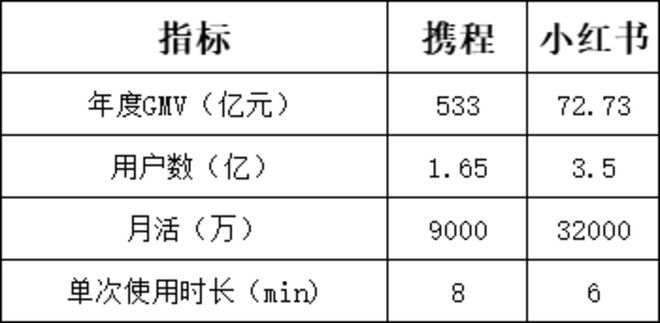
Group 1 - Xiaohongshu's average daily search volume reached 600 million by Q4 2024, with travel-related content accounting for approximately 15% of its traffic [1] - The Chinese homestay market is projected to reach a scale of 42.27 billion yuan in 2024, with financing in the industry hitting a seven-year high of 4.49 billion yuan [1] - The competition for traffic is intensifying as Xiaohongshu's attention surpasses that of Online Travel Agencies (OTAs) [1] Group 2 - Ctrip's annual GMV is 53.3 billion yuan, while Xiaohongshu's is 7.273 billion yuan, indicating a significant difference in scale [2] - Ctrip has 1.65 billion users compared to Xiaohongshu's 350 million users, and Xiaohongshu has a higher monthly active user count of 32 million versus Ctrip's 9 million [2] - Tujia, a key player in the homestay market, is under pressure to leverage Xiaohongshu for traffic as it faces challenges in its business model [7][12] Group 3 - Tujia's peak year was 2019, where it achieved over 10,000 managed properties, but it has since struggled with losses [3][4] - Tujia's operational model has evolved, splitting into an online platform and a property management service, but it has not successfully replicated the success of Airbnb [4][6] - Tujia's recent attempts to engage with Xiaohongshu have been limited and lack urgency until recent competitive pressures emerged [11][12] Group 4 - The competition landscape has shifted, with players like Muniu and Xiaohongshu emerging as significant threats to Tujia [13][20] - The industry faces challenges in achieving sustainable profitability, with cash flow management being critical for survival [14][15] - Muniu has successfully reached profitability and has focused on leveraging its own traffic, while Tujia has struggled to maintain its market position [17][19] Group 5 - The battle for user attention is intensifying, with both Tujia and Muniu vying for the same demographic on Xiaohongshu [22] - The shift from traditional channels to social media platforms like Xiaohongshu reflects changing user behaviors and preferences [23][24] - As competition increases, brands must focus on creating meaningful connections with users rather than relying solely on advertising [25]