品质第一

Search documents
王孝飞:在激进的时代,长安福特选择稳健前行 | 高端访谈
Zhong Guo Qi Che Bao Wang· 2025-12-25 10:18
Core Viewpoint - The automotive industry is experiencing signs of restlessness and internal competition, prompting companies to return to the essence of manufacturing, focusing on product quality, systematic intelligent manufacturing capabilities, and sustainable development paths. Changan Ford exemplifies a differentiated approach in this context, emphasizing a steady development logic amidst fierce competition [1][3]. Industry Context - The automotive market is characterized by rapid expansion, parameter comparisons, marketing hype, and short-term traffic competition, leading to increased product homogeneity and varied user experiences. This poses challenges to the healthy development of the industry [3]. - There are two distinct development paths in the industry: one led by new energy vehicle startups focusing on rapid expansion through technological innovation, and the other by traditional large automakers emphasizing steady development and value accumulation [3][5]. Changan Ford's Strategy - Changan Ford adheres to the principle of "quality first, customer first," avoiding blind pursuit of short-term scale and focusing on three main directions: quality, intelligent manufacturing, and green development [5][6]. - The company emphasizes value marketing, enhancing user satisfaction and ensuring sustainable development for its dealer network without engaging in price wars [6]. Quality and Safety Commitment - Changan Ford's products are recognized for their reliability and safety, earning the nickname "road tank." The company maintains a strong commitment to quality and safety through cultural heritage, systematic guarantees, and user feedback mechanisms [7][10]. - The company has implemented rigorous quality management systems and advanced technologies to enhance quality control, achieving significant improvements in defect detection efficiency [8][10]. Intelligent Manufacturing Innovations - Changan Ford is exploring intelligent manufacturing by integrating advanced technologies into production processes, such as using AI for quality inspection and developing flexible robotic grippers to improve production efficiency [15][17]. - The company fosters a culture of innovation among employees, encouraging suggestions for improvements and recognizing contributions that lead to significant cost savings and patent achievements [20]. Sustainable Development Practices - Changan Ford is committed to green development, focusing on energy conservation, environmental material applications, and harmful substance control throughout the product lifecycle [23][25]. - The company has achieved significant advancements in material safety and recycling, earning recognition as a "green factory" and maintaining high standards for VOC control [25]. Future Development Vision - Changan Ford's future development will revolve around the core principles of "customer first, quality first, pursuit of excellence, and mutual growth," focusing on user value creation and steady transformation [26][27]. - The company aims to enhance its product offerings in new energy and intelligent technology while ensuring quality and safety, ultimately achieving a balance between traditional strengths and emerging technologies [26][27].


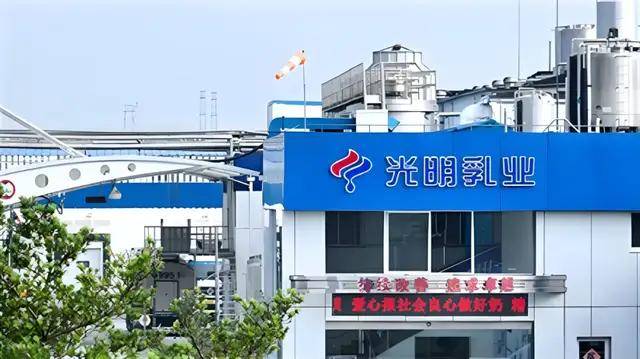
“优倍代言人+科研生态圈”双拳出击,董事长黄黎明能否重振光明增长曲线?
Sou Hu Cai Jing· 2025-06-03 08:54
Core Viewpoint - The Chinese dairy industry is facing unprecedented operational pressures due to a prolonged downturn, characterized by price wars and weak demand, significantly impacting leading companies like Bright Dairy [2][20]. Group 1: Company Performance - Bright Dairy has experienced a continuous decline in revenue over the past three years, with a reported revenue of 24.28 billion in 2024, down 8.33% from the previous year [14]. - The net profit attributable to shareholders for 2024 was 722 million, reflecting a significant drop of 25.36% compared to the previous year [14]. - The company's sales personnel compensation decreased by 15% to 1.302 billion in 2024, while other employee compensation slightly declined from 521 million to 517 million [2]. Group 2: Market Position - Bright Dairy, once the leader in the dairy sector, has seen its market share eroded by competitors like Yili and Mengniu, with its market share in the low-temperature milk segment at 21% as of 2022, compared to Yili's 26.4% and Mengniu's 21.6% [8][20]. - Despite being the top player in the low-temperature milk market, Bright Dairy's competitive edge is diminishing as new entrants and established brands intensify their marketing efforts [7][8]. Group 3: Marketing Strategy - Bright Dairy has been criticized for its low marketing expenditure, with a sales expense ratio of only 12.3%, significantly lower than competitors like Mengniu and Yili, which spent 24% and 18.6% respectively [11][12]. - The company's cautious approach to marketing and brand promotion has resulted in limited consumer engagement and brand visibility, contributing to declining sales [9][13]. Group 4: Quality and Safety Issues - Bright Dairy has faced multiple food safety issues, including a recent incident where a batch of its plant-based butter was found to exceed peroxide value standards, raising health concerns [17][18]. - The company has been subject to numerous consumer complaints regarding product quality, which could undermine consumer trust and brand reputation [19]. Group 5: Future Outlook - Bright Dairy's attempts to seek growth through international acquisitions, such as the purchase of New Zealand's Newlight, face challenges due to the acquired company's limited competitiveness and financial difficulties [20]. - The industry is shifting from a scale-based competition to a value-based competition, necessitating Bright Dairy to adapt its strategies to regain market influence [20].