
商业航天监管职能整合

Search documents
商业航天迎重磅利好
2 1 Shi Ji Jing Ji Bao Dao· 2025-11-25 03:24
Core Insights - The establishment of the Commercial Aerospace Department by the National Defense Science and Technology Industry Administration is a significant move towards streamlining the regulatory framework in China's commercial aerospace sector [1][3][4] - This new department aims to address the fragmented regulatory landscape and improve the efficiency of approval processes for satellite launches and operations [3][4] Group 1: Regulatory Changes - The Commercial Aerospace Department will consolidate various regulatory functions that were previously scattered across multiple agencies, including the National Defense Science and Technology Industry Administration and the National Space Administration [3][4] - The new department is expected to enhance communication and coordination between commercial aerospace companies and regulatory bodies, moving from a "shared management" to a "dedicated management" approach [3][4] Group 2: Industry Development - China's commercial aerospace sector is transitioning from technology validation to large-scale deployment and application, with significant satellite constellations already in orbit [5] - The successful launch of satellites for the GW and Qianfan constellations marks a critical phase in the development of China's satellite internet infrastructure [5] - The demand for reduced launch costs and increased launch frequency is driving private rocket companies to focus on developing medium-sized, reusable launch vehicles [5] Group 3: Market Expansion - The approval and promotion of commercial satellite applications are accelerating, with major telecommunications companies entering the satellite communication market [6] - The introduction of satellite direct connection capabilities in consumer devices, such as smartphones and vehicles, is becoming a competitive advantage for manufacturers [6]

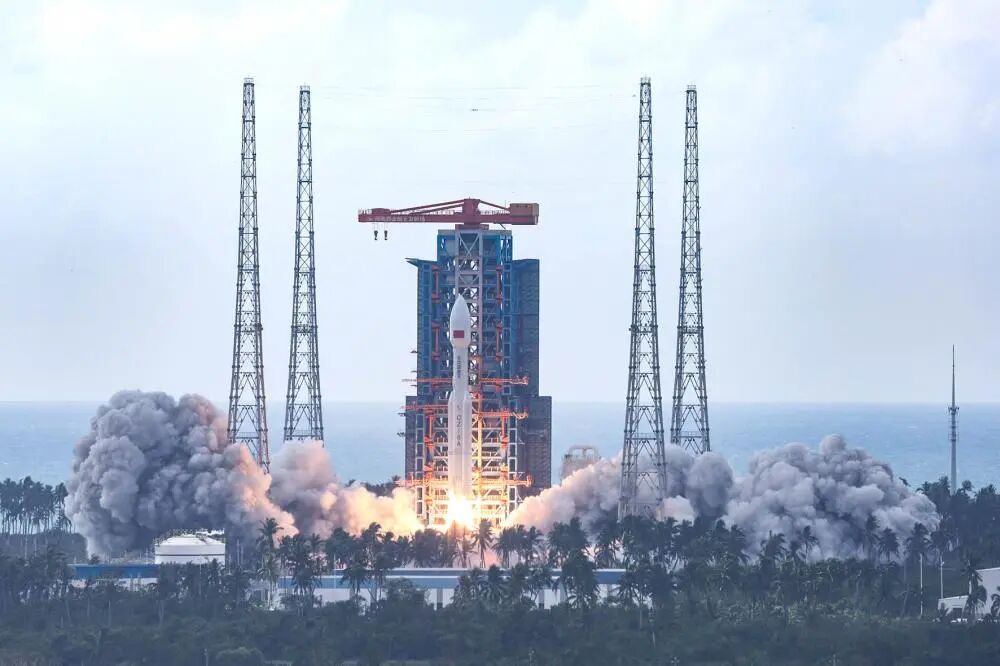
中国商业航天爆发前夜,商业航天司来了
2 1 Shi Ji Jing Ji Bao Dao· 2025-11-24 10:35
Core Insights - The establishment of the Commercial Space Administration signals a significant move by the Chinese government to streamline the regulatory framework for the commercial space industry, addressing the complexities of oversight and promoting standardized and scaled development [1][2][3] Group 1: Regulatory Changes - The new Commercial Space Administration will focus on policy research, project management, and safety supervision within the commercial space sector, marking a shift from a fragmented regulatory approach to a more centralized one [1][2] - Previously, regulatory functions were dispersed among multiple agencies, leading to inefficiencies and challenges in communication for commercial space companies [2][3] - The establishment of a dedicated administration is expected to enhance the efficiency of approval processes and resource allocation, benefiting the overall industry [2][3] Group 2: Industry Development - China’s commercial space sector is transitioning from technology validation to large-scale networking and application, indicating a critical phase for growth [4] - Major satellite constellations, such as GW and Qianfan, have begun to take shape, with over 100 satellites in orbit, marking the start of an accelerated networking phase for China's satellite internet [5] - The demand for reduced launch costs and increased launch frequency is driving private rocket companies to develop medium-sized, reusable launch vehicles [5] Group 3: Market Expansion - The approval and promotion of commercial space applications are advancing, with major telecommunications companies entering the satellite communication market [6] - The emergence of satellite-direct mobile phones and automotive applications is gaining traction, with over 30 models of phones supporting direct satellite connectivity [6]