
商品房去库存

Search documents
商品房库存连续8个月减少
2 1 Shi Ji Jing Ji Bao Dao· 2025-11-14 12:20
Core Viewpoint - The real estate market in China is experiencing fluctuations, but the effects of policies are becoming evident, with a narrowing decline in new housing sales compared to last year [2] Group 1: Market Performance - From January to October, the sales area and sales amount of new commercial housing decreased by 6.8% and 9.6% year-on-year, respectively, with declines narrowing by 9 percentage points and 11.3 percentage points compared to the same period last year [2][5] - As of the end of October, the unsold housing area nationwide was 75,606 million square meters, a decrease of 3.22 million square meters from the end of September, marking eight consecutive months of reduction [5] - In October, new home prices in first-tier, second-tier, and third-tier cities fell by 0.3%, 0.4%, and 0.5% month-on-month, respectively, with six cities, including Shanghai and Hangzhou, experiencing price increases [3][4] Group 2: Inventory and Supply - The ongoing inventory reduction efforts have led to a continuous decline in unsold housing, with residential unsold area decreasing by 2.92 million square meters this year [5][6] - The supply of new projects has been adjusted downward, with many projects being promoted under the "good housing" standard, leading to an improvement in inventory structure and supply-demand relationships [6] Group 3: Investment Trends - From January to October, real estate development investment totaled 73,563 billion yuan, down 14.7% year-on-year, with the decline rate increasing by 0.8 percentage points compared to previous values [7] - The funding received by real estate companies decreased by 9.7% year-on-year, but the decline rate has narrowed compared to the same period last year and the previous year [7] - The approval amount for loans related to "white list" projects has exceeded 70 billion yuan, indicating a need for further policy implementation to support the sector [7][8] Group 4: Policy Measures - Various regions have accelerated the implementation of supportive policies to stimulate rigid and improved housing demand, aiming to stabilize the real estate market [8] - The next steps involve adhering to the decisions of the central government and promoting high-quality development in the real estate sector through a combination of short-term and long-term strategies [8]

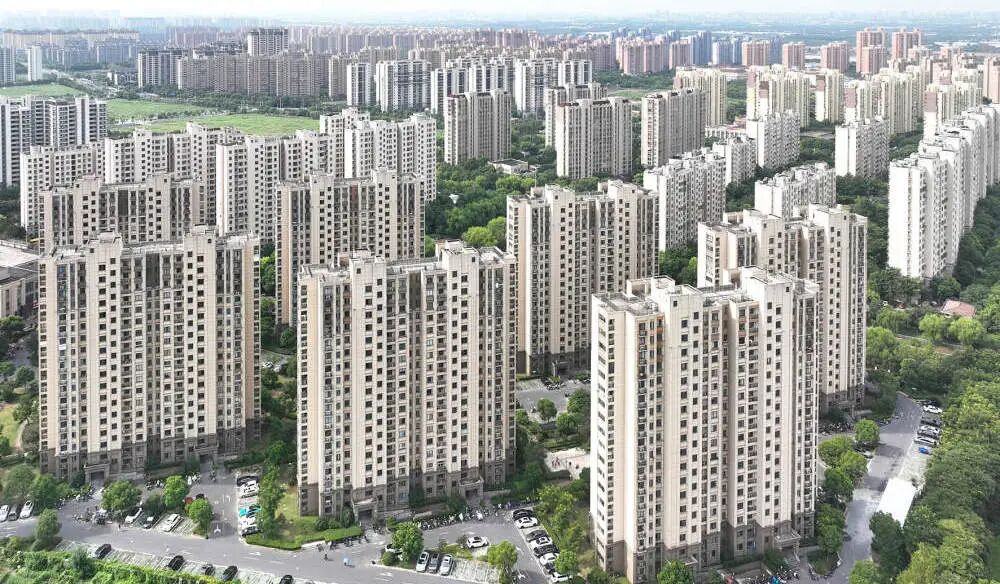
政策成效继续显现,商品房库存连续八个月减少
2 1 Shi Ji Jing Ji Bao Dao· 2025-11-14 10:22
Core Insights - The real estate market in China is experiencing fluctuations, but the effectiveness of policies is still evident, with a narrowing decline in sales year-on-year [2] - As of October, the sales area and sales revenue of new commercial housing from January to October decreased by 6.8% and 9.6% respectively, but the decline has narrowed compared to the same period last year [2][5] - The inventory of commercial housing has been decreasing for eight consecutive months, with a reduction of 3.22 million square meters in October alone [2][6] Market Trends - In October, new home prices in first-tier, second-tier, and third-tier cities fell by 0.3%, 0.4%, and 0.5% respectively, while six cities, including Shanghai and Hangzhou, saw price increases [3] - The second-hand housing market is undergoing a price correction, with first-tier and second-tier cities experiencing a decline of 0.9% and 0.6% respectively, although the decline has narrowed compared to the previous month [3][4] - The overall trend indicates that first-tier cities are stabilizing, while second-tier cities show internal differentiation, and third-tier cities remain under pressure [4] Inventory and Investment - The total area of unsold commercial housing stood at 75.606 million square meters at the end of October, marking a continuous decrease since the beginning of the year [6] - Real estate development investment from January to October reached 735.63 billion yuan, down 14.7% year-on-year, with the decline rate increasing compared to previous values [6] - Funding for real estate companies has seen a reduction of 9.7% year-on-year, but the decline has narrowed compared to previous periods, indicating some stabilization in funding sources [7] Policy and Future Outlook - The government is actively implementing supportive policies to stimulate housing demand and stabilize the real estate market [7] - The next phase will focus on constructing a new development model for real estate, emphasizing both short-term and long-term strategies for high-quality market development [7]
收购商品房用做保障房,三大一线城市已展开行动
Di Yi Cai Jing· 2025-06-12 08:23
Group 1 - The core viewpoint of the articles is that the acquisition of existing residential properties for the purpose of affordable rental housing is gaining momentum in major cities, particularly in Shanghai, as part of a broader strategy to address housing supply and demand issues [1][3][4] - Shanghai's Minhang District has initiated a public acquisition process for existing residential properties to be used as affordable rental housing, marking a significant step in the city's efforts to tackle housing inventory [2][3] - The central government has been supportive of local governments using special bonds and other financial tools to acquire existing properties for affordable housing, with several provinces already issuing such bonds [6][7] Group 2 - As of now, three of the four first-tier cities (Shenzhen, Guangzhou, and Shanghai) have announced plans to acquire existing residential properties for affordable housing, indicating a trend among major urban centers [4][6] - The issuance of special bonds for property acquisition has been reported, with Zhejiang and Sichuan provinces leading the way, raising a total of 19.2 billion yuan for this purpose [6][7] - The acquisition process is expected to alleviate inventory pressure on real estate companies and improve cash flow, thereby balancing the supply-demand relationship in the housing market [8]