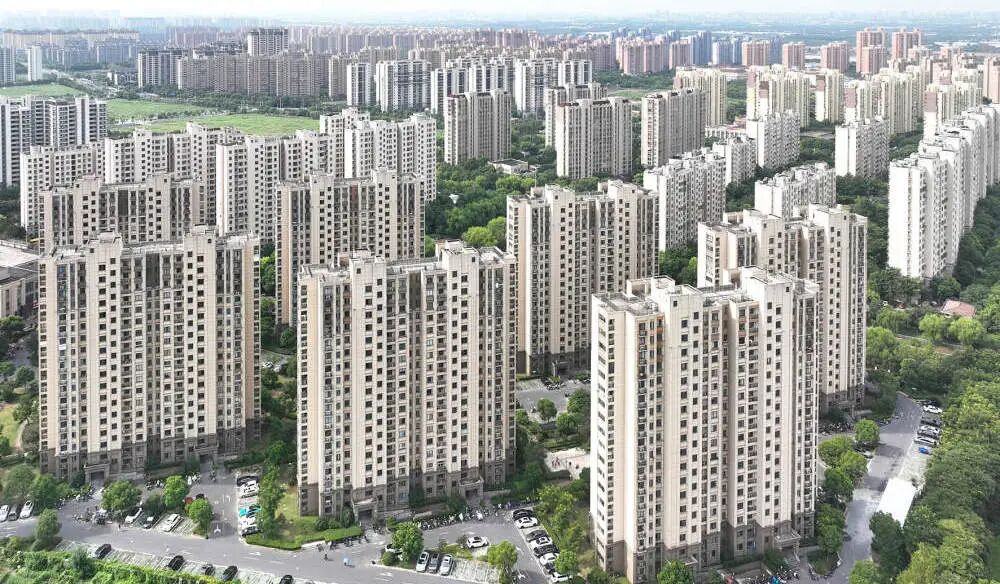
房地产新旧模式转换

Search documents
万科A:房地产行业目前正处于新旧模式转换的重要时期
Zheng Quan Ri Bao Zhi Sheng· 2026-01-30 12:15
Group 1 - The core viewpoint is that the real estate industry is currently undergoing a significant transition between old and new models, with the company experiencing a continuous decline in sales and facing a challenging overall operating environment [1] - The company is actively promoting reform and risk management efforts with the support of various stakeholders [1]

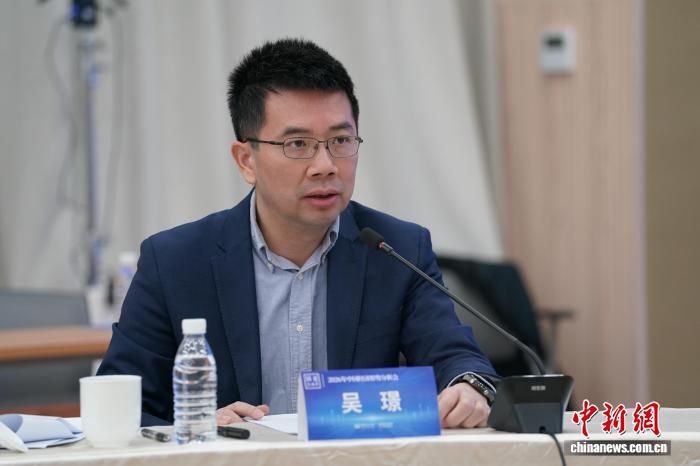
吴璟:2025年房地产市场呈现四个积极现象
Zhong Guo Xin Wen Wang· 2026-01-19 08:57
Core Insights - The real estate market in China is showing signs of stabilization amidst fluctuations, with four positive phenomena observed in 2025 that lay a foundation for a more stable market in 2026 [1][3]. Short-term Trends - The overall transaction scale in the real estate market is stabilizing, with combined sales of new and second-hand homes showing signs of slight growth in major cities [3]. - There is an increasing divergence between cities and within different districts of cities, driven by macroeconomic factors and previous inventory levels [3]. - Policies aimed at controlling supply and reducing inventory are having a positive impact on market recovery [3][4]. Inventory Trends - As of the end of November 2025, the nationwide inventory of unsold commercial housing decreased by 3.01 million square meters compared to the end of October, indicating effective measures on both supply and demand sides [4]. Long-term Trends - The transition from old to new models in the real estate sector is becoming clearer, with significant achievements noted during the transition from the "14th Five-Year Plan" to the "15th Five-Year Plan" [5]. - The completion of housing delivery tasks is a landmark event, indicating a reduction in risks associated with the old model characterized by high debt, leverage, and turnover [5]. - The new development model emphasizes the return of real estate to its social welfare role, focusing on the construction of "good houses" that are safe, comfortable, green, and smart [5]. - Urban development is shifting from large-scale expansion to a focus on quality development through urban renewal, providing new opportunities for traditional industries [5]. Policy Environment - The policy toolbox for both supply and demand sides is continuously improving, creating a favorable environment for market recovery, with ongoing marginal improvements expected to work in synergy [6].

《求是》:改善和稳定房地产市场预期|宏观经济
清华金融评论· 2026-01-03 09:47
Core Viewpoint - The article emphasizes the importance of stabilizing the real estate market in China to support the overall economy and prevent systemic risks, as highlighted in the Central Economic Work Conference held at the end of 2025 [2][3]. Group 1: Current Market Conditions - China's real estate market is undergoing significant adjustments, with some projects and cities experiencing oversupply, leading to a notable decline in sales and prices, which impacts the demand side of the economy and financial institutions [3][5]. - The real estate sector is crucial for the national economy, contributing to employment and involving numerous related industries such as steel, cement, and home appliances, with its value added accounting for 13% of GDP in 2024 [6]. Group 2: Historical Context and Development - Since the early 1980s, China has transitioned from welfare housing to a market-oriented housing system, significantly improving living conditions over 20 years, with urban per capita housing area reaching 38.6 square meters by 2020 [4]. - The "14th Five-Year Plan" anticipates a cumulative sales area of approximately 5 billion square meters of commercial housing, with urban per capita housing area projected to reach around 41 square meters by the end of 2024 [4]. Group 3: Challenges and Structural Changes - The real estate market is shifting from a phase of housing shortage to a phase of balance, with structural supply issues, particularly in affordable housing for new citizens and young people [5][7]. - There is a growing demand for quality housing, with residents increasingly focused on the quality of living rather than mere availability [5]. Group 4: Policy Measures and Future Outlook - The Central Political Bureau meeting in September 2024 called for measures to stabilize the real estate market, including a combination of policies aimed at risk prevention and promoting transformation [8]. - The government is implementing various initiatives to enhance housing supply, including the construction of affordable housing and the renovation of old residential areas, with a focus on meeting the high-quality living needs of the population [8][9]. Group 5: Market Dynamics and Expectations - Despite overall stability in the real estate market, some cities are experiencing fluctuations, and real estate development investment continues to decline, indicating a need for time to adjust and stabilize market dynamics [9][10]. - The article stresses the importance of maintaining policy consistency and effectively managing supply to support the transition to a new development model in the real estate sector [10][11].

住建部会议透露“十五五”楼市调控新思路:“稳楼市”从首要任务变为第二重点,房地产开启新旧模式转换
Hua Xia Shi Bao· 2025-12-24 11:33
Core Viewpoint - The recent national housing and urban construction work conference emphasizes the importance of urban renewal and high-quality development in the real estate sector, with stabilizing the real estate market now positioned as a secondary priority [2][6][7]. Group 1: Key Focus Areas for 2026 - The conference outlines four main areas of focus for 2026: promoting modern urban construction, stabilizing the real estate market, upgrading the construction industry, and strengthening the foundation for high-quality development [2]. - Urban renewal has been elevated to the primary task, reflecting a shift in priorities from previous years where stabilizing the real estate market was the foremost concern [7][8]. Group 2: Market Dynamics and Trends - The rising proportion of second-hand housing transactions is recognized as a significant trend, indicating a need to view the new and second-hand housing markets as a cohesive entity [9][10]. - In 30 key cities, the transaction volume of second-hand homes accounts for nearly 70%, with first-tier cities experiencing a four-year high in second-hand transactions [10]. Group 3: Policy Implications - The conference calls for tailored policies to control supply, reduce inventory, and optimize supply in the real estate sector, emphasizing the importance of local government autonomy in adjusting real estate policies [6][8]. - There is an expectation for more supportive measures from local governments, such as removing restrictive policies and increasing housing subsidies [6][8]. Group 4: Industry Transformation - The meeting highlights the need for real estate companies to transition from primarily selling new homes to offering diverse, high-quality living services, indicating a shift in business models within the industry [10][11]. - The emphasis on urban renewal and the transformation of real estate business models suggests a significant evolution in the sector's approach to meeting housing demands and addressing market challenges [11].

聚焦中央经济工作会议丨把“稳”字落到实处推动房地产市场健康发展
Xin Hua Wang· 2025-12-24 11:07
Group 1 - The central economic work conference emphasizes the need to stabilize the real estate market, focusing on "controlling increment, reducing inventory, and optimizing supply" based on local conditions [1] - The supply-demand relationship in China's real estate market has shifted from a total shortage to a basic balance, with structural supply shortages remaining [1] - The ongoing new urbanization and the optimization of urban stock provide significant potential for the real estate market, indicating continued growth opportunities [1] Group 2 - The conference encourages the acquisition of existing commercial housing for use as affordable housing, which will help alleviate financial pressure in the market and expand the supply of affordable housing [2] - The ultimate goal of real estate development is to meet the evolving housing needs of residents, with new demands for comfort and smart features emerging [2] - The focus on building "good houses" and transforming old houses into "good houses" aims to create safe, comfortable, green, and smart living environments [2]
土地月报|成交规模同比延续缩量,平均溢价率迎来回升(2025年11月)
克而瑞地产研究· 2025-11-28 08:13
Core Viewpoint - The industry is undergoing a transformation from old to new models, with the land market expected to adjust first as a key upstream indicator [2][7]. Supply and Demand - The supply of land in November 2025 was 290 million square meters, a 250% increase month-on-month but a 9% decrease year-on-year. The transaction area was 86.04 million square meters, up 39% month-on-month but down 27% year-on-year [3][4][10]. - The overall supply and demand scale continues to decline year-on-year, indicating a contraction in the land market [4][10]. Market Heat - The average premium rate in November was 4.1%, an increase of 1.29 percentage points from the previous month. However, the bidding heat remains concentrated in a few premium areas, with many plots sold at base prices [5][20]. - In November, 9% of land parcels failed to sell, remaining at a near-low level, indicating ongoing challenges in the market [22]. Distribution - First-tier cities saw a year-on-year increase in transaction value by 43%, while second-tier cities decreased by 17%, and third and fourth-tier cities dropped by 39% [6]. Future Outlook - The land market is expected to adjust significantly as it is a leading indicator for the industry. The total land transaction area for 2025 is projected to be only 1.1 times that of new housing transactions, down from 1.8 times in 2020, indicating a shift towards a new inventory reduction cycle [7][10]. - The Ministry of Housing and Urban-Rural Development has emphasized urban renewal, which is expected to provide quality projects and support high-quality urban development, potentially stabilizing the market [8][14]. Key Land Transactions - Notable land transactions in November included a residential plot in Beijing's Chaoyang District sold for 5.024 billion yuan with a premium rate of 18.21%, and a commercial plot in Yiwu with a premium rate of 159% [27][28]. - The highest nominal floor price was recorded for a residential plot in Beijing at 81,120 yuan per square meter, reflecting the premium nature of certain urban areas [31][33].
房地产处在新旧模式转换时期,二手房替代作用不断增强
Huan Qiu Wang· 2025-11-17 01:47
Group 1 - The core viewpoint is that the second-hand housing market in China is showing signs of recovery, with a 4.7% year-on-year increase in transaction area from January to October, and second-hand homes accounting for 45% of total transactions [1][2] - Major cities such as Shanghai, Shenzhen, Chongqing, Nanjing, Changzhou, and Dongguan have seen over a 10% year-on-year increase in second-hand housing transaction area [1] - Analysts suggest that as the housing market transitions to a stock era, the role of second-hand homes as a substitute for new homes is becoming increasingly significant [2] Group 2 - The Chinese government has been actively implementing supportive policies to stimulate rigid and improved housing demand, contributing to a stabilization in the real estate market [2] - Despite fluctuations in the real estate market, the effectiveness of these policies is evident, with a narrowing decline in commodity housing sales and ongoing inventory reduction [2] - The spokesperson from the National Bureau of Statistics indicated that the real estate market is in a transitional phase, requiring time for adjustment, and emphasized the need for a new development model for the sector [4]

库存“八连降”、销售降幅收窄,房地产转型驶入“深水区”
Bei Ke Cai Jing· 2025-11-14 14:01
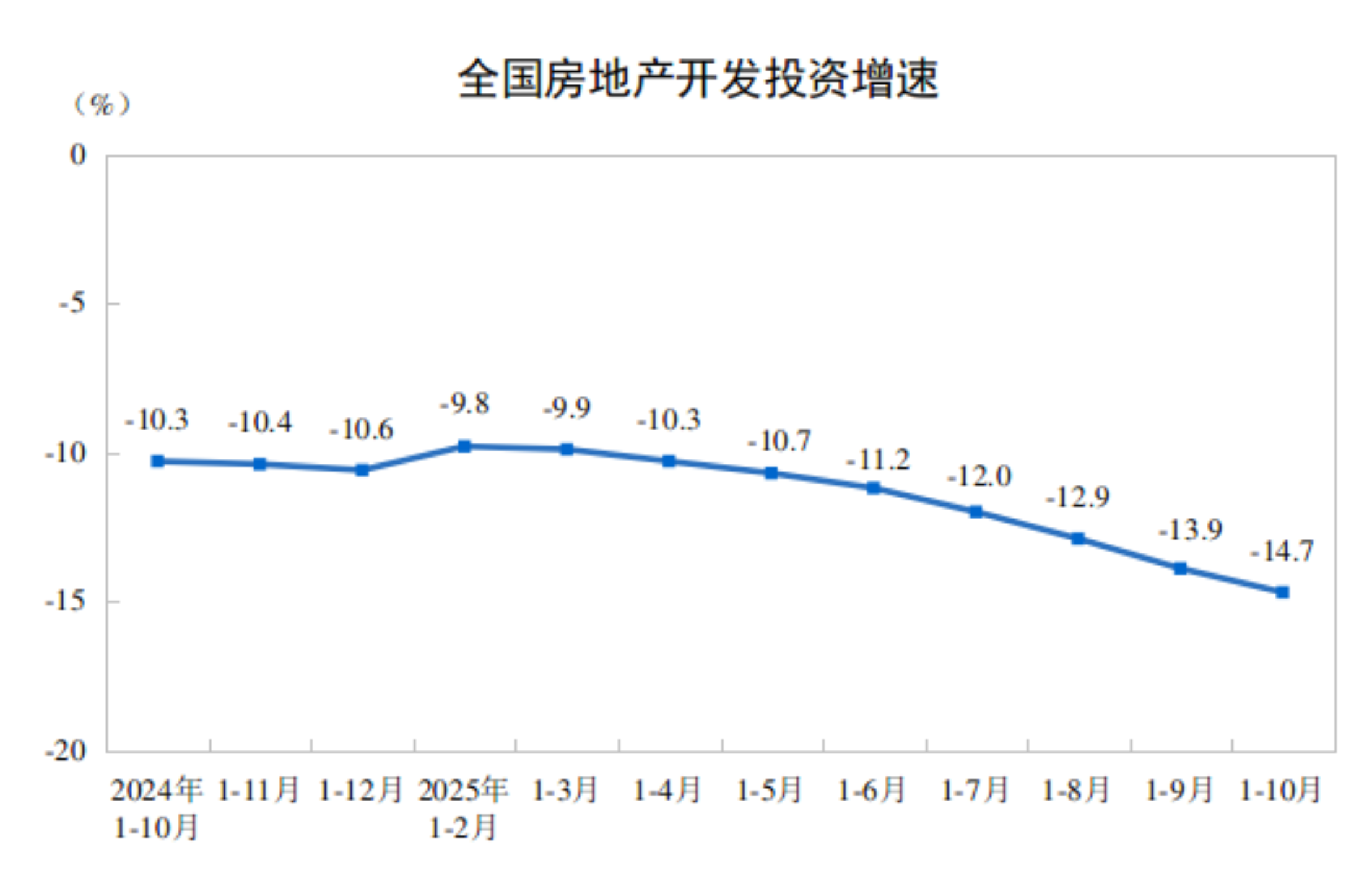
Core Viewpoint - The real estate market in China is undergoing a significant adjustment, with investment declining and sales showing signs of stabilization due to policy measures [1][2][12]. Group 1: Investment Trends - From January to October, national real estate development investment reached 7.36 trillion yuan, a year-on-year decrease of 14.7%, indicating a deep adjustment period in the market [1]. - Real estate developers' funds received totaled 7.89 trillion yuan, down 9.7% year-on-year, with various funding sources such as domestic loans and personal mortgage loans also experiencing declines [6][7]. - The decline in funds received has narrowed compared to previous periods, suggesting some improvement in the financial situation of real estate companies [7]. Group 2: Construction and Development - The total area of housing under construction was 6.529 billion square meters, down 9.4% year-on-year, with new construction area dropping by 19.8% [7]. - The completion area of housing was 3.49 billion square meters, reflecting a 16.9% decrease, indicating a slowdown in construction activity [7]. Group 3: Sales and Inventory - New residential property sales area decreased by 6.8% year-on-year, with sales revenue down 9.6%, but the rate of decline has slowed compared to previous periods [12][13]. - The inventory of unsold commercial housing decreased by 3.22 million square meters from September to October, marking the eighth consecutive month of decline [14]. - The ongoing efforts to reduce inventory and stabilize the market are showing positive results, with a focus on controlling new supply and optimizing existing stock [14][15].
商品房库存连续8个月减少
2 1 Shi Ji Jing Ji Bao Dao· 2025-11-14 12:20
Core Viewpoint - The real estate market in China is experiencing fluctuations, but the effects of policies are becoming evident, with a narrowing decline in new housing sales compared to last year [2] Group 1: Market Performance - From January to October, the sales area and sales amount of new commercial housing decreased by 6.8% and 9.6% year-on-year, respectively, with declines narrowing by 9 percentage points and 11.3 percentage points compared to the same period last year [2][5] - As of the end of October, the unsold housing area nationwide was 75,606 million square meters, a decrease of 3.22 million square meters from the end of September, marking eight consecutive months of reduction [5] - In October, new home prices in first-tier, second-tier, and third-tier cities fell by 0.3%, 0.4%, and 0.5% month-on-month, respectively, with six cities, including Shanghai and Hangzhou, experiencing price increases [3][4] Group 2: Inventory and Supply - The ongoing inventory reduction efforts have led to a continuous decline in unsold housing, with residential unsold area decreasing by 2.92 million square meters this year [5][6] - The supply of new projects has been adjusted downward, with many projects being promoted under the "good housing" standard, leading to an improvement in inventory structure and supply-demand relationships [6] Group 3: Investment Trends - From January to October, real estate development investment totaled 73,563 billion yuan, down 14.7% year-on-year, with the decline rate increasing by 0.8 percentage points compared to previous values [7] - The funding received by real estate companies decreased by 9.7% year-on-year, but the decline rate has narrowed compared to the same period last year and the previous year [7] - The approval amount for loans related to "white list" projects has exceeded 70 billion yuan, indicating a need for further policy implementation to support the sector [7][8] Group 4: Policy Measures - Various regions have accelerated the implementation of supportive policies to stimulate rigid and improved housing demand, aiming to stabilize the real estate market [8] - The next steps involve adhering to the decisions of the central government and promoting high-quality development in the real estate sector through a combination of short-term and long-term strategies [8]