商改租

Search documents
价格“内卷”!实探沪深写字楼市场
证券时报· 2026-01-06 13:18
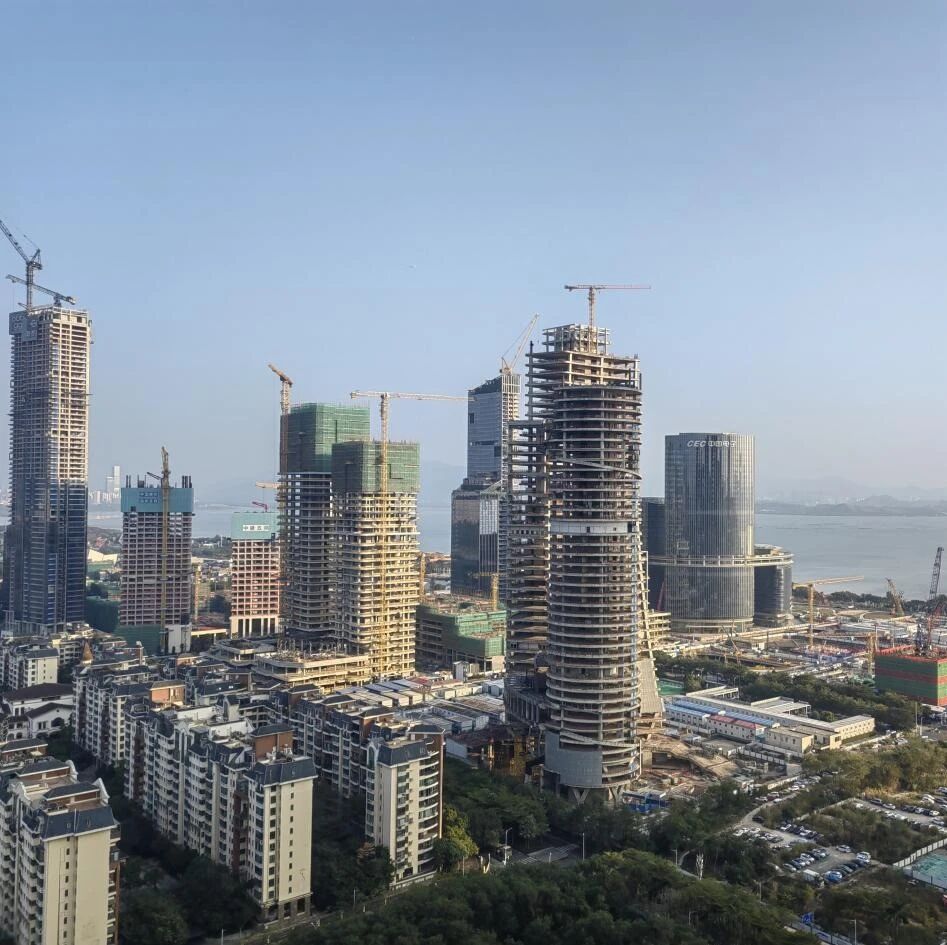
Core Viewpoint - The vacancy rate of office buildings in first-tier cities has become a significant concern in the commercial real estate sector, indicating challenges and pressures for transformation in the office market [1] Group 1: Vacancy Rates and Market Conditions - As of the end of Q3 2025, the vacancy rates for Grade A office buildings in first-tier cities like Beijing, Shanghai, Guangzhou, and Shenzhen range from approximately 19% to 30%, with a rate above 20% indicating a supply-demand imbalance [3] - In Shanghai, the vacancy rate for office buildings reached 23.5% by the end of Q3 2025, with significant price reductions observed, such as a drop from 10 yuan per square meter per day to 5 yuan [6][7] - The overall net absorption of Grade A office space in first-tier cities is projected to be about 1.175 million square meters in 2025, a significant decrease from 3.342 million square meters in 2021, highlighting a persistent supply-demand imbalance [9] Group 2: Market Challenges and Competitive Pressures - The phenomenon of "price competition" is prevalent, with tenants comparing prices and demanding lower rents, leading to a decline in rental stability, especially among small and medium enterprises [5] - In competitive areas like the Huaxin district in Shanghai, despite a strong logistics industry presence, the office market struggles due to reduced government subsidies and increasing competition from nearby districts [7] - A high-end office complex in the Jing'an Temple business district has seen its vacancy rate approach 80%, with rental prices dropping significantly due to oversupply in the area [7] Group 3: Recommendations for Addressing Vacancy Issues - Experts suggest addressing the vacancy issue by managing new supply and revitalizing existing stock, including stricter evaluations for new projects and repurposing unused buildings for essential services [9][10] - The Shenzhen government has initiated policies allowing the conversion of idle non-residential properties into affordable rental housing, providing a potential solution to the oversupply of office space [10] - To stimulate demand, there is a need for industrial upgrades and enhancing the service sector, requiring comprehensive measures to attract modern service enterprises [11]

2025年11月亚洲(中国)长租公寓发展报告
3 6 Ke· 2025-12-31 08:02
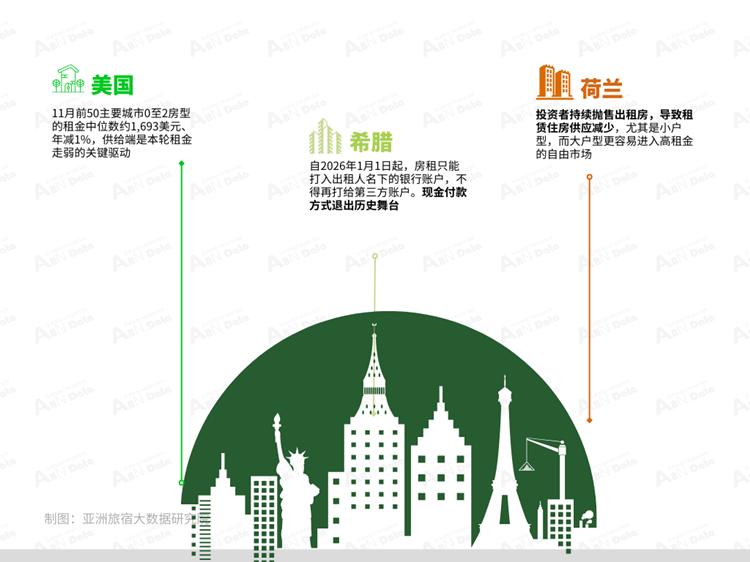
Global Rental Market Dynamics - The global rental market in November shows divergence, with the US market experiencing a decline in rents due to an influx of new housing supply, particularly in fast-growing areas like Austin and Denver, indicating a shift from a "landlord's market" to a tenant's market [2][3] - In the US, the median rent for 0-2 bedroom units in the top 50 cities is approximately $1,693, down 1% year-over-year, marking the 28th consecutive month of annual declines [3] - The European market continues to see high rents, while the Asia-Pacific region is steadily expanding, with centralized long-term rental companies growing despite a seasonal decline in rents [2] Regional Rental Market Developments United States - In November, the national median rent fell to $1,367, with a monthly decrease of 1.0% and an annual decrease of 1.1% [3] - Significant rent declines were observed in cities like Austin (-6.6%), Denver (-4.8%), and Birmingham (-4.6%) [3] Greece - Greece's rental market is set for a major reform starting in 2026, transitioning to bank payments for rent to combat "black rent" issues, with significant implications for landlords and tenants [4] Netherlands - The Dutch rental market is characterized by ongoing investor sell-offs of rental properties, leading to a decrease in rental housing supply, particularly for smaller units [5] Australia - From November 25, Victoria's rental market will undergo significant reforms aimed at enhancing tenant rights, including the prohibition of "no-fault evictions" and extending notice periods for rent increases [7] Singapore - In November, apartment rents slightly decreased by 0.1%, with a year-on-year increase of 2.3%, while the rental market for public housing units showed a recovery with a monthly increase of 0.5% [8] South Korea - Seoul's apartment rents increased by 3.29% from January to November, marking the highest growth since 2015, with the average monthly rent reaching 1,476,000 KRW [9] China - In November, the rental market in China's top 10 cities saw a median rent of 1,700 CNY/month, with a month-on-month decline of 5.45% [11] - Chengdu experienced the largest decline at 6.93%, while Sanya was the only city to see an increase of 0.92% [11][13] Rental Enterprise Developments - Several rental communities and hotels opened in November, including Hefei Anju Group's "Chengyu·Zhenjing" community and Wuhan's "Yuyun Chuang" youth apartment, aimed at providing quality housing options for young professionals [14][15][27] - The rental market is seeing a trend of new openings and expansions, with companies like Magic Cube Apartment and Zhenxing Apartment launching multiple new locations across key urban areas [16][17] Rental Housing Supply Dynamics - The rental housing market is actively addressing supply through various initiatives, including the introduction of affordable rental housing projects in cities like Wuhan and Quanzhou, aimed at meeting the needs of young professionals [28][30] - The market is also witnessing a trend of converting commercial properties into rental housing to enhance supply [46]