商标使用合规

Search documents
谁是许思敏?起底娃哈哈31岁新董事长
新浪财经· 2025-11-27 11:48
Core Viewpoint - The recent leadership change at Wahaha Group, with Xu Simin replacing Zong Fuli as the legal representative, chairman, and general manager, indicates a strategic shift within the company while Zong Fuli retains a significant 29.40% stake in the company [2][3]. Group 1: Leadership Transition - Xu Simin, aged 31, with a legal background, has a history in the restaurant industry and has been closely associated with Zong Fuli, leading to speculation that he may be a figurehead while actual control remains with Zong Fuli [4][6]. - Xu's rapid ascent within Wahaha, from entering the executive team in August 2024 to becoming chairman and general manager in just over a year, reflects a significant shift in the company's management dynamics [8][10]. Group 2: Xu Simin's Background - Xu Simin founded a fast-food brand in 2015 and has maintained a 38% stake in his restaurant venture while also working in the legal department of Hongsheng Group [6][8]. - His promotion within Hongsheng Group was notably due to his effective crisis management during an environmental compliance issue, which saved the company significant costs [10]. Group 3: Challenges Ahead - The primary challenge facing Xu Simin as the new chairman is the trademark issue, particularly regarding the use of the "Wahaha" brand, which requires unanimous consent from all shareholders [12]. - The current ownership structure includes a 46% stake held by a state-owned entity, 29.4% by Zong Fuli, and 24.6% by an employee shareholding committee, complicating decision-making regarding brand usage [12][13]. - Recent developments indicate a pushback against the new "Wawa Xiaozong" brand, with distributors expressing concerns and leading to a retraction of the brand's rollout [13][14]. Group 4: Strategic Vision - In a recent sales meeting, Xu emphasized the importance of aligning with national strategies and maintaining a focus on the manufacturing sector as essential for the company's long-term stability and growth [14]. - He highlighted the need for private enterprises to contribute to economic development and job creation, reinforcing Wahaha's commitment to its foundational values [14].


硬刚宗馥莉?宗庆后弟弟推出“娃小智”品牌:买10万即可成区域独家经销商
Mei Ri Jing Ji Xin Wen· 2025-10-11 11:37
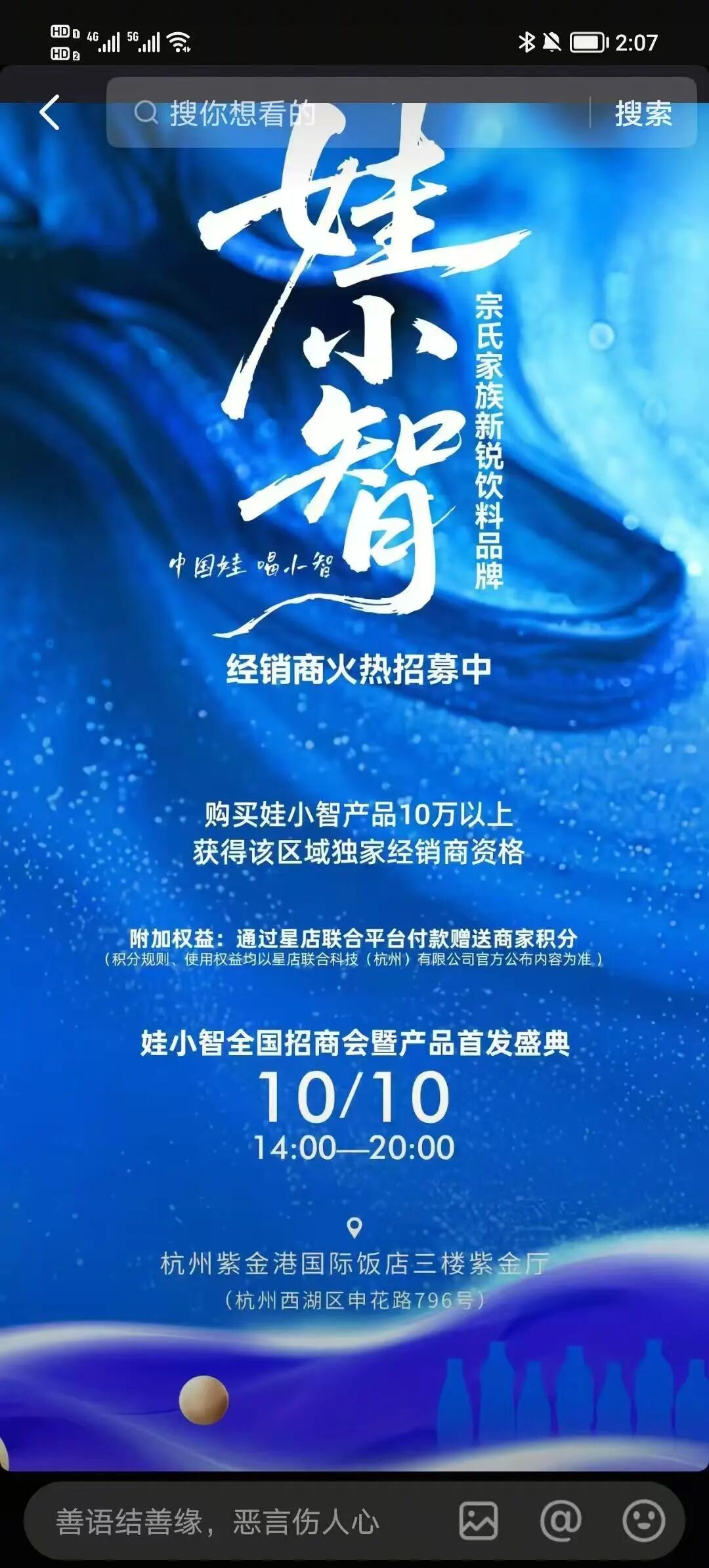
Core Viewpoint - The resignation of Zong Fuli from her positions at Wahaha and her focus on creating a new brand "Wah Xiaozong" has sparked significant attention, alongside the launch of her uncle Zong Zehou's competing brand "Wah Xiaozhi" [1][15][17]. Group 1: Brand Developments - Zong Fuli has officially resigned from her roles at Wahaha as of September 12, 2023, and is now launching her own brand "Wah Xiaozong," which has already introduced its first product, a sugar-free Oolong tea priced at 4 yuan [14][15][17]. - Zong Zehou's brand "Wah Xiaozhi" has initiated a nationwide recruitment campaign, with over 150 clients signed up, primarily in Zhejiang, Hunan, and Guizhou, and offers products at lower prices than Wahaha [1][9]. Group 2: Market Competition - The competition between "Wah Xiaozong" and "Wah Xiaozhi" is highlighted, with both brands aiming to capture market share in the beverage sector [1][5]. - The recruitment for "Wah Xiaozhi" allows agents to start with a minimum purchase of 30,000 yuan, with no deposit required, indicating a competitive entry strategy [5][9]. Group 3: Legal and Compliance Issues - The decision for Zong Fuli to create "Wah Xiaozong" stems from compliance issues regarding the use of the "Wahaha" trademark, which requires unanimous consent from all shareholders of Wahaha Group [17][19]. - Wahaha Group has been addressing historical compliance issues related to its brand usage, leading to the decision to transition to the new brand "Wah Xiaozong" starting from the 2026 sales year [19][20]. Group 4: Corporate Changes - Multiple Wahaha-related companies have undergone name changes to "Hongsheng," reflecting a shift in branding and corporate structure following the founder's passing [20]. - The establishment of Wah Xiaozhi Foods (Hangzhou) Co., Ltd. in 2025, controlled by Zong Zehou, indicates a strategic move within the family to diversify brand offerings [11].
“壹号土猪”争议标识开始替换,“壹号土”鸡是否合规?
Bei Ke Cai Jing· 2025-04-09 00:11
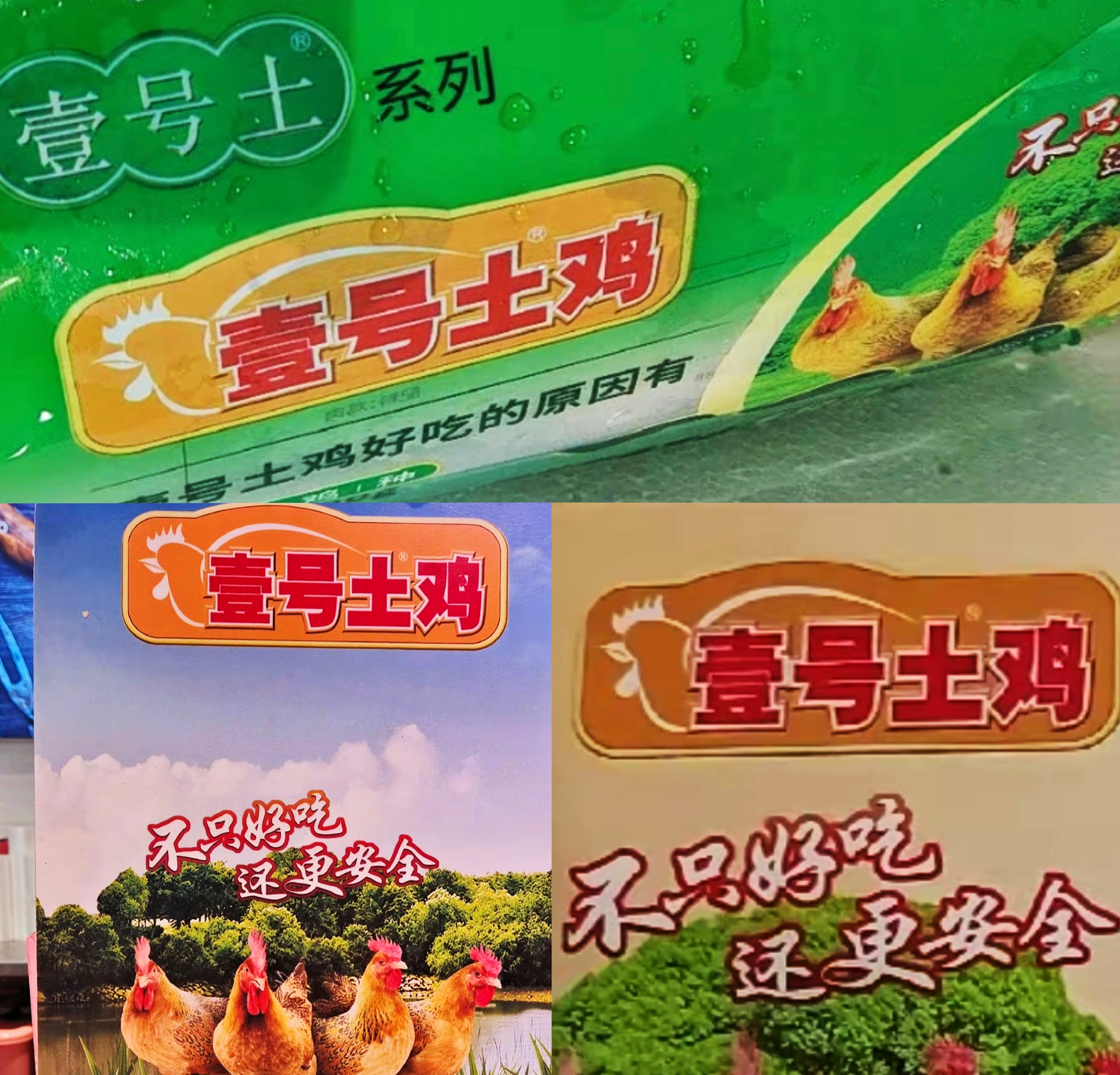
Core Viewpoint - The controversy surrounding the trademark usage of "壹号土®" by Guangdong Yihua Food Co., Ltd. has raised consumer concerns about the authenticity of the products being sold under this label, particularly regarding whether they are genuine "土猪" (local breed pigs) or just regular pork [1][3]. Group 1: Trademark Issues - The company has two trademarks: "壹号土®" and "壹号土猪®", with the latter being used for its pork products, which are derived from the local breed "两广小花猪" [1][3]. - The "壹号土鸡" label has not been registered as a trademark and was previously rejected due to potential consumer confusion regarding the product's characteristics [2][3]. - The use of "壹号土®" in conjunction with various agricultural products has been criticized for being misleading, as it does not clearly indicate that it is a trademark [2][14]. Group 2: Consumer Reactions and Company Response - Consumers have expressed confusion over the labeling, believing they are purchasing "壹号土猪" when in fact they are buying "壹号土®猪", leading to accusations of false advertising [3][6]. - In response to the backlash, the company has begun to replace product packaging and has removed misleading labels from its website [6][9]. - The company maintains that it has always sold local breed pork and that there is no intention to deceive consumers [3][6]. Group 3: Regulatory and Legal Context - The trademark registration process in China is voluntary, and while the company has successfully registered "壹号土猪®", other attempts to register similar trademarks have faced rejection due to potential consumer misinterpretation [7][8]. - The lack of a national standard defining "土鸡" complicates the regulatory landscape, as various interpretations exist regarding what constitutes a "土鸡" [17][19]. - Legal experts have noted that the current labeling practices may violate the Trademark Law, which prohibits misleading representations that could confuse consumers about product quality [15][16].