国家重大发展战略

Search documents
全文!信长星在省政协十三届四次会议上的讲话
Xin Lang Cai Jing· 2026-02-03 05:24
Core Viewpoint - The speech emphasizes the importance of uniting efforts to advance the new practice of Chinese-style modernization in Jiangsu, highlighting the achievements and future goals of the province in alignment with national strategies [1][4]. Group 1: Economic Development - Jiangsu's high-tech industry output value has increased to 52.1% of the total industrial output, reflecting a shift towards a more advanced economic structure [2]. - The province's total import and export value reached a record high of 5.95 trillion yuan, showcasing strong economic resilience amid global uncertainties [2]. - Jiangsu has implemented significant reforms, including the establishment of a trade cooperation platform with Central Asia, enhancing its role in international trade [2]. Group 2: Infrastructure and Connectivity - Key infrastructure projects such as the Yangtze River bridges and high-speed rail lines are being accelerated, enhancing Jiangsu's connectivity and regional influence [3]. - The province is deepening cooperation with major economic regions like Beijing-Tianjin-Hebei and the Guangdong-Hong Kong-Macau Greater Bay Area, promoting integrated development [3]. Group 3: Social Development and Quality of Life - Jiangsu is focused on improving the living standards of its residents, with initiatives like childcare subsidies benefiting 1.24 million families [3]. - The province has achieved a high air quality rate of 83.8% for good days, indicating significant environmental improvements [3]. - The number of national civilized cities in Jiangsu has reached 37, reflecting advancements in social governance and community well-being [4]. Group 4: Governance and Political Engagement - The speech underscores the role of the People's Political Consultative Conference (PPCC) in promoting high-quality development and addressing public concerns through effective governance [8][9]. - Emphasis is placed on enhancing the capabilities of the PPCC to better serve the community and contribute to the modernization efforts [9]. - The importance of political unity and collaboration among various parties and groups is highlighted as essential for achieving common goals [7].
中国人民政治协商会议第十六届成都市委员会提案委员会关于市政协十六届四次会议提案审查情况的报告
Xin Lang Cai Jing· 2026-01-30 17:41
Group 1 - The report highlights the active participation of the Chengdu Municipal Committee of the Chinese People's Political Consultative Conference in contributing to the modernization of Chengdu, aligning with national and local strategic goals [1] - A total of 831 proposals were received, with 492 officially registered, including 53 merged proposals, indicating a strong engagement from committee members [1] - The proposals cover various areas, including enhancing urban development, promoting technological innovation, and improving public welfare, reflecting a comprehensive approach to city governance [1][2][3][4] Group 2 - The proposals related to enhancing urban development focus on building strategic industrial chains and improving talent mobility, with 36 proposals registered in this category [2] - A significant emphasis is placed on technological and industrial innovation, with 127 proposals aimed at fostering collaboration between state-owned and private enterprises and enhancing the digital economy [2] - The report also addresses the need for deep reforms and high-level openness, with 31 proposals aimed at improving resource allocation and promoting international medical tourism [3] - Cultural innovation is highlighted with 62 proposals aimed at enhancing the city's cultural influence and developing creative industries [3] - The focus on improving public welfare is evident with 125 proposals aimed at enhancing education, employment support, and healthcare services [4] - Environmental sustainability is addressed with 22 proposals aimed at promoting green transformation and improving urban ecological systems [4] - Governance improvements are proposed through 48 initiatives aimed at enhancing urban management and community engagement [4]
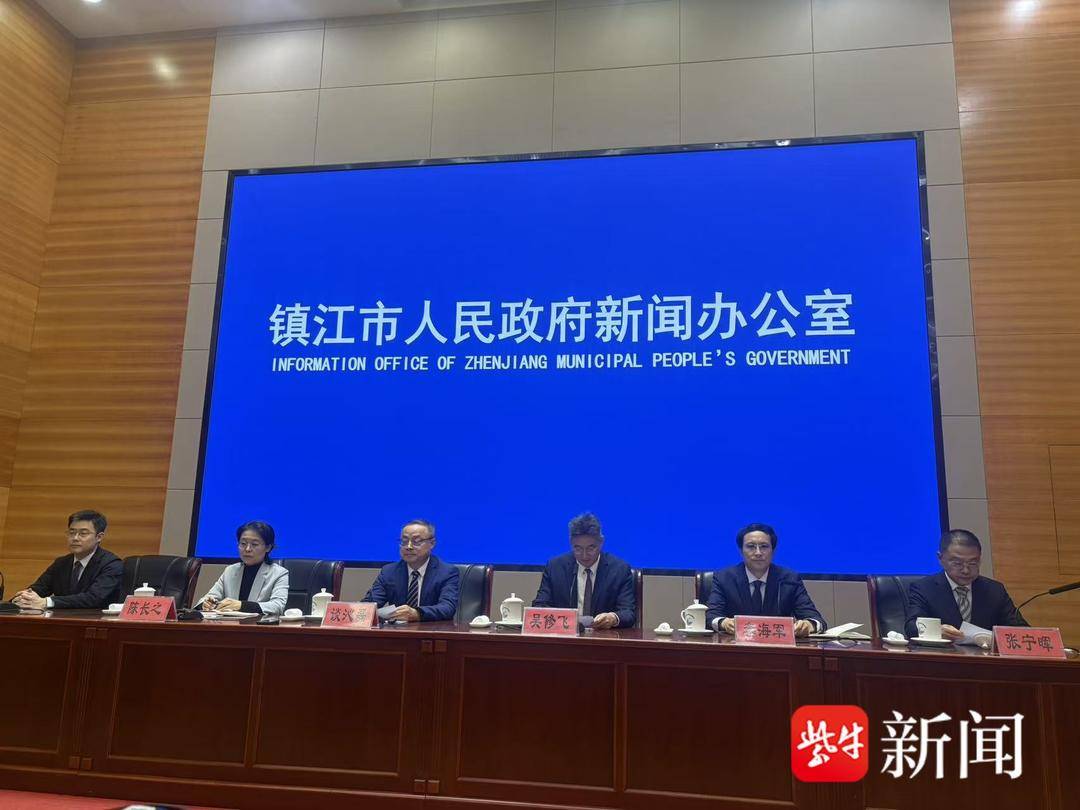
镇江:多维发力落实国家重大战略 书写高质量发展答卷
Yang Zi Wan Bao Wang· 2025-11-11 09:30
Core Viewpoint - Zhenjiang is actively integrating into national major development strategies, focusing on high-quality completion of the 14th Five-Year Plan through collaborative development, ecological protection, and open cooperation [1][3]. Group 1: Regional Coordination and Integration - Zhenjiang is advancing the integration of the Ning-Zhen-Yang area, focusing on the G312 industrial innovation corridor, enhancing transportation connectivity, and fostering industrial collaboration [4]. - The city has improved public services through shared educational and healthcare resources, achieving significant results in industrial cooperation with over 50% of new projects during the 14th Five-Year Plan period being linked to Ning-Zhen enterprises [4]. Group 2: Ecological Development - Zhenjiang has prioritized ecological civilization, achieving a PM2.5 annual average concentration of 35 micrograms per cubic meter by 2024, the best level recorded [5]. - The city has maintained a 100% rate of good water quality in surface water monitoring points for three consecutive years and has established a comprehensive ecological protection system [5]. Group 3: Transportation Infrastructure - The transportation sector in Zhenjiang is enhancing its modern comprehensive transportation system, with the port expected to handle 295 million tons of cargo by 2024, ranking among the top 20 ports in China [6][7]. - Significant improvements in road and rail networks have been made, including the completion of major highways and the development of rural transportation [7]. Group 4: Innovation and Economic Development - Zhenjiang ranks 100th globally in the 2025 Global Innovation Index, with a strong focus on cultivating specialized and innovative enterprises [8]. - The city has seen a trade volume of 42.37 billion yuan with Belt and Road countries from January to September, accounting for 51.7% of its total imports and exports [8]. Group 5: Support and Collaboration - Zhenjiang has invested 1.833 billion yuan in 353 support projects, fostering collaboration with regions like Tibet and Xinjiang, and creating significant employment opportunities [9]. - The city is leveraging its planning period to enhance regional collaboration, innovation, and public welfare, aiming to contribute more significantly to provincial development [9].

经济大省要在落实国家重大发展战略上走在前作示范挑大梁
Ren Min Ri Bao· 2025-11-11 01:56
Core Viewpoint - Economic provinces play a crucial role in implementing national development strategies and are expected to take on greater responsibilities in promoting modernization and high-quality development [1][2][3]. Group 1: Economic Provinces' Role - Economic provinces are considered the "pillar" of national economic development and are essential for stabilizing the economy [2][5]. - They are expected to lead by example and take on significant responsibilities in advancing national strategies, particularly in the context of China's modernization [1][4]. - The importance of economic provinces extends beyond their economic size to their ability to drive overall national development [2][3]. Group 2: Strategic Implementation - Economic provinces must align their strategies with national goals, ensuring that local actions contribute to broader objectives [12][13]. - The relationship between overall progress and targeted breakthroughs is emphasized, advocating for a balanced approach to development [2][3]. - Economic provinces should leverage their unique advantages to foster regional development and innovation [5][6]. Group 3: Innovation and Technology - Economic provinces are identified as key sources of technological innovation and industrial transformation, crucial for high-quality development [6][8]. - They are expected to lead in scientific research and development, facilitating the transition of technological advancements into productive capabilities [6][8]. - The integration of technology and industry is highlighted as a core driver of new productive forces [8][9]. Group 4: Open Economy and Global Integration - Economic provinces are pivotal in establishing a new development pattern that emphasizes both domestic and international circulation [7][8]. - They are positioned to enhance China's openness to the world, contributing to the establishment of a high-level open economy [7][8]. - The role of economic provinces in facilitating international trade and investment is underscored, with a focus on aligning with global standards [7][15]. Group 5: Support Systems and Major Projects - A robust support system is necessary for economic provinces to effectively implement national strategies, including policies that promote innovation and resource allocation [8][11]. - Major projects in infrastructure and technology are essential for driving regional development and achieving national strategic goals [11][12]. - Economic provinces should prioritize the implementation of significant projects that align with national interests and enhance their own development [11][12].
经济大省要在落实国家重大发展战略上走在前作示范挑大梁(深入学习贯彻习近平新时代中国特色社会主义思想)
Ren Min Ri Bao· 2025-11-10 22:41
Core Viewpoint - The articles emphasize the critical role of major economic provinces in implementing national development strategies and driving overall economic modernization in China. These provinces are seen as essential for achieving high-quality development and serving as models for other regions [1][2][3]. Group 1: Responsibilities of Major Economic Provinces - Major economic provinces are described as the "backbone" of the national economy and are crucial for stabilizing economic performance and driving overall development [2][5]. - The importance of these provinces is not only in their economic size but also in their ability to lead national development strategies and promote regional growth [2][5]. - The articles highlight the need for these provinces to adopt a holistic approach, balancing overall progress with targeted breakthroughs in specific areas [2][3]. Group 2: Role in Technological Innovation - Major economic provinces are identified as key sources of technological innovation and industrial transformation, with a concentration of high-level research institutions and talent [6][8]. - The integration of technological advancements into production processes is emphasized as a fundamental driver of economic growth and social change [6][8]. - These provinces are positioned to lead in overcoming critical technological challenges and fostering a modern industrial system through innovation [6][8]. Group 3: Support for National Development Strategies - The articles call for the establishment of a support system to facilitate major economic provinces in executing national development strategies effectively [8][9]. - Emphasis is placed on leveraging advanced technologies to drive the implementation of these strategies, with a focus on transforming scientific achievements into productive forces [8][9]. - Major projects in infrastructure, industry, and social welfare are highlighted as essential for aligning regional development with national strategic goals [11][12]. Group 4: Open Economy and International Cooperation - Major economic provinces are seen as pivotal in promoting a dual circulation development pattern, enhancing both domestic and international economic interactions [7][15]. - The articles stress the importance of these provinces in leading high-level openness and integrating into global economic systems [7][15]. - There is a call for these provinces to adopt innovative practices in trade and investment, aligning with international standards to enhance competitiveness [7][15]. Group 5: Strategic Coordination and Integration - The need for strategic coordination among various national development strategies is emphasized, with major economic provinces acting as hubs for resource allocation and integration [13][14]. - The articles advocate for collaborative efforts across different sectors and regions to maximize the impact of development initiatives [13][14]. - The importance of aligning local actions with national objectives to ensure cohesive progress is highlighted [13][14].
城市24小时 | 经济大省,再被“点名”
Mei Ri Jing Ji Xin Wen· 2025-10-28 16:31
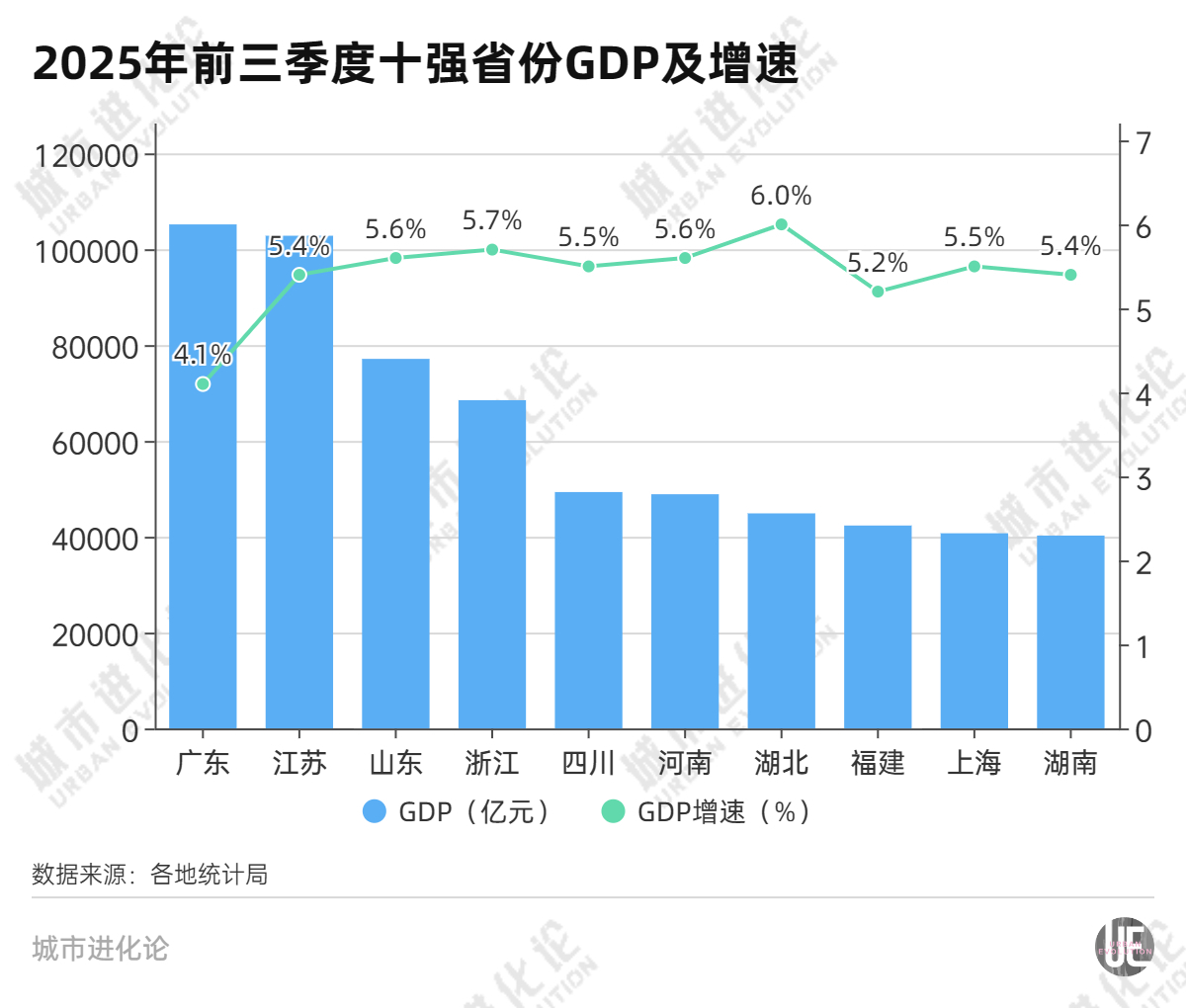
Core Insights - The Central Committee of the Communist Party of China has proposed a new five-year plan focusing on enhancing regional development coordination and promoting the modernization of various regions, including the western, northeastern, central, and eastern areas of China [1][2][4]. Group 1: Economic Provinces - Economic provinces are identified as crucial for stabilizing the national economy and driving growth, with ten provinces projected to exceed a GDP of 5 trillion yuan each in 2024, collectively accounting for 61% of the national economy [2][4]. - These provinces house over 70% of the country's large-scale industrial enterprises and high-tech companies, serving as a stabilizing force and a source of new development [4][5]. - The government emphasizes the importance of these provinces in leading economic growth and innovation, with specific focus areas including technology and industry integration, deep reforms, and high-level openness [5]. Group 2: Infrastructure Developments - Beijing's subway system is set to exceed 900 kilometers in operational length with the recent commencement of trial runs for new lines [6]. - Jiangsu province has reported a significant increase in ship exports, reaching 1,078.4 billion yuan in the first three quarters of the year, marking a 38.3% year-on-year growth [7]. Group 3: Housing and Urban Development - Guangzhou has introduced 20 construction standards aimed at improving housing quality, focusing on safety, comfort, and sustainability [8]. Group 4: Economic Rankings - The 2025 Hurun Rich List indicates that Shanghai and Shenzhen have surpassed Beijing in the number of billionaires, with significant increases in wealth attributed to sectors like new energy vehicles and biotechnology [15][17].
市委举办第六期干部学习大讲堂
Nan Jing Ri Bao· 2025-08-17 02:36
Core Viewpoint - The article emphasizes the importance of aligning local development strategies with national priorities, particularly focusing on the 2050 urban development strategy for Nanjing, to enhance its role in the national development framework [1][2]. Group 1: Strategic Planning - The city of Nanjing is tasked with conducting research on its 2050 urban development strategy, which must be aligned with national strategic goals [2]. - The focus areas for Nanjing's development include "innovation, culture, internationalization, and hub status," aiming to leverage its comparative advantages [2]. Group 2: Implementation Mechanisms - A mechanism is proposed to ensure the implementation of national strategies, which includes a framework of "national strategy—Nanjing tasks—department responsibilities—project lists" [2]. - Emphasis is placed on proactive engagement with national strategic trends to secure pilot projects and resource allocation [2]. Group 3: Leadership and Collaboration - City leaders are encouraged to enhance their capabilities in understanding broader trends, planning comprehensively, and addressing significant issues [2]. - There is a call for collaborative efforts among various departments to ensure the effective execution of national strategies in Nanjing [2].
中共南京市委十五届十一次全会举行
Nan Jing Ri Bao· 2025-06-13 01:51
Core Points - The meeting emphasized the importance of implementing Xi Jinping's important speech to enhance Nanjing's role as a provincial capital and contribute to high-quality development [1][2][3] - The meeting outlined four key focus areas for Nanjing to take the lead in economic development: promoting technology and industry innovation, advancing deep reforms and high-level openness, implementing national development strategies, and demonstrating common prosperity [3][4] Group 1 - The meeting highlighted the need for Nanjing to enhance its central city capabilities as a significant opportunity for high-quality development [2] - It was stated that the city should adopt a reform-oriented mindset to stimulate vitality and achieve tangible results [2][4] - The meeting called for a strong political commitment to uphold the Party's leadership and ensure high-quality development through effective governance [4] Group 2 - The four key focus areas include: 1. Leading in technology and industry innovation by building innovation hubs and enhancing the integration of education and technology [3] 2. Taking the initiative in deep reforms and high-level openness to boost consumption and improve the business environment [3] 3. Leading in implementing national strategies by enhancing collaboration with key economic regions [3] 4. Setting an example in promoting common prosperity through job creation and improving public services [3] Group 3 - The meeting stressed the urgency of completing annual goals and the "14th Five-Year Plan" objectives, especially as the year approaches its midpoint [5] - It emphasized the need for a strong sense of responsibility to maintain economic stability and achieve breakthroughs in high-quality development [5]
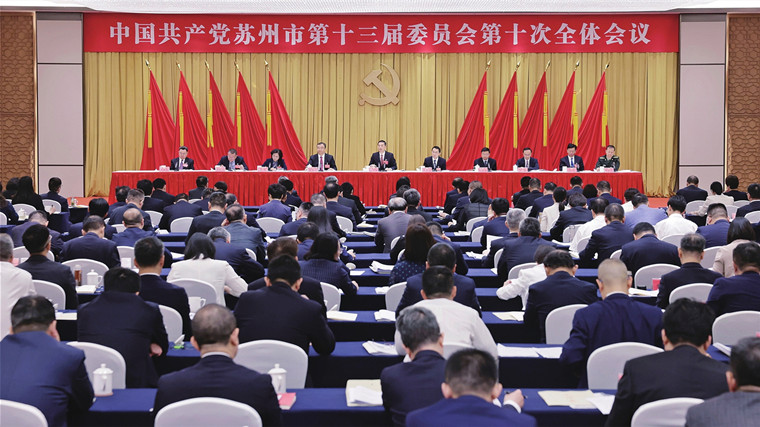
中国共产党苏州市第十三届委员会第十次全体会议决议
Su Zhou Ri Bao· 2025-05-31 00:06
Core Points - The meeting emphasized the importance of learning and implementing Xi Jinping's important speech as a major political task for the current and future periods [2] - The meeting outlined six major requirements to support the province's economic leadership and development [3] Group 1: Economic Development - The meeting highlighted the need to stabilize foreign trade and investment, boost market consumption, and accelerate project construction to ensure continuous economic recovery [3] - It called for a focus on technological and industrial innovation, implementing eight major technological innovation projects and ten actions for Suzhou manufacturing [3] Group 2: Reform and Opening Up - The meeting stressed the importance of deepening reforms and expanding high-level opening up to create a competitive advantage [3] - It emphasized the need to integrate and serve major national development strategies, enhancing internal motivation and radiative power [3] Group 3: Social Development - The meeting aimed to demonstrate the promotion of common prosperity by fostering employment and income growth, integrating urbanization with rural revitalization, and ensuring a positive cycle between economic development and public welfare [3] - It also focused on high-quality party building to lead high-quality development, emphasizing strict governance and political guidance [3] Group 4: Action Plan - The meeting called for intensified efforts to stabilize employment, businesses, and market expectations while ensuring compliance and improving livelihoods [4] - It approved a decision to deepen the learning and implementation of Xi Jinping's important speech and called for unity around the central leadership [4]
中共苏州市委十三届十次全会召开
Su Zhou Ri Bao· 2025-05-30 23:45
Core Points - The meeting emphasized the importance of implementing Xi Jinping's important speech to better serve Jiangsu's economic leadership and contribute to national and provincial development [3][4] - The meeting highlighted the need for high-quality development and the integration of various economic strategies to enhance innovation and market stability [4][5] Group 1 - The meeting was convened to discuss the implementation of Xi Jinping's important speech and its implications for Suzhou's responsibilities in supporting Jiangsu's economic leadership [3] - The meeting approved a decision to deepen the learning and implementation of Xi Jinping's speech, linking it with previous directives for Jiangsu and Suzhou [3][4] - The meeting recognized the need for a comprehensive approach to economic work, including stabilizing foreign trade and investment, boosting market consumption, and accelerating project construction [4][5] Group 2 - The meeting called for a focus on technological and industrial innovation, aiming to enhance productivity and foster new growth curves [4] - The meeting stressed the importance of deepening reforms and expanding high-level opening-up, particularly in the biopharmaceutical sector [4][5] - The meeting outlined the goal of promoting common prosperity through job creation, urbanization, and rural revitalization, while ensuring a balance between economic development and public welfare [5]