
民生事业发展

Search documents
中国人民政治协商会议第十六届成都市委员会提案委员会关于市政协十六届四次会议提案审查情况的报告
Xin Lang Cai Jing· 2026-01-30 17:41
Group 1 - The report highlights the active participation of the Chengdu Municipal Committee of the Chinese People's Political Consultative Conference in contributing to the modernization of Chengdu, aligning with national and local strategic goals [1] - A total of 831 proposals were received, with 492 officially registered, including 53 merged proposals, indicating a strong engagement from committee members [1] - The proposals cover various areas, including enhancing urban development, promoting technological innovation, and improving public welfare, reflecting a comprehensive approach to city governance [1][2][3][4] Group 2 - The proposals related to enhancing urban development focus on building strategic industrial chains and improving talent mobility, with 36 proposals registered in this category [2] - A significant emphasis is placed on technological and industrial innovation, with 127 proposals aimed at fostering collaboration between state-owned and private enterprises and enhancing the digital economy [2] - The report also addresses the need for deep reforms and high-level openness, with 31 proposals aimed at improving resource allocation and promoting international medical tourism [3] - Cultural innovation is highlighted with 62 proposals aimed at enhancing the city's cultural influence and developing creative industries [3] - The focus on improving public welfare is evident with 125 proposals aimed at enhancing education, employment support, and healthcare services [4] - Environmental sustainability is addressed with 22 proposals aimed at promoting green transformation and improving urban ecological systems [4] - Governance improvements are proposed through 48 initiatives aimed at enhancing urban management and community engagement [4]
满怀豪情赴盛会 履职尽责献良策
Hai Nan Ri Bao· 2026-01-26 01:16
Group 1 - The representatives and committee members attending the provincial two sessions in Haikou are filled with enthusiasm and a sense of responsibility, bringing high-quality proposals and suggestions to the conference [2] - The focus of the discussions includes the development of the modern service industry as a key component of Hainan's free trade port, emphasizing the need for enhanced professional services to meet the demands of incoming foreign trade enterprises [3] - A total of 682 proposals have been received by the proposal group of the Political Consultative Conference, covering various aspects such as economic, political, cultural, social, and ecological development [3] Group 2 - The representatives are particularly interested in topics such as the promotion of traditional medicine, improvements in public welfare, and the development of high-efficiency tropical agriculture [2] - There is a call for the integration of legal, tax, and accounting services to provide comprehensive support for businesses in Hainan's free trade port [3] - The emphasis on cultural development aims to leverage Hainan's unique historical and cultural elements to enhance the competitiveness of the cultural and tourism industries [3]
四川眉山:五年累计投入超千亿绘就温暖答卷 “十五五”期间接续奋斗谱写幸福新篇
Xin Lang Cai Jing· 2025-12-27 06:22
Core Viewpoint - The news highlights the significant achievements in the livelihood sector of Meishan during the "14th Five-Year Plan" and outlines the focus areas for the upcoming "15th Five-Year Plan," emphasizing a people-centered approach to development and continuous improvement of public welfare [3][4]. Group 1: Achievements during the "14th Five-Year Plan" - A total of 107.55 billion yuan was invested in livelihood projects, accounting for over 65% of the general public budget expenditure [3]. - The city created 176,300 new urban jobs, with per capita disposable income for urban and rural residents rising to 47,253 yuan and 23,240 yuan, respectively, compared to 2020 [3]. - Education resources improved significantly, with 81 new or expanded public schools and an increase of 65,800 new student places [3]. - Healthcare advancements included the establishment of the first national regional medical center in the province and an increase in life expectancy to 79.4 years [3]. Group 2: Social Services and Infrastructure Improvements - The elderly care system was enhanced with over 1,000 various elderly service facilities and a significant increase in nursing bed availability to 79% [4]. - The social security network was strengthened, maintaining a 100% pension payment rate and distributing 3.17 billion yuan in assistance to vulnerable groups [4]. - Urban and rural infrastructure saw substantial upgrades, including nearly 50,000 rural streetlight installations and the construction of 2,970 kilometers of rural roads [4]. Group 3: Future Directions for the "15th Five-Year Plan" - The focus will be on improving public services to match the vision of a "thousand-year poetry city," with an emphasis on addressing urgent public needs [5]. - Strategies will include promoting high-quality employment, enhancing educational and healthcare services, and developing a friendly environment for children and the elderly [5]. - The social security system will be further refined to ensure better protection for women, children, and disabled individuals, alongside improvements in housing security [5].

衢州“十四五”民生答卷亮眼
Xin Lang Cai Jing· 2025-12-19 17:25
Core Insights - The report highlights the achievements in social and民生事业 development in Quzhou during the "14th Five-Year Plan" period, emphasizing a focus on public welfare and community services [1][2][3] Group 1: Investment in Public Welfare - Over the past five years, public welfare spending accounted for 70% of the general public budget, with over 50 billion invested in major projects in education, healthcare, elderly care, and sports [1] - Key indicators in the民生领域 have improved significantly, with 38 indicators achieving a status of "catching up" to "leading" [1] Group 2: Education Development - Quzhou's education modernization index improved from 10th to 4th in the province, with the proportion of children in public kindergartens increasing from 30.3% to 85.04% [1] - A total of 64,000 new school places were created, and the standardization rate of urban and rural schools reached 98% [1] Group 3: Elderly Care Initiatives - The city launched innovative services for the elderly, benefiting 12 million people, and established 1,085 elderly dining and assistance service points [2] - Housing renovations were completed for 1,094 low-income families, and smart security devices were installed in 9,011 homes of elderly individuals living alone [2] Group 4: Employment and Social Security - A robust employment and social security system was established, with over 25,000 new urban jobs created annually [2] - The number of participants in pension insurance exceeded 1.89 million, and significant improvements were made in occupational injury insurance coverage [2] Group 5: Healthcare Advancements - The establishment of a provincial-level hospital and the promotion of mobile healthcare services have improved access to medical care, reducing the average distance to healthcare facilities for rural residents to 3 kilometers [2] - The city implemented free medication programs for hypertension and diabetes, leading to comprehensive health improvements [2][3] Group 6: Health Insurance Reforms - The basic health insurance coverage rate remained above 99%, with initiatives aimed at simplifying medical expense settlements and reducing costs for dental implants [3] - Various reforms have been introduced to enhance the accessibility and affordability of healthcare services for the population [3] Group 7: Sports and Community Engagement - The completion of the city sports center and the establishment of 807 sports venues have created a "10-minute fitness circle" in urban communities [3] - Hosting major sports events has contributed to increased community engagement and vitality [3]
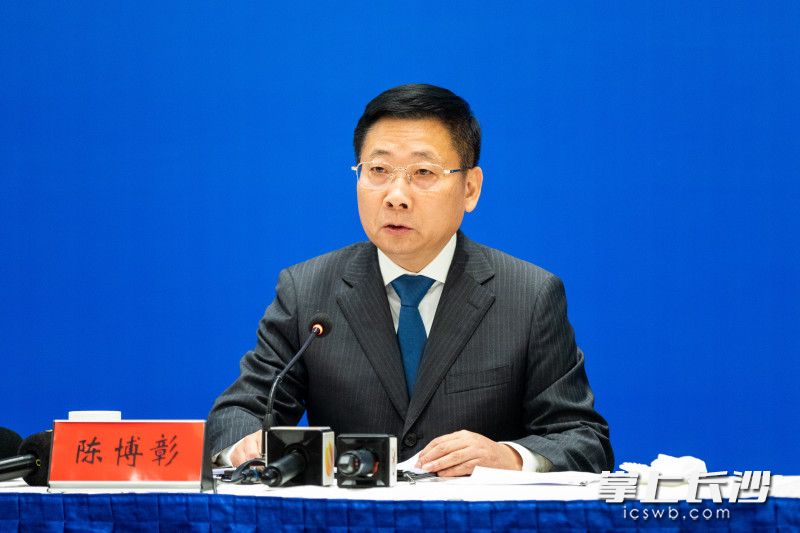
湖南“十四五”答卷系列主题新闻发布会长沙专场举行 陈博彰发布长沙有关情况并答记者问
Chang Sha Wan Bao· 2025-11-28 03:41
Group 1 - The core message of the news release is that Changsha has achieved significant progress in its economic and social development during the "14th Five-Year Plan" period, demonstrating high-quality growth and modernization efforts [3][4]. - Changsha's GDP is projected to grow at an average annual rate of 5.4% from 2021 to 2024, marking its entry into the category of mega cities [4]. - The city has cultivated seven trillion-level industrial clusters and three national-level advanced manufacturing clusters, ranking 5th among the top 100 advanced manufacturing cities in China [4]. Group 2 - The number of high-tech enterprises in Changsha is expected to exceed 8,600, with an average annual growth rate of 8% in industrial added value during the "14th Five-Year Plan" [7]. - Changsha has completed 852 key reform initiatives, promoting the "efficient handling of matters" reform experience nationwide [4]. - The city has improved its air quality, with the excellent rate rising from 84.4% at the end of the "13th Five-Year Plan" to 90.2%, and achieving a 100% excellent water quality rate for key river sections [4]. Group 3 - Changsha has positioned itself as a central city in the middle reaches of the Yangtze River and is advancing its rural revitalization demonstration city initiatives [4]. - The city has created a cultural and technological integration development pattern, enhancing its reputation as a historical cultural city and ranking among the "Global 100 Destinations" [4]. - The local government has committed over 75% of its fiscal resources to improving people's livelihoods, resulting in the creation of 782,700 urban jobs and the addition of 365,100 basic education seats [4].
社会事业向好发展民生福祉不断增进
Guo Jia Tong Ji Ju· 2025-09-30 00:50
Core Viewpoint - The Chinese government emphasizes the importance of improving people's livelihoods as a key goal of modernization, focusing on high-quality population development and enhancing public services to ensure a better quality of life for citizens [1][20]. Group 1: Population Development - The total population of China is projected to be 1.40828 billion by the end of 2024, with a labor force of 857.98 million, representing 60.9% of the total population [2]. - Urbanization continues to rise, with the urban population reaching 943.50 million and an urbanization rate of 67.00%, an increase of 3.11 percentage points since 2020 [2]. - The average life expectancy is expected to reach 79.0 years by 2024, an increase of 1.07 years since 2020, and the average education level for the labor force is 11.21 years, up by 0.46 years [2]. Group 2: Employment Stability - The total employment in urban areas is projected to be 73.439 million by the end of 2024, with urban employment accounting for 64.5% of total employment [3]. - The unemployment rate in urban areas is expected to average 5.1% in 2024, a decrease of 0.5 percentage points since 2020 [3]. Group 3: Income Growth - The per capita disposable income is expected to reach 41,314 yuan in 2024, an increase of 9,125 yuan since 2020, with an average annual real growth rate of 5.5% from 2021 to 2024 [4]. - The income gap between urban and rural residents is narrowing, with the ratio of per capita disposable income between rural and urban residents at 2.34, down by 0.22 since 2020 [5]. Group 4: Public Services - The social security system is the largest globally, with 1.07 billion people covered by basic pension insurance, and the average monthly pension for retirees increased from approximately 2,900 yuan in 2020 to 3,162 yuan in 2023 [6]. - By the end of 2024, 1.33 billion people are expected to be covered by basic medical insurance, with the per capita financial subsidy for rural residents reaching 670 yuan, a 21.8% increase since 2020 [6]. Group 5: Education and Health - The gross enrollment rate for preschool education is projected to reach 92.0% by 2024, and the total number of higher education students is expected to be 48.46 million, an increase of 6.63 million since 2020 [8]. - The number of hospital beds per 1,000 people is expected to increase from 6.46 in 2020 to 7.23 in 2023, indicating improved healthcare resources [9]. Group 6: Cultural Development - By the end of 2024, the number of registered museums is expected to reach 7,046, a 21.7% increase since 2020, reflecting the growth of public cultural services [10]. - The cultural industry is projected to achieve a revenue of 191.423 billion yuan in 2024, a 37.7% increase since 2020 [11]. Group 7: Targeted Support for Vulnerable Groups - The per capita disposable income for residents in poverty-stricken counties is expected to rise from 12,588 yuan in 2020 to 17,522 yuan in 2024, with an average annual real growth rate of 7.8% [13]. - The number of migrant workers is projected to reach 29.973 million by 2024, an increase of 1.413 million since 2020, indicating a stable trend in urban integration [14]. Group 8: Safety and Quality of Life - The crime rate in China is decreasing, with public safety perception remaining above 98% since 2020, making it one of the safest countries globally [18]. - By 2024, the average number of household appliances per 100 households is expected to increase significantly, indicating an improvement in living standards [18].