先进制造业

Search documents
中国 “十五五” 规划:高质量增长的三大支柱-China‘s 15th FYP_ Three pillars for high-quality growth
2026-03-24 01:27
Summary of China's 15th Five-Year Plan (2026-30) Industry and Company Focus - **Industry**: China's economic and social development - **Company**: The Hongkong and Shanghai Banking Corporation Limited (HSBC) Key Points and Arguments Pillar 1: Industrial Modernisation - Focus on boosting productivity through technological breakthroughs and industrial modernisation, prioritising high-tech industrialisation, digitalisation, and green transformation [3][19] - Emphasis on upgrading traditional industries and scaling up future industries like chips and humanoid robots [3][24] - Shift from maintaining a stable manufacturing share of GDP to ensuring a reasonable share, indicating a pragmatic approach to avoid premature deindustrialisation [20][21] Pillar 2: Strong Domestic Market - Domestic market to become the primary growth engine, with measures to boost household spending through job creation and income growth [4][9] - Investment policy shifts towards "effective investment," focusing on quality and efficiency, including investments in human capital and healthcare [4][45] - Creation of a unified national market to dismantle local protectionism and enhance market efficiency [48][49] Pillar 3: High-Level Opening Up - Emphasis on two-way trade and investment flows, encouraging imports of agricultural products and advanced technology [5][63] - Policies to attract foreign direct investment (FDI) and support outbound direct investment (ODI) to localise production and ease trade frictions [5][69] - Institutional opening up to align with international rules and standards, enhancing market access for foreign firms [70][71] Reform as the Glue - Reform is positioned as the essential link between the three pillars, aimed at strengthening SOE governance and enhancing the business environment for private sectors [6][78] - Focus on building a high-standard socialist market economy to boost confidence and productivity [79][80] Economic Growth Targets - The plan sets a minimum average annual GDP growth rate of approximately 4.2% from 2026 to 2030 [15] - Specific targets include urbanisation rate reaching 71% by 2030 and growth of R&D expenditure exceeding 7% [16] Domestic Consumption and Investment - Major initiatives to boost domestic consumption, with a focus on service consumption and improving the consumer environment [39][40] - Shift towards effective investment, targeting projects that enhance quality of life and consumer spending [46] Urbanisation and Integration - Urbanisation is integrated into the broader population strategy, focusing on converting migrant workers into settled urban residents [53][54] - Emphasis on improving transport connectivity and public services to facilitate integrated growth across cities [58][59] Conclusion - The 15th FYP aims for a dynamic, resilient, and globally competitive economy through industrial modernisation, a strong domestic market, and high-level opening up, supported by comprehensive reforms [75][83]
中华人民共和国国民经济和社会发展第十五个五年规划纲要|宏观经济
清华金融评论· 2026-03-14 10:09
Core Viewpoint - The 15th Five-Year Plan outlines China's strategic intentions and government priorities for the period from 2026 to 2030, aiming to achieve comprehensive modernization and establish a solid foundation for socialist modernization [4]. Group 1: Development Environment - The 14th Five-Year Plan period saw significant achievements, with GDP surpassing 140 trillion yuan, and a focus on high-quality development and technological innovation [8][9]. - The development environment is characterized by complex changes, with both opportunities and challenges arising from international relations and domestic economic conditions [10][11]. Group 2: Guiding Principles - The guiding ideology emphasizes the importance of Marxism, socialism with Chinese characteristics, and the need for high-quality development, reform, and innovation [14]. - Key principles include maintaining the Party's leadership, prioritizing people's interests, promoting high-quality development, and ensuring effective market and government collaboration [15][16]. Group 3: Main Goals - The plan aims for significant achievements in high-quality development, with GDP growth maintained within a reasonable range and an increase in the contribution of technological progress to economic growth [18]. - It targets a substantial improvement in social welfare, with urban unemployment rates below 5.5% and an increase in per capita disposable income [19]. - Environmental goals include reducing carbon emissions per unit of GDP by 17% and increasing the proportion of non-fossil energy in total energy consumption to 25% [20]. Group 4: Modernization of Industry - The focus is on building a modern industrial system that emphasizes advanced manufacturing, quality, and green development [22]. - Key industries such as steel, petrochemicals, and electronics are targeted for structural upgrades and innovation [24][25]. Group 5: Emerging and Future Industries - The plan promotes the development of strategic emerging industries, including information technology, new energy, and biotechnology, to create new economic growth points [29][30]. - Future industries such as quantum technology and brain-computer interfaces are identified as key areas for investment and development [30]. Group 6: Infrastructure Development - A modern infrastructure system is to be established, focusing on transportation, energy, and digital infrastructure to enhance connectivity and resilience [38][41]. - The transportation network will be improved with the construction of high-speed rail and modern airports, while energy infrastructure will focus on clean and renewable energy sources [39][41].


“投资者点题 代表委员作答”|增强包容性适应性 让耐心资本护航科技前行·2026全国两会特别策划
证券时报· 2026-03-12 00:18
Core Viewpoint - The article emphasizes the importance of long-term capital support for technological innovation and the need for a more inclusive and precise capital market to foster the growth of hard technology enterprises [1]. Group 1: Optimizing Institutional Supply - The capital market must adapt its systems to better serve technological innovation, with a focus on deepening reforms in the Sci-Tech Innovation Board and the Growth Enterprise Market to facilitate the growth of hard technology companies [3]. - Suggestions include broadening financing channels for high-tech and capital-intensive advanced manufacturing industries, and easing administrative approvals for refinancing in these sectors [3]. - A shift in evaluation criteria is proposed, moving from a singular focus on profitability to a multi-dimensional approach that includes R&D investment, technological barriers, team capabilities, and market prospects [3]. Group 2: Gathering Patient Capital - The need for "patient capital" that is willing to invest long-term in technology innovation is highlighted, with recommendations to enhance mechanisms for long-term funds to enter the market [5]. - It is suggested to optimize tax policies for venture capital to support original innovation and seed-stage technology enterprises, and to improve exit mechanisms to foster a healthy investment ecosystem [5]. - The article stresses the importance of aligning the investment policies of long-term funds with their long-term return goals, advocating for a more flexible investment ratio for social security and insurance funds [5]. Group 3: Streamlining the Transformation Chain - The article discusses the necessity of transforming scientific and technological achievements into productive forces, proposing that the capital market act as a bridge to strengthen collaboration among industry, academia, and research [7]. - Recommendations include revising the law on promoting the transformation of scientific and technological achievements to alleviate burdens on researchers and institutions [7]. - It is suggested to address bottlenecks in the transformation process through various measures, including the establishment of regional pilot platforms and the cultivation of "technical managers" with diverse expertise [7].
江苏省国民经济和社会发展第十五个五年规划的建议
Zhong Shang Chan Ye Yan Jiu Yuan· 2026-03-05 00:05
Investment Rating - The report does not explicitly provide an investment rating for the industry Core Insights - The "14th Five-Year Plan" period has seen significant achievements in Jiangsu's development, with GDP expected to exceed 14 trillion yuan, innovation capabilities ranking second nationally, and high-tech industries accounting for over 50% of industrial output [7][8] - The "15th Five-Year Plan" period presents both opportunities and challenges, including geopolitical tensions, economic uncertainties, and structural issues within the province [9][10] - The guiding ideology for the "15th Five-Year Plan" emphasizes high-quality development, comprehensive reform, and the importance of innovation and modernization [11][12] - Key goals for the "15th Five-Year Plan" include maintaining economic growth, enhancing technological innovation, promoting deep reforms, and ensuring common prosperity [15][16][17] Summary by Sections Economic and Social Development Goals - The main goals for the "15th Five-Year Plan" include achieving high-quality economic growth, advancing technological innovation, and promoting deep reforms [15][16] - The focus will be on enhancing the quality of life for residents, ensuring equitable income distribution, and improving public services [17] Modern Industrial System - The report emphasizes the need to build a modern industrial system with a focus on advanced manufacturing and strategic emerging industries [19][20] - Traditional industries will be revitalized through technology upgrades and green transformations [19] Technological Innovation - The report highlights the importance of fostering a robust innovation ecosystem, with a focus on key technologies and collaborative research [22][24] - There is a strong emphasis on integrating technological innovation with industrial development to enhance competitiveness [24][25] Infrastructure Development - The report outlines plans for modernizing infrastructure, including transportation networks and digital infrastructure, to support economic growth [31][32] Agricultural Modernization - The report stresses the need for agricultural modernization, focusing on sustainable practices and enhancing rural living conditions [40][41] Regional Coordination - The report discusses the importance of regional coordination and collaboration to enhance economic development and innovation across Jiangsu [45][46]
四川省国民经济和社会发展第十五个五年规划的建议
Zhong Shang Chan Ye Yan Jiu Yuan· 2026-03-05 00:05
Investment Rating - The report does not explicitly provide an investment rating for the industry Core Insights - The "14th Five-Year Plan" period has been a milestone for Sichuan's development, with significant achievements in economic growth and modernization, guided by Xi Jinping's directives [8][12] - Sichuan aims to enhance its comprehensive strength and core competitiveness, with a focus on high-quality development and the construction of a modern industrial system [9][19] - The "15th Five-Year Plan" period is seen as a critical phase for consolidating the foundation for socialist modernization and creating new competitive advantages [12][13] Summary by Sections Economic and Social Development Goals - The overall requirement for the "15th Five-Year Plan" emphasizes high-quality development, reform innovation, and meeting the people's growing needs [15][16] - Key goals include maintaining economic growth above the national average, enhancing the innovation system, and achieving significant progress in urban-rural coordination [19][20] Industrial Development - The report highlights the need to strengthen advanced manufacturing and optimize traditional industries, with a focus on green and intelligent manufacturing [22][23] - It emphasizes the cultivation of emerging industries such as biomedicine, new energy, and artificial intelligence, aiming to establish Sichuan as a hub for innovation [24][26] Infrastructure and Technological Innovation - The construction of a modern infrastructure system is prioritized, including transportation and digital networks, to support economic growth [28][29] - The report stresses the importance of enhancing original innovation capabilities and integrating technology with industry [30][31] Regional Coordination and Urbanization - The report advocates for the coordinated development of the Chengdu-Chongqing economic circle and the promotion of urbanization that prioritizes human-centered approaches [34][38] - It calls for the integration of rural and urban development, enhancing public services and infrastructure in rural areas [41] Cultural and Social Development - The promotion of cultural values and the integration of culture with tourism are highlighted as essential for enhancing the quality of life in Sichuan [47][48] - The report emphasizes the importance of improving public services and ensuring social stability and security [50]
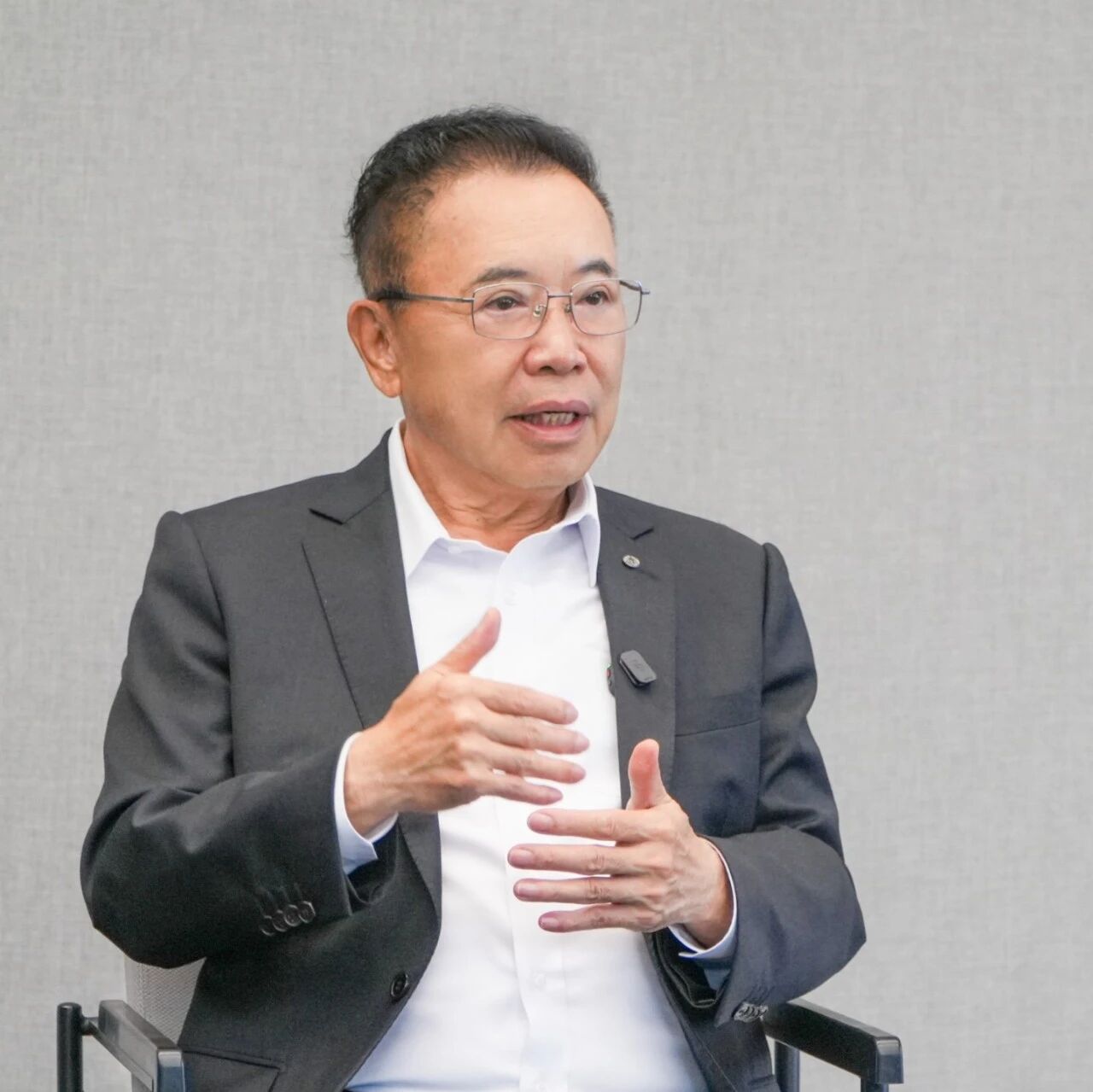
李东生:建议加强资本市场对先进制造企业的融资支持
YOUNG财经 漾财经· 2026-03-04 07:33
Core Viewpoint - The article emphasizes the need for enhanced financing support from the capital market for advanced manufacturing enterprises in China, particularly in high-tech sectors like integrated circuits [1][2]. Group 1: Current State of Manufacturing - China's manufacturing value-added accounts for nearly 30% of the global total, maintaining the largest scale in the world for several consecutive years [1]. - There are still shortcomings in certain high-tech fields, notably in integrated circuits, due to limitations in technology and insufficient capital investment [1]. Group 2: Recommendations for Improvement - To stimulate investment in the integrated circuit industry, it is crucial to enhance capital market refinancing, which is key for private enterprises to engage in advanced manufacturing and achieve sustainable development [1]. - The establishment of special financing rules and channels for high-tech, heavy asset, and long-cycle industries is recommended to better support the development of advanced manufacturing [2]. - Breakthroughs in key technology areas are essential to support the transformation and upgrading of the Chinese economy and improve the core capabilities of the technology manufacturing sector [2].

内蒙古加快建设以先进制造业为骨干的现代化产业体系
Xin Lang Cai Jing· 2026-02-27 18:26
Core Viewpoint - The Inner Mongolia Autonomous Region is focusing on high-quality development by implementing the "1571" work deployment, aiming to build a modern industrial system and enhance traditional industries while fostering emerging and future industries [1] Group 1: Promotion of "Two New" Integration Development - Strengthening the role of enterprises in technological innovation, aiming for full coverage of R&D activities in large-scale manufacturing enterprises [2] - Coordinating innovation chains with industrial chains, focusing on key areas such as rare earth materials and modern coal chemical industry [2] - Enhancing the construction of innovation platforms and increasing the cultivation of manufacturing innovation centers [2] Group 2: Improvement and Renewal of Traditional Industries - Stabilizing growth in key industries by implementing national plans to mitigate "involution" competition in sectors like crystalline silicon [3] - Promoting technological upgrades and equipment renewal in traditional industries such as chemicals and steel [3] - Advancing the deep processing of resource-based industries and increasing the share of green electricity consumption [3] Group 3: Development of Emerging and Future Industry Clusters - Restructuring advanced manufacturing industry clusters and implementing high-quality development actions for key industrial chains [4] - Fostering new materials, digital economy, and new chemical industries as trillion-level industry clusters [4] - Supporting the development of strategic emerging industry clusters such as new energy and bio-manufacturing [4] Group 4: Collaboration Among Enterprises of All Sizes - Strengthening the cultivation of leading enterprises and enhancing the role of chain master enterprises [5] - Improving the cultivation system for quality enterprises and promoting the growth of specialized and innovative small and medium-sized enterprises [5] - Enhancing the management and development of industrial parks to boost their comprehensive strength [5][6]
浙江嘉兴 低效用地再开发拓展产业发展空间
Zhong Guo Zi Ran Zi Yuan Bao· 2026-02-27 08:54
Core Insights - Jiaxing City in Zhejiang Province is leveraging its inclusion in the second batch of low-efficiency land redevelopment pilot projects by the Ministry of Natural Resources to transform land use from inefficient to efficient through measures such as "space exchange, optimization of layout, and renovation" [1] Group 1: Land Utilization and Redevelopment - By 2025, Jiaxing aims to revitalize 16,415 acres of existing construction land and complete the redevelopment of 7,053 acres of low-efficiency land, with typical cases from Xiuzhou, Pinghu, and Tongxiang included in the provincial case library [1] - The city is promoting a "space exchange" development strategy, encouraging enterprises to enhance floor area ratios and develop underground spaces, implementing "zero land" technological upgrades, and waiving land price payments for eligible industrial and warehousing land [1] - By 2025, Jiaxing plans to complete 64 projects involving 1,425 acres of floor area ratio enhancements and corresponding renovations, effectively tapping into existing space and upgrading industries [1] Group 2: Industrial Project Management - Jiaxing is adopting a "retreating the second, optimizing the second" and "retreating the low, advancing the high" approach, establishing a classified disposal and negotiation mechanism for low-efficiency industrial projects that require relocation or elimination, using a "one enterprise, one policy" strategy for land rights recovery [2] - The city emphasizes policy coordination and interest balance, clarifying compensation standards, relocation paths, and land recovery timelines, while prioritizing the integration and re-planning of recovered land for advanced manufacturing and modern service industries [2] - By 2025, Jiaxing aims to recover land use rights for 140 projects, totaling 4,195 acres, and will standardize the transformation and functional enhancement of quality assets recovered during the "two retreats, two advances" process through state-owned platforms [2] - The city plans to supply 34 plots of standard factory land, covering 2,079 acres, to facilitate the rapid establishment and intensive development of industrial projects [2]
科研生态圈|省级政府工作报告如何落子科技创新
Zhong Guo Qing Nian Bao· 2026-02-27 07:54
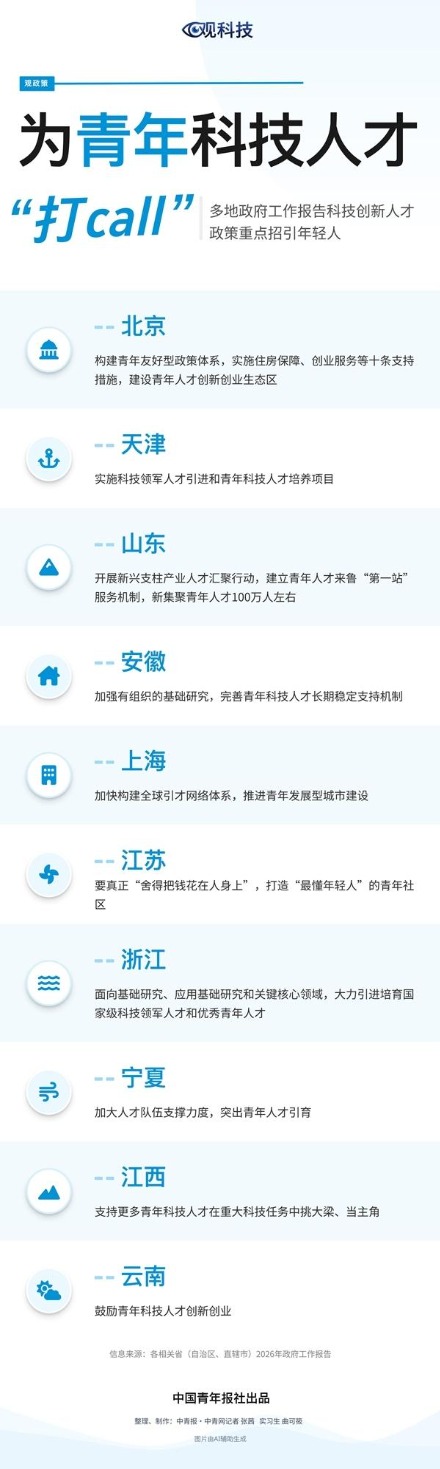
Core Insights - The majority of provincial government work reports for 2026 emphasize the importance of technological innovation as a key driver for economic development, reflecting a trend towards deeper integration of technology and industry, optimized local layouts, targeted technological breakthroughs, and refined talent support [1][3][5]. Group 1: Technological Innovation and Industry Integration - The integration of technological innovation and industrial innovation is increasingly emphasized, with reports indicating a strong focus on optimizing traditional industries and fostering new and future industries [3][5]. - Various provinces are actively promoting high-tech industries, such as artificial intelligence, integrated circuits, and advanced manufacturing, to inject new momentum into economic growth [5][9]. - The reports highlight a shift in management thinking from "project management" to "ecosystem building," indicating a comprehensive approach to innovation that includes spatial restructuring of innovation elements [7][8]. Group 2: Talent Development and Attraction - Talent is a recurring theme in the government work reports, with a particular focus on attracting and nurturing young talent, which is seen as crucial for driving innovation [10][11]. - Provinces are implementing targeted policies to enhance talent services, such as creating supportive environments for young innovators and establishing comprehensive talent support systems [10][11]. - The emphasis on investing in human capital reflects a strategic approach to align talent development with regional industrial needs, aiming to build a robust workforce for future growth [11].
烟台新春第一会系列网评观大势:三个跃升背后的战略清醒
Qi Lu Wan Bao· 2026-02-27 07:31
Group 1 - The core viewpoint of the article emphasizes the transition of Yantai from "quantitative leap" during the 14th Five-Year Plan to "qualitative transformation" in the 15th Five-Year Plan, indicating a significant shift in the city's development strategy [1][4] - Yantai aims to evolve from a traditional industrial city to a strong advanced manufacturing hub, a logistics hub facing Northeast Asia, and a center for new energy, reflecting a strategic planning based on industrial characteristics [4][5] - By 2025, Yantai's GDP is projected to grow by 6.1%, exceeding 1.1 trillion yuan, with major economic indicators showing substantial growth, which serves as a testament to the "quantitative leap" and lays the groundwork for the "qualitative transformation" [4][5] Group 2 - The three leaps outlined by the city leadership are part of a strategic path to transition from "changes in scale" to "changes in structure," with a goal of establishing a green, low-carbon, high-quality development demonstration city by the end of the 15th Five-Year Plan [5] - The urgency expressed by the leadership, emphasizing that opportunities and competition do not wait for anyone, reflects a clear awareness of the regional competitive landscape and the need for Yantai to find its precise positioning within the broader context of Shandong's development [5] - The theme for economic work in 2026 focuses on accelerating the development of new productive forces and shaping new advantages for high-quality development, responding to the need for growth that drives structural change rather than mere quantitative increases [5]