
国际科技创新中心建设

Search documents
《中国新闻》报专版刊登:惠企助企 上海奋力打开民营经济发展新天地
Xin Lang Cai Jing· 2026-02-14 12:22
Core Insights - The article emphasizes Shanghai's commitment to enhancing the development of the private economy by implementing supportive policies and addressing challenges faced by private enterprises, leading to significant growth in various economic indicators by 2025 [1][6]. Group 1: Economic Growth Indicators - By 2025, Shanghai's private enterprises are projected to achieve an import and export total of approximately 1.81 trillion yuan, reflecting a year-on-year growth of 25.8% [6]. - The number of jobs created by private enterprises is expected to reach around 2.195 million, accounting for 71.5% of the city's total [6]. - New private market entities are anticipated to number 392,000, representing 95.4% of all new entities established in the city [6]. - By the end of 2025, Shanghai is expected to have 1,026 national-level "specialized, refined, distinctive, and innovative" enterprises, with 776 being private, making up 75.6% of the total [6]. Group 2: Policy and Regulatory Framework - Shanghai has prioritized policy supply as a key strategy, continuously improving its policy framework to support the high-quality development of the private economy [10]. - The implementation of the "Shanghai Private Economy Promotion Regulations" provides legal guarantees for private enterprises to participate in market competition and access resources [10]. - The city has established a comprehensive support system covering the entire lifecycle of enterprises, including measures to stimulate technological innovation [10]. Group 3: Business Environment and Support Services - Shanghai has focused on creating a market-oriented, law-based, and international business environment, which has been recognized as a fertile ground for the growth of private enterprises [10][11]. - The city has launched the "Optimization of Business Environment Plan 9.0," introducing 26 targeted measures to enhance the business climate and reduce competitive pressures [10]. - A collaborative service ecosystem has been established, allowing for direct communication between private enterprises and government departments to address challenges effectively [13][14]. Group 4: Financial Support and Innovation - Shanghai has enhanced financial services for private enterprises, with a loan balance for private enterprises reaching 3.3 trillion yuan by the end of 2025, marking a year-on-year increase of 7.76% [15]. - The city has set up 270 financial service points and reduced loan interest rates to 2.56%, effectively lowering financing costs for enterprises [15]. - The focus on technological innovation is evident as Shanghai aims to position private enterprises as key players in the international technology innovation center [17].


上海市科委:“十五五”上海将加速基础研究转化
Di Yi Cai Jing· 2026-02-11 08:07
Group 1 - The core viewpoint emphasizes the acceleration of a collaborative research and development model where industries pose questions and technology provides answers, aiming to enhance Shanghai's role as an international technology innovation center by 2030 [1][2] - By 2030, Shanghai aims for basic research funding to account for approximately 15% of total R&D expenditure, with a focus on producing significant original achievements and strengthening foundational research and innovation capabilities [1] - The city plans to enhance its foundational research capabilities through strategic layout, support from strategic technology forces, and reforms in the research system, particularly focusing on integrated circuits, biomedicine, and artificial intelligence [1][2] Group 2 - The "Explorer Plan" will be implemented to strengthen the roles of leading technology enterprises as questioners, answerers, and evaluators, establishing a selection mechanism for basic research projects to accelerate the transition from laboratory to market [2] - Shanghai will optimize its basic research organizational model, relying on the Shangsi Research Institute to deepen the construction of basic research pilot zones and improve the selection mechanism based on topics [2] - The city aims to collaborate with Jiangsu, Zhejiang, and Anhui provinces to enhance strategic coordination, resource integration, and policy alignment, promoting the construction of an international technology innovation center [2][3] Group 3 - The focus is on promoting deep integration of technological and industrial innovation, reforming the functions of the Yangtze River Delta National Technology Innovation Center, and supporting leading enterprises in forming cross-regional innovation alliances [3]
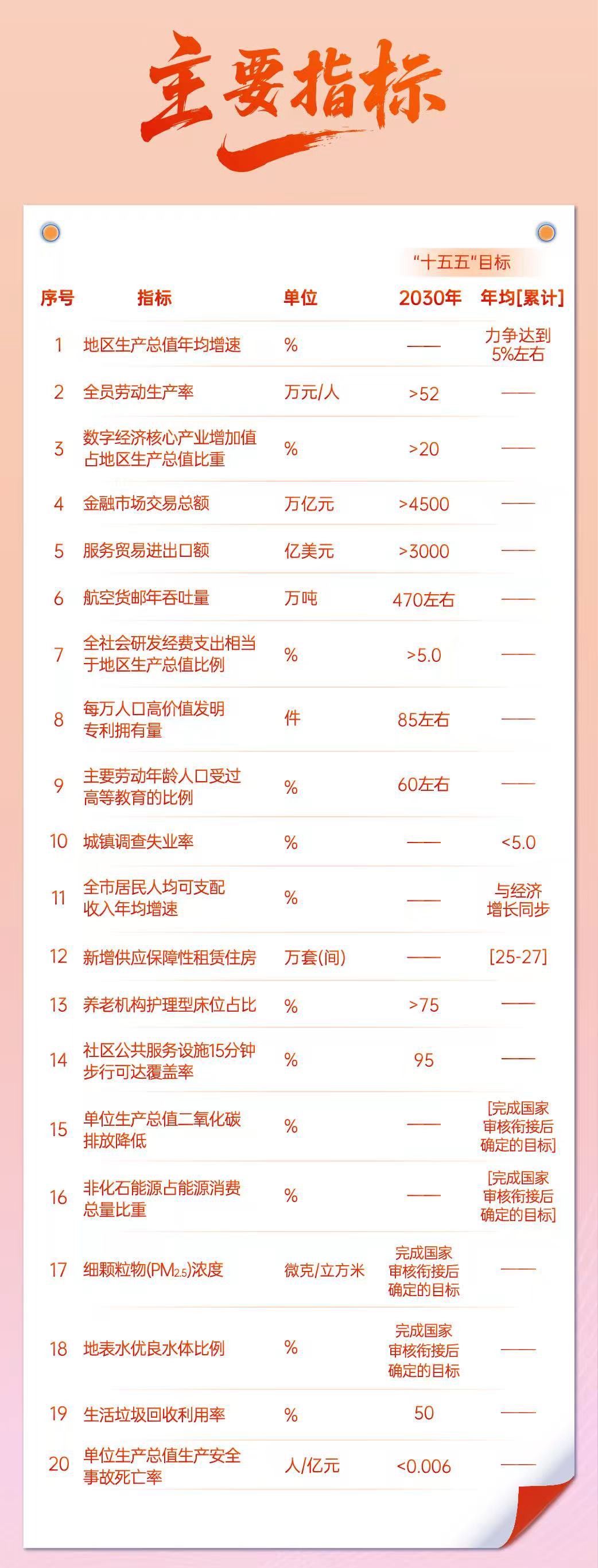
肩负使命担当 投身强国建设
Xin Lang Cai Jing· 2026-02-10 22:11
Group 1 - Xi Jinping visited the National Innovation Park in Beijing, emphasizing the importance of technological innovation and encouraging researchers and tech entrepreneurs to contribute to national modernization [2][4] - The National Innovation Park has attracted 1,000 companies, with a focus on cutting-edge fields such as quantum information, 6G communication, and smart hardware [4] - Companies like Beijing Lingzu Times Technology and Beijing Brain Science and Brain-like Research Institute expressed motivation from Xi's visit, highlighting the need for continuous innovation and tackling significant technological challenges [3][5] Group 2 - The emphasis on "self-reliance and self-improvement in technology" was a key message from Xi, inspiring organizations to focus on original innovation and breakthrough technologies [4][5] - The Beijing Quantum Information Science Research Institute aims to lead in quantum technology research, integrating it with artificial intelligence to enhance technological capabilities [8][9] - The robotics sector, represented by companies like Shurui Robotics, is committed to overcoming technical challenges and contributing to China's technological independence [9][10] Group 3 - The "14th Five-Year Plan" outlines goals for Beijing to become a global hub for scientific innovation, focusing on high-level talent and open innovation [12] - The National Blockchain Technology Innovation Center is dedicated to ensuring that China's blockchain technology remains globally competitive, addressing critical issues in the field [12] - The overall sentiment among tech companies is one of determination to fulfill Xi's vision for a technologically advanced nation, with a strong focus on practical applications and real-world problem-solving [10][11]
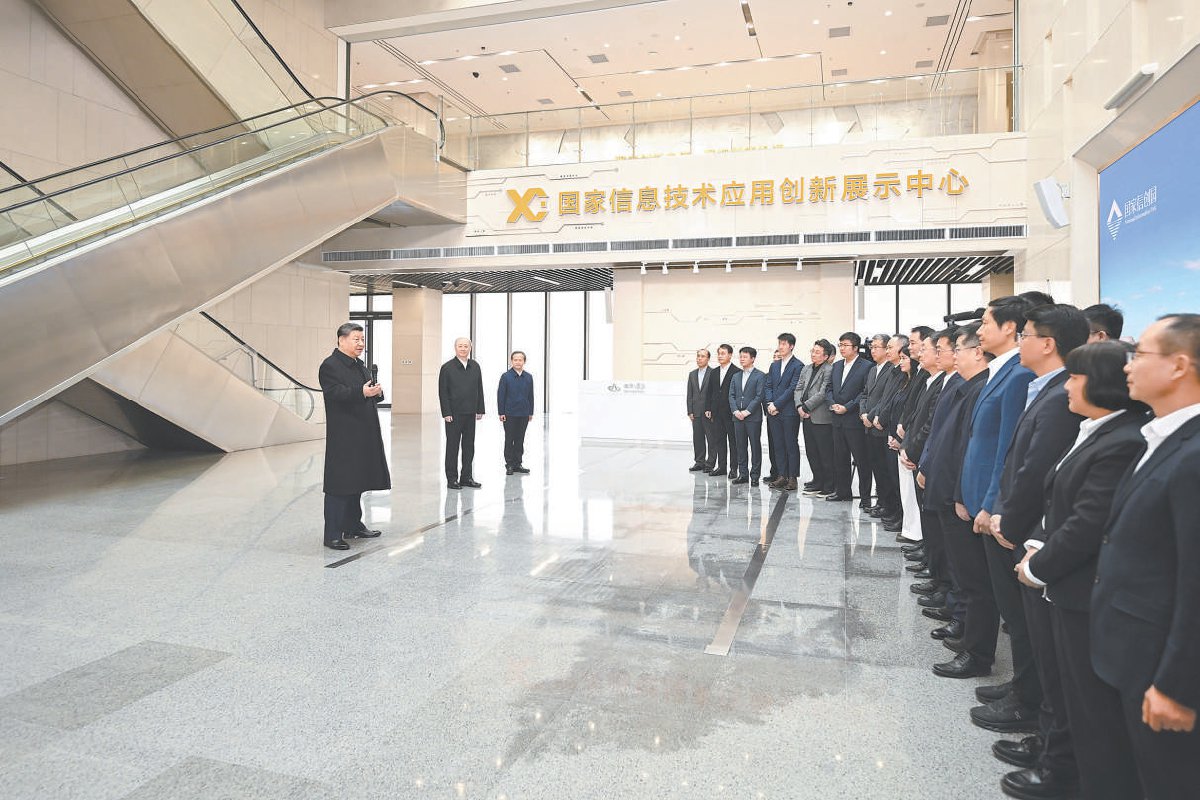
视频丨习近平在北京考察科技创新工作
Xin Lang Cai Jing· 2026-02-09 06:31
Core Viewpoint - The visit of General Secretary Xi Jinping to the National Innovation Park in Beijing highlights the emphasis on information technology application innovation and the acceleration of building an international science and technology innovation center in Beijing [1][1]. Group 1 - The event took place on the morning of the 9th, where Xi Jinping engaged with representatives from scientific research and technology enterprises [1][1]. - The visit included an observation of representative technological innovation achievements, showcasing the advancements in the sector [1][1].
财经聚焦·地方两会经济“拼”图|拼合力!2026年三大国际科技创新中心建设启新篇
Xin Hua She· 2026-02-08 16:23
Core Viewpoint - The construction of three international technology innovation centers in Beijing (Jing-Jin-Ji), Shanghai (Yangtze River Delta), and the Guangdong-Hong Kong-Macao Greater Bay Area is set to enhance collaborative innovation and release innovation momentum across these regions [1][2][4]. Group 1: Jing-Jin-Ji Region - The three regions (Beijing, Tianjin, and Hebei) are focusing on their unique roles in the international technology innovation center, with Beijing as the source of original innovation, Tianjin as a manufacturing hub, and Hebei as a space for technology transfer [2][3]. - Specific initiatives for 2026 include enhancing the development of the Xiong'an New Area and establishing a talent innovation corridor between Beijing and Xiong'an [2]. - Tianjin plans to improve its innovation service ecosystem and establish 20 joint laboratories with universities [2]. Group 2: Yangtze River Delta - The Yangtze River Delta is emphasizing cross-regional collaboration in technology and industry innovation, with Shanghai facing challenges such as limited development space and high costs [4][5]. - Shanghai's government report highlights the need for a collaborative mechanism to facilitate the flow of talent, capital, and technology across regions [4]. - Anhui province aims to align with the Shanghai international technology innovation center, focusing on sectors like new energy vehicles and artificial intelligence [5]. Group 3: Guangdong-Hong Kong-Macao Greater Bay Area - The Greater Bay Area is recognized for its high level of openness and innovation, with plans to create a globally influential industrial technology innovation center by 2026 [6][7]. - The region has established numerous key laboratories and research institutions, enhancing its collaborative innovation capabilities [6]. - Guangdong aims to leverage its manufacturing base and international resources to support technological upgrades and transformation of traditional industries [7].
拼合力!2026年三大国际科技创新中心建设启新篇
Bei Jing Ri Bao Ke Hu Duan· 2026-02-08 12:06
Group 1: Beijing-Tianjin-Hebei Region - The Beijing-Tianjin-Hebei region aims to establish an international technology innovation center, focusing on collaborative innovation and enhancing the efficiency of technology transfer [2][3] - Beijing will strengthen industrial linkages and improve the conversion efficiency of technological achievements, while Tianjin will leverage its high-end manufacturing capabilities [3] - Hebei will participate actively in the construction of the innovation center, focusing on becoming a preferred location for technology achievement trials [3] Group 2: Yangtze River Delta - The Yangtze River Delta, particularly Shanghai, faces challenges such as limited development space and high factor costs, necessitating cross-regional collaboration in technology and industry innovation [6][8] - Shanghai's government emphasizes the need for a collaborative mechanism to facilitate the flow of talent, capital, and technology across regions [6] - Anhui province plans to implement a construction scheme for the Shanghai international technology innovation center, focusing on sectors like new energy vehicles and artificial intelligence [8][9] Group 3: Guangdong-Hong Kong-Macau Greater Bay Area - The Greater Bay Area is recognized as one of the most open and economically vibrant regions in China, with a strong focus on building a globally influential industrial technology innovation center [9][10] - The region has attracted numerous key laboratories and research institutions, enhancing its innovation capabilities [10] - Guangdong province aims to leverage its manufacturing base and international resources to empower small and medium-sized enterprises through technological innovation [10][12]
财经聚焦·地方两会经济“拼”图丨拼合力!2026年三大国际科技创新中心建设启新篇
Xin Hua Wang· 2026-02-08 07:36
Group 1 - The central economic work conference in December 2025 proposed the establishment of international technology innovation centers in Beijing (Jing-Jin-Ji), Shanghai (Yangtze River Delta), and the Guangdong-Hong Kong-Macao Greater Bay Area [2] - The three regions aim to enhance collaborative innovation and policy synergy to release innovation momentum [2][3] - Beijing focuses on original innovation and technology research, while Tianjin emphasizes high-end manufacturing capabilities, and Hebei aims to be a hub for technology transfer [3] Group 2 - The 2026 government work reports from the Jing-Jin-Ji region highlight the importance of the Beijing international technology innovation center [3] - Specific initiatives include enhancing the development of the Xiong'an New Area and establishing talent corridors between Beijing and Xiong'an [3] - The region aims to break down barriers to resource flow and improve technology transfer efficiency as a key breakthrough for building the international innovation center [5] Group 3 - In the Yangtze River Delta, the focus is on strengthening cross-regional collaboration in technology and industry innovation [6] - Shanghai's government report emphasizes the need for integrated mechanisms to facilitate talent, capital, and technology flow across regions [6] - Anhui province plans to implement a scheme to co-build the Shanghai international technology innovation center, focusing on sectors like new energy vehicles and artificial intelligence [8] Group 4 - The Guangdong-Hong Kong-Macao Greater Bay Area is recognized as one of the most open and innovative regions in China [9] - The Guangdong government aims to create a globally influential industrial technology innovation center by 2026 [9][11] - The region has already gathered significant research resources, including 45 national key laboratories and 35 joint laboratories [9]
市十六届人大四次会议闭幕
Xin Lang Cai Jing· 2026-01-29 18:46
Core Points - The Beijing Municipal People's Congress successfully concluded its fourth session, passing several important regulations and resolutions related to urban development and social services [1][2] Group 1: Legislative Actions - The Congress approved the "Beijing Urban Sub-center Regulations" and the "Beijing Elderly Care Service Regulations" among other resolutions [1] - A total of 215 proposals were submitted by representatives, with 71 related to education, culture, and health, accounting for nearly 30% of the total [3] Group 2: Key Proposals - Proposals included the development or amendment of local regulations on various issues such as conflict resolution, AI industry development, and consumer rights protection [4] - Suggestions were made for the construction of an international technology innovation center, emphasizing the need for effective implementation and evaluation of related regulations [4] - Recommendations were made to enhance Beijing's status as an international consumption center, focusing on boosting market vitality and consumer capacity [4] Group 3: Social and Environmental Initiatives - Proposals included improving waste management practices through enforcement checks on existing regulations to promote waste reduction and resource recycling [5] - Suggestions aimed at increasing farmers' income through better policy implementation and support for rural industries were also highlighted [6]
市十六届人大四次会议共收到代表提出的议案215件
Xin Jing Bao· 2026-01-29 12:13
Group 1 - The Beijing Municipal People's Congress received a total of 215 proposals, with 206 submitted by more than ten representatives, focusing on various sectors including education, urban construction, and agriculture [1] - The proposals are categorized into several areas: 71 related to education and health, 48 to urban construction, 37 to finance and economy, 30 to agriculture and rural affairs, and others [1] - Key areas of focus include the establishment or amendment of local regulations, construction of an international technology innovation center, and management of household waste [2][7] Group 2 - The construction of an international technology innovation center is deemed essential for enhancing Beijing's core competitiveness and high-quality development, with a new regulation expected in 2024 to support this initiative [3] - The management of household waste is highlighted as a critical aspect of urban governance, with recommendations for enforcement checks on existing regulations to improve waste management practices [4] - Increasing farmers' income is identified as a central task for rural development, with suggestions for enhancing agricultural policies and support systems to ensure sustainable income growth [5] Group 3 - Four key proposals related to the international technology innovation center, international consumer center city, waste management, and increasing farmers' income have been included in the 2026 supervisory work plan of the Municipal People's Congress [7] - The Municipal People's Congress will review and supervise the implementation of these proposals through government reports and enforcement checks [7][8] - Specific proposals regarding the promotion of the private economy and consumer rights protection are assigned to relevant committees for further examination [8]
去年北京市检察机关受理“四大检察”案件123412件
Xin Jing Bao· 2026-01-27 07:21
Group 1 - The Beijing People's Procuratorate reported handling a total of 123,412 cases in 2025, including 75,686 criminal cases, 29,704 civil cases, 13,215 administrative cases, and 4,807 public interest litigation cases, with 116,738 cases concluded [1] - The report highlighted the prosecution of 131 cases involving crimes that endanger national security and public safety, with 532 corruption cases resulting in 619 individuals prosecuted [1] - The agency addressed 392 key legal disputes and conflicts, contributing to the stability of the political center [1] Group 2 - The Beijing People's Procuratorate processed 592 foreign-related cases, including illegal foreign exchange operations using virtual currency and copyright infringement of globally recognized software [2] - A total of 1,195 intellectual property cases were handled, along with 104 cases related to optimizing traditional industries and fostering emerging and future industries [2] - The agency emphasized the need for a global digital economy benchmark city by prosecuting 108 cases of data rights infringement [2]