
土地换和平

Search documents
中东,又变天了?
Xin Lang Cai Jing· 2026-01-11 01:45
Core Viewpoint - The Middle East is experiencing a temporary calm after two years of turmoil, but a lasting and just new order remains elusive, indicating a fragile balance of power without real conflict resolution [1][31]. Geopolitical Dynamics - The influence of major powers in the Middle East has become multipolar, with the U.S. maintaining the strongest overall influence, while the EU and China have notable economic impacts, and Russia plays a role in specific countries [3][19]. - Following the escalation of the Ukraine crisis, Russia's influence in the Middle East has waned, particularly after the fall of the Assad regime in Syria in December 2024, which diminished its strategic foothold [3][19][25]. U.S. Military Presence - The U.S. has increased its military presence in the region, with troop numbers rising from 35,000 to approximately 50,000, including two aircraft carrier battle groups and six B-2 bombers, enhancing its military cooperation with Israel [4][20]. - Despite political backlash from its support of Israel, the U.S. military influence has strengthened, leading to a more unilateral approach in regional issues [4][20]. Israel's Strategic Ambitions - Israel's military and expansionist policies have gained momentum, with a shift from managing conflicts to a strategy aimed at the complete destruction of Hamas and the disarmament of Hezbollah [6][21]. - The reversal of Israel's "land for peace" policy since 2024 has led to increased tensions and a bleak outlook for peace negotiations with Palestine [7][22]. Resistance Movements - The resistance front, including Hezbollah and Iranian-backed groups, has faced significant setbacks, particularly after the Gaza conflict, which marked a turning point in Iran's regional influence [8][24]. - Hezbollah has suffered heavy losses, with its leadership nearly decimated and 80% of its weaponry destroyed, significantly weakening its position [8][24]. Syrian Political Landscape - The fall of the Assad regime has led to a reconfiguration of alliances in Syria, with the new government seeking to establish friendly relations with countries excluding Iran, marking a significant shift in the geopolitical landscape [9][25]. - The ongoing military interventions by various powers, including the U.S., Turkey, and Israel, complicate Syria's political transition and increase the risk of renewed conflict [14][29]. Lebanon's Internal Dynamics - Lebanon is experiencing a significant political shift, with the future of Hezbollah's disarmament becoming a central issue in the power struggle among various factions [30]. - The internal political landscape is characterized by three main groups: Hezbollah, radical factions, and moderate parties, each backed by external powers, complicating the path to disarmament [30].

报道:俄罗斯停火筹码曝光—要求乌克兰“用土地换和平”
Hua Er Jie Jian Wen· 2025-08-17 05:59
Group 1 - The core viewpoint of the articles indicates that President Trump and President Putin have reached a basic agreement on providing some form of security guarantees to Ukraine during their meeting [1] - Reports suggest that Trump mentioned to Zelensky that Russia wants Ukraine to cede the Donbas region in exchange for a commitment to ceasefire from Russia [1] - The Donbas region, covering approximately 60,000 square kilometers, includes the key areas of Donetsk and Luhansk, and the U.S. appears to be leaning towards supporting Russia's demands regarding this region [1] Group 2 - The specific details of the "land for peace" proposal indicate that Russia demands Ukraine to withdraw completely from the Donetsk and Luhansk regions, where Ukraine currently controls about 6,600 square kilometers [2] - In return, Russia is prepared to return small territories in Sumy and northeastern Kharkiv, totaling approximately 440 square kilometers, and promises to freeze the front lines in the southern regions of Kherson and Zaporizhzhia [2] - This proposal poses a significant challenge for Ukraine, which has previously stated its refusal to withdraw from any Ukrainian territory, particularly in Donetsk, as it is seen as a critical defensive structure against Russian advances [2]
巴勒斯坦,会亡国吗?
虎嗅APP· 2025-08-10 08:51
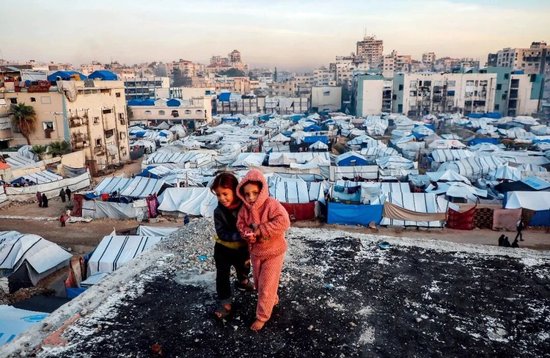
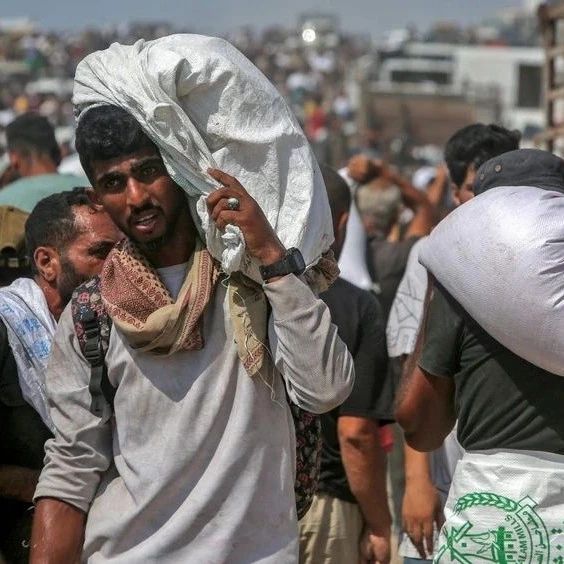
Core Viewpoint - The article discusses the escalation of the Israeli military actions in Gaza and the implications for the Palestinian territories, particularly focusing on the potential annexation of the West Bank and the humanitarian crisis in Gaza [4][20]. Group 1: Gaza Situation - Israel's security cabinet has approved a plan to take control of Gaza City, marking an escalation in military actions after nearly two years of conflict [4][5]. - The Israeli military aims to occupy Gaza City and surrounding refugee camps, which house a significant portion of Gaza's 2.1 million residents [5][6]. - The plan includes a demand for Palestinian residents to evacuate by October 7, coinciding with the anniversary of a Hamas attack on Israel, indicating a symbolic timing [5][7]. - The Israeli government expresses intentions to defeat Hamas and potentially expand military operations beyond Gaza City [7][8]. Group 2: West Bank Dynamics - The West Bank is divided into Areas A, B, and C, with varying degrees of Palestinian and Israeli control, complicating governance for Palestinians [12][15]. - The Oslo Accords aimed to establish a Palestinian state but have not resulted in a stable governance structure, leading to perceptions of betrayal among Palestinians [16][20]. - As of January 2023, there are 144 Jewish settlements in the West Bank, with ongoing expansion efforts by Israel, which Palestinians view as a threat to their statehood [17][19]. - Recent Israeli parliamentary decisions indicate a push towards annexing parts of the West Bank, further complicating the peace process [18][19]. Group 3: Implications for Palestinian Statehood - If Israel proceeds with the annexation of the West Bank, it could effectively nullify the Palestinian statehood process and escalate tensions in the region [20][21]. - The potential for violent conflict increases as the Palestinian Authority may feel cornered, leading to clashes with Israeli forces and settlers [21][22]. - International reactions are mixed, with some countries opposing Israel's military actions and annexation plans, indicating a growing pressure on Israel from the global community [22].
巴勒斯坦,会亡国吗?
Hu Xiu· 2025-08-10 03:46
Core Viewpoint - The Israeli government has escalated its military operations in Gaza, specifically targeting Gaza City and surrounding areas, amidst ongoing international pressure and internal divisions regarding the extent of military control [1][2][8]. Group 1: Military Operations in Gaza - The Israeli security cabinet has approved a plan to take control of northern Gaza City, marking an intensification of military actions after 22 months of conflict [1][2]. - The Israeli military aims to encircle Gaza City and conduct large-scale strikes to prepare for ground troop entry, while also attempting to avoid brutal urban warfare [5][6]. - A significant aspect of the operation is the demand for Palestinian residents to evacuate Gaza City by October 7, coinciding with the anniversary of a Hamas attack on Israel, which carries symbolic weight [3][4]. Group 2: Internal and External Reactions - There are internal disagreements within the Israeli government regarding the full occupation of Gaza, with military leaders expressing concerns about the risks to Israeli hostages and the strain on military resources [11][12]. - The Israeli Defense Forces Chief of Staff has warned that a complete takeover of Gaza could take one to two years, with initial intense fighting lasting up to five months [13]. - The international community, including Western nations, has expressed opposition to Israel's military escalation and potential annexation plans, with Germany halting arms exports that could be used in Gaza [46]. Group 3: West Bank Situation - The situation in the West Bank is characterized by fragmentation, with areas controlled by Palestinians being interspersed with Israeli-controlled regions, complicating governance and mobility for Palestinians [20][21][27]. - The Israeli government has recently approved a resolution supporting the annexation of the West Bank, which is seen as a move away from the two-state solution and a further encroachment on Palestinian land [37][40]. - The ongoing expansion of Israeli settlements in the West Bank, with over 144 settlements and at least 196 unauthorized ones, is viewed as a direct threat to the establishment of a viable Palestinian state [34][36]. Group 4: Implications for Palestinian Statehood - If Israel disregards the Oslo Accords and fully annexes the West Bank, it would effectively nullify the Palestinian statehood process, leading to heightened tensions and potential conflict [41][42]. - The annexation could provoke strong backlash from Arab nations and further complicate the already fragile situation for the Palestinian Authority [43]. - The ongoing military actions in Gaza and settlement expansions in the West Bank are pushing the Palestinian people closer to a potential "stateless" condition, raising concerns about their future [48][49].
