地域差异

Search documents
小寒大寒,究竟哪个更冷?
Xin Lang Cai Jing· 2026-01-03 02:48
Core Viewpoint - The article discusses the differences between the solar terms "Xiao Han" (Minor Cold) and "Da Han" (Major Cold), highlighting that despite their names, the actual temperature data often shows that Xiao Han is colder than Da Han in many regions of China [1][2]. Group 1: Temperature Comparison - Xiao Han marks the beginning of severe cold, while Da Han represents the accumulation of cold [1]. - Meteorological data indicates that during Xiao Han, average temperatures in Beijing range from -5 to -10 degrees Celsius, while Da Han is typically 1 to 2 degrees warmer [2]. - In the Yellow River basin, extreme low temperatures during Xiao Han can drop below -10 degrees Celsius [2]. Group 2: Climate Dynamics - The colder temperatures during Xiao Han are attributed to the strong cold air masses and the "lag effect" of ground heat loss [2]. - After the winter solstice, the ground continues to lose heat, leading to the lowest temperatures being recorded during Xiao Han [2]. - By Da Han, although cold air activity remains, the average temperature slightly increases due to longer daylight and increased solar radiation [2]. Group 3: Regional Variations - In northern China, the cold is characterized as "dry cold," with temperatures often dropping to -20 or -30 degrees Celsius [3]. - In southern China, the cold is described as "wet cold," with temperatures typically between 0 and 10 degrees Celsius during Xiao Han, but more frequent cold air activity during Da Han can lead to lower temperatures [3]. - The perception of cold varies regionally, with southern areas experiencing more discomfort due to humidity and precipitation during Da Han [3]. Group 4: Cultural Significance - Xiao Han symbolizes a period of hidden strength, while Da Han signifies a turning point towards the arrival of spring [3]. - Both terms reflect ancient Chinese sensitivity to seasonal changes and respect for nature [3].
小寒大寒哪个更冷?(文化中国行·二十四节气二十四问)
Ren Min Wang· 2026-01-03 01:12
Core Viewpoint - The article discusses the differences between the solar terms "Minor Cold" and "Major Cold," highlighting their climatic significance and cultural implications in Chinese tradition [2][3][4]. Group 1: Climatic Differences - Minor Cold is characterized by lower average temperatures, often ranging from -5 to -10 degrees Celsius in Beijing, while Major Cold is slightly warmer by 1 to 2 degrees Celsius [3]. - The phenomenon of "Minor Cold being colder than Major Cold" is attributed to the strong cold air and the lag effect of ground heat loss during Minor Cold, leading to extreme low temperatures [3]. - In the Yellow River region, extreme low temperatures during Minor Cold can often drop below -10 degrees Celsius, reinforcing the saying that "Minor Cold surpasses Major Cold" [3]. Group 2: Regional Variations - In northern China, the cold is described as "dry cold," with temperatures often dropping to -20 or -30 degrees Celsius, while in southern China, the cold is perceived as "wet cold," with temperatures typically between 0 and 10 degrees Celsius [4]. - Southern regions experience more frequent cold air activities during Major Cold, leading to a higher probability of temperatures dropping below 0 degrees Celsius compared to Minor Cold [4]. Group 3: Cultural Significance - Minor Cold symbolizes a period of hidden strength, while Major Cold represents a turning point towards the arrival of spring, reflecting the cyclical nature of seasons [4]. - The article emphasizes the importance of adapting to seasonal changes and maintaining warmth during the coldest times of the year, rather than merely comparing which term signifies greater coldness [4].


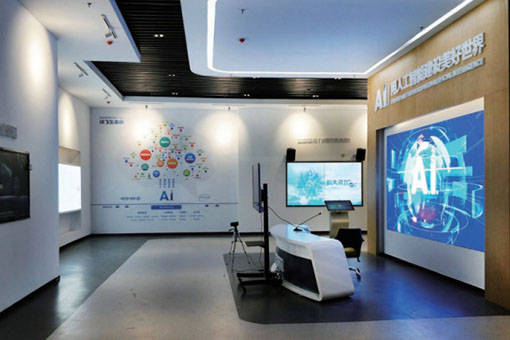
影响企业展厅设计费用的因素有哪些?
Sou Hu Cai Jing· 2025-07-23 06:43
Group 1 - The cost of exhibition hall design is influenced by multiple factors such as scale, complexity, material choices, and more [1] - The size of the exhibition hall and the original space conditions are fundamental determinants of costs, with larger areas leading to proportionally higher expenses [3] - Original space defects can increase costs due to necessary modifications, while a well-structured space can save on these expenses [3] Group 2 - The complexity and creativity of the design directly affect costs, with unique themes and intricate structures leading to higher design fees [4] - Design fees can vary significantly based on the complexity level, ranging from 5%-25% of total costs depending on the design type [5] Group 3 - The core functions and technology integration of the exhibition hall are key cost differentiators, with more complex functionalities requiring additional facilities and equipment [6] - Advanced multimedia technologies can significantly increase costs, potentially accounting for 30%-50% of total expenses [6] Group 4 - Material quality and construction techniques have a direct and significant impact on costs, with high-end materials being 5-10 times more expensive than standard options [7] - Special construction techniques can also increase labor costs significantly, potentially by 2-3 times compared to conventional methods [7] Group 5 - Regional differences and service coverage can indirectly affect costs, with first-tier cities having higher labor and material transportation costs compared to lower-tier cities [8] - Cross-regional services can incur additional travel and accommodation expenses, especially with multiple site visits [8] Group 6 - The characteristics of the exhibits and their display requirements can influence costs, with heavy exhibits necessitating special structures and equipment [9] - Complex display methods may require custom mechanical devices, further increasing expenses [9] Group 7 - The project timeline and additional services can lead to cost fluctuations, with expedited timelines resulting in higher labor and material costs [10] - Additional services such as maintenance and operational support can increase overall project costs by 10%-15% [10] Group 8 - The essence of exhibition hall design costs is the "matching cost of demand and resources," where more complex demands and greater resource investments lead to higher expenses [11] - Companies should clearly define core needs and balance creativity with budget to avoid excessive costs [11]