小寒

Search documents
今日,大寒
Xin Lang Cai Jing· 2026-01-20 12:45
Core Viewpoint - Major Cold, the last of the 24 solar terms, signifies the peak of winter cold and marks the transition to the Chinese New Year, highlighting various cultural practices associated with this period [1][2] Group 1: Seasonal Characteristics - Major Cold occurs between January 20 and 21, representing the coldest time of the year and the period with the least rainfall [1][2] - This season is characterized by frequent cold waves affecting the northern hemisphere, indicating extreme cold conditions [1][2] Group 2: Cultural Practices - Numerous folk customs are observed from Major Cold to the Chinese New Year, including eating glutinous foods, cleaning homes, and preparing for the New Year [1][2] - The Laba Festival is celebrated during this time, featuring the preparation of Laba congee, symbolizing warmth and well-being for the upcoming year [1][2]
文化中国行丨二十四节气·小寒 梅绽小寒枝头 大雁渐次北归
Yang Shi Xin Wen Ke Hu Duan· 2026-01-06 00:47
Group 1 - The article highlights that ice and snow sports have become a new trend across the country, moving beyond traditional northern activities like ice fishing and skating [2] - The period of "Minor Cold" is characterized by frequent cold air moving south, marking a time when most regions in China experience severe cold, but not to the extreme [3] - The arrival of "Minor Cold" also signals the beginning of the plum blossom season, with cultural practices such as plum viewing continuing for thousands of years, indicating a transition towards spring [4]

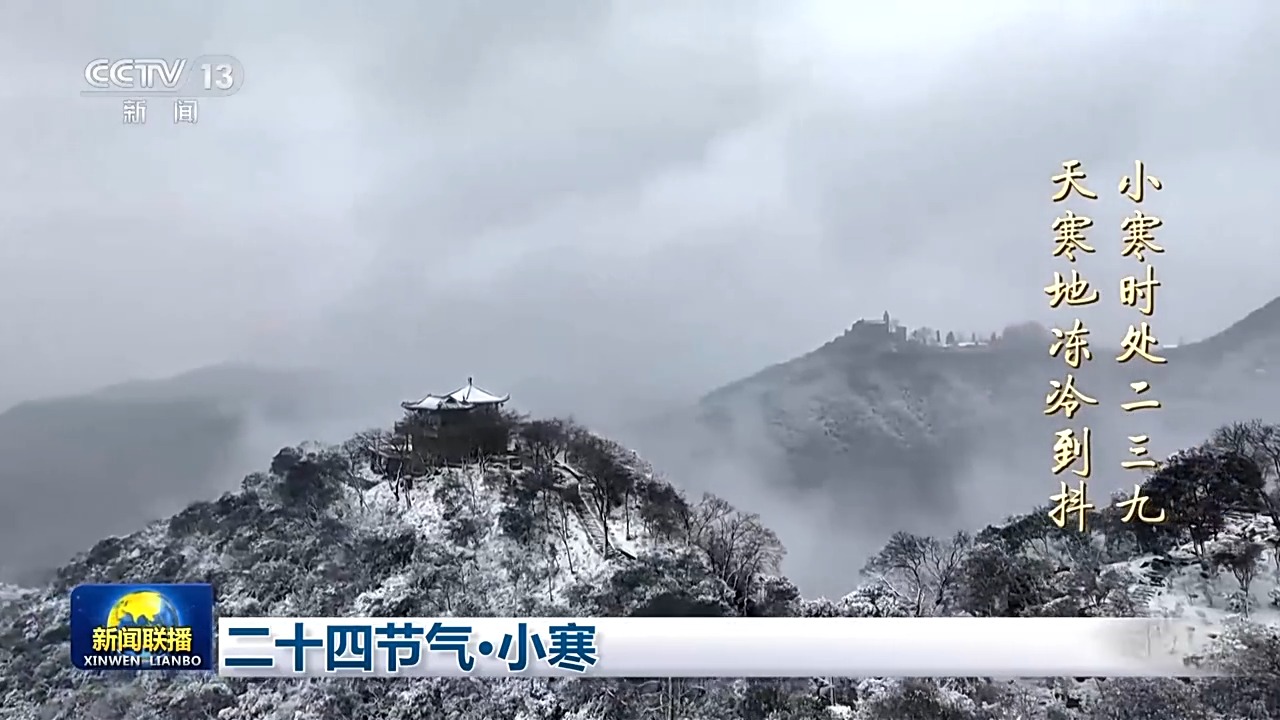
二十四节气·小寒
Yang Shi Wang· 2026-01-05 13:55
Group 1 - The article discusses the significance of the solar term "Minor Cold," which is the 23rd solar term and the 5th of winter, indicating a period of severe cold in most parts of China, although not at its peak yet [1] - Traditional winter sports such as ice spinning and ice skating are highlighted as popular activities during this season, reflecting a cultural shift towards ice and snow sports across the country [1] - The article notes the cultural practices associated with Minor Cold, such as plum blossom appreciation, which has been a tradition for thousands of years, symbolizing the arrival of spring despite the cold weather [1]
小寒时节潭柘寺古韵更显,游客可享静谧冬日
Bei Jing Shang Bao· 2026-01-05 02:54
Group 1 - The article discusses the significance of the "Minor Cold" solar term, which is the 23rd of the 24 solar terms in China, indicating that the coldest days are approaching [1] - It highlights the traditional saying "cold in the three nines," suggesting that the coldest period typically falls within the Minor Cold solar term [1] - The article suggests that visiting Tanzhe Temple during this time is ideal due to the tranquility and the serene atmosphere created by the winter season [1] Group 2 - The winter scenery at Tanzhe Temple is described as quiet, with ancient trees and buildings appearing more solemn in the cold air [1] - The article notes that although the leaves have fallen, the ancient architecture's charm becomes more pronounced, allowing visitors to experience the temple's ambiance without the usual crowds [1]
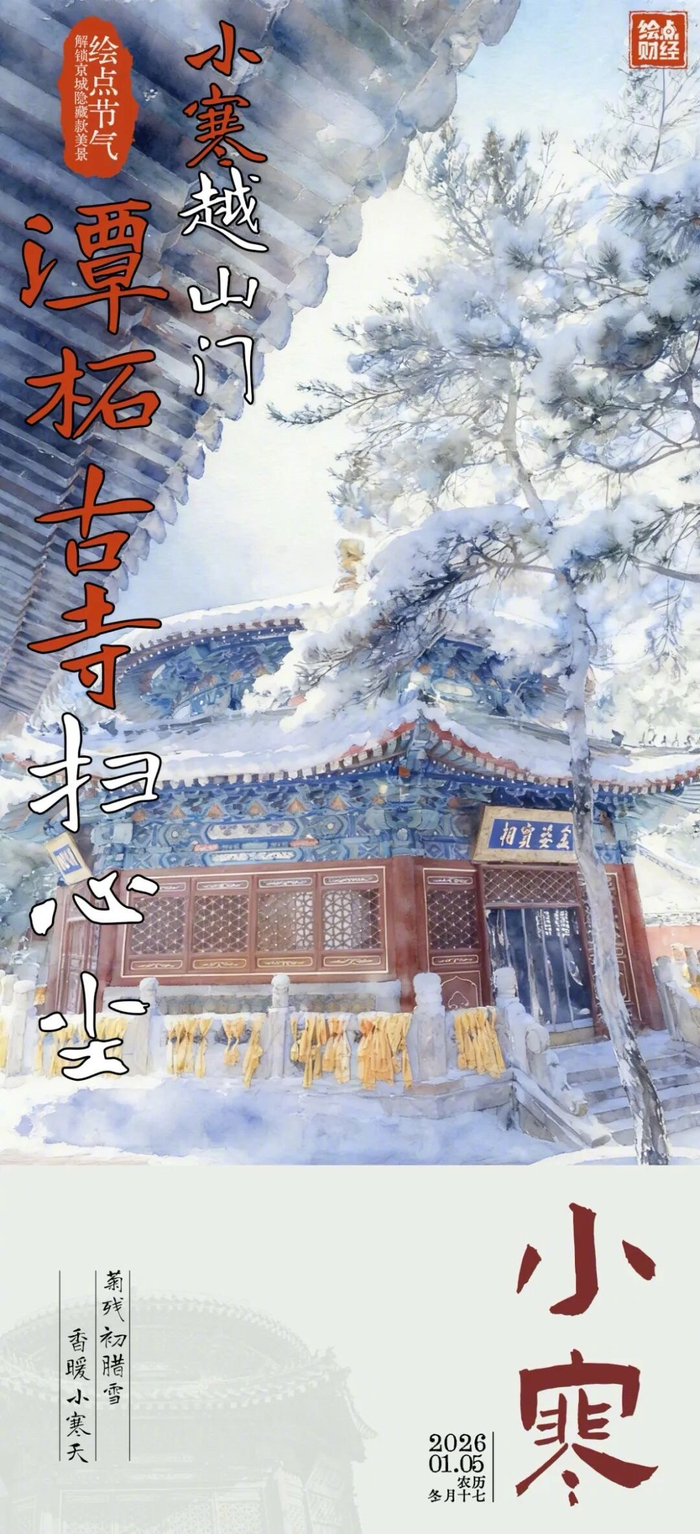
今日小寒
中国能源报· 2026-01-04 23:05
Group 1 - The article discusses the solar term "Xiaohan," which is the 23rd solar term in the 24 solar terms, indicating cold weather but not at its peak [1] - It highlights that during Xiaohan, the cold air accumulates, leading to freezing rivers and frozen soil, particularly in northern China [1] - The article mentions the saying "Xiaohan is colder than Dahan," suggesting that Xiaohan is often colder than the subsequent solar term, Dahan [1]
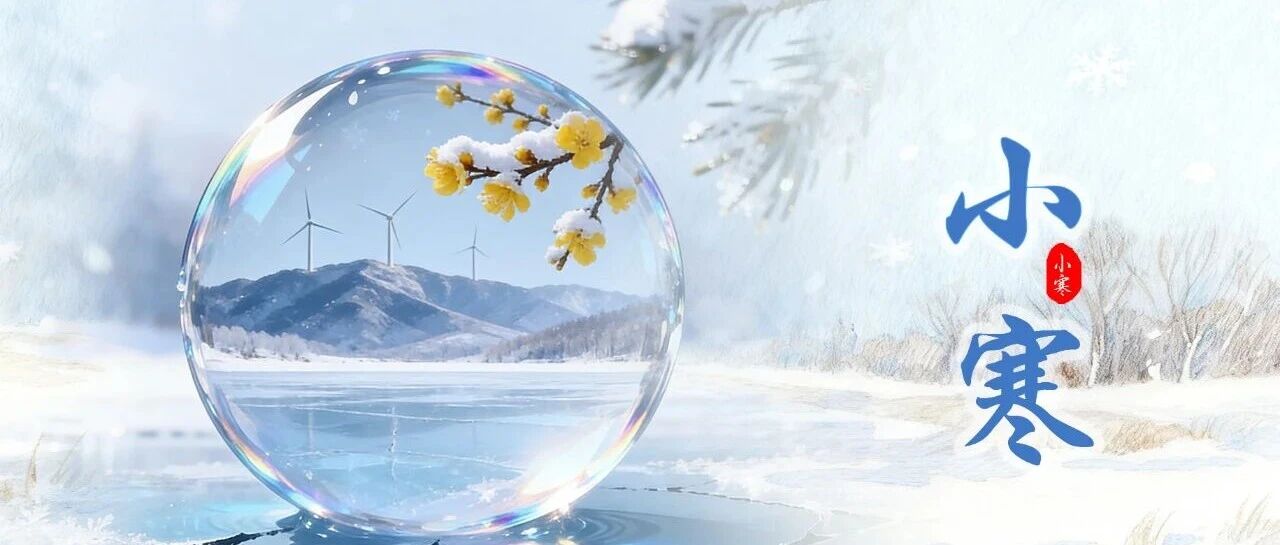
小寒时节天气冷 记得加衣保暖
Yang Shi Xin Wen· 2026-01-04 23:02
Core Viewpoint - The article discusses the arrival of the "Minor Cold" solar term, indicating a significant drop in temperatures across various regions, symbolizing a time for nature to gather strength in anticipation of renewal [1] Group 1 - The "Minor Cold" is the 23rd solar term in the 24 solar terms, marking the onset of severe cold in most areas [1] - The article highlights the current weather conditions, emphasizing the cold and the impact it has on the environment [1]
小寒大寒哪个更冷?(文化中国行·二十四节气二十四问)
Ren Min Wang· 2026-01-03 01:12
Core Viewpoint - The article discusses the differences between the solar terms "Minor Cold" and "Major Cold," highlighting their climatic significance and cultural implications in Chinese tradition [2][3][4]. Group 1: Climatic Differences - Minor Cold is characterized by lower average temperatures, often ranging from -5 to -10 degrees Celsius in Beijing, while Major Cold is slightly warmer by 1 to 2 degrees Celsius [3]. - The phenomenon of "Minor Cold being colder than Major Cold" is attributed to the strong cold air and the lag effect of ground heat loss during Minor Cold, leading to extreme low temperatures [3]. - In the Yellow River region, extreme low temperatures during Minor Cold can often drop below -10 degrees Celsius, reinforcing the saying that "Minor Cold surpasses Major Cold" [3]. Group 2: Regional Variations - In northern China, the cold is described as "dry cold," with temperatures often dropping to -20 or -30 degrees Celsius, while in southern China, the cold is perceived as "wet cold," with temperatures typically between 0 and 10 degrees Celsius [4]. - Southern regions experience more frequent cold air activities during Major Cold, leading to a higher probability of temperatures dropping below 0 degrees Celsius compared to Minor Cold [4]. Group 3: Cultural Significance - Minor Cold symbolizes a period of hidden strength, while Major Cold represents a turning point towards the arrival of spring, reflecting the cyclical nature of seasons [4]. - The article emphasizes the importance of adapting to seasonal changes and maintaining warmth during the coldest times of the year, rather than merely comparing which term signifies greater coldness [4].