
城市副中心高质量发展

Search documents
第三批市属国企将适时启动搬迁
Xin Lang Cai Jing· 2026-02-01 19:21
Group 1: Core Objectives of the "15th Five-Year Plan" - The urban sub-center of Beijing is entering a new phase of functional enhancement and comprehensive development, aiming for a leap in economic capacity, urban functions, governance efficiency, and quality of life [1] - The plan focuses on the construction of five demonstration zones and includes 31 key indicators across six areas: innovation, coordination, green development, openness, sharing, and security [1] Group 2: Transportation and Connectivity - The urban sub-center will enhance transportation infrastructure, aiming to create a well-connected "transportation skeleton" with improved rail and road networks, including the M101 and M102 lines [5][6] - The completion of the Pinggu Line is expected by the end of this year, which will facilitate better connectivity between the urban sub-center and surrounding areas [6] - The plan includes optimizing public transport systems around rail stations and enhancing multi-modal transport options to meet diverse travel needs [7] Group 3: Economic Development and Industry - The urban sub-center aims to build a modern industrial system characterized by high-quality development, focusing on advanced manufacturing sectors such as new energy vehicles, biomedicine, and integrated circuits [3][4] - The initiative includes the establishment of a blue economic belt along the Grand Canal, promoting tourism and leisure activities to enhance urban living experiences [4] - The plan emphasizes the importance of creating attractive industrial spaces and improving the overall business environment to attract and retain enterprises [4]
北京立法推动城市副中心高质量发展
Xin Hua She· 2026-01-29 13:19
Core Viewpoint - The "Beijing Urban Sub-center Regulations" were passed, granting greater autonomy for reform and innovation to address development challenges, effective from May 1, 2026 [1] Group 1: Regulatory Framework - The regulations consist of 9 chapters and 65 articles, covering general principles, management systems, planning and construction, industrial layout, green development, smart cities, public services, collaborative development, and supplementary provisions [1] - The regulations apply to the planning scope defined by the urban sub-center's detailed control planning and its expansion areas [1] Group 2: Key Development Areas - A unified land spatial planning system will be established, focusing on unique urban spatial structures, green space systems, and historical and cultural preservation [2] - The sub-center will prioritize the development of six key industries, including digital economy and modern finance, to foster future industries [2] - The smart city initiative will emphasize digital empowerment for socio-economic development, establishing a mechanism for synchronized planning and construction of digital and municipal infrastructure [2] Group 3: Collaborative Development - The regulations outline the integration of the sub-center with the main urban area, expansion zones, and surrounding regions, including the coordination with Xiong'an New Area for non-capital functions and population transfer [2] - There will be a focus on the integrated development of Tongzhou District with Tianjin and surrounding areas in Hebei Province [2] Group 4: Implementation Strategy - The implementation of the regulations is included in the annual work priorities of the urban sub-center construction leadership group, coinciding with the start of the 14th Five-Year Plan [2] - The Beijing Urban Sub-center Management Committee will develop implementation plans and supporting policies, leveraging local legislative experiences to ensure high-quality task completion [2]
北京拟立法赋予城市副中心更大的改革开放和创新发展自主权
Xin Jing Bao· 2026-01-27 03:09
Group 1 - The core viewpoint of the news is the significance of the draft regulation for Beijing's urban sub-center, which aims to serve as a model for urban development in the context of China's modernization process and to promote coordinated development in the Beijing-Tianjin-Hebei region [1][2] - The draft regulation has undergone three reviews by the Beijing Municipal People's Congress Standing Committee, with the final proposal submitted for review in November 2025 [1] - The legislation aims to summarize existing experiences and provide institutional pathways to address current challenges, marking a new phase of high-quality, rule-based development for the urban sub-center [1] Group 2 - The legislative approach accurately defines the functional positioning of the urban sub-center, balancing the relationship between the capital and the city, and solidifying relevant goals and frameworks from the overall urban planning into local regulations [2] - The regulation emphasizes reform and innovation, aligning with the central government's new requirements for high-quality development, and aims to empower the urban sub-center with greater autonomy for reform and innovation [2] - The draft regulation combines goal-oriented and problem-oriented approaches, addressing issues such as inadequate management systems and uneven public services, while also allowing for future development flexibility through effective institutional design [2]
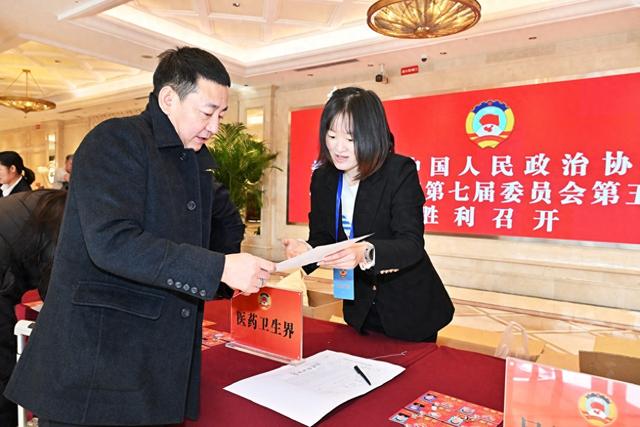
区政协委员热情饱满报到
Xin Lang Cai Jing· 2026-01-05 09:29
Group 1 - The Beijing Tongzhou District Political Consultative Conference has officially commenced, focusing on high-quality development for the urban sub-center [2] - The conference aims to transform grassroots public opinion into practical measures for economic development, livelihood security, and urban governance [2] - A total of 205 proposals have been submitted by committee members, reflecting their insights and addressing public needs [5] Group 2 - Committee member Deng Shuai proposed optimizing the management and registration system for boats on the Grand Canal to support cultural tourism development [3] - Agricultural committee member Cao Yanhong emphasized the importance of the cherry industry in rural revitalization and proposed a pilot program for a "Rural CEO" training model [4] - Legal services are being enhanced to address community needs, with a focus on providing accessible legal assistance to residents [5]

推动城市副中心高质量发展
Xin Lang Cai Jing· 2025-12-27 07:24
Group 1 - The construction of Beijing's urban sub-center is a significant national project aimed at enhancing the city's modern urban functions and quality of life [1][4] - The urban sub-center is tasked with relieving non-capital functions from the central urban area and optimizing the layout of the capital's urban functions [2][4] - The "Smart Beijing Innovation Center" is a key initiative for exploring digital economy and green development, focusing on data innovation and urban digitalization [2][4] Group 2 - The comprehensive transportation hub in the urban sub-center is crucial for implementing Beijing's overall urban planning and promoting regional collaboration [3] - The opening of the Beijing Tongzhou Station is a significant milestone, emphasizing safety and efficiency in transportation operations [3] - Continuous investment in major projects is necessary to enhance the urban sub-center's administrative, business, cultural, and technological functions [4] Group 3 - Cultural heritage preservation and the integration of historical and modern elements are essential for enhancing the cultural appeal of Tongzhou District [5] - The development of cultural facilities and community services is aimed at improving the quality of life for residents [5] - Regional collaboration with neighboring areas is vital for integrated development and improving transportation efficiency [5]