
现代化首都都市圈

Search documents
从“双城生活”到“同城体验”,看京津冀如何改写通勤日常?
Xin Lang Cai Jing· 2026-02-28 02:44
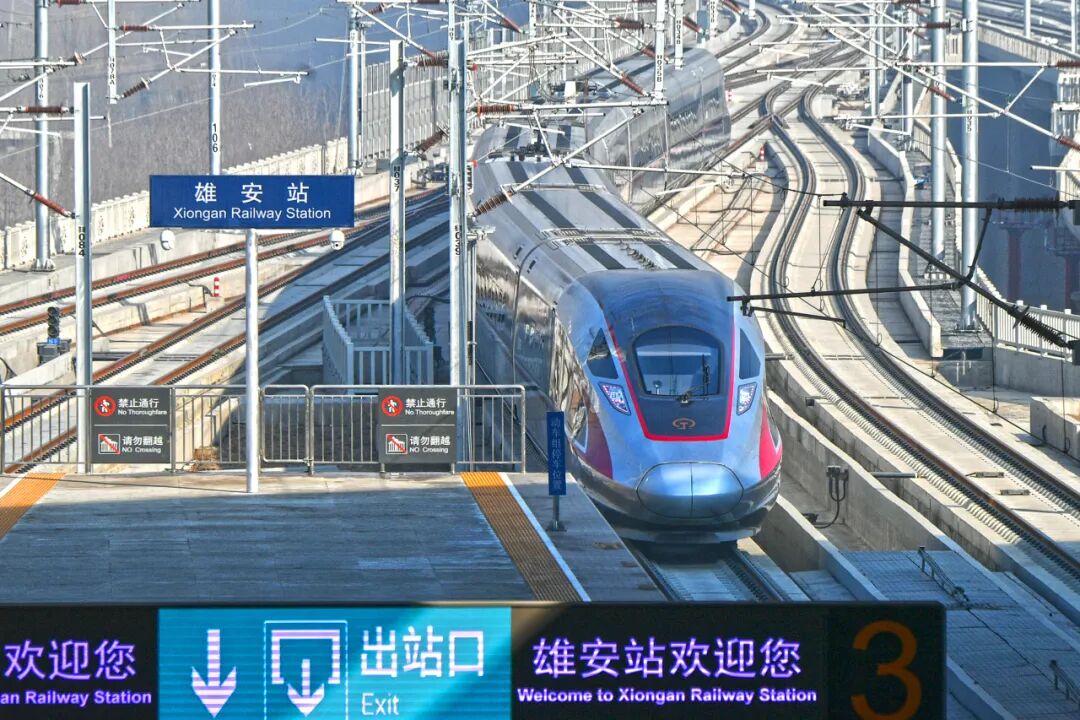
Core Insights - The integration of transportation networks in the Beijing-Tianjin-Hebei region has advanced significantly, transitioning from connectivity to rapid connectivity, with customized express buses and regular cross-province public transport operations enhancing commuter experiences [1][4] Group 1: Transportation Infrastructure Development - By the end of 2025, the operational railway mileage in the Beijing-Tianjin-Hebei region is expected to exceed 11,000 kilometers, marking a nearly 40% increase since 2014, while the total highway mileage will reach 11,000 kilometers, reflecting a 41.7% growth [2] - Major railway projects such as the Beijing-Harbin High-Speed Railway and the Beijing-Tanggu Intercity Railway have been completed, enabling travel between major cities in the region within 1.5 to 2 hours [2] Group 2: Cross-Province Commuting Solutions - The transportation department has launched 41 regular cross-province bus routes, serving 17 surrounding counties and cities, with an average daily passenger volume exceeding 230,000 [4] - Customized express buses have been introduced, with 12 main lines and over 50 branch lines, transporting an average of 9,500 commuters daily [4] Group 3: Technological Advancements - The Beijing section of the Jingxiong Expressway has become the first smart highway in the country to achieve full 5G coverage, while autonomous driving trials are being conducted on various routes [5] Group 4: Future Planning and Integration - The "Modern Capital Metropolitan Area Spatial Coordination Plan (2023-2035)" aims to integrate key sectors such as industry, transportation, ecology, and public services into a cohesive spatial framework [6] - Beijing will focus on enhancing the transportation network and optimizing customized bus services based on commuter demand, with plans to promote intercity bus operations from Tianjin to Tongzhou [6][8]

打造“高铁+特色主题园区”辐射合作模式
Xin Lang Cai Jing· 2026-02-27 19:29
Core Viewpoint - The Tianjin government has officially issued the "Opinions on Promoting the Integrated Development of Station, Industry, and City," aiming to enhance the synergy between transportation hubs, industrial development, and urban functions, creating a mutually supportive and interactive development model [1][2]. Group 1: Development Goals and Planning - The "Opinions" emphasize the need for strong planning guidance, aligning with the "Modern Capital Metropolitan Area Spatial Coordination Plan (2023-2035)," to develop a high-quality "14th Five-Year" plan for the integrated development of station, industry, and city [1]. - The plan outlines specific functional positioning for key areas, such as the Tianjin West Station area as a leading area for coordinated production and living in the Beijing-Tianjin-Hebei region, and the Tianjin South Station area as an innovative collaborative zone for new productivity [1]. Group 2: Expected Outcomes and Timeline - By the end of 2027, significant progress is expected in the integrated development of key areas, with the formation of a "high-speed rail + themed park" cooperative model, enhanced transportation connectivity, and the cultivation of new business formats [2]. - By 2030, the cooperative model is anticipated to deepen, with improved high-speed rail efficiency and a notable increase in the agglomeration effect of leading industries, further integrating into the modern capital metropolitan area [2].
北京房山区委书记阳波:多领域协同发力,全面融入现代化首都都市圈建设
Bei Jing Ri Bao Ke Hu Duan· 2026-02-27 02:03
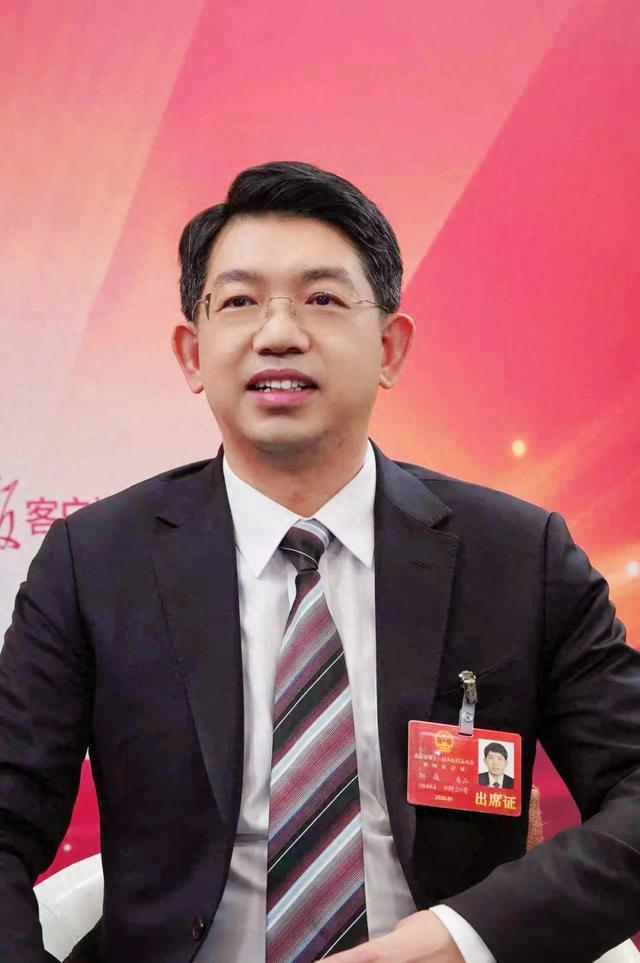
Core Viewpoint - The Beijing-Tianjin-Hebei (Jing-Jin-Ji) coordinated development has transitioned from blueprint to reality, forming a world-class urban agglomeration with strong momentum for high-quality growth. The current phase emphasizes deep integration and efficiency improvement, requiring strategic determination and systematic thinking as it enters the "14th Five-Year Plan" period [1]. Group 1: Strategic Development - The Beijing-Tianjin-Hebei coordinated development is now in a new stage of deep integration and quality enhancement, with a focus on strategic determination and systematic thinking [1]. - The "14th Five-Year Plan" marks a critical period for advancing the coordinated development strategy, with a series of interviews with local leaders discussing collaborative achievements and future plans [1]. Group 2: Technological Innovation - Fangshan District is leveraging the Liangxiang University Town as a source of technological innovation, with over 63,000 students and 89 national and provincial laboratories [8]. - The district aims to enhance collaborative development by establishing a national green energy technology transfer center and fostering partnerships with high-tech industrial zones [8][10]. Group 3: Industrial Collaboration - Fangshan is actively integrating into the Jing-Jin-Ji industrial belt, focusing on green energy and new materials, and has signed 42 cooperation agreements to enhance industrial collaboration [10]. - The district is promoting major projects in green energy and new materials, including the construction of hydrogen pipelines and the establishment of a new materials industry project admission guide [10][12]. Group 4: Transportation and Logistics - Fangshan is developing a modern transportation network to facilitate integration within the Jing-Jin-Ji region, with multiple new roads and rail lines under construction [12]. - The district has established international logistics channels, including nearly 37 international freight trains, enhancing connectivity with Europe and Asia [12][13]. Group 5: Cultural Heritage and Tourism - Fangshan is focusing on cultural heritage preservation and tourism development, aiming to create a cultural brand that highlights its historical significance [16]. - The district is working on joint tourism initiatives with neighboring regions to promote cultural and natural resource integration, enhancing the overall tourism experience [17].
展卷通武廊 读懂京津冀
Xin Lang Cai Jing· 2026-02-25 17:54
Core Viewpoint - The article highlights the progress and significance of the Beijing-Tianjin-Hebei coordinated development strategy over the past twelve years, emphasizing the emergence of the "Tongwu-Lang" area as a model for regional collaboration and innovation [1][2][3]. Group 1: Development Overview - The "Tongwu-Lang" area, covering the intersection of Beijing's Tongzhou, Tianjin's Wuqing, and Hebei's Langfang, is characterized by shared resources, synchronized development, and cultural integration, showcasing the achievements of coordinated development [3][4]. - The geographical significance of the Tongwu-Lang area is underscored by its location along the Grand Canal, facilitating connectivity and collaboration among the three regions [3]. Group 2: Strategic Planning - The "Modern Capital Urban Circle Spatial Coordination Plan (2023-2035)" aims to accelerate the construction of the Beijing-Tianjin-Hebei innovation triangle, with Tongwu-Lang positioned as a core area for innovation and development in sectors like digital economy and new energy vehicles [4][5]. - The integration of Wuqing into the modern capital urban circle's "commuting circle" provides a more precise foundation for high-quality development, supported by specific institutional arrangements outlined in various planning documents [5]. Group 3: Future Prospects - The article emphasizes the importance of the integrated development approach in Tongwu-Lang as a model for the national strategy of coordinated development in the Beijing-Tianjin-Hebei region, indicating a promising future for more cohesive growth and enhanced public sentiment [5][6].
新华财经周报:2月9日至2月15日
Xin Hua Cai Jing· 2026-02-15 09:43
Domestic News - The "Modern Capital Urban Circle Spatial Collaborative Planning (2023-2035)" has been released, marking the first urban circle plan approved by the Central Committee of the Communist Party of China and the State Council. The plan emphasizes the "four zones and one engine" positioning, aiming to construct a nested structure of commuting, functional, and industrial collaboration circles, and promotes the coordinated development of Beijing-Tianjin-Hebei region to build a world-class urban circle [1] - The Ministry of Commerce announced that the first batch of national subsidy funds amounting to 62.5 billion yuan has been allocated to local commerce departments, which will guide increased subsidy distribution during the nine-day Spring Festival holiday [3] - The People's Bank of China reported that by the end of January, the broad money supply (M2) reached 347.19 trillion yuan, reflecting a year-on-year growth of 9% [6] - The State Administration for Market Regulation has interviewed seven platform companies to eliminate various forms of "involution" competition and ensure compliance with competition laws [7] Industry Developments - The State Council has issued implementation opinions on improving the national unified electricity market system, aiming for 70% of electricity consumption to be traded in the market by 2030 [2] - The Ministry of Industry and Information Technology has proposed to enhance the planning and policy support for the low-altitude industry, aiming for a 90% coverage of ground mobile communication networks for low-altitude public air routes by 2027 [4] - The National Development and Reform Commission and other departments have released opinions to promote the high-quality development of low-altitude insurance, with a mandatory insurance system for unmanned aerial vehicles expected to be established by 2027 [4] - The Ministry of Industry and Information Technology and other departments have issued opinions to strengthen the capacity building of the information and communication industry to support low-altitude infrastructure development [5] Market Regulation - The State Administration for Market Regulation has released guidelines to regulate pricing behavior in the automotive industry, aiming to promote a healthy and orderly automotive market [8] - The National Bureau of Statistics reported that in January, the consumer price index (CPI) rose by 0.2% year-on-year, with food prices decreasing by 0.7% and non-food prices increasing by 0.4% [8] - The National Bureau of Statistics also indicated that in January, the sales prices of new residential properties in first-tier cities decreased by 0.3% month-on-month, while second-hand residential prices fell by 0.5% [9]
以规划实施为牵引推动都市圈建设不断取得新突破
Xin Lang Cai Jing· 2026-02-15 06:20
Group 1 - The meeting focused on the progress of the Beijing-Tianjin-Hebei coordinated development plan for 2025 and the key tasks for 2026, including statistical monitoring and the construction of key industrial chains [1][2] - Emphasis was placed on deepening the integration of innovation chains, industrial chains, capital chains, and talent chains to enhance regional industrial compatibility and capacity [2] - The meeting highlighted the importance of establishing a convenient and efficient comprehensive transportation system to promote integrated development of commuting circles, with a focus on improving public transport frequency and expanding new lines [2] Group 2 - The meeting underscored the need to leverage the "core" radiation effect to drive regional innovation and industrial development, aiming to create a world-class technology innovation hub and advanced manufacturing cluster [1][2] - It was noted that the construction of the Beijing-Tianjin-Hebei international technology innovation center should be used as an opportunity to strengthen industrial collaboration and optimize the flow of production factors [1] - The meeting called for a unified planning approach for population, industry, urbanization, and transportation to enhance connectivity between major transport hubs and promote the integration of transportation with economic and social development [2]
锐财经|《现代化首都都市圈空间协同规划(2023—2035年)》公布 打造世界一流都市圈
Ren Min Ri Bao Hai Wai Ban· 2026-02-14 01:58
Core Viewpoint - The "Modern Capital Urban Circle Spatial Coordination Plan (2023-2035)" marks a significant step in the coordinated development of the Beijing-Tianjin-Hebei region, aiming to establish a world-class urban circle centered around the capital by 2050 [1][2]. Group 1: Planning Objectives and Structure - By 2035, the basic structure of the modern capital urban circle will be formed, with significant achievements in the integration of Beijing, Tianjin, and Hebei [2]. - The plan emphasizes a multi-layered circle structure, including commuting circles, functional circles, and industrial collaboration circles, to promote deep integration of industrial, innovation, and service chains [3][4]. Group 2: Collaborative Development - "Collaboration" is a key theme, requiring the three regions to leverage their comparative advantages for mutual development [5]. - Beijing will focus on enhancing its "four centers" and relieving non-capital functions to support the development of Tianjin and Hebei [5][6]. Group 3: Implementation Strategies - The plan outlines specific tasks for collaboration across different dimensions, including optimizing capital functions, promoting innovation, and ensuring social welfare [8]. - The Ministry of Natural Resources will support the establishment of mechanisms for dynamic planning maintenance and cross-regional land use coordination to address spatial configuration issues [9].
打造世界一流都市圈(锐财经)
Ren Min Ri Bao Hai Wai Ban· 2026-02-13 22:42
Core Viewpoint - The "Modern Capital Urban Circle Spatial Coordination Plan (2023-2035)" has been released, marking a new phase in the coordinated development of the Beijing-Tianjin-Hebei region, aiming to establish a world-class urban circle by 2050 [4][6]. Group 1: Planning Objectives - By 2035, the basic structure of the modern capital urban circle will be formed, with significant achievements in the integration of Beijing, Tianjin, and Hebei [4]. - The plan emphasizes the optimization and enhancement of the capital's functions, positioning the urban circle as a key area for world-class city group construction and regional governance [6][8]. Group 2: Structural Framework - The plan proposes a multi-layered open structure consisting of commuting circles, functional circles, and industrial collaboration circles, promoting deep integration of industrial, innovation, and service chains [6][7]. - The commuting circle considers cross-border commuting rates and areas reachable within one hour, while the functional circle includes regions in Beijing, Tianjin, and Hebei [6][7]. Group 3: Collaborative Development - The plan highlights the importance of collaboration among Beijing, Tianjin, and Hebei, leveraging each region's comparative advantages to foster a synergistic development model [8]. - Specific tasks for collaboration include enhancing the construction of Beijing's "four centers" and promoting the development of Tianjin's advanced manufacturing sector [8][9]. Group 4: Implementation Strategies - The plan outlines key areas for future work, focusing on optimizing the capital's functions, fostering innovation, advancing reforms, and ensuring public welfare [11]. - Measures include the relocation of non-capital functions from Beijing to Xiong'an New Area and enhancing the administrative and service capabilities of the Beijing urban sub-center [12]. Group 5: Support Mechanisms - The plan calls for the establishment of a dynamic maintenance and optimization mechanism for planning, addressing issues such as industrial park layout and regional spatial coordination [13]. - It also suggests a cross-regional land use coordination mechanism to manage construction land according to the overall urban circle plan [13].
权威发布|一核两翼、双城多点、双廊多圈 世界一流都市圈这样建
Ren Min Ri Bao· 2026-02-13 05:49
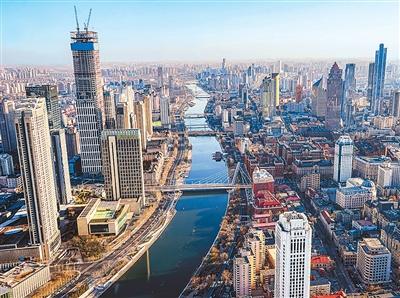
Core Viewpoint - The approval of the "Modern Capital Metropolitan Area Spatial Collaborative Planning (2023-2035)" is a significant step towards optimizing the capital's functions, enhancing regional high-quality development, and advancing Chinese-style modernization [1] Group 1: Planning Framework - The planning is the first metropolitan area plan approved by the Central Committee and the State Council, enhancing the capital planning system [2] - The metropolitan area is strategically positioned as "four zones and one engine," focusing on optimizing the capital's functions and building a world-class urban agglomeration [2][3] - The planning introduces a multi-layered, nested collaborative "concentric circle" spatial division model, which includes commuting, functional, and industrial collaboration circles [2][3] Group 2: Spatial Circles - The commuting circle covers approximately 27,000 square kilometers, including all of Beijing and 12 surrounding districts, based on current cross-border commuting rates [2] - The functional circle, which is the core area for development, spans about 42,000 square kilometers, including Beijing, Tianjin, Hebei Xiong'an New Area, and parts of surrounding cities [3] - The industrial collaboration circle extends beyond the functional circle, enhancing cooperation across the Beijing-Tianjin-Hebei region and connecting with other major urban clusters [3] Group 3: Development Goals - The planning aims to create a synergistic and interconnected development pattern among Beijing, Tianjin, and Hebei, leveraging each region's comparative advantages [4] - Beijing will focus on creating a safe and efficient governance environment, promoting cultural collaboration, and enhancing its role as an international exchange center [4] - Tianjin will be integrated into the commuting and functional circles, emphasizing the development of an innovation triangle with Xiong'an New Area and Beijing [4][5] Group 4: Innovation and Infrastructure - The planning emphasizes innovation-driven development, with a focus on establishing a collaborative innovation triangle in the core area [6] - A comprehensive transportation network will be developed to improve commuting efficiency, with daily cross-city travel expected to reach 225,000 by 2025 [6] - Environmental protection initiatives will be strengthened, particularly in the Yanshan- Taihang Mountain ecological barrier, to support the construction of a beautiful China [6] Group 5: Implementation Mechanisms - The planning includes mechanisms for dynamic maintenance and optimization, allowing for greater flexibility in land use management [7] - Future efforts will focus on optimizing capital functions, promoting innovation, and enhancing public services across the three regions [7] - The three regions aim to become a model area for Chinese-style modernization through effective planning and implementation [7]
世界一流都市圈这样建
Ren Min Ri Bao· 2026-02-13 01:40
Core Viewpoint - The approval of the "Modern Capital Metropolitan Area Spatial Collaborative Planning (2023-2035)" is a significant step towards optimizing the capital's functions and promoting high-quality regional development, marking the first metropolitan area plan approved by the central government [1] Group 1: Strategic Framework - The planning enhances the capital's planning system, establishing a strategic positioning of "four zones and one engine" for the metropolitan area, which includes key areas for optimizing capital functions and promoting world-class city cluster development [2][3] - The spatial structure proposed is "one core, two wings, multiple cities, and multiple circles," focusing on commuting, functional, and industrial collaboration circles [2][3] Group 2: Spatial Circles - The commuting circle covers approximately 27,000 square kilometers, including all of Beijing and 12 surrounding districts, based on current cross-border commuting rates and a one-hour travel radius [2] - The functional circle, which is the core area for development, spans about 42,000 square kilometers, including Beijing, Tianjin, and parts of Hebei [3] - The industrial collaboration circle extends beyond the functional circle, integrating surrounding urban clusters and enhancing cooperation with major city groups [3] Group 3: Development Goals - The plan aims to create a synergistic and interconnected development pattern among Beijing, Tianjin, and Hebei, leveraging each region's comparative advantages [4] - Beijing will focus on creating a safe and efficient governance environment, promoting cultural collaboration, and enhancing its role as an international exchange center [4][5] - Tianjin will be integrated into the commuting and functional circles, emphasizing the development of an innovation triangle with Hebei and Beijing [5] Group 4: Innovation and Infrastructure - The plan emphasizes innovation-driven development, proposing the establishment of a collaborative innovation triangle in the core area, with a focus on technology and industrial cooperation [6] - A comprehensive transportation network will be developed to improve commuting efficiency, with projected daily cross-city travel reaching 225,000 by 2025 [6] - Environmental protection initiatives will be implemented to strengthen ecological barriers and promote sustainable development [6] Group 5: Implementation Mechanisms - The plan includes mechanisms for dynamic maintenance and optimization of planning, allowing for greater flexibility in land use management [7] - Future efforts will focus on optimizing capital functions, fostering innovation, and enhancing public services across the three regions [7]