
现代金融

Search documents
《北京城市副中心条例》表决通过,看点在这里
Xin Lang Cai Jing· 2026-01-29 16:41
Group 1 - The core focus of the newly passed "Beijing Urban Sub-center Regulations" is to promote the development of six key industries: digital economy, modern finance, advanced manufacturing, business services, cultural tourism, and modern seed industry, with an aim to cultivate future industries and encourage technological innovation policies [3][4] - The digital economy sector will include the establishment of a national cybersecurity industry park, a data infrastructure pilot area, and an innovation center for smart Beijing, aimed at promoting data technology innovation and industrial development [3] - The modern finance sector will support the establishment of various financial institutions, innovative financial products, and the construction of a global wealth management center, as well as a center for green and sustainable finance [3] Group 2 - The regulations emphasize the need for a synchronized planning and construction mechanism for digital and municipal infrastructure, aiming to create a new model of smart city characterized by "one network, one brain, one platform" [4][5] - The urban sub-center is tasked with promoting the integration of data resources, fostering a data factor market, and enhancing the innovation of open scenarios, thereby advancing the development of the digital economy [5] - The regulations also highlight the importance of establishing a collaborative mechanism with the North Three Counties to build a demonstration area for coordinated development in the Beijing-Tianjin-Hebei region, focusing on infrastructure connectivity and improved commuting efficiency [6][8]

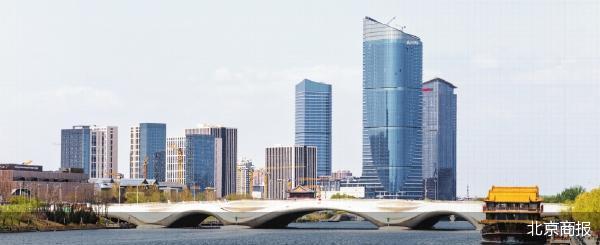
北京立法推动城市副中心高质量发展
Xin Hua She· 2026-01-29 13:19
Core Viewpoint - The "Beijing Urban Sub-center Regulations" were passed, granting greater autonomy for reform and innovation to address development challenges, effective from May 1, 2026 [1] Group 1: Regulatory Framework - The regulations consist of 9 chapters and 65 articles, covering general principles, management systems, planning and construction, industrial layout, green development, smart cities, public services, collaborative development, and supplementary provisions [1] - The regulations apply to the planning scope defined by the urban sub-center's detailed control planning and its expansion areas [1] Group 2: Key Development Areas - A unified land spatial planning system will be established, focusing on unique urban spatial structures, green space systems, and historical and cultural preservation [2] - The sub-center will prioritize the development of six key industries, including digital economy and modern finance, to foster future industries [2] - The smart city initiative will emphasize digital empowerment for socio-economic development, establishing a mechanism for synchronized planning and construction of digital and municipal infrastructure [2] Group 3: Collaborative Development - The regulations outline the integration of the sub-center with the main urban area, expansion zones, and surrounding regions, including the coordination with Xiong'an New Area for non-capital functions and population transfer [2] - There will be a focus on the integrated development of Tongzhou District with Tianjin and surrounding areas in Hebei Province [2] Group 4: Implementation Strategy - The implementation of the regulations is included in the annual work priorities of the urban sub-center construction leadership group, coinciding with the start of the 14th Five-Year Plan [2] - The Beijing Urban Sub-center Management Committee will develop implementation plans and supporting policies, leveraging local legislative experiences to ensure high-quality task completion [2]
城市副中心将培育壮大未来产业
Xin Lang Cai Jing· 2026-01-27 16:55
Core Viewpoint - The draft regulation for the Beijing Urban Sub-center emphasizes the optimization of industrial layout, focusing on the development of six key industries: digital economy, modern finance, advanced manufacturing, business services, cultural tourism, and modern seed industry, to foster future industries [3][4] Group 1: Industrial Layout Optimization - The regulation specifies that the urban sub-center should prioritize administrative offices, business services, cultural tourism, and technological innovation as leading functions [3] - It aims to cultivate new productive forces and establish a high-precision industrial structure [3] - The six key industries identified for development include digital economy, modern finance, advanced manufacturing, business services, cultural tourism, and modern seed industry [3][4] Group 2: Urban Planning and Construction - The draft outlines that the urban sub-center must align with Beijing's overall urban planning and detailed control planning as the basis for land use planning and management [3] - It proposes a spatial structure of "one belt, one axis, multiple clusters" and a green space system of "one belt, one axis, two rings, one center" [3] - The regulation emphasizes the establishment of a unified and coordinated land space planning system to support innovative planning management [3] Group 3: Green Development - The urban sub-center is tasked with integrating green production, living, and ecology, focusing on key areas such as industry, construction, and transportation [4] - It aims to strengthen support in energy, ecology, and culture, with the goal of high-level construction of a national green development demonstration zone [4] Group 4: Public Service System - The regulation highlights the need for organic integration of public service groups and community planning, adjusting administrative boundaries as necessary [4] - It aims to enhance the quality and balance of public services in education, healthcare, childcare, elderly care, housing, and culture [4] - The regulation supports the establishment of service functions tailored to local needs to meet residents' work and life demands [4] Group 5: Collaborative Development - The draft emphasizes the integration of planning areas and expansion zones to achieve unified urban planning, resource allocation, infrastructure, industry, public services, and social governance [4] - It outlines collaboration with surrounding regions, including the construction of a coordinated development demonstration area in the Beijing-Tianjin-Hebei region [4] - The regulation also mentions the need for a work coordination mechanism with Xiong'an New Area to jointly enhance the capital's functional optimization [4]
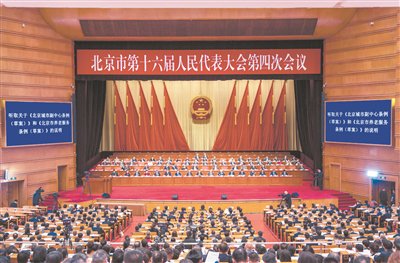
一江一河 织出惬意生活图景
Xin Lang Cai Jing· 2026-01-10 09:09
Core Viewpoint - The development of the Huangpu River and Suzhou River waterfront areas during the 14th Five-Year Plan period has significantly enhanced public spaces, transportation accessibility, and cultural activities, making these areas popular destinations for residents and tourists [2][3][5]. Group 1: Waterfront Development - During the 14th Five-Year Plan, 24 kilometers of new waterfront connectivity were added along the Huangpu River, with over 80 hectares of new riverside green spaces and public areas along the Suzhou River [3]. - The Huangpu River waterfront has seen the construction of over 520 hectares of new waterfront green spaces and public areas, including parks and cultural sites [3]. - Key projects include the completion of the Yangpu Riverside Park and various ecological corridors, enhancing the overall landscape and recreational opportunities [3][4]. Group 2: Transportation Improvements - The construction of Metro Line 23 has commenced, along with the initiation of several river tunnels and bridges, improving connectivity across the waterfront [4]. - Upgrades to riverside roads and the establishment of new ferry terminals have strengthened waterway access and transportation options for visitors [4]. Group 3: Cultural and Recreational Activities - Over 60,000 square meters of high-grade public facilities have been built, including cultural centers and museums, enhancing the cultural landscape along the rivers [5]. - A variety of sports and cultural events, such as the Shanghai Tourism Festival and the International Light and Shadow Festival, have been organized, attracting significant visitor numbers [5]. - By 2025, over 800 themed events are expected to be held along the waterfront, with peak attendance exceeding 120,000 in certain areas [5]. Group 4: Economic Development - The formation of world-class waterfront business districts is underway, with a focus on finance, technology, and culture, particularly in the "Golden Triangles" of the city [6]. - New industries are rapidly emerging in areas like digital economy and cultural creativity, with significant developments in the Yangpu Riverside area [6]. Group 5: Governance and Community Engagement - The governance model for waterfront areas is shifting from management to service, with enhanced community involvement and resource sharing among districts [7]. - Initiatives have been implemented to improve public service facilities and ensure accessibility for all age groups, including the establishment of barrier-free zones [7].
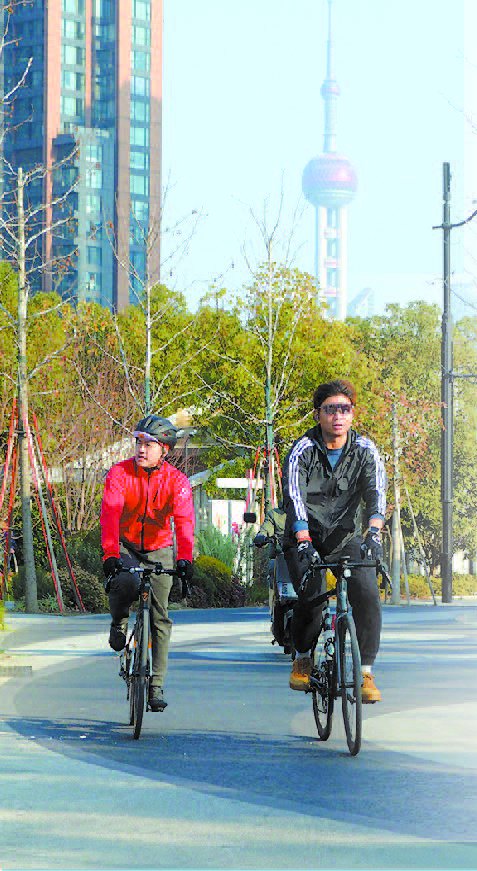
更加聚焦群众急难愁盼和关心关切
Xin Lang Cai Jing· 2025-12-20 06:42
Group 1: Key Points on Social Welfare and Elderly Care - The meeting emphasized the importance of elderly care as a significant issue affecting families and the overall development of the capital [2] - The introduction of the Elderly Care Service Regulation aims to create a capital-specific elderly care service system, focusing on demand orientation and optimizing resource allocation [2] - A three-tier elderly care service network will be developed, promoting community-based and home-based care, while enhancing collaboration with social capital [2] Group 2: Key Points on Urban Development and City Sub-center - The planning and construction of the Beijing Urban Sub-center is a major strategic deployment by the central government, representing an important opportunity for the capital's development [3] - The meeting highlighted the need to implement the Urban Sub-center Regulation and enhance regional development capabilities while promoting coordinated development with surrounding areas [3] - Emphasis was placed on fostering key industries such as digital economy and modern finance, while maintaining a high investment scale to support urban infrastructure and public services [3] Group 3: Key Points on Agricultural Land Protection - The meeting recognized the critical importance of protecting arable land and ensuring food security, with a focus on implementing protective measures [4] - It was noted that high-standard farmland construction should be accelerated to enhance the quality and concentration of modern agricultural land [4] - The meeting called for strict enforcement of land protection responsibilities and the establishment of a balanced compensation system for land use [4]
面向2026届毕业生,丰台区赴京内京外多所高校开展宣讲招聘
Xin Jing Bao· 2025-10-29 05:59
Core Points - Fengtai District has launched a recruitment campaign targeting graduates of the class of 2026, starting at Renmin University of China, with plans to visit other top universities and cities along high-speed rail lines [1][2] - The campaign aims to fill over 300 quality positions in fields such as modern finance, digital economy, artificial intelligence, and cultural creativity, aligning with the high-quality development needs of Fengtai District [1] - Local officials shared personal experiences and insights on how Fengtai District has been attracting and nurturing talent through innovative ecosystems and quality platforms [1] Recruitment Activities - Hundreds of students from Renmin University participated in the recruitment event, which will also extend to Peking University, Tsinghua University, and cities along high-speed rail lines like Xi'an [2] - The recruitment initiative aims to establish a regular mechanism that integrates "enterprise demand + university training + talent delivery" to inject momentum into regional high-quality development [2] Talent Development - Fengtai District provided students with information on job requirements, application processes, and career development, highlighting various talent development pathways such as civil service recruitment and grassroots practice [1] - Programs like "Jingrui Camp" and "Xinrui Camp" were introduced to showcase clear growth paths for young talents [1]
石景山地区生产总值一年迈一个百亿台阶
Bei Jing Wan Bao· 2025-08-22 06:04
Economic Growth - The GDP of Shijingshan District has increased from 97.38 billion yuan in 2020 to 131.29 billion yuan in 2024, achieving a growth of 7.6% in the first half of this year, ranking first among central urban areas [1][2] - The district's GDP reached 69.66 billion yuan in the first half of this year [1] Industrial Transformation - Shijingshan District is accelerating industrial transformation, evolving its industrial system from "1+3+1" to "2+4+4" [2] - The district focuses on two leading trillion-yuan industries: information technology and modern finance, with emerging industries such as artificial intelligence and virtual reality contributing significantly [2] - The contribution of the two leading industries exceeds 60% of the district's GDP, while the annual revenue of four featured industries reaches 130 billion yuan [2] Urban Development Projects - The district plans to implement 481 urban renewal projects during the 14th Five-Year Plan, attracting over 90 billion yuan in investment [3] - Key projects include the transformation of Shougang Park and the development of a multi-functional exhibition town covering nearly 2 square kilometers [3] - The district aims to enhance its waterfront areas, creating vibrant commercial districts and attracting 13 million visitors by 2024 [3] Upcoming Events - The "Chao Wan Yue Xiang Shui An" project will debut before the Service Trade Fair, aiming to create an innovative waterfront lifestyle experience [4] - The project will feature approximately 5,000 square meters of space with 30 design works and brands, with the first "Opening Festival" scheduled to coincide with the fair [4]
孙志洋会见恒丰银行行长白雨石
Guang Zhou Ri Bao· 2025-08-21 02:15
Group 1 - Guangzhou is focusing on "6+4" urban characteristics and core functions, leveraging technological innovation and modern finance to accelerate the construction of a "12218" modern industrial system [2] - The collaboration between Guangzhou and Hengfeng Bank is expected to expand, with an emphasis on the opportunities presented by the Guangdong-Hong Kong-Macao Greater Bay Area and the "Nansha Financial 30 Policies" [2] - Hengfeng Bank aims to align closely with Guangzhou's urban development strategy and continuously innovate financial products and services to support high-quality development and modernization efforts in the city [2] Group 2 - The city government will continue to optimize the business environment to provide quality services for enterprise growth [2] - Hengfeng Bank has reported on its business development in Guangzhou, indicating a commitment to deepen cooperation in various fields, including financial openness and technological innovation [2] - The meeting highlights the importance of collaboration in driving innovation and implementing national strategies effectively [2]
华尔街是如何诞生的?
Sou Hu Cai Jing· 2025-07-11 00:49
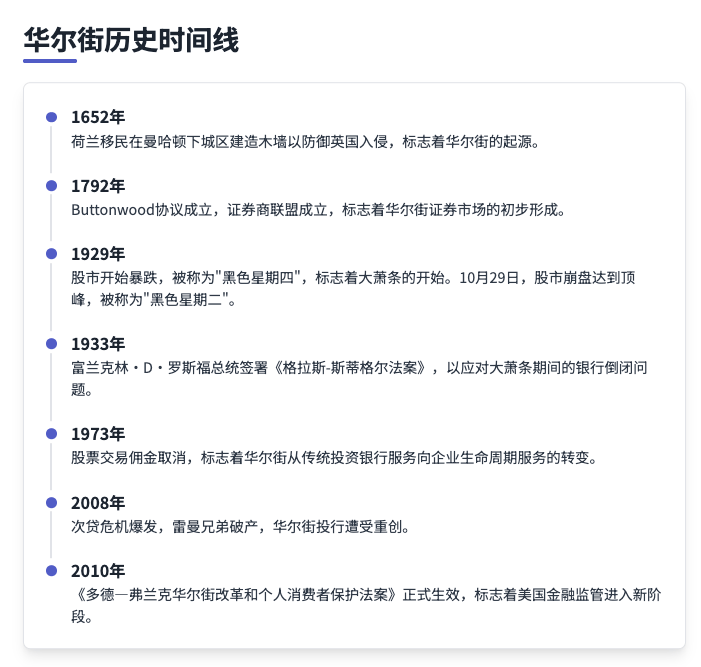
Group 1 - The article discusses the historical context of Wall Street, highlighting its origins and the duality of wealth perspectives in early America [1][3] - It contrasts the wealth generation methods of the Southern colonies, which relied on single-crop agriculture, with the Northern colonies that developed a complex commercial economy [4][5] - The emergence of financial needs in the Northern colonies led to the creation of a capital system that emphasized risk management and financing for trade [5][6] Group 2 - The Dutch played a crucial role in the development of modern financial tools, including the establishment of the first stock exchange and the concept of shares [6][7] - The transition of New Amsterdam to New York included the inheritance of advanced financial infrastructure from the Dutch, which laid the groundwork for Wall Street [9] - The article emphasizes the influence of Puritan work ethics on capitalism, framing wealth accumulation as a form of divine approval [10][11] Group 3 - The narrative introduces a historical example of financial manipulation through the story of Frederick Philipse, who controlled the production of a currency, leading to inflation and wealth extraction [13][14] - The article draws parallels between historical financial practices and modern monetary policies, suggesting a continuity in the manipulation of currency and wealth [14][16] - It concludes that Wall Street's power lies in its ability to control financial rules and manipulate value, creating invisible barriers that shape global capital flows [17][18]
欢迎跨国公司扎根中国市场(锐财经)
Ren Min Ri Bao Hai Wai Ban· 2025-06-13 21:02
Group 1 - The core theme of the summit is "Multinational Companies and China - Linking the World for Win-Win Cooperation," focusing on policy dialogue, industry connection, and project cooperation [1] - The summit will take place from June 18 to 20 in Qingdao, co-hosted by the Ministry of Commerce and the Shandong Provincial Government [1] - The summit aims to attract multinational companies to invest in the Chinese market, emphasizing long-term and value investment for mutual benefits [1] Group 2 - This year's summit features four key characteristics: a balanced focus on continuity and expansion, with an emphasis on the role of multinational companies and the new expectations in international economic cooperation [2] - A total of 471 guests from multinational companies are confirmed to attend, with 342 from overseas and 129 from within China, representing 43 countries and regions, over 50% of which are from emerging markets [2] - The summit will include diverse activities focusing on both investment and trade, with targeted matchmaking events for traditional and emerging industries [2] Group 3 - The event design emphasizes optimization and innovation, featuring classic forums and new topics such as overseas fund investment cooperation and the silver economy [3] - The summit has attracted significant attention, with 83 senior executives from global companies attending, marking a 22% increase from the previous year [4] - New participants include 102 first-time attendees from 32 countries, highlighting the summit's growing appeal across various sectors [4] Group 4 - The Ministry of Commerce aims to provide more opportunities for foreign enterprises, promoting high-level opening-up and supporting foreign investment in China [5] - Plans include expanding market access in sectors like cloud computing and biotechnology, and revising the encouraged foreign investment industry catalog [6] - The Ministry will ensure fair competition and equal treatment for foreign enterprises, allowing them to participate in government procurement and benefit from China's market growth [6][7] Group 5 - The Ministry of Commerce will enhance services for foreign investment, addressing key concerns through roundtable meetings and project support [7] - Efforts will be made to promote the "Invest in China" brand and facilitate financing services for foreign enterprises [7]