基建创新

Search documents
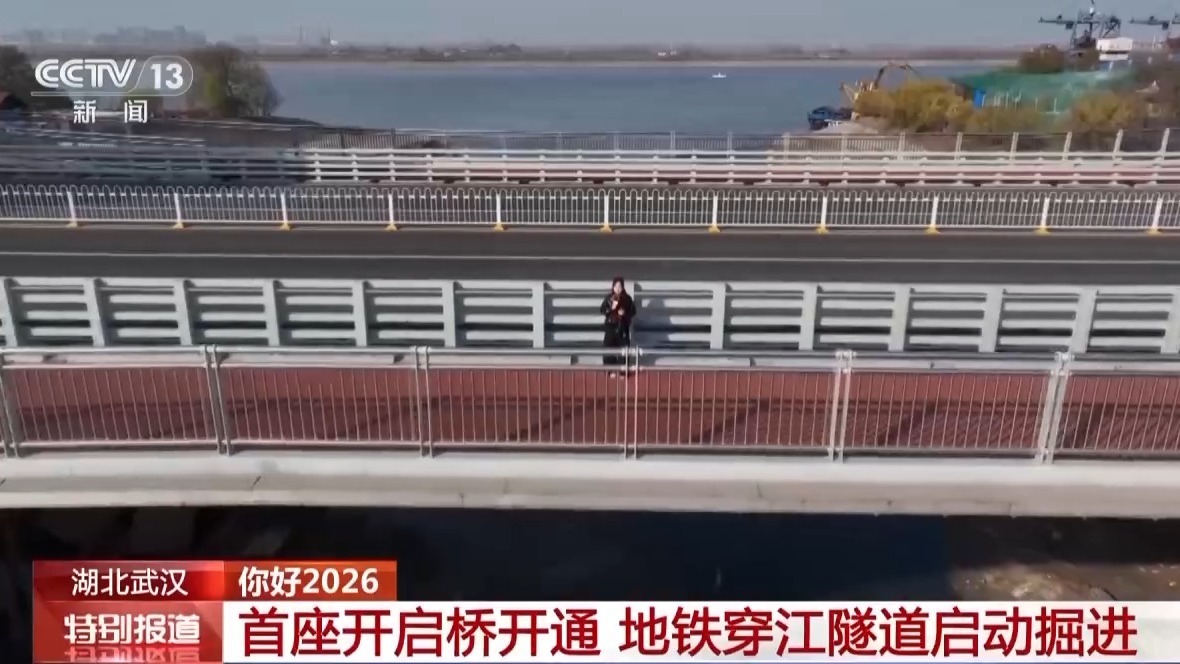
桥面可“坐电梯”般升降 湖北武汉首座开启桥正式开通
Xin Lang Cai Jing· 2026-01-01 02:19
Core Insights - The article highlights significant advancements in urban transportation infrastructure in Wuhan, with the opening of the Wuhan Right Bank Avenue Cross-Industrial Port Lifting Bridge and the commencement of the shield tunneling for the Wuhan Metro Line 10 underwater tunnel [1][3]. Group 1: Infrastructure Developments - The Wuhan Right Bank Avenue Cross-Industrial Port Lifting Bridge, measuring 104 meters in length, can elevate 2,650 tons of steel box beams by 27 meters in just 9 minutes, allowing for a clearance of 8 meters for daily shipping and up to 35 meters during flood season for 5,000-ton vessels [4][6]. - The construction of the bridge utilized ground assembly and water surface floating techniques due to the narrowness of the industrial port, which prevented the use of large floating cranes [6]. Group 2: Metro Line 10 - The Wuhan Metro Line 10 is the city's first cross-city express line, featuring a maximum operational speed of 120 kilometers per hour, and aims to connect major transportation hubs, including Hankou Railway Station and Wuhan Railway Station, enhancing travel efficiency for citizens [8][10].

通了!穿越天山 此生必驾
Xin Lang Cai Jing· 2025-12-26 05:41
Core Viewpoint - The opening of the Urumqi to Yili Expressway (G0711) marks a significant milestone in China's infrastructure development, enhancing connectivity in Xinjiang and reducing travel time across the region. Group 1: Project Overview - The Urumqi to Yili Expressway spans 324.7 kilometers and features a dual four-lane design, significantly reducing travel time from Urumqi to Korla from 7 hours to 3.5 hours [10][22]. - The expressway includes the Tianshan Victory Tunnel, which is the world's longest highway tunnel at 22.13 kilometers, and features 17 tunnels in total [11][12]. - The construction utilized an innovative "three tunnels + four shafts" approach, allowing for efficient excavation through challenging geological conditions [14][16]. Group 2: Engineering Challenges - The Tianshan Victory Tunnel faced extreme conditions, including high altitude (average over 3000 meters), low temperatures (down to -40°C), and complex geological features with 17 fault zones [12][13]. - The tunnel's second shaft reaches a depth of 707 meters, making it the deepest highway shaft globally, surpassing the height of the Canton Tower by over 100 meters [12][13]. - The construction team developed specialized equipment, such as the "Tianshan" and "Victory" tunnel boring machines, to navigate the challenging terrain and ensure safety and efficiency [17]. Group 3: Economic and Cultural Impact - The expressway is a crucial part of Xinjiang's "six horizontal and six vertical" high-grade highway network, facilitating trade and tourism by connecting various regions and cultural sites [21][30]. - It enhances the transportation of local products, such as Korla pears and high-quality wines, while promoting tourism to scenic areas like Bosten Lake and the Kanas National Park [31][32]. - The expressway is expected to foster rural revitalization and overall tourism development in the region, making it a vital economic artery [31].