多元共治格局

Search documents
亮剑浦江|个人信息保护监管执法如何从“盆景”变为“风景”
Xin Lang Cai Jing· 2026-02-09 07:58
Core Viewpoint - The "Liangjian Pujiang" special action represents a significant local enforcement practice in personal information protection regulation in China, effectively safeguarding citizens' personal information security [1][2]. Group 1: Regulatory Actions - The "Liangjian Pujiang" initiative focuses on common and critical areas of personal information protection, addressing issues such as telecom network fraud, which remains a serious concern [1]. - The enforcement initially targeted common consumer scenarios to create a deterrent effect against prevalent illegal activities, later expanding to high-risk areas like facial recognition [1]. - The initiative employs a multi-faceted enforcement model that leverages existing regulatory capabilities while enhancing overall enforcement effectiveness [1]. Group 2: Legal Framework - Since the implementation of the Personal Information Protection Law in 2021, a series of supporting regulations and guidelines have been introduced, including the Network Data Security Management Regulations and the Personal Information Protection Compliance Audit Management Measures [2]. - The legal framework for personal information protection in China is becoming increasingly comprehensive, which is expected to enhance the role of regulatory enforcement activities like the "Liangjian Pujiang" initiative [2].
21社论丨构建放心生态,提振消费信心
2 1 Shi Ji Jing Ji Bao Dao· 2026-02-05 23:15
Core Viewpoint - The Chinese government is focusing on enhancing consumer confidence and optimizing the consumption environment through the establishment of "reassuring consumption clusters" and related policies, aiming to stimulate domestic demand and support high-quality economic development [1][2][3]. Group 1: Policy Initiatives - The State Administration for Market Regulation plans to introduce standards and policies for reassuring consumption, aiming to cultivate a large number of trustworthy business districts, markets, and scenic areas [1][3]. - By 2025, China's total retail sales of consumer goods are expected to exceed 50 trillion yuan, with final consumption expenditure contributing 52% to economic growth [1]. Group 2: Challenges and Solutions - Despite a generally stable consumption market, there are bottlenecks such as insufficient transparency in some regions and inconsistent quality standards in goods and services, which can affect consumer confidence [2]. - The State Administration for Market Regulation is implementing a three-year action plan to optimize the consumption environment, focusing on innovative practices in 48 representative regions [2]. Group 3: Reassuring Consumption Clusters - The concept of reassuring consumption clusters aims to shift from reactive governance to proactive prevention, establishing a favorable environment for consumers to feel safe and willing to spend [3]. - The key to building these clusters lies in establishing a standard system that covers product quality, service processes, after-sales support, information disclosure, and dispute resolution [3]. Group 4: Collaborative Efforts - Building a trustworthy consumption environment requires a multi-faceted governance approach involving government regulation, corporate responsibility, social oversight, and consumer participation [4]. - Continuous innovation in regulatory methods by the government, along with active participation from businesses and consumers, is essential for creating a stable and transparent consumption ecosystem [4].
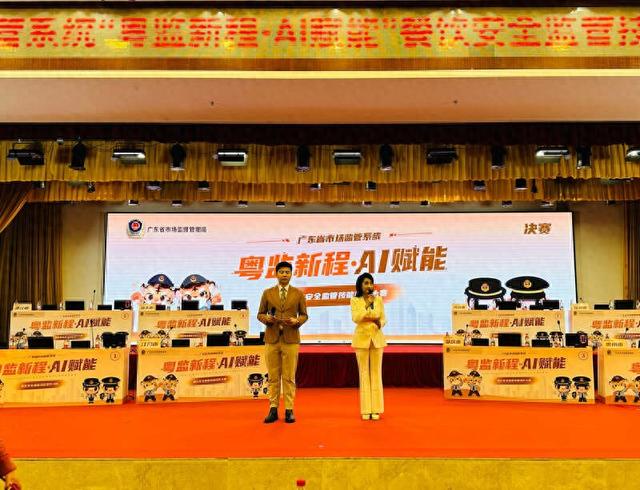
骑手来“抢麦”!广东开展餐饮安全监管技能提升大赛
Xin Lang Cai Jing· 2025-12-26 15:56
Core Insights - The "Yuejian New Journey: AI Empowerment" food safety supervision skills competition recently concluded in Guangzhou, focusing on the innovative application of artificial intelligence in food safety regulation [1][3] - The competition involved collaboration among regulatory bodies, schools, platforms, and delivery personnel across 21 cities in Guangdong Province [1][3] Group 1: Competition Structure - The competition lasted over two months and utilized a "three-stage progressive" format, including a rapid-fire quiz segment where eight finalist teams competed [3] - The Shenzhen Market Supervision Bureau team won the gold medal in the team category [3] - The event emphasized the integration of AI technology in food safety regulation, with questions focusing on school food safety and online food delivery [3] Group 2: Team Composition and Evaluation - Teams were formed by regulatory personnel, school principals, food delivery platform managers, and delivery personnel, competing in a format that combined theoretical competition, random inspections, and on-site training [3] - The preliminary round focused on theoretical knowledge and initial exploration of AI technology, while the semi-finals involved cross-regional practical inspections [3] - The finals tested comprehensive abilities, emphasizing the use of AI for identification and data analysis, addressing new challenges in the rapidly evolving food service industry [3] Group 3: Future Directions - The competition was co-hosted by the Guangdong Provincial Market Supervision Administration, the Guangdong Provincial Department of Education, and the Guangdong Provincial Department of Human Resources and Social Security [4] - The Guangdong Provincial Market Supervision Administration plans to continue promoting the use of AI technology in regulatory scenarios, encouraging innovative regulatory methods to enhance smart supervision [4] - The goal is to transition from "traditional regulation" to "smart regulation," fostering a multi-party governance model involving regulators, schools, platforms, and delivery personnel [4]

地产经纬丨浦东三林版“新天地”来了?上海城市更新加快走向多元参与格局
Xin Hua Cai Jing· 2025-11-20 10:38
Core Viewpoint - The collaboration between Ruian Real Estate and local state-owned enterprises in Shanghai's urban renewal project is expected to set a new benchmark for urban revitalization in the region, highlighting the importance of diverse participation in enhancing regional vitality and value [1][5][9]. Group 1: Project Overview - Ruian Real Estate announced a significant partnership with three state-owned enterprises to establish a joint venture for urban renewal in the Sanlin area of Pudong, Shanghai [2][4]. - The joint venture has a registered capital of 2.32 billion yuan, with a total capital commitment of approximately 9.162 billion yuan, making it one of the largest urban renewal projects in Shanghai in recent years [4][6]. - The project site covers approximately 723,900 square meters, primarily designated for residential and commercial use, and will encompass a full range of real estate development and management services [7][8]. Group 2: Strategic Implications - The partnership is seen as a strong integration of resources, combining Ruian's extensive experience in urban renewal with the local advantages of state-owned enterprises in resource integration and policy alignment [5][9]. - The Sanlin project is anticipated to enhance Ruian's position in the urban renewal sector in Shanghai, contributing positively to its property sales revenue and overall financial health [7][8]. - The project is expected to revitalize the Sanlin area, injecting new commercial vitality and cultural significance, potentially becoming a landmark project following Ruian's previous successes [8][9]. Group 3: Industry Trends - The Sanlin project reflects a broader trend in Shanghai's urban renewal efforts, where collaborative models involving both state and private capital are becoming increasingly common to address funding gaps and development challenges [9][10]. - Experts suggest that sustainable urban renewal requires a combination of government guidance, market mechanisms, and public participation to attract more social capital and enhance project viability [9][10]. - The emergence of projects like Sanlin is indicative of a shift towards a multi-stakeholder approach in urban renewal, moving away from traditional single-developer models [10].


别让视频会议成“安全黑洞”(纵横)
Ren Min Ri Bao· 2025-08-05 22:21
Core Viewpoint - The increasing reliance on video conferencing in various sectors has highlighted significant security risks, including technical vulnerabilities, content management issues, and cross-border data flow conflicts [1][2]. Group 1: Security Risks - Technical vulnerabilities such as weak authentication mechanisms and unencrypted connections can lead to data breaches and privacy violations [1]. - Content management risks arise from the ease of sharing and disseminating copyrighted materials without permission, making infringement harder to trace [1]. - The lack of unified international data governance rules limits users' ability to protect their rights when using foreign platforms [1]. Group 2: Governance and Regulation - There is a need for a comprehensive risk supervision and prevention system to address the complexities of video conferencing applications [1]. - The promotion of data security laws and network security laws is essential for clarifying the application of regulations in relevant scenarios [1]. - Platforms should integrate risk prevention into the entire lifecycle of technology development and application, emphasizing default encryption, strong identity verification, and meeting permission controls [1]. Group 3: User Awareness and Collaboration - Enhancing user awareness regarding privacy protection and security operations is crucial, necessitating multi-channel legal education and specialized training [2]. - A collaborative governance model involving government regulation, industry self-discipline, and public participation is needed to strengthen video conferencing security [2].
多管齐下强监管 筑牢市场守防线
Sou Hu Cai Jing· 2025-06-20 08:21
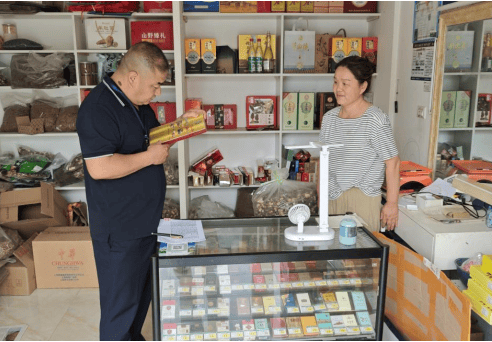
Core Viewpoint - The Danjiangkou Tobacco Monopoly Bureau is enhancing market regulation effectiveness through innovative measures, focusing on post-licensing supervision, problem-oriented approaches, and collaboration among departments to ensure a healthy development of the tobacco market [1][6]. Group 1: Innovative Regulatory Methods - The bureau has implemented a dual-track mechanism combining "system alerts + manual assessment" to identify abnormal business operations, significantly improving the efficiency of market regulation [1][3]. - A grid-based responsibility system has been established, dividing the jurisdiction into multiple regulatory grids, requiring weekly visits to at least 20 retail outlets to check license usage and cigarette display compliance [1][3]. Group 2: Strengthening Collaborative Governance - The bureau relies on an information-based regulatory platform to create dynamic profiles for retailers, enabling timely detection of abnormal business operations through data comparison and on-site verification [3][4]. - A "1+N" collaborative regulatory model has been developed to address challenges such as single regulatory forces and enforcement difficulties, utilizing two subsystems to analyze retail data and manage abnormal operations dynamically [3][4]. Group 3: Improving Assessment Mechanisms - The enhancement of regulatory effectiveness is supported by a professional and efficient team, with a focus on performance assessment that includes metrics like the number of leads discovered and the quality of case handling [6][7]. - An innovative "mentor-mentee" training model has been introduced, where experienced personnel guide new staff, leading to a significant improvement in the overall quality of the regulatory team [6][7].
织密水域安全网 护航平安海南行
Hai Nan Ri Bao· 2025-06-04 01:06
Core Viewpoint - The article emphasizes the importance of water safety in Hainan as the region promotes various maritime tourism activities during the summer, highlighting the need for a comprehensive water safety network to protect public safety and enhance the image of the free trade port [2][3]. Group 1: Water Safety Governance - Hainan has made significant progress in water safety governance, integrating technology, ecological restoration, institutional innovation, and social collaboration to strengthen safety measures for the free trade port and tourism development [3][4]. - The province has established a "smart defense line" for water safety, utilizing a three-dimensional approach with technology such as intelligent monitoring systems and emergency rescue technologies, including water rescue robots and drones [3][4][5]. Group 2: Social Collaboration - The governance model has shifted from a government-only approach to a collaborative model involving various social entities, enhancing the professionalism and timeliness of water safety governance through training, drills, and community engagement [4][5]. - Educational initiatives have been implemented to promote water safety awareness among students, creating a multi-faceted governance structure led by the government with broad social participation [5]. Group 3: Emergency Preparedness - Hainan maintains a high level of vigilance regarding extreme weather events, with a comprehensive emergency management system in place for flood, wind, and drought prevention, including proactive monitoring and resource allocation [5][6]. - The province has developed a robust emergency response framework, including a multi-level command system and risk assessment mechanisms to enhance water safety management [7][8]. Group 4: Institutional Framework - Hainan has established a legal framework for ecological protection and water safety, including regulations that enforce strict environmental protections and governance responsibilities for water bodies [6][7]. - The province has implemented various policies to create a comprehensive ecological protection network, ensuring sustainable water safety measures are in place [6]. Group 5: Future Recommendations - Recommendations for improving water safety governance include establishing a provincial comprehensive governance committee and enhancing collaboration among various departments [7][8]. - The article suggests leveraging AI and IoT technologies to create a "smart brain" for water safety, integrating advanced monitoring and emergency response systems [8][9]. Group 6: Cultural and Educational Initiatives - Hainan aims to build a unique water safety culture through immersive educational experiences and the development of safety-themed tourism routes [10]. - The province plans to enhance public awareness of water safety through creative campaigns and educational programs, ensuring widespread knowledge dissemination [10].