
大科学装置

Search documents
研之有理|以产业为牵引推进教育科技人才一体发展
Xin Lang Cai Jing· 2026-02-23 22:47
Core Viewpoint - The article emphasizes the importance of integrating education, technology, and talent development in Heilongjiang to drive high-quality economic revitalization through a collaborative approach involving various sectors and resources [1]. Group 1: Education and Industry Integration - The integration of education and industry serves as a crucial link between educational supply and industrial demand, facilitating resource complementarity and precise supply-demand matching [2]. - Higher education institutions are encouraged to develop new majors aligned with strategic emerging industries such as aerospace, electronic information, and high-end equipment, while also focusing on talent-scarce areas like cultural tourism and modern services [2][3]. Group 2: Technology and Project Collaboration - The article outlines a framework for technology-driven projects where enterprises identify key technological challenges, and the government selects relevant research topics, creating a dynamic project database [2]. - Collaborative teams formed through education-industry integration are tasked with addressing critical technological challenges, promoting innovation through partnerships among universities, research institutions, and enterprises [2]. Group 3: Talent Development Mechanisms - A "revolving door" mechanism is proposed to facilitate the exchange of personnel between enterprises and educational institutions, allowing experienced professionals to contribute as "industry professors" [3]. - The evaluation system for educators will be reformed to prioritize practical experience and problem-solving capabilities, aligning talent assessment with industry needs [3]. Group 4: Role of Major Projects - Major projects are identified as essential for integrating education, technology, and talent, necessitating systematic support and collaboration among these elements [4]. - Educational institutions are encouraged to align their curriculum and professional training with the talent needs of significant engineering projects, ensuring a comprehensive approach to talent development [4]. Group 5: Innovation through Large Scientific Facilities - Large scientific facilities are highlighted as foundational platforms for innovation, capable of attracting and nurturing top scientific talent while enhancing the synergy between education, technology, and talent [7]. - Collaborative innovation centers involving management entities, universities, research institutes, and enterprises are proposed to leverage shared resources for technological advancements [7]. Group 6: Talent Recruitment and Evaluation - A targeted talent recruitment strategy is suggested to attract top-tier scientists and young talents globally, with a focus on contributions to large scientific facilities [8]. - The evaluation criteria for researchers and engineers involved in these facilities will be revised to emphasize tangible results and contributions [8].
东方钽业:前次定增项目产品覆盖半导体、化工防腐、航空航天及大科学装置等领域
2 1 Shi Ji Jing Ji Bao Dao· 2026-02-06 10:01
Group 1 - The core viewpoint of the article highlights the technological upgrades in the production lines of tantalum and niobium products by Dongfang Tantalum Industry, which are essential raw materials for high-temperature alloys and high-end products [1] - The 'Tantalum and Niobium Pyrometallurgical Product Production Line Technology Upgrade Project' focuses on producing tantalum and niobium ingots, which are crucial for various high-tech applications [1] - The 'Tantalum and Niobium Plate and Strip Product Production Line Technology Upgrade Project' targets applications in semiconductors, chemical corrosion resistance, and aerospace industries [1] - The 'Annual Production of 100 Niobium Superconducting Cavities Project' is aimed at producing components primarily used in large scientific installations such as particle accelerators and synchrotron light sources [1]

合肥四年跨越三个千亿台阶
Zhong Guo Xin Wen Wang· 2025-11-17 12:03
Core Insights - Hefei's GDP has increased from just over 1 trillion yuan at the end of the 13th Five-Year Plan to 1.35 trillion yuan in 2024, achieving an average annual growth rate of 6.2% and ranking 19th among cities nationwide [1][3]. Economic Development - During the 14th Five-Year Plan period, Hefei has established, is constructing, or is researching 13 major scientific facilities, ranking among the top in the country [3]. - The city's total R&D investment intensity has surpassed 4%, placing it second among provincial capital cities and sixth among cities with GDP over 1 trillion yuan [3]. - The number of national high-tech enterprises has exceeded 10,000, more than doubling, while the number of "specialized, refined, distinctive, and innovative" small giant enterprises has reached 312, increasing over fourfold [3]. Industrial Growth - The new strategic industries in Hefei have maintained a leading position in the country, with the city ranking first in the production of new energy vehicles and first globally in photovoltaic inverter production [5]. - The low-altitude economy is also among the top in the country, with the quantum industry leading in the number of enterprises and patents [5]. Integration and Logistics - Hefei is deeply integrated into the Yangtze River Delta regional development, with the construction of the Hongqiao International Open Hub Hefei Link Zone accelerating [5]. - The city has been approved for the Hefei Metropolitan Area Development Plan, and its logistics system has been significantly advanced, being selected as a national logistics hub city [5]. - The number of newly established enterprises from Fortune Global 500 companies has reached 44, totaling over 111, while cross-border e-commerce transactions have doubled to 28.9 billion yuan compared to the end of the 13th Five-Year Plan [5].

大科学装置建设全面提速 筑牢科技强国基石
Yang Shi Wang· 2025-11-13 12:38
Core Insights - The development of large scientific facilities is crucial for technological innovation and building a strong scientific nation in China [1][2][3] - The construction of major scientific infrastructure has accelerated during the 14th Five-Year Plan, with a focus on foundational research and achieving high-level technological self-reliance [1][3] Group 1: Major Scientific Projects - The fourth-generation advanced fission nuclear energy system, the thorium molten salt experimental reactor, has achieved thorium-uranium conversion, breaking the reliance on uranium fuel [1] - The world's largest supergravity centrifuge has officially started operations and will provide critical support for disaster prevention and new material research by the end of 2026 [1] - The compact fusion energy experimental device (BEST) in Hefei is under development and is expected to demonstrate nuclear fusion power generation internationally by the end of 2027 [1][3] Group 2: Investment and Growth in Research - Research and development funding has reached a record high of 249.7 billion yuan, increasing over 70% since 2020 [3] - Over 65 large scientific devices are currently under construction or in operation, with national scientific data centers seeing a fivefold increase in data volume compared to the end of the 13th Five-Year Plan [2][3] Group 3: Strategic Goals and Future Plans - The 14th Five-Year Plan emphasizes the need for strategic, forward-looking, and systematic layout of major scientific infrastructure to enhance open sharing and operational efficiency [2][4] - The 15th Five-Year Plan suggests accelerating high-level technological self-reliance and implementing significant national scientific tasks to meet strategic national needs [4]
“十四五”大国科技取得“硬核”成绩 高水平科技自立自强“加速跑”
Yang Shi Wang· 2025-10-12 08:28
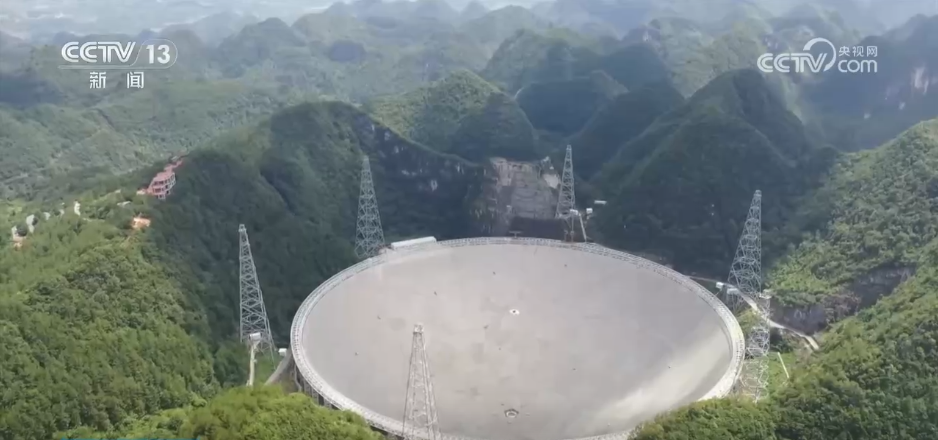
Core Viewpoint - The "14th Five-Year Plan" marks a milestone in China's technological development, emphasizing the importance of large scientific facilities in driving innovation and addressing fundamental scientific challenges [1][5]. Group 1: Investment in Scientific Infrastructure - Large scientific facilities are crucial for national innovation, requiring significant investment and long-term commitment [3]. - China's R&D investment is projected to exceed 3.6 trillion yuan in 2024, reflecting a steady increase in technological innovation capabilities [5]. Group 2: Core Competencies of Large Scientific Facilities - **Competency 1: Addressing Fundamental Scientific Questions** Large scientific facilities represent the pinnacle of engineering technology, essential for exploring unknowns and tackling fundamental scientific issues, such as those addressed by the Tianyan and Jiangmen neutrino experiments [7]. - **Competency 2: Catalyzing Disruptive Technological Breakthroughs** These facilities serve as sources of original innovation, enabling significant advancements in materials science and reducing the development cycle and costs of new materials, particularly in critical areas like semiconductors and renewable energy [8][9]. - **Competency 3: Enhancing Public Health** Large scientific facilities are directly linked to public health, facilitating the development of targeted therapies for diseases like cancer and Alzheimer's through advanced techniques such as protein structure analysis and proton therapy [11][13]. Group 3: Broader Implications - Investment in large scientific facilities not only enhances national technological competitiveness but also contributes to the well-being and sustainable development of humanity, making it a vital area for future investment [13].
“超级显微镜”解决卡脖子难题
Jing Ji Ri Bao· 2025-10-09 22:40
Core Insights - The first domestically developed boron neutron capture therapy device has been successfully used to treat a recurrent nasopharyngeal cancer patient in Dongguan, Guangdong Province, marking a significant advancement in cancer treatment technology [1] - The Chinese Spallation Neutron Source (CSNS) is recognized as a "super microscope" and serves as a typical case of technology transfer in the field of large scientific instruments [1][2] - The CSNS aims to enhance medical accessibility by enabling local hospitals to operate such advanced equipment [1] Group 1 - The CSNS has expanded its neutron spectrometer terminals from 3 to 11 during the 14th Five-Year Plan, contributing significantly to solving critical national technological challenges [2] - The CSNS has facilitated breakthroughs in various scientific fields, including superconducting materials and nanomaterials, by providing ideal probes for research [2] - The CSNS has completed 14 rounds of open access for global scientists, with over 9,000 registered users and nearly 2,300 research projects conducted [2] Group 2 - The second phase of the CSNS project has commenced, with an expected completion date in 2029, which will enhance its performance by five times and increase the number of experimental terminals to 20 [2] - The CSNS is positioned to better serve national strategic needs by covering all areas of neutron scattering research [2]
比太阳亮万亿倍!高能同步辐射光源今年底试运行 “大国重器”有何“硬核”底气?
Yang Shi Wang· 2025-10-01 08:28
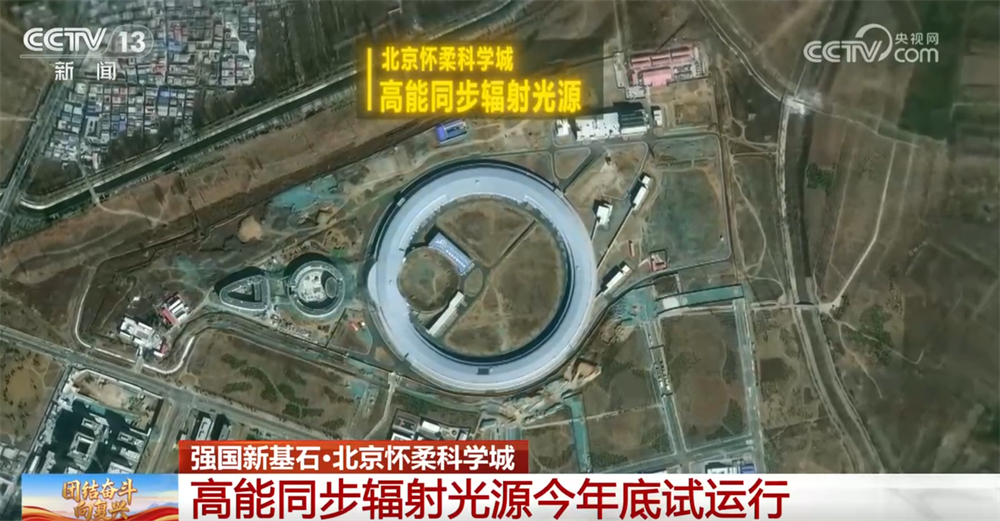
Core Viewpoint - The high-energy synchrotron radiation source, located in Beijing Huairou Science City, is a significant scientific facility that will enhance China's capabilities in observing the microscopic world and support various fields such as aerospace, energy, environment, life sciences, and new materials research [1][6][22]. Group 1: Facility Overview - The high-energy synchrotron radiation source is designed to produce light that is one trillion times brighter than sunlight, making it a powerful tool for scientific exploration [3][13]. - The facility covers an area of 976 acres, with a storage ring circumference of 1360.4 meters, capable of accommodating up to 20 football fields [7][9]. - It consists of a linear accelerator, booster, storage ring, and beamlines, which work together to generate high-performance X-rays [13][15]. Group 2: Development Timeline - Construction of the high-energy synchrotron radiation source began in June 2019, with an expected completion period of approximately 6.5 years [18]. - The facility is set to begin trial operations in December 2023, with full operational status anticipated after national acceptance [11][23]. - The final installation of the last magnet in the storage ring was completed in December 2023, marking a significant milestone in the construction process [20]. Group 3: Research Capabilities - The facility will eventually host over 90 beamlines, allowing multiple research teams to conduct experiments simultaneously [23]. - Current research focuses on areas such as new energy battery structure-function studies and heavy metal pollution in the environment [15][23]. - The high-energy synchrotron radiation source aims to enhance China's original innovation capabilities in basic science and high-tech fields, addressing challenges in resources, energy, environment, population, and health [23].
“走进国之重器”系列科普活动启动
Shan Xi Ri Bao· 2025-09-14 23:17
Group 1 - The "Walk into National Heavy Equipment" series of science popularization activities was launched in Xi'an, focusing on the importance of time and the development of the national time standard system [1] - The first event featured a report by researcher Li Xiaohui from the National Time Service Center, discussing the construction and achievements of the national time system [1] - Over 150 high school students from Lintong District participated in the event, which included a visit to the Time Science Museum to interact with advanced scientific equipment [1] Group 2 - The provincial science association aims to leverage the construction of large scientific devices to enhance science popularization products and infrastructure [2] - There is a focus on cultivating talent in science popularization theory and communication, fostering a societal atmosphere that values science [2] - The provincial science association encourages scientists to translate cutting-edge research into accessible science content and effectively communicate scientific stories [2]
中国散裂中子源二期工程首栋建筑单体完工
Ke Ji Ri Bao· 2025-07-30 23:56
Group 1 - The core viewpoint of the news is the significant progress in the second phase of the China Spallation Neutron Source (CSNS) project, which is a major scientific infrastructure under China's 14th Five-Year Plan [1] - The first building of the CSNS Phase II project, the radioactive solid waste storage hall, has been completed ahead of schedule, laying a solid foundation for subsequent precision equipment installation and system commissioning [1] - The CSNS, located in Dongguan, Guangdong Province, is referred to as a "super microscope" and aims to enhance research capabilities in neutron scattering applications to reach international advanced levels after the completion of Phase II [1] Group 2 - The construction and installation engineering of large scientific devices is crucial for ensuring their performance, with the CSNS Phase II construction being a key project for Guangdong Province and Dongguan City [2] - The project includes the construction of five new buildings, such as the linear equipment building and the high-energy proton experimental hall, with construction starting in July 2024 and completion expected by August 2026 [2] - The engineering progress is on track, with key annual targets set for the completion of the backscattering spectrometer experimental station by the end of August and the overall main structure topping out by the end of the year [2]
夏季达沃斯论坛有句“潜台词”
Zhong Guo Fa Zhan Wang· 2025-06-27 04:06
Group 1 - The Summer Davos Forum has become a significant platform for discussing global economic trends and China's development, emphasizing the dual focus on present realities and future aspirations [1] - Key topics at the forum include finding growth momentum, embracing emerging technologies, and exploring sustainable development paths, with a notable increase in discussions centered around China [1] - "China Outlook" is highlighted as one of the five core themes for the 2025 Tianjin Summer Davos Forum, reflecting China's shift towards a technology-driven economic development model [1] Group 2 - The 2025 Tianjin Summer Davos Forum will cover diverse fields such as healthcare, cutting-edge technology, social equity, and cultural arts, showcasing a global perspective on various industry topics [2] - The forum features exhibitions from top international artists, merging advanced technology with ecological data and artistic aesthetics, prompting reflections on the future of civilization [2] - Long-term considerations are emphasized as essential for societal progress, even amidst the fluctuations of the global economy [2] Group 3 - China's economic trajectory demonstrates a commitment to "long-termism," with ongoing investments in large scientific projects despite cuts in research funding in some developed countries [3] - The country has established a robust industrial base with a comprehensive range of industrial categories, supported by decades of investment in basic research and talent development [3] - Recent policy initiatives aim to build a foundational data infrastructure to support the digital economy, indicating a strategic approach to future growth [3]