
太空政策

Search documents
特朗普签署行政令:2028年登月
财联社· 2025-12-19 01:22
Core Viewpoint - The article discusses a new executive order signed by Trump that outlines a vision for a "America First" space policy, aiming to ensure the United States leads in space exploration, security, and commercial sectors [2][7]. Group 1: Executive Order Details - The executive order aims to send astronauts back to the Moon by 2028 through NASA's Artemis program and establish a permanent presence on the Moon by 2030 [3][5]. - It emphasizes the development of nuclear energy in space, directing the deployment of nuclear reactors on the Moon and in orbit [5]. - The order also calls for upgrading launch infrastructure and developing commercial pathways to replace the International Space Station by 2030, stimulating private sector innovation and investment [6]. Group 2: Investment and Economic Impact - The executive order is expected to attract at least $50 billion in additional investment to the U.S. space market by 2028 [7]. - It highlights the importance of space superiority as a measure of national vision and will, contributing significantly to national strength, security, and prosperity [7]. Group 3: NASA's Artemis Program Updates - NASA's Artemis 2 mission, which aims to send astronauts into lunar orbit, has been delayed to April 2026, while Artemis 3, targeting a lunar landing, is postponed to 2027 [7].

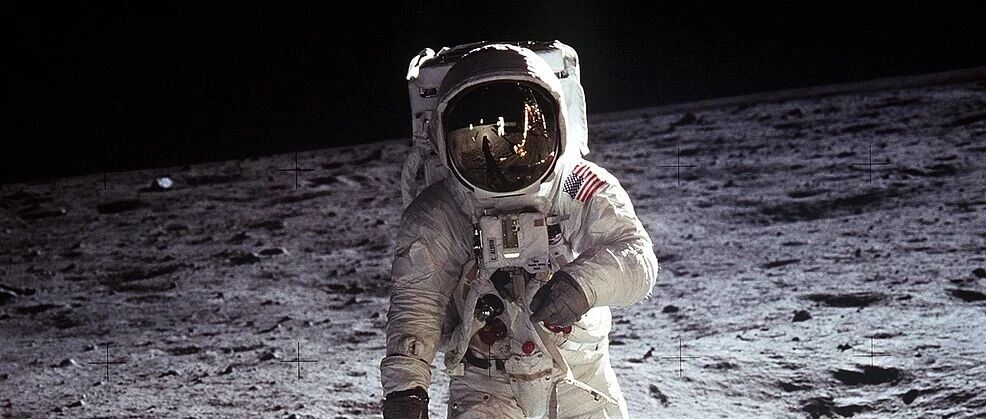
特朗普行政令确认2028年登月目标并取消国家太空委员会
Di Yi Cai Jing· 2025-12-18 23:16
Core Viewpoint - The article discusses President Trump's signing of an executive order to return humans to the Moon by 2028, which is now part of the U.S. national space policy [1] Group 1: Policy Changes - The executive order cancels the White House National Space Council, integrating its functions into a policy coordination mechanism led by the President's chief science advisor [1] - The document emphasizes the importance of enhancing space security and supporting the development of commercial space ventures [1] Group 2: Strategic Goals - The order reaffirms the goal of maintaining U.S. leadership in global space competition [1]
整理:特朗普过去24小时都忙了什么?(2025-05-10)
news flash· 2025-05-10 09:58
Group 1 - Trump criticized the Federal Reserve, claiming there is "no inflation" and that costs are decreasing, which contrasts with the views of the Fed and mainstream media [1] - Trump announced that many trade agreements are in the works, focusing on countries like Japan, South Korea, and Vietnam, which are key import sources for the U.S. [1] - The Trump administration is considering accelerating the construction of nuclear power plants to meet growing electricity demands, aiming to quadruple the capacity from nearly 100 gigawatts to 400 gigawatts by 2050 [2] Group 2 - The U.S. government is discussing a "Free Association Agreement" with Greenland, similar to agreements with Pacific island nations, which would provide public services in exchange for military and trade privileges [3] - Trump's administration issued a warning to the UN and other aid organizations regarding a new aid plan for Gaza, threatening funding cuts if they do not support the U.S. initiative [3] - The U.S. Army has postponed a decision on the full production of Lockheed Martin's $2 billion air defense radar system, which is a candidate for the proposed "Iron Dome" defense system, now set for a decision between July and September 2026 [4] Group 3 - India proposed to reduce the tariff gap with the U.S. from nearly 13% to below 4% to reach a trade agreement with Trump, representing a significant reduction of 9 percentage points in average tariffs [4]
特朗普政府计划重振国家太空委员会 或可制衡马斯克
news flash· 2025-05-09 14:41
Core Viewpoint - The Trump administration is revitalizing the National Space Council to guide ambitious space goals and potentially counterbalance Elon Musk's influence in the space industry [1] Group 1: National Space Council - The National Space Council is being reestablished after being dormant for 24 years, with the Trump administration aiming to enhance its role in shaping space policy [1] - The council will be staffed by a small number of officials, including an executive secretary, and will oversee various space-related departments [1] - The council's responsibilities include implementing space policies and coordinating efforts across different governmental space agencies [1] Group 2: Space Ambitions - The council may support the Trump administration's space ambitions, which include building a space-based missile defense system called "Iron Dome," returning to the Moon by 2030, sending astronauts to Mars, and supporting commercial space companies [1] - A new rocket launch is anticipated next year to test systems for sending astronauts to Mars [1] Group 3: Impact on Elon Musk - The revitalization of the National Space Council could diminish Elon Musk's influence, especially as he plans to resign from his role as a top advisor to Trump [1]