太空竞争

Search documents
特朗普行政令确认2028年登月目标并取消国家太空委员会
Di Yi Cai Jing· 2025-12-18 23:16
Core Viewpoint - The article discusses President Trump's signing of an executive order to return humans to the Moon by 2028, which is now part of the U.S. national space policy [1] Group 1: Policy Changes - The executive order cancels the White House National Space Council, integrating its functions into a policy coordination mechanism led by the President's chief science advisor [1] - The document emphasizes the importance of enhancing space security and supporting the development of commercial space ventures [1] Group 2: Strategic Goals - The order reaffirms the goal of maintaining U.S. leadership in global space competition [1]
“原本针对中国,不料反变美国太空政策批斗大会”
Guan Cha Zhe Wang· 2025-12-08 13:45
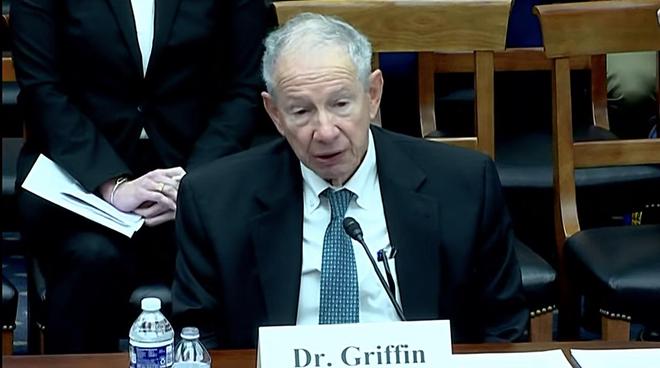
Core Viewpoint - The U.S. Congress hearing on December 4 focused on China's growing space capabilities and the competition for leadership in future manned lunar missions, highlighting broader geopolitical tensions in space [1][2]. Group 1: U.S. Space Policy Criticism - The hearing evolved into a critique of the overall U.S. space policy, particularly questioning NASA's current plans for manned lunar missions [1][2]. - Lawmakers expressed dissatisfaction with the Trump administration's budget cuts and personnel reductions at NASA, arguing that these actions undermine the U.S. ability to compete with China [1][5]. - Concerns were raised about the feasibility of NASA's Artemis lunar program, with experts suggesting it is unlikely to meet its deadlines [1][9]. Group 2: Comparison with China's Space Program - Witnesses at the hearing contrasted the uncertainty of U.S. plans with China's steady progress in space exploration, attributing China's success to its systemic advantages [2][10]. - China aims to achieve its first manned lunar landing by 2030, having made significant advancements in lunar exploration and technology [12][13]. - The U.S. witnesses acknowledged the potential for China to land astronauts on the moon before the U.S. can achieve a similar goal, with varying degrees of pessimism expressed regarding NASA's capabilities [9][10].

他秘密提出“雅典娜计划”:彻底重组NASA,和中国竞争
Guan Cha Zhe Wang· 2025-11-05 03:22
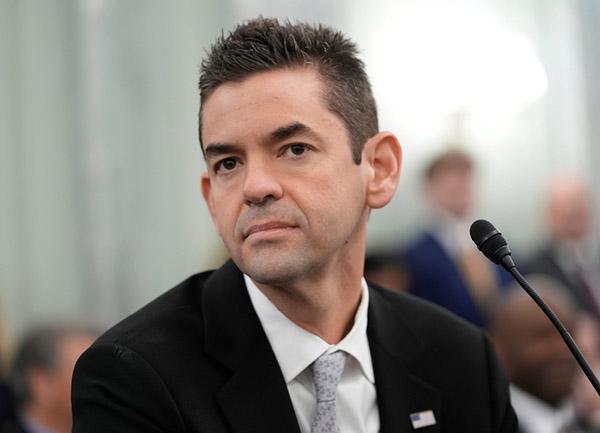
Core Viewpoint - The competition for the NASA Administrator position is intensifying, with Jared Isaacman proposing significant reforms to enhance U.S. competitiveness in space against China, while current acting Administrator Sean Duffy also seeks to be confirmed [1][5]. Group 1: Proposed Reforms by Jared Isaacman - Isaacman aims to restructure NASA through his "Athena Plan," focusing on maintaining U.S. leadership in space, unlocking orbital economies, and accelerating transformative discoveries [1][3]. - He suggests outsourcing certain NASA tasks to private companies and proposes a "science as a service" model, where NASA would purchase scientific data from commercial entities instead of building its own satellite network [3][4]. - Isaacman recommends halting funding for climate science missions, allowing the academic community to determine research directions independently [3][4]. Group 2: Specific Changes Suggested - In relation to the Artemis program, Isaacman believes NASA should stop developing the Space Launch System (SLS) rocket and cancel plans for the Gateway space station in lunar orbit [3][4]. - He questions the cost-effectiveness of contracts at NASA's Jet Propulsion Laboratory (JPL) and suggests a review of the agency's performance metrics [3][4]. - The "Athena Plan" proposes consolidating NASA's operational control into the Johnson Space Center in Texas and streamlining the agency's headquarters [4][5]. Group 3: Industry Reactions and Challenges - Some NASA experts argue that the agency requires comprehensive reforms to effectively operate in the new space era and enhance U.S.-China space competition capabilities [5]. - Critics assert that Isaacman's approach treats NASA like a business rather than a government agency, misunderstanding the nature of scientific funding [5]. - There are concerns that many of Isaacman's proposals would require Congressional approval, which could hinder their implementation [5][6]. Group 4: Current Context and Implications - The ongoing internal turmoil at NASA is seen as a potential threat to the U.S. goal of landing astronauts on the Moon by 2027, especially with the looming competition from China [8]. - The outcome of the leadership battle between Isaacman and Duffy may not resolve the challenges facing NASA, regardless of who ultimately leads the agency [8].