女性职业发展

Search documents
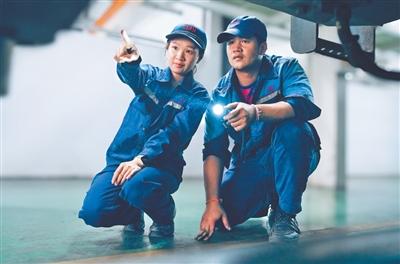
“我在中老铁路给列车做‘体检’”
Ren Min Ri Bao· 2026-01-11 00:05
Core Viewpoint - The article highlights the significant role of female workers, particularly in technical positions, within the Laos-China Railway, showcasing their contributions and the evolving landscape of gender representation in the railway industry [4][7]. Group 1: Employee Experience and Contributions - The article features a young Laotian woman, Peng Mengyu, who works as a locomotive mechanic, emphasizing her dedication to ensuring the safety and efficiency of train operations [4][5]. - Peng Mengyu performs routine inspections on locomotives, often working late into the night, and has developed her skills through practical training and experience since joining the company in 2022 [5][6]. - The article notes that female mechanics like Peng Mengyu bring unique qualities such as attention to detail and patience, which are crucial for the high-stakes nature of locomotive maintenance [6]. Group 2: Gender Representation in the Industry - The Laos-China Railway Company has seen an increase in female employees, with 345 women making up approximately 20% of the workforce, surpassing the international railway industry average [7]. - The company actively promotes the development of female staff through various initiatives, including technical competitions and training programs, encouraging women to take on leadership roles [7]. - Female employees have achieved notable recognition, with 40% of the "Outstanding Laotian Employee" awards and 21% of the "Professional Technical Expert" awards going to women, indicating a shift towards greater gender equality in the railway sector [7].

何以为她丨罗马女导游:以热爱重启人生,用微笑连接世界
Xin Hua Wang· 2025-10-15 01:36
Core Insights - The article highlights the journey of Marina, a tour guide in Rome, who transformed her passion for art into a profession, emphasizing the importance of cultural exchange and understanding through tourism [1] Group 1: Professional Development - Marina has over 20 years of experience as a tour guide, having previously worked as an art teacher and in publishing before obtaining her tour guide license in her late 30s [1] - She initially worked part-time but gradually developed skills in team management and cross-cultural communication, becoming a trusted professional guide [1] Group 2: Gender Perspective - The article discusses the inherent advantages women have in the tour guide industry, such as flexibility, resilience, and empathy, which serve as effective cultural bridges [1] - Marina encourages young women to start their careers with confidence and to build their expertise gradually through practice [1] Group 3: Cultural Exchange - Marina's experiences with Chinese culture have broadened her perspective, noting similarities between Italian and Chinese histories [1] - She has studied Chinese language and believes that tourism is not just a means of livelihood but a pathway to foster understanding and friendship [1]
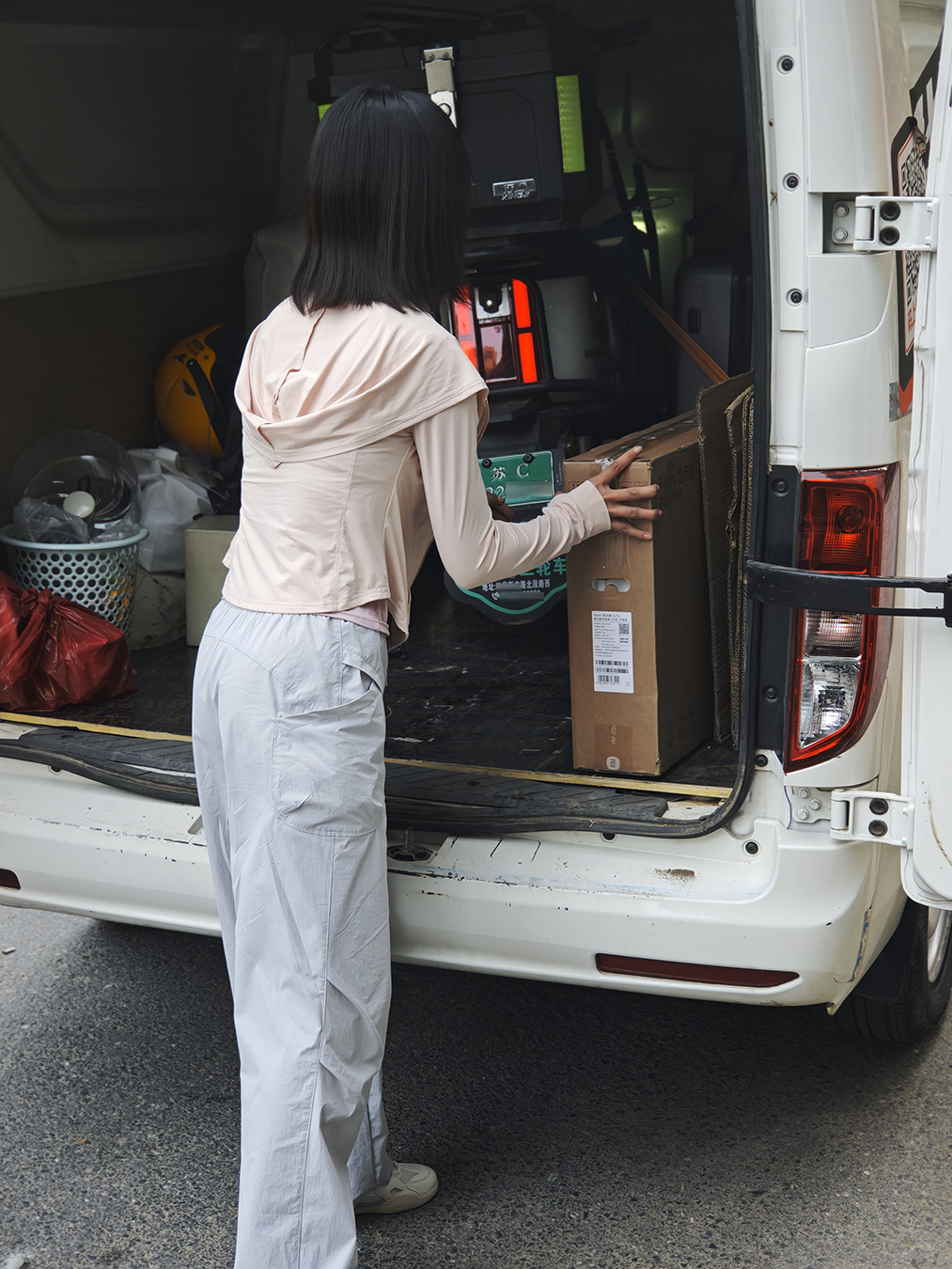
独居女性搬家时,为何难寻一名女货车司机?
Hu Xiu· 2025-05-15 03:59
Core Viewpoint - The article highlights the experiences and challenges faced by female truck drivers in the logistics industry, emphasizing the growing presence of women in a traditionally male-dominated field and the societal biases they encounter. Group 1: Female Truck Drivers' Experiences - The article recounts various experiences of women during their moving and driving jobs, illustrating feelings of discomfort and fear when interacting with male drivers or workers [1][2][3]. - A female truck driver, Xiaomi, shares her journey from being a yoga instructor to becoming a truck driver, highlighting the challenges and societal perceptions she faces in her new role [6][7][8]. - The report indicates that as of 2024, only 0.97% of truck drivers in China are women, although this number increases to 2.63% among those with less than two years of experience [8]. Group 2: Gender Dynamics in the Industry - The article discusses the increasing number of female truck drivers, with a report showing that over 14,000 new female drivers joined the platform in 2023, marking a 94% year-on-year growth [14]. - It notes that 22% of female drivers were full-time housewives before entering the profession, and 46% chose this job for the flexibility it offers to care for their children [16]. - The societal perception of women in physically demanding jobs is challenged, as the article argues that gender should not dictate job suitability [13]. Group 3: Challenges Faced by Female Drivers - Female drivers face unique challenges, including physical limitations compared to male counterparts, which can affect their job opportunities and competitiveness [24]. - The article highlights the difficulties female drivers encounter regarding basic needs, such as restroom access, which is a significant concern for 30% of female drivers [36]. - It also discusses the emotional and physical toll of the job, including the need to endure discomfort during menstruation and the pressure to maintain a certain image in a male-dominated field [39][40]. Group 4: Societal Bias and Safety Concerns - The article addresses the biases female drivers face, including skepticism about their abilities and the prevalence of derogatory comments from male clients [46][48]. - It emphasizes the safety concerns for female drivers, particularly when working alone at night or in unfamiliar areas, which can lead to feelings of vulnerability [60][64]. - The article concludes that while the presence of female drivers is increasing, long-standing gender biases and safety issues still need to be addressed for a more equitable work environment [68].