
好意同乘

Search documents
乘客“开门杀”、“好意同乘”遇车祸……这些热点问题如何定责?一文了解
Yang Shi Wang· 2025-11-10 01:57
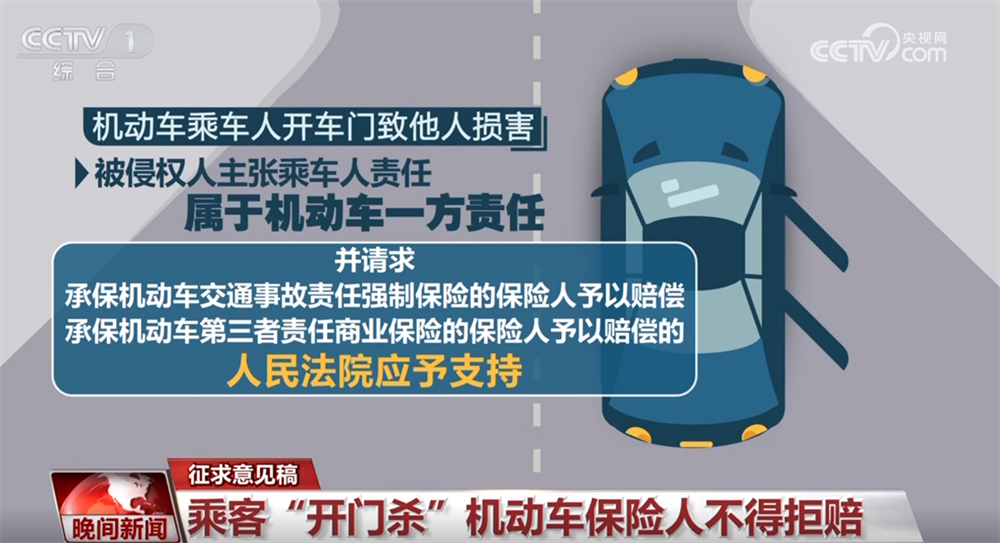
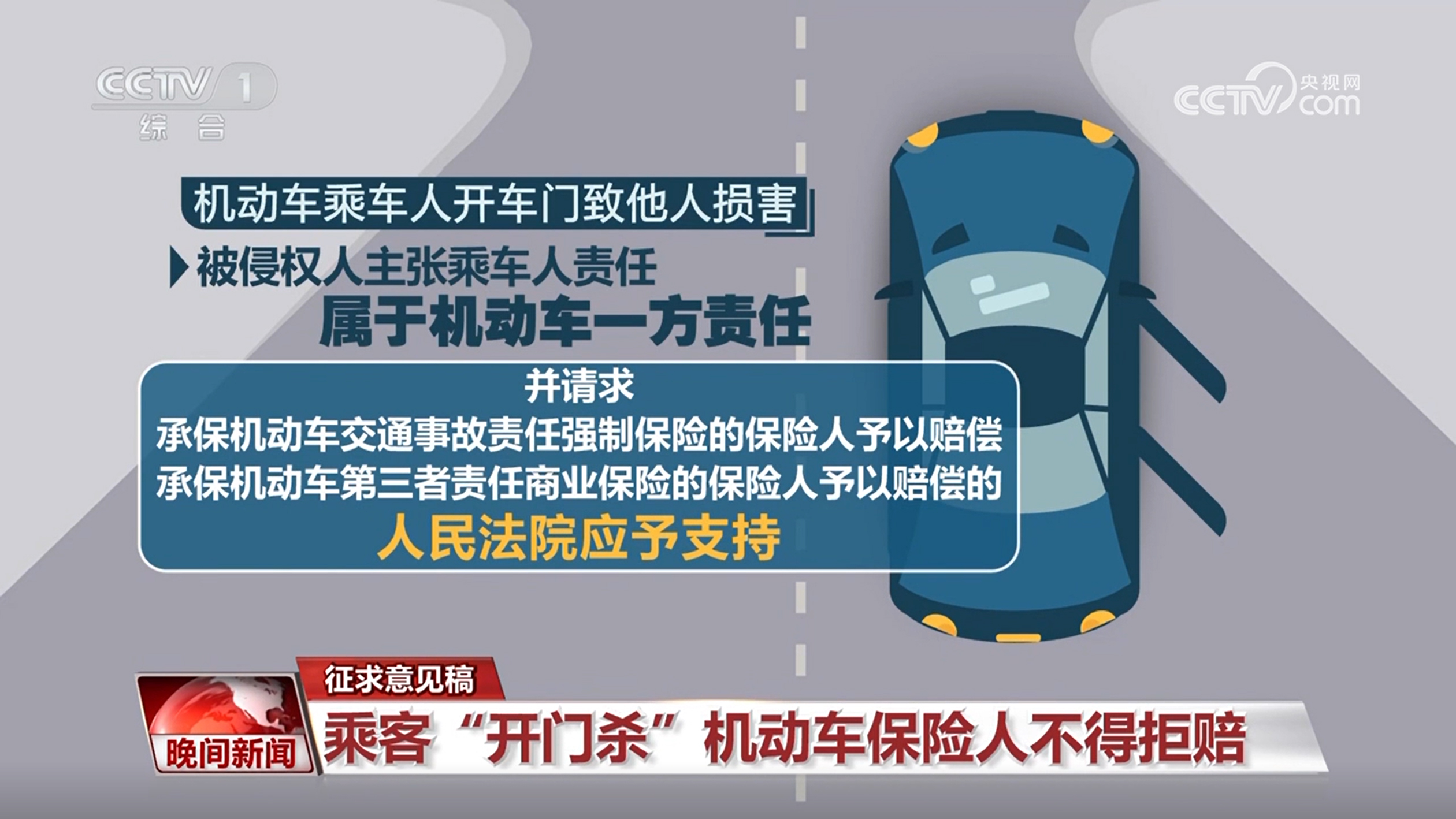
Core Points - The Supreme People's Court is seeking public opinion on the interpretation of laws regarding traffic accident liability disputes, with a deadline for feedback set for November 15 [1] Group 1: Passenger Liability - The draft stipulates that if a passenger opens a car door and causes harm to others, the liability falls under the motor vehicle's responsibility, allowing the injured party to claim compensation from the vehicle's insurance [2] - Legal expert Yue Shanshan emphasizes that this classification treats the passenger's action as a specific risk associated with the vehicle's use, rather than an independent tort by the passenger [4] Group 2: Electric Bicycle Accidents - In cases where an electric bicycle causes injury to a motor vehicle occupant, the court will consider the degree of fault of the electric bicycle operator, the consequences of the damage, and the danger level of the involved vehicles when determining compensation [4][6] - Yue notes that this comprehensive assessment will ensure that dangerous behaviors, such as illegal modifications or speeding, are accurately reflected in civil compensation [6] Group 3: Good Samaritan Rides - The draft states that in non-commercial vehicle accidents involving unpaid passengers, the court will evaluate the driver's major fault based on the traffic accident report and other relevant factors [6][8] - Yue explains that this approach protects well-meaning drivers from excessive liability while ensuring that passengers' rights are safeguarded when the driver is significantly at fault [8]

【最高人民法院】就交通事故责任纠纷司法解释征求意见
Yang Shi Wang· 2025-11-09 17:34
Core Points - The Supreme People's Court of China is seeking public opinion on the interpretation of laws regarding traffic accident liability, with a deadline for feedback set for November 15 [1] - The draft clarifies that if a passenger opens a car door and causes harm, the insurance for the vehicle must cover the damages, as this action is classified as a risk associated with the vehicle's operation [3][4] - The draft also addresses liability in accidents involving electric bicycles and motor vehicles, emphasizing a comprehensive assessment of fault and damage when determining compensation [6] Group 1 - The draft states that if a passenger opens a car door and causes damage, the insurance company cannot refuse to pay based on the argument that the passenger is not an insured driver [3] - Legal experts highlight that this classification of the passenger's action as a risk of the vehicle's operation ensures victims can receive compensation promptly from the more financially capable party [4] - The draft proposes that in accidents between electric bicycles and motor vehicles, courts should consider the degree of fault, damage consequences, and the danger level of each vehicle when determining compensation [6] Group 2 - The draft specifies that in non-commercial vehicle accidents involving unpaid passengers, courts should evaluate the driver's major negligence based on accident reports and the driver's specific actions [8] - Legal experts note that this approach protects well-meaning drivers from excessive liability while ensuring that passengers' rights are safeguarded in cases of serious driver negligence [8]
明确“开门杀”“好意同乘”责任划分、引导电动自行车强化规则意识……这些案例值得关注
Xin Hua Wang· 2025-10-30 09:36
Group 1 - The Supreme People's Court of China released six typical cases of traffic accident liability disputes to guide safe and civilized travel, emphasizing the importance of traffic safety for the public [1] - The case of "opening the door" highlights the shared responsibility of drivers and passengers, where both parties must exercise caution to prevent accidents, resulting in compensation of over 240,000 yuan for the victim [1] - The ruling reinforces the role of insurance in protecting victims while also raising awareness among drivers and passengers about their responsibilities [1] Group 2 - In the case of "Zhao vs. Qian," the court reduced the driver's liability due to the passenger's failure to wear a seatbelt, establishing a precedent for shared responsibility in "good Samaritan" situations [2] - The rise of ride-hailing services has prompted discussions on the liability of platform companies in ensuring passenger safety during rides [2] - The case involving a ride-hailing driver who caused injury to a passenger led to the court holding the platform company liable, emphasizing the need for proper management and safety protocols [2] Group 3 - The increasing popularity of electric bicycles has raised concerns about traffic violations and accidents, prompting legal scrutiny on liability in such cases [3] - In the case of "He vs. Li," the electric bicycle rider was found fully responsible for an accident, highlighting the need for electric bicycle riders to be aware of traffic rules and responsibilities [3] - The court's decision to hold the electric bicycle rider accountable serves as a reminder for all road users to enhance their awareness of traffic regulations and safety [3]
最高人民法院发布交通事故责任纠纷典型案例
Zhong Guo Xin Wen Wang· 2025-10-30 04:20
Core Viewpoint - The Supreme People's Court of China has released six typical cases regarding traffic accident liability disputes, emphasizing the importance of timely and adequate relief for victims, reasonable determination of responsibilities among parties involved, and the need to enhance awareness of traffic rules among participants [1][2][3]. Group 1: Timely Relief for Victims - The increase in non-motorized vehicles, particularly electric bicycles, has led to more traffic accidents, necessitating a focus on ensuring victims receive timely and adequate compensation [1]. - In case 3, the court determined the liability of the electric bicycle driver for injuries caused to a motor vehicle driver, balancing the degree of fault and the nature of the vehicles involved to ensure victim relief and promote awareness among electric bicycle users [1][3]. Group 2: Reasonable Determination of Responsibilities - Traffic accident liability disputes involve multiple parties, including drivers, victims, passengers, insurance companies, and ride-hailing platforms, requiring courts to clarify legal relationships and accurately assign responsibility [2]. - In case 2, the court applied the principle of "good Samaritan" to reduce the driver's liability, encouraging a culture of mutual assistance while enhancing the driver's awareness of responsibility [2]. - In case 4, the court recognized the contractual relationship between passengers and ride-hailing platforms, holding the platform accountable for passenger injuries, thereby promoting safety management within the industry [2]. Group 3: Enhancing Awareness of Traffic Rules - Traffic rules are essential for reducing accidents and maintaining order, and all participants must adhere to them [3]. - In case 1, the court ruled that both the driver and passenger of a motor vehicle share responsibility for damages caused by the passenger opening the door, emphasizing the need for caution and awareness during such actions [3]. - In case 6, the court upheld administrative penalties against non-motorized vehicle drivers who violated traffic signals, reinforcing the importance of compliance with traffic regulations [3].
免费搭载同事却出车祸,同事10级伤残索赔十几万元,法院:司机承担60%赔偿责任
Mei Ri Jing Ji Xin Wen· 2025-10-22 12:30
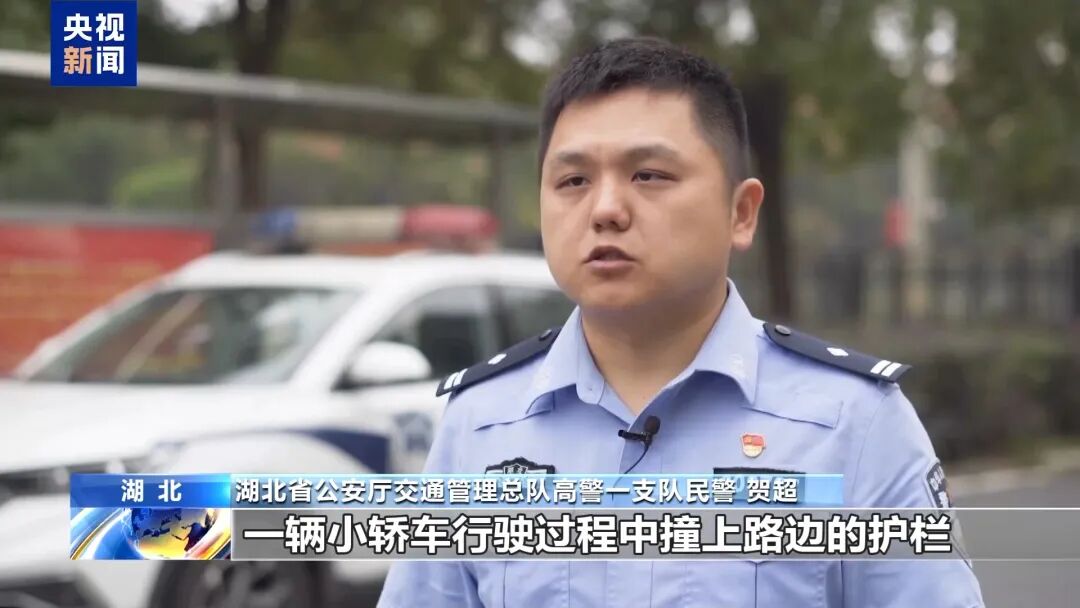
Core Viewpoint - The case highlights the legal implications of "goodwill rides" in traffic accidents, emphasizing the driver's responsibility and the potential for liability even in non-commercial situations [10][12]. Group 1: Incident Overview - A traffic accident occurred on the Fuyin Expressway in Hubei, where driver Wang offered free rides to two colleagues, resulting in injuries to both passengers [3][5]. - The accident was caused by Wang's abrupt steering, leading to the car colliding with the roadside guardrail [5][6]. Group 2: Legal Proceedings - The injured passenger, Zhang, sought over 100,000 yuan in compensation from Wang, who refused, leading to a lawsuit [8][10]. - The court determined that Wang bore full responsibility for the accident, while the passengers were deemed not at fault [6][12]. Group 3: Court Ruling - The court recognized the "goodwill ride" relationship, which typically reduces liability for non-commercial drivers unless there is gross negligence [10][12]. - Wang was found to have not exercised sufficient caution while driving, resulting in a 60% liability for the damages incurred by Zhang [12].
非机动车“好意同乘”出车祸,赔偿责任如何划分?
Ren Min Wang· 2025-05-16 01:02
Core Viewpoint - The court ruled on a traffic accident involving a motor vehicle and an electric bicycle, determining the compensation responsibilities among the parties involved, with the driver of the car bearing 70% of the liability, the cyclist 10%, and the passenger 20% [1][2]. Group 1: Accident Details - The accident occurred on April 22, 2024, when a car driven by Jiang collided with an electric bicycle ridden by Chen, resulting in injuries to Zhang, the passenger [1]. - Zhang incurred medical expenses exceeding 200,000 yuan due to the accident [1]. Group 2: Court Ruling - The court found that Jiang and Chen shared equal responsibility for the accident, leading to Jiang being liable for 70% of the compensation and Chen for 10% [2]. - The court referenced the Shandong Provincial regulations, which stipulate that in accidents involving motor vehicles and non-motor vehicles, the motor vehicle driver is liable for 60% to 70% of the compensation if the non-motor vehicle driver shares fault [2]. Group 3: Legal Principles - The court applied the principle of "good Samaritan" in determining Chen's liability, as he was providing a free ride to Zhang, which mitigated his responsibility [2][4]. - The ruling emphasized that the nature of the vehicle and the driver's intent are crucial in assessing liability in such cases [4].