
过错责任原则

Search documents
全国首例,“AI幻觉”引发的侵权案宣判
财联社· 2026-01-27 12:11
Core Viewpoint - The article discusses the first case in China regarding "AI hallucination" leading to a legal dispute, where the court ruled that AI-generated promises do not constitute legal obligations of the service provider [1][2]. Group 1: AI's Legal Status - The court determined that artificial intelligence does not possess civil subject status and cannot make legal declarations [2]. - AI-generated compensation promises are not considered as the service provider's legal expressions due to the lack of civil subject qualification [2]. Group 2: Liability Principles for AI - The court ruled that the case falls under the general fault liability principle rather than product liability, as AI services are categorized as "services" rather than "products" [3][4]. - The ruling is based on the absence of specific usage and quality standards for AI-generated content, which typically does not carry the high risk associated with product liability [3][4]. Group 3: Determining Infringement - The court examined whether the service provider had violated any duty of care, concluding that the plaintiff's claims were based on economic loss rather than infringement of personal or property rights [5]. - The court identified three layers of duty of care that service providers must adhere to, including strict review of harmful content, clear communication of AI limitations, and ensuring functional reliability [5][6]. Group 4: Court's Final Decision - The court found that the service provider had fulfilled its duty of care by displaying warnings about AI limitations and employing measures to enhance content reliability [6]. - The plaintiff failed to provide evidence of actual damages or a causal link between the AI's inaccurate information and their decision-making process, leading to the dismissal of the lawsuit [6].


“如果生成内容有误,我将赔偿您10万元”,全国首例因“AI幻觉”引发的侵权案宣判
券商中国· 2026-01-27 05:58
Core Viewpoint - The article discusses a legal case involving AI-generated misinformation, highlighting the concept of "AI hallucination" and its implications for liability and responsibility of AI service providers [1][4]. Group 1: Case Background - In June 2025, a high school student named Liang used an AI platform to inquire about college admission information, which resulted in the generation of inaccurate data regarding a university campus [2]. - Liang filed a lawsuit against the AI platform's developer, seeking compensation of 9,999 yuan due to the misleading information that he believed caused him to miss an admission opportunity [3]. Group 2: Court Ruling - The Hangzhou Internet Court ruled against Liang's lawsuit, stating that the AI's "promise" does not constitute a legal expression of intent from the platform, clarifying the boundaries of the service provider's duty of care [4]. - The court determined that AI does not possess civil subject status and cannot make legal declarations, thus the AI's generated compensation promise lacks legal effect [5]. Group 3: Liability Principles - The court applied the general fault liability principle from the Civil Code, rather than the strict liability principle applicable to product defects, due to the nature of AI services lacking specific quality standards [6]. - The court emphasized that the AI service provider's duty of care is dynamic and must adapt to the evolving nature of AI technology and its applications [7]. Group 4: Duty of Care - The court identified three layers of duty of care for AI service providers: 1. A strict obligation to review harmful or illegal content 2. A requirement to clearly inform users about the inherent limitations of AI-generated content 3. A basic duty to ensure functional reliability by employing industry-standard measures to enhance content accuracy [8]. - The court found that the defendant had adequately fulfilled its duty of care by providing clear warnings about the limitations of AI-generated content and implementing measures to improve reliability [8]. Group 5: Causation and Damages - The court ruled that Liang failed to provide sufficient evidence of actual damages resulting from the misleading information, thus could not establish a causal link between the AI's output and his alleged losses [7]. - The court concluded that the AI-generated misinformation did not significantly influence Liang's decision-making process regarding college applications, leading to the dismissal of the lawsuit [7].

AI“胡说八道”,平台要担责吗?法院判了
Nan Fang Du Shi Bao· 2026-01-20 15:28
Core Viewpoint - The case represents the first legal dispute in China regarding the liability of generative AI for misinformation, highlighting the need for clear boundaries on the responsibilities of AI service providers and the limitations of AI-generated content [1][3][8] Group 1: Case Background - In June 2025, a user named Liang sued an AI application for providing inaccurate information about college admissions, claiming it misled him and caused harm [2] - The AI's response to the error was a suggestion to sue, which led to the lawsuit where Liang sought compensation of 9,999 yuan [2] - The court ruled in favor of the AI operator, stating that the AI's generated content does not constitute a binding commitment from the platform [4][7] Group 2: Legal Principles Established - The court clarified that under current law, AI does not have civil subject status and cannot independently express intentions, meaning AI-generated promises are not binding on the platform [4] - The ruling established a "human responsibility" principle, indicating that the benefits and risks associated with AI systems should ultimately be managed by humans [4][8] Group 3: Liability and Responsibility - The court determined that the AI's misinformation does not automatically constitute tort liability; instead, it applies a fault liability principle, requiring examination of whether the platform acted negligently [5][7] - The ruling emphasized that AI service providers must fulfill certain duties of care, including ensuring that harmful or illegal content is not generated and providing clear warnings about the limitations of AI-generated information [6][8] Group 4: Guidelines for AI Service Providers - The court outlined specific obligations for AI service providers, including strict scrutiny for illegal content, reasonable measures to enhance accuracy, and clear user notifications about AI limitations [6] - Providers must implement industry-standard technical measures to ensure reliability and safety, especially in high-risk areas such as health and finance [6][7] Group 5: Implications for AI Governance - The court's decision reflects a balanced approach to AI governance, promoting innovation while ensuring legal compliance and public safety [8] - It stresses the importance of public awareness regarding the limitations of AI, urging users to maintain a critical perspective on AI-generated content [8]
滑雪场碰撞事故频发,谁该为意外“买单”?
Xin Lang Cai Jing· 2025-12-28 16:22
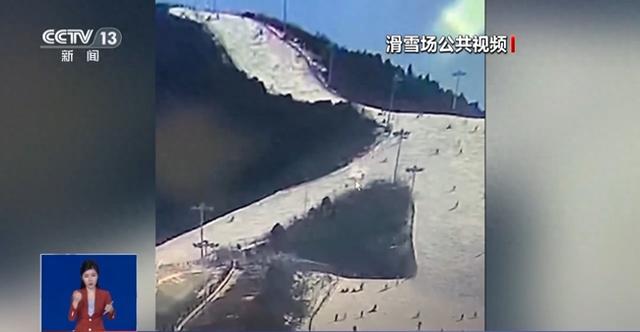
Core Viewpoint - The article discusses a legal case in Beijing regarding a skiing accident involving a minor, highlighting the responsibilities of skiers and ski resorts in ensuring safety and adhering to skiing regulations [1][9]. Group 1: Incident Details - A 12-year-old skier, Xiaomin, collided with a snowboarder, Yan, resulting in Yan suffering a fractured leg and requiring three months of recovery [3][9]. - Yan sought compensation of over 82,000 yuan for medical expenses and lost wages from Xiaomin and the ski resort [3][5]. Group 2: Legal Proceedings - Xiaomin's guardians argued that Yan's claims were excessive and that Xiaomin, being a minor, lacked sufficient understanding of skiing risks [5][9]. - The ski resort claimed it had fulfilled its safety obligations and should not be held liable for the accident [7][9]. Group 3: Court Rulings - The court ruled that Xiaomin was fully responsible for the accident as she did not adhere to the skiing priority rules, which state that the skier ahead has the right of way [9][10]. - Xiaomin's guardians were ordered to compensate Yan for his economic losses, a decision that was upheld upon appeal [9][10]. Group 4: Safety Regulations - The article emphasizes the importance of understanding skiing safety regulations, including the priority of skiers on the slope and the responsibilities of ski resorts to provide safety measures [10][20]. - Skiers are advised to wear protective gear and to be aware of their surroundings to prevent accidents [20]. Group 5: Additional Cases - Another case involved a skier, Yuan, who was injured while skiing and sought compensation from the ski resort, which was found to have partially failed in its duty to provide timely assistance [17][19]. - The court determined that the ski resort was 20% liable for Yuan's injuries, awarding him approximately 45,000 yuan in damages [17][19].
乘客“开门杀”、“好意同乘”遇车祸……这些热点问题如何定责?一文了解
Yang Shi Wang· 2025-11-10 01:57
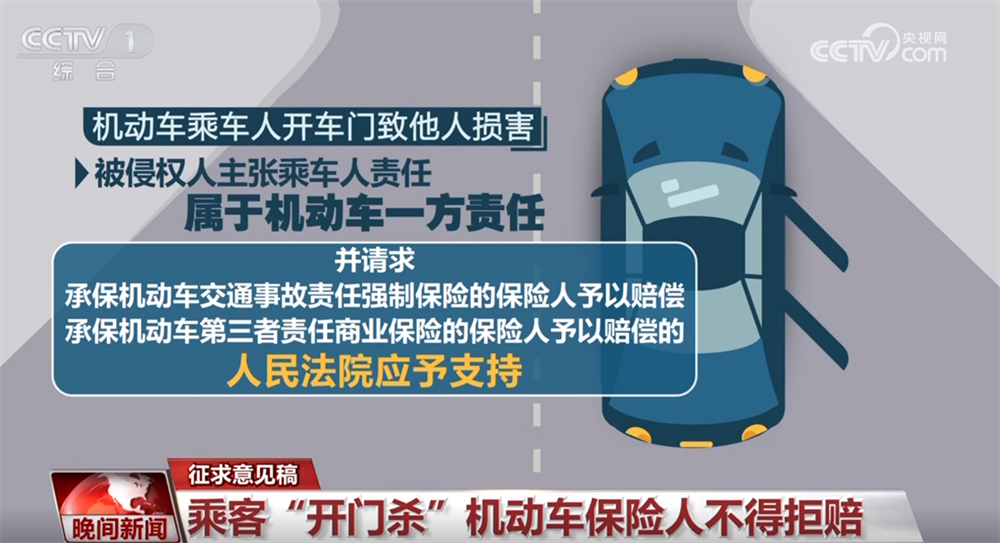
Core Points - The Supreme People's Court is seeking public opinion on the interpretation of laws regarding traffic accident liability disputes, with a deadline for feedback set for November 15 [1] Group 1: Passenger Liability - The draft stipulates that if a passenger opens a car door and causes harm to others, the liability falls under the motor vehicle's responsibility, allowing the injured party to claim compensation from the vehicle's insurance [2] - Legal expert Yue Shanshan emphasizes that this classification treats the passenger's action as a specific risk associated with the vehicle's use, rather than an independent tort by the passenger [4] Group 2: Electric Bicycle Accidents - In cases where an electric bicycle causes injury to a motor vehicle occupant, the court will consider the degree of fault of the electric bicycle operator, the consequences of the damage, and the danger level of the involved vehicles when determining compensation [4][6] - Yue notes that this comprehensive assessment will ensure that dangerous behaviors, such as illegal modifications or speeding, are accurately reflected in civil compensation [6] Group 3: Good Samaritan Rides - The draft states that in non-commercial vehicle accidents involving unpaid passengers, the court will evaluate the driver's major fault based on the traffic accident report and other relevant factors [6][8] - Yue explains that this approach protects well-meaning drivers from excessive liability while ensuring that passengers' rights are safeguarded when the driver is significantly at fault [8]
【最高人民法院】就交通事故责任纠纷司法解释征求意见
Yang Shi Wang· 2025-11-09 17:34
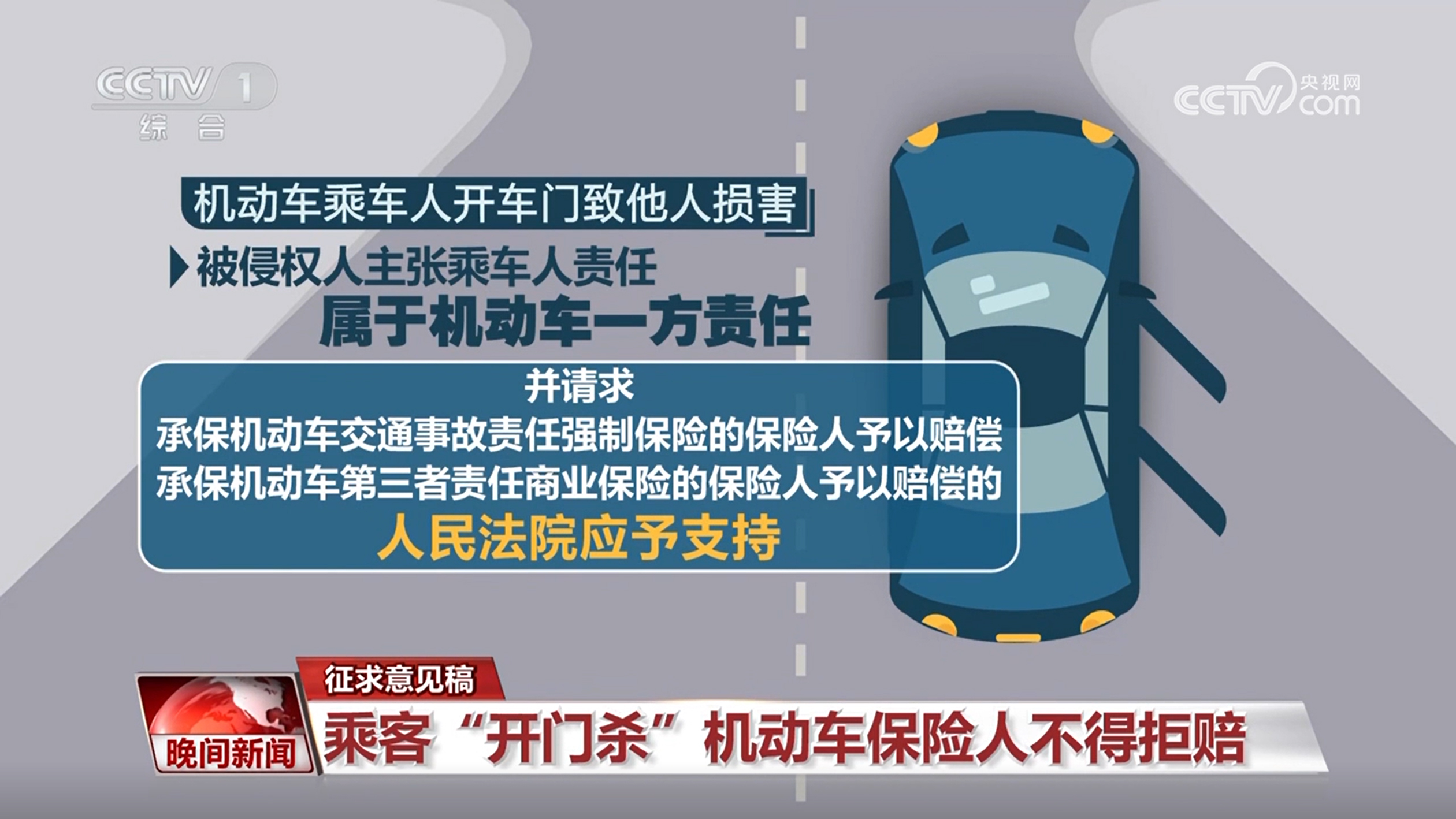
Core Points - The Supreme People's Court of China is seeking public opinion on the interpretation of laws regarding traffic accident liability, with a deadline for feedback set for November 15 [1] - The draft clarifies that if a passenger opens a car door and causes harm, the insurance for the vehicle must cover the damages, as this action is classified as a risk associated with the vehicle's operation [3][4] - The draft also addresses liability in accidents involving electric bicycles and motor vehicles, emphasizing a comprehensive assessment of fault and damage when determining compensation [6] Group 1 - The draft states that if a passenger opens a car door and causes damage, the insurance company cannot refuse to pay based on the argument that the passenger is not an insured driver [3] - Legal experts highlight that this classification of the passenger's action as a risk of the vehicle's operation ensures victims can receive compensation promptly from the more financially capable party [4] - The draft proposes that in accidents between electric bicycles and motor vehicles, courts should consider the degree of fault, damage consequences, and the danger level of each vehicle when determining compensation [6] Group 2 - The draft specifies that in non-commercial vehicle accidents involving unpaid passengers, courts should evaluate the driver's major negligence based on accident reports and the driver's specific actions [8] - Legal experts note that this approach protects well-meaning drivers from excessive liability while ensuring that passengers' rights are safeguarded in cases of serious driver negligence [8]
半夜,信用卡在境外被盗刷!
Zhong Guo Jing Ying Bao· 2025-07-19 07:30
Core Insights - The article highlights the increasing incidents of overseas credit card fraud, emphasizing the multiple factors contributing to these cases, such as CVV2 code leakage and the vulnerability of magnetic stripe cards [1][2][3] Group 1: Fraud Incidents - A case is presented where a cardholder experienced unauthorized transactions on their credit card, with amounts of 460 yuan and 1300 yuan being fraudulently charged while the cardholder was in China [2] - Many banks have issued warnings regarding the risks of overseas credit card fraud, advising customers to use chip cards and to protect their CVV2 codes [2][4] Group 2: Security Measures - Banks are encouraged to upgrade security measures by replacing magnetic stripe cards with chip cards, which are more secure and less susceptible to data theft [4][5] - A three-tiered protective mechanism is suggested, focusing on prevention, interception, and assistance, which includes implementing dynamic verification technologies and real-time transaction monitoring [3][6] Group 3: Responsibilities and Legal Framework - The responsibility for credit card fraud is primarily based on the "fault liability principle," where both cardholders and banks have specific obligations to fulfill [6][8] - Cardholders must safeguard their information and act promptly upon discovering fraudulent transactions, while banks are required to implement robust security measures [8][9] - Legal precedents indicate that banks may bear the primary responsibility for losses if they fail to detect fraudulent transactions or if the cardholder has acted without negligence [7][8]