学术造假

Search documents
只要交钱,高中生也能发NeurIPS?港大教授怒批顶会变味
3 6 Ke· 2025-12-08 07:23
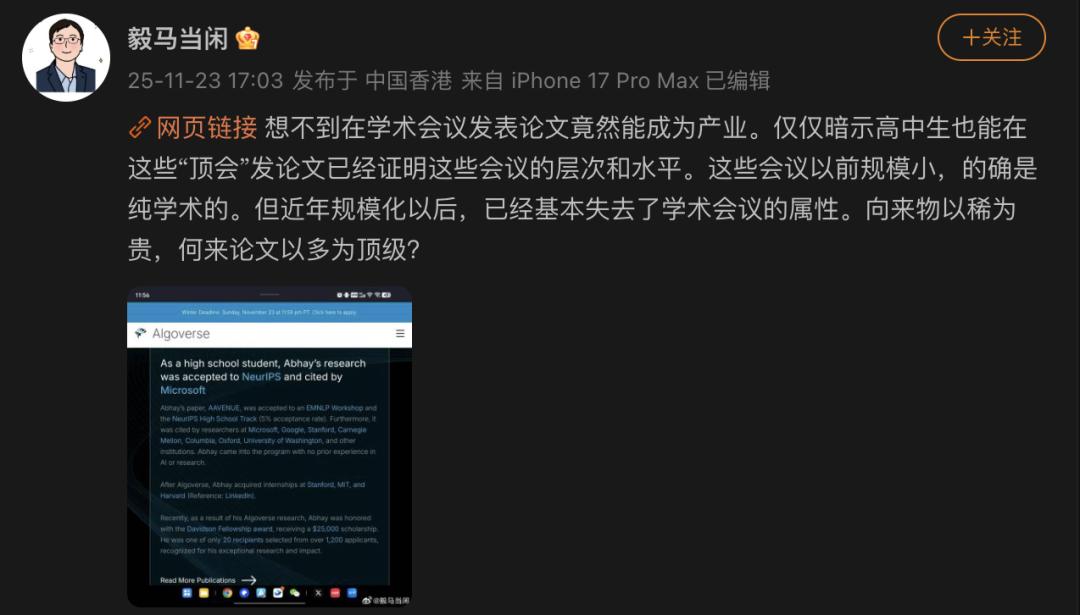
Core Viewpoint - The commercialization of academic research, particularly in the field of AI, is leading to a dilution of academic integrity and trust, resulting in a potential crisis of value in academic credentials and research quality [1][15]. Group 1: Commercialization of Academic Research - The rise of institutions like Algoverse is turning academic conferences into a commercialized "academic game," where acceptance rates for papers can be artificially inflated to 68%-70%, significantly higher than the average of 30%-50% from reputable academic institutions [3][5]. - Algoverse markets its services to high school and undergraduate students, claiming to help them produce impactful AI research that can be published in top conferences, thus capitalizing on parental anxiety regarding college admissions [8][14]. Group 2: Impact on Academic Integrity - The practice of paying for research paper authorship and conference participation is commodifying academic reputation, leading to a scenario where academic achievements can be purchased rather than earned [15][16]. - The phenomenon of "paper mills" is exacerbated by AI technologies, which can generate low-quality or fraudulent academic papers, further undermining the credibility of academic research [19][22]. Group 3: Consequences of Commercialization - The increasing number of papers being submitted to top conferences, such as NeurIPS, has surged from 9,467 in 2020 to 21,575 in 2025, creating resource strain and potentially diluting the quality of accepted research [23]. - The commercialization trend may lead to a vicious cycle where the quantity of published papers increases while their value decreases, resulting in academic inflation and devaluation of degrees [16][17].

起底“首席科学家”骗局:9.9的假学历,骗走千万
3 6 Ke· 2025-12-04 07:32
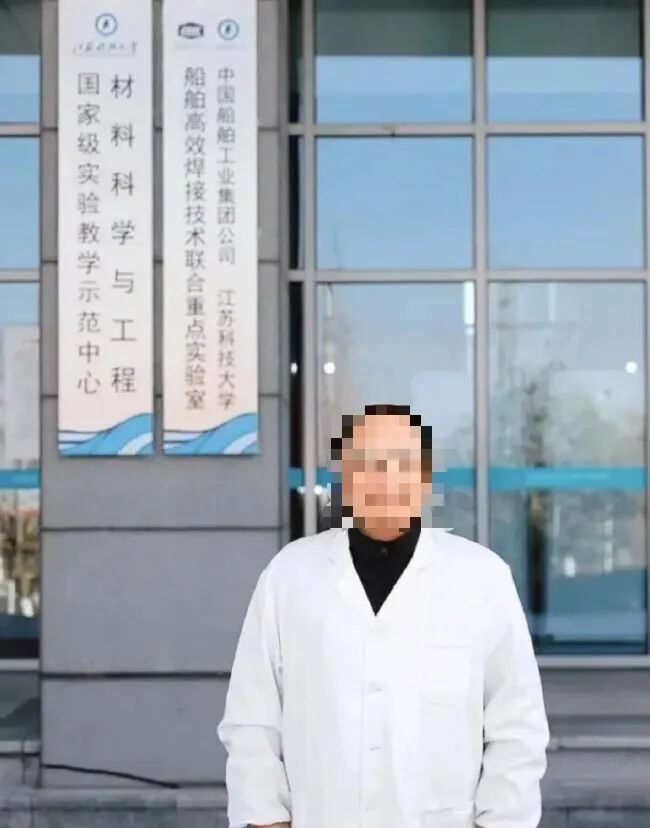
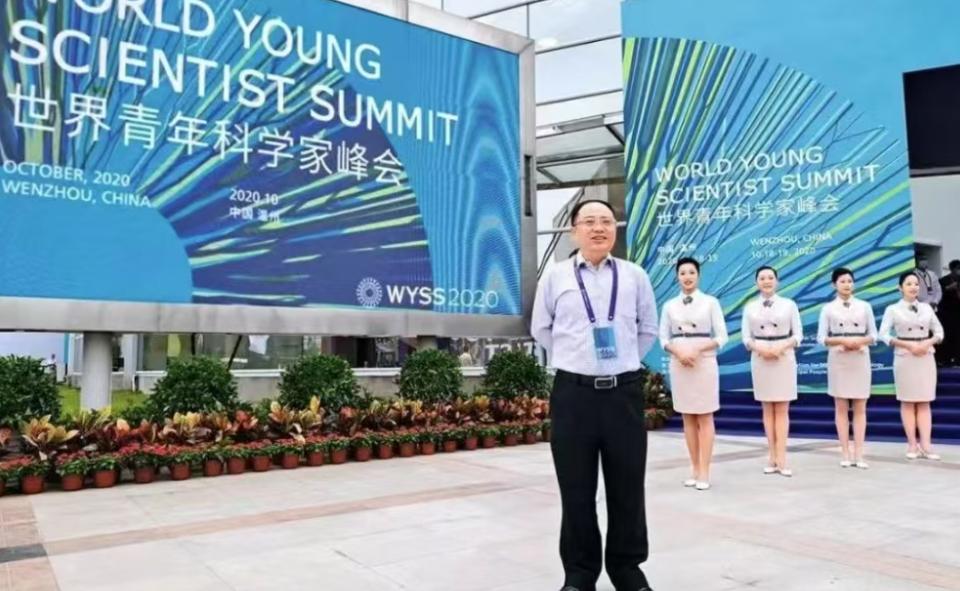
Core Insights - The article discusses the rise and fall of Guo Wei, a high school dropout who fabricated an impressive academic and professional identity, ultimately deceiving institutions and individuals in the academic field [1][6][27]. Group 1: Background and Rise - Guo Wei, originally a high school dropout from Jiangxi, claimed to be the top science student in the 1994 college entrance examination and fabricated a prestigious academic background, including being a chief scientist at Jiangsu University of Science and Technology [1][9][11]. - He created a false narrative of being an internationally recognized scientist, claiming numerous accolades and achievements, including being a "national major talent project A-class innovative talent" and a "Humboldt Young Scholar" [4][7][14]. - Guo's fabricated resume allowed him to secure a position as a professor and chief scientist, with a salary of 1.4 million yuan and a housing allowance of 3 million yuan, bypassing the usual academic promotion ladder [17][18]. Group 2: Deception Tactics - Guo Wei utilized various strategies to maintain his deception, including creating a fake company that he presented as a research institution and producing promotional materials to enhance his credibility [19][21]. - He claimed to have supported several national projects and published over 180 SCI papers, all of which were later revealed to be fabricated [16][31]. - To further bolster his image, Guo purchased fake honors and titles, including a foreign academician title, which he used as leverage in his academic pursuits [25][28]. Group 3: Exposure and Consequences - Guo's fraudulent activities came to light when a netizen questioned his claimed titles, leading to investigations that revealed the lack of evidence for his academic credentials [28][30]. - The fallout from his deception affected not only Guo but also the 12 doctoral students he supervised, who were left without guidance and had their research interrupted [32][34]. - The total financial impact of Guo's fraud is estimated to exceed 20 million yuan, including salaries, project funds, and profits from his associated companies [32][34].
《华尔街日报》丨一名麻省理工学院学生凭借人工智能研究令顶尖经济学家惊叹——然后身败名裂
Xin Lang Cai Jing· 2025-11-23 17:25
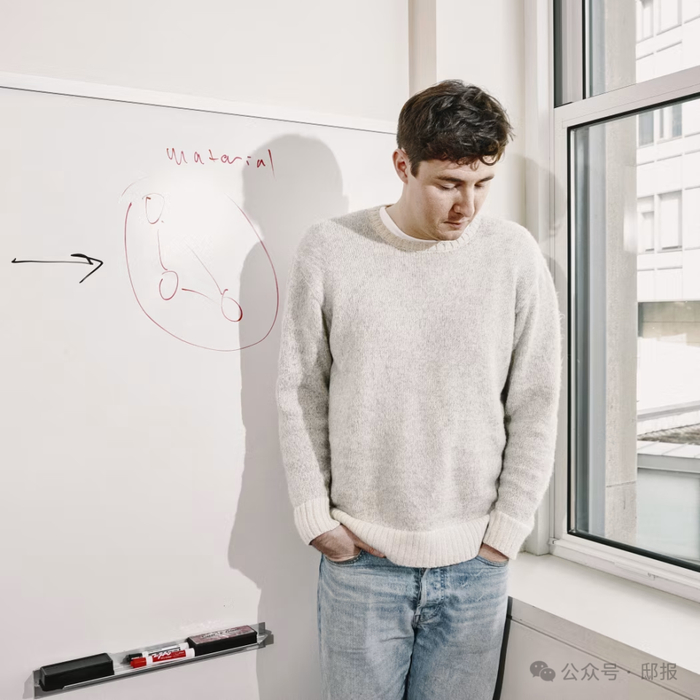
Core Insights - Aidan Toner-Rodgers, a 27-year-old MIT student, gained rapid recognition in the economics field for his AI research but faced allegations of academic fraud shortly after [3][4][5] - His paper claimed that AI improved workplace efficiency and innovation, but doubts arose regarding the authenticity of his data and findings [4][5][20] - The incident has prompted discussions within MIT and the broader academic community about the need for stricter standards in research verification [7][27] Group 1: Background and Rise - Toner-Rodgers was a graduate student at MIT, where he wrote a paper on AI's impact on the workplace that gained significant attention, including being cited in congressional hearings [4][5] - His research was supported by notable professors, including Nobel laureate Daron Acemoglu, which initially lent credibility to his work [4][5] - The paper suggested that AI tools increased productivity but faced skepticism regarding the acceptance of such tools among workers [4][5] Group 2: Fraud Allegations - Concerns about the validity of Toner-Rodgers' research emerged when it was discovered that he fabricated data rather than merely altering variables [5][20] - The investigation began after Charles Elkan, a computer scientist, raised questions about the feasibility of the claims made in the paper [20][21] - MIT later distanced itself from the research, stating it did not recognize the validity of the data or findings [25] Group 3: Academic Implications - The incident has led to discussions among MIT economics professors about enhancing standards for graduate research, including stricter data verification processes [7][27] - The academic community is reflecting on the vulnerabilities exposed by this case, with calls for increased skepticism and diligence in research practices [27][28] - Acemoglu noted that researchers will likely become more cautious and suspicious in the future due to this incident [28]
俄罗斯工程院回复“郭某”事件
第一财经· 2025-11-23 07:10
Core Viewpoint - The article discusses the academic fraud incident involving Guo Wei from Jiangsu University of Science and Technology, highlighting the university's acknowledgment of significant recruitment flaws and the ongoing investigation by the Russian Academy of Engineering regarding Guo Wei's election as a foreign academician in 2025 [3][5]. Group 1 - The Russian Academy of Engineering's China headquarters is currently verifying the information related to Guo Wei's election as a foreign academician in 2025 [3]. - Jiangsu University of Science and Technology has admitted to major recruitment vulnerabilities in light of the academic fraud allegations against its chief scientist [5].
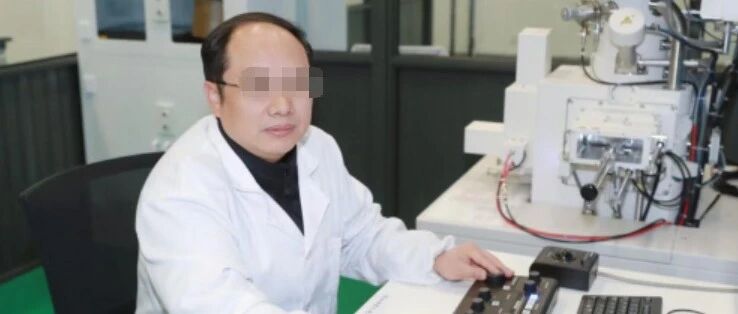
俄罗斯工程院最新通报:正在核查,郭伟外籍院士资格暂予中止!江科大首席科学家被打假,自称曾获得8000余万元研究经费
Mei Ri Jing Ji Xin Wen· 2025-11-23 06:59
Core Points - The article discusses allegations against Guo Wei, a former chief scientist at Jiangsu University of Science and Technology, regarding academic fraud, degree falsification, and misappropriation of national research funds [1][6][7] - The Russian Academy of Engineering has initiated an investigation into Guo Wei's claims of being elected as a foreign academician in 2025, temporarily suspending his qualification during the review process [4][6] - Jiangsu University has confirmed the initiation of an investigation following reports of academic misconduct, resulting in the termination of Guo Wei's employment and a report to law enforcement [6][7] Group 1 - Guo Wei has an impressive academic and professional background, including titles such as "Top Scholar in College Entrance Examination," "Chief Scientist," and various awards, which have contributed to his reputation in academia and business [1][6] - Allegations surfaced on November 18, leading Jiangsu University to announce an investigation into Guo Wei's academic integrity, confirming serious misconduct and the termination of his employment [6][7] - The university acknowledged lapses in the verification process during Guo Wei's hiring and has committed to holding responsible parties accountable [6][7] Group 2 - Guo Wei's company, Lishui Hanbao Technology Co., Ltd., claims to focus on key technologies in metal materials, but has faced scrutiny due to a lack of employee insurance and failure to disclose annual reports since 2021 [8][10] - Guo Wei has been involved in multiple companies, with several facing operational issues, including revocation of business licenses, raising concerns about his business practices [10] - The article highlights the contrast between Guo Wei's claimed achievements and the operational realities of his companies, suggesting potential discrepancies in his professional narrative [8][10]
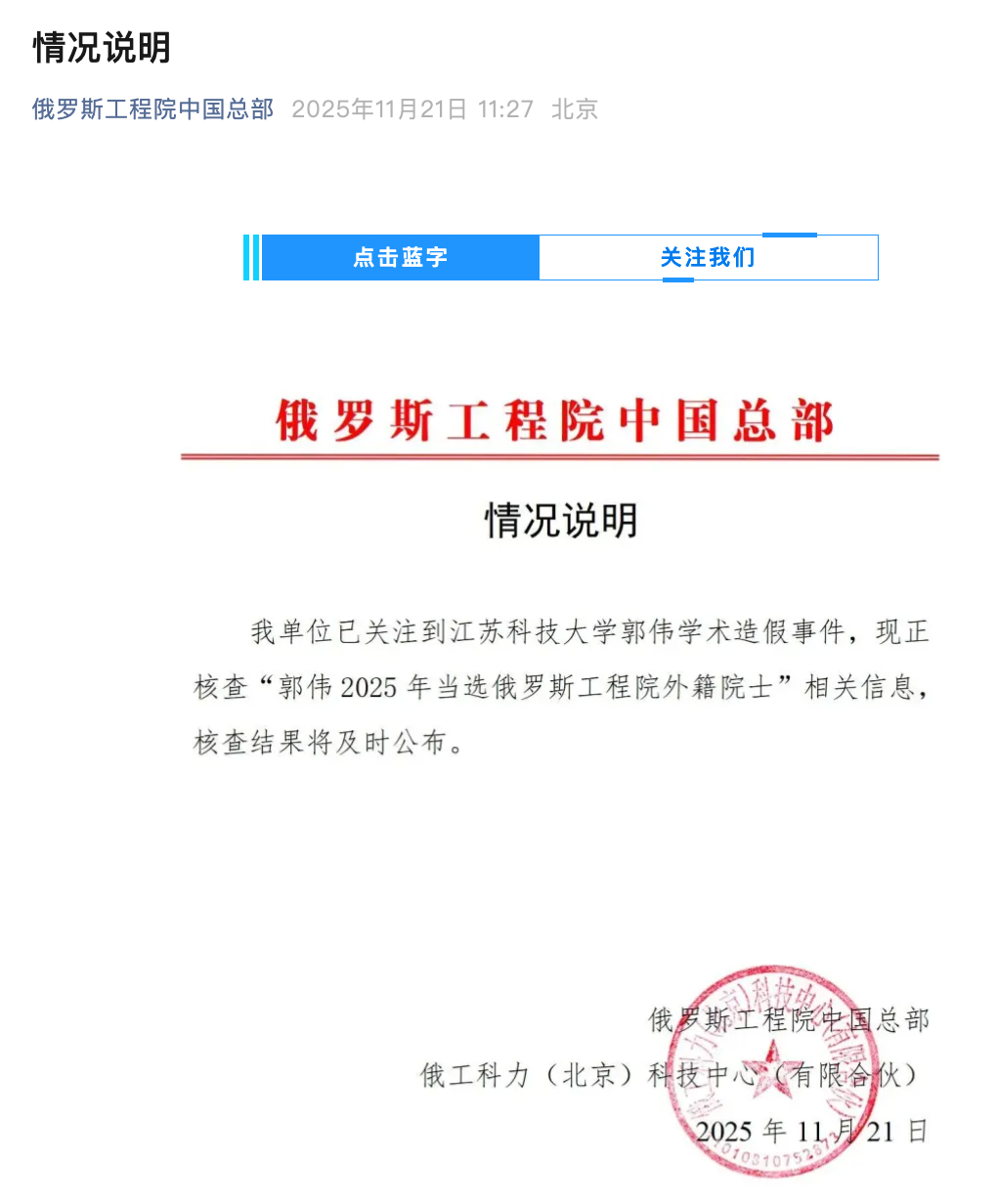
俄罗斯工程院发布情况说明
券商中国· 2025-11-23 04:12
Core Viewpoint - The article discusses the academic misconduct case involving Guo Wei from Jiangsu University of Science and Technology, highlighting the university's response and the ongoing investigation into his alleged fraudulent claims regarding his academic credentials [4][6]. Group 1: Incident Overview - On November 21, the Russian Academy of Engineering's China headquarters acknowledged the academic fraud incident involving Guo Wei and is currently verifying information related to his claim of being elected as a foreign academician in 2025 [1]. - Jiangsu University of Science and Technology issued a statement on November 18, confirming that they received a report of academic misconduct against Guo Wei in September 2025 and initiated an investigation [4]. - The investigation concluded that Guo Wei committed serious academic misconduct, leading to the termination of his employment and the arrangement of his team's academic responsibilities [4]. Group 2: Background Information - Guo Wei previously presented an impressive resume, claiming to be a top scorer in the Shaanxi Province college entrance examination and having studied at prestigious institutions such as the University of Wollongong in Australia and Kyushu University in Japan [5]. - His accolades included titles such as "A-class innovative talent of the National Major Talent Project," "German Young Humboldt Scholar," and "Foreign Academician of the Russian Academy of Engineering," focusing on nanomaterials research [5]. - However, most of these credentials have been proven to be false, leading to widespread attention and concern on the internet [6].
高中生变成大学首席科学家,爽剧都不敢这么编
虎嗅APP· 2025-11-21 09:31
Core Viewpoint - The article discusses the scandal involving Guo Wei, a supposed chief scientist at Jiangsu University of Science and Technology, who was exposed for having a high school diploma only, with his resume being fabricated or borrowed from others [4]. Group 1: Background and Discovery - Guo Wei claimed to have an impressive academic and professional background, including being a top science student in Shaanxi Province and holding positions in prestigious institutions [4]. - Investigations revealed that the claims about his academic achievements, such as being the top science student in 1994, were false, as the actual top student attended Tsinghua University [4]. - Jiangsu University acknowledged the serious academic misconduct and terminated Guo's employment, reporting the case to the police [4][8]. Group 2: Academic and Research Claims - Guo claimed to have published over 170 SCI papers and developed significant theories in materials science, yet searches in top journals revealed no publications under his name [6]. - He falsely claimed to have received national science and technology awards, which were actually awarded to other individuals with the same name [6]. Group 3: Financial Implications and Consequences - Guo allegedly misappropriated substantial research funds, with reports suggesting he managed projects totaling nearly $30 million [7]. - The scandal raises concerns about the integrity of academic hiring processes and the potential waste of academic resources, as genuine talent may be overlooked due to such fraudulent activities [8]. Group 4: Broader Implications for Academia - The incident highlights systemic issues within academic institutions regarding the verification of credentials and the prevalence of academic fraud [8]. - It suggests a need for stricter oversight and accountability in the hiring processes of academic and research positions to prevent similar occurrences in the future [8].
新华网快评丨到底是首席科学家“学术不端”,还是“高中生”招摇撞骗?
Bei Jing Ri Bao Ke Hu Duan· 2025-11-20 06:57
Core Viewpoint - Recent rumors surrounding a former chief scientist at a university, including allegations of academic misconduct and misappropriation of research funds, have sparked widespread public concern regarding academic integrity and research funding management [1]. Group 1: Academic Integrity - The involved university has acknowledged serious academic misconduct by the former chief scientist, indicating a failure in the material review process during his recruitment [1]. - The situation raises questions about whether the issue stems from the chief scientist's academic dishonesty or if it involves a "high school student" deceiving a higher education institution [1]. Group 2: Public Trust and Institutional Credibility - The university's vague response to public inquiries risks further erosion of public trust, potentially transforming an individual integrity crisis into a broader challenge to the institution's credibility [1].

高校“首席科学家”郭某,涉嫌学术造假、侵占科研经费等问题被带走调查!今年当选俄工程院外籍院士,校方:其已离职
新浪财经· 2025-11-19 09:39
Core Viewpoint - The article discusses allegations of academic fraud involving a doctoral advisor, highlighting the ongoing police investigation and the university's response to the situation [2] Group 1 - Allegations of academic fraud have emerged against a doctoral advisor, raising concerns about the integrity of academic qualifications [2] - The police have taken action by investigating the claims, indicating the seriousness of the allegations [2] - The university has issued a response, addressing the situation and the steps being taken to ensure transparency and accountability [2]
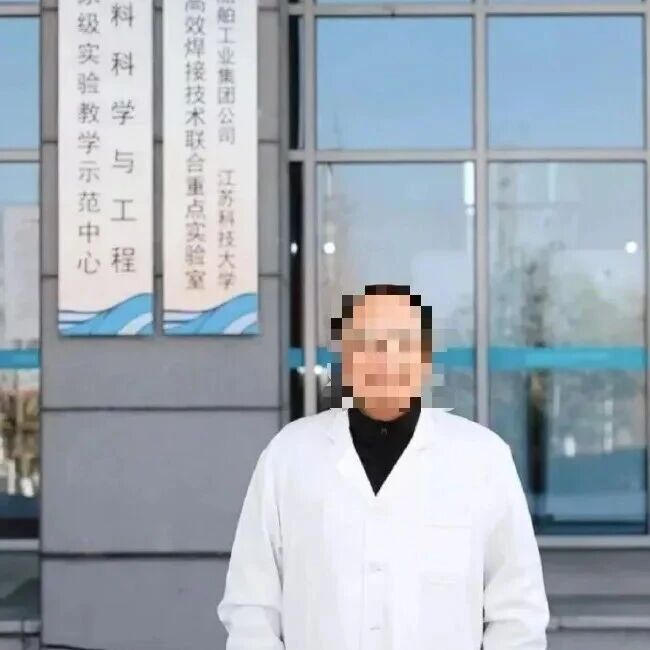
高校“首席科学家”郭某,涉嫌学术造假、侵占科研经费等问题被带走调查!今年当选俄工程院外籍院士,校方:其已离职
Mei Ri Jing Ji Xin Wen· 2025-11-18 16:37
Core Points - Recent allegations against Guo, a former chief scientist at Jiangsu University of Science and Technology, include academic fraud, misappropriation of national research funds, and discrepancies in his public resume [1][3][5] Group 1: Allegations and Investigations - Guo has been taken away by the police for investigation regarding academic fraud and misappropriation of national research funds [3] - Jiangsu University of Science and Technology confirmed that Guo is no longer with the institution, and his students have been reassigned to new advisors [3] - Guo's profile has been removed from the university's official website following the allegations [3] Group 2: Academic and Professional Background - Guo was recognized as a top talent in various capacities, including being a chief scientist and a nominee for prestigious awards [3][5] - His academic credentials include a history of significant research contributions, such as leading seven national projects and publishing over 170 SCI papers [5] - Guo's career includes positions at international institutions and notable achievements in materials science, including awards for scientific progress [5]