
安全保障义务

Search documents
小区里有个马蜂窝
Xin Lang Cai Jing· 2026-01-31 18:30
Group 1 - The incident involved two children, Xiao Ming and Xiao Liang, who were stung by wasps after disturbing a wasp nest while playing in a community area [1] - The property management company is being held responsible for not detecting the wasp nest, which is part of their duty to maintain safety and manage the environment in the residential area [2] - The court ruled that the property management company must compensate 30% of the medical expenses for the children, acknowledging that while the company had some responsibility, the children also contributed to the incident by disturbing the nest [2] Group 2 - Wasp sting incidents are common, and the consequences can range from mild pain and swelling to severe allergic reactions or even death [2] - Wasp nests are often hidden and difficult to detect, making it challenging to prevent such incidents, especially during summer outdoor activities [2] - It is advised to observe the surroundings and avoid provoking wasps, as they are aggressive and protective of their nests [2]
滑雪撞伤人责任如何划分滑雪场需承担全方位安全保障义务
Xin Lang Cai Jing· 2026-01-10 15:25
Core Viewpoint - The article discusses the responsibility allocation in skiing accidents, emphasizing that ski resorts must provide comprehensive safety guarantees and that liability depends on the circumstances of each incident [1] Group 1: Legal Framework and Liability - Skiing is recognized as a high-risk sport, and participants must understand the associated risks [1] - The "self-assumed risk" rule in China's Civil Code applies only when other participants do not exhibit intentional or gross negligence [1] - Liability in skiing accidents is determined by the degree of fault and specific circumstances of the incident [1] Group 2: Ski Resort Responsibilities - Ski resorts must obtain a "High-Risk Sports Project Operating License" and employ certified personnel for safety management [1] - Clear warning signs and safety rules must be displayed, especially for vulnerable groups such as minors and the elderly [1] - Regular maintenance of facilities and prompt emergency response protocols are required to ensure skier safety [1]
普法时刻 | 初次滑雪就摔伤 应由谁担责
Xin Lang Cai Jing· 2025-12-19 09:12
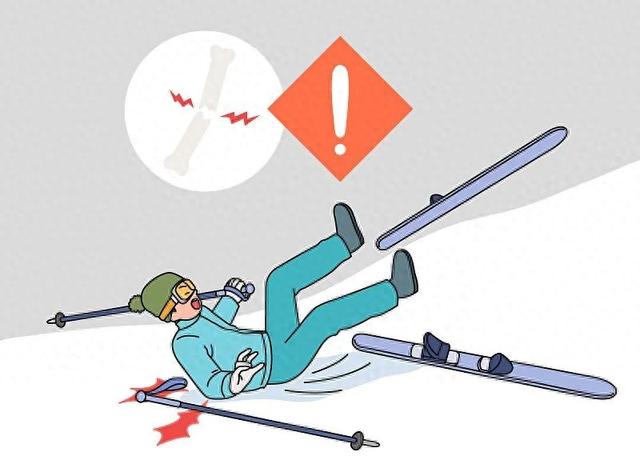
Group 1 - The case highlights the responsibility of operators of high-risk sports venues, such as ski resorts, to provide a reasonable level of safety assurance to participants [3][4] - The court determined that the ski resort operator failed to fulfill its safety obligations by not providing necessary guidance to a novice skier, leading to the skier's injury [3] - The skier was found to have some responsibility for the accident due to not adhering to safety guidelines and attempting to ski without adequate skills [3][4] Group 2 - The court ruled that the ski resort company should bear 60% of the compensation responsibility, while the skier was assigned 40% of the responsibility for the accident [3] - The insurance company of the ski resort is required to compensate the skier for a portion of the economic losses, amounting to 39,357.49 yuan, while the ski resort itself will pay 4,373.05 yuan [3] - The case serves as a reminder for participants in high-risk sports to understand the inherent risks and to take greater personal safety precautions [4]

在餐厅用餐时滑倒受伤,责任如何认定?
Ren Min Ri Bao· 2025-09-15 23:23
Group 1 - The case involves a restaurant's liability for a customer's injury due to a slip and fall incident, where the court ruled that the restaurant was 60% responsible for the damages incurred by the customer [1] - The court ordered the restaurant to pay over 120,000 yuan in total damages, which includes medical and nursing expenses for the injured customer [1] - The restaurant's failure to maintain a safe environment and promptly address hazards contributed to the incident, highlighting the importance of safety measures in the food service industry [2] Group 2 - According to the Civil Code, restaurant operators have a legal obligation to ensure customer safety, which includes maintaining proper building standards and addressing hazardous conditions like wet floors [2] - The court emphasized that the restaurant did not fulfill its safety obligations, leading to the customer's injury, thus reinforcing the need for compliance with both legal and industry safety standards [2] - The injured customer also bore some responsibility for her safety, as she is considered a fully capable adult, which reflects the shared responsibility in such incidents [2]
在餐厅用餐时滑倒受伤,责任如何认定?(新闻看法)
Ren Min Ri Bao· 2025-09-15 22:22
Core Viewpoint - The case highlights the responsibility of restaurant operators in ensuring customer safety and the legal implications of failing to meet safety obligations, resulting in shared liability for injuries sustained by customers [1][2]. Group 1: Incident Details - A woman named Wang fell and was injured while walking to her seat in a restaurant, leading to her hospitalization [1]. - The restaurant staff took approximately three minutes to clean the area where the incident occurred after Wang's fall [1]. Group 2: Court Ruling - The court determined that the restaurant was 60% responsible for Wang's injuries due to negligence in maintaining a safe environment, while Wang was deemed 40% responsible [1]. - The total compensation awarded to Wang for medical and care expenses amounted to over 120,000 yuan [1]. Group 3: Legal Obligations - According to Article 1198 of the Civil Code, restaurant operators are legally obligated to ensure customer safety, which includes maintaining proper facility standards and addressing hazardous conditions promptly [2]. - The court emphasized that the restaurant failed to eliminate safety hazards in a timely manner, violating both legal and industry standards [2]. Group 4: Responsibilities of Parties - Wang, as a fully capable individual, also had a duty to exercise caution regarding her own safety, thus sharing some responsibility for the incident [2].
28岁女律师不幸身亡,周某被执行死刑
Zhong Guo Xin Wen Wang· 2025-09-14 10:59
Group 1 - The civil trial regarding the case of a 28-year-old female lawyer who was killed by a falling brick has garnered significant attention, with the court hearing taking place in Changchun City, but no verdict was announced on the spot [1][7] - The plaintiff is seeking over 2 million yuan in compensation from five defendants, including Wanda Group and the night market management, for death compensation, funeral expenses, living expenses for dependents, and mental damage compensation [1][7] - The court inquired whether the parties agreed to mediation during the trial, with the plaintiff's family expressing uncertainty about the outcome and awaiting the court's decision [1][7][8] Group 2 - The incident occurred on June 22, 2023, when the victim was struck by a brick while passing through a night market, leading to the arrest of a 22-year-old male suspect who had been throwing objects from a high-rise building [2][4] - The suspect reportedly expressed a desire to harm others as a means of seeking death, and he was later sentenced to death by the Supreme People's Court [4][5] - The victim's family believes the tragedy could have been avoided, citing prior warnings to management about safety hazards, including the presence of bricks on the rooftop [5][6] Group 3 - The plaintiff's side argued that the location had long-standing safety issues, with bricks and other materials improperly stored, and that the defendants failed to fulfill their safety obligations [7][8] - The defendants, including Wanda, claimed they had taken necessary precautions and communicated with property management to mitigate risks, asserting that the presence of bricks was not the sole factor in the incident [8] - The court has not yet reached a decision on the case, and the plaintiff's family is committed to holding the responsible parties accountable to prevent future incidents [6][8]
KTV房间内激光灯致消费者手机摄像头损坏 维修费谁来承担?
Ren Min Wang· 2025-08-22 00:52
Core Viewpoint - The court ruled that the KTV operator is 70% responsible for the damage to the consumer's phone camera due to insufficient warning about the risks associated with laser lights, while the consumer bears 30% of the responsibility for not paying attention to the warnings [1][2]. Group 1: Incident Details - The incident occurred when a consumer, Xiaomei, discovered purple spots on her phone's front camera after using it in a KTV room equipped with laser lights [1]. - The damage was confirmed to be caused by laser burns, as indicated by a repair shop's assessment [1][2]. - The KTV operator initially denied responsibility, claiming the laser lights were certified and that warnings were posted [2]. Group 2: Court Findings - The court found that the KTV did have laser lights installed, which could potentially damage cameras, even if not directly aimed at them [2]. - Evidence presented by the consumer, including consumption records and photo comparisons, established a strong likelihood that the damage occurred at the KTV [2]. - The court noted that the warnings provided by the KTV were not sufficiently prominent or frequent to effectively inform consumers of the risks [2]. Group 3: Liability and Compensation - The court determined that the KTV operator failed to adequately inform consumers about the risks associated with the laser lights, leading to their 70% liability [2]. - The consumer was found to have some responsibility for not heeding the warnings, resulting in her 30% liability [2]. - The total repair cost was assessed at 1198 yuan, with the KTV required to compensate the consumer 838.6 yuan [2].
钓友突发疾病死亡,同行者是否担责?
Ren Min Wang· 2025-06-11 08:18
Core Viewpoint - The court ruled that the defendants, who were fishing companions, did not commit any tortious act and should not bear compensation liability, dismissing all claims from the plaintiff [3][4]. Group 1: Incident Overview - The incident involved three individuals, Zhang Xiaowei, Peng Jun, and Liu Zheng, who went fishing together at Changshou Lake in Chongqing [2]. - Zhang Xiaowei experienced sudden health issues, leading to his death from a myocardial infarction, despite attempts by his companions to assist him [2][3]. Group 2: Court's Reasoning - The court determined that the fishing activity was spontaneous and informal, lacking any organized structure or management, thus the defendants were not considered organizers of the event [3]. - The court found that the companions fulfilled their reasonable duty of care, as the rapid onset of Zhang's condition exceeded what could be reasonably anticipated by the defendants [3]. Group 3: Legal Implications - The ruling emphasized that the mutual assistance obligations among friends in casual social activities should not be overextended, distinguishing them from formal public venues with defined safety responsibilities [4]. - The court highlighted that the defendants were not professional medical personnel and their actions were consistent with common sense and reasonable expectations in such situations [4].
未戴护具进游戏区受伤 经营者能否免责?(以案说法)
Ren Min Ri Bao· 2025-05-07 22:40
Group 1 - The case involves a fitness center that offers a shooting experience, where participants are required to wear safety equipment in the game area due to the inherent risks of the activities [1] - The court ruled that the fitness center is 70% responsible for the injuries sustained by the plaintiff, while the plaintiff is 30% responsible, and the minor involved bears no liability [1][2] - The court emphasized that the fitness center, as an operator of a potentially dangerous activity, has a duty to ensure participant safety and failed to adequately supervise the environment during the game [1][2] Group 2 - The court noted that the plaintiff, being a fully capable adult, did not take necessary safety precautions despite being warned about the risks, thus sharing some responsibility for the incident [2] - The court determined that the minor, under the supervision of a coach and within the designated area, did not act negligently, and therefore should not be held liable for the incident [2] - The ruling highlighted the importance of operators providing a safe environment, conducting regular safety checks, and ensuring proper monitoring during activities to prevent accidents [2]