
宏观审慎工具

Search documents
稳定人民币汇率!央行将远期售汇业务外汇风险准备金率下调为0
Xin Lang Cai Jing· 2026-02-27 02:25
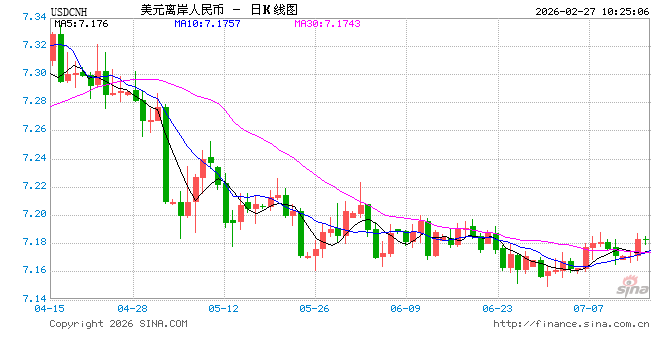
Core Viewpoint - The People's Bank of China (PBOC) announced a reduction of the foreign exchange risk reserve ratio for forward foreign exchange sales from 20% to 0% effective March 2, 2026, to support enterprises in managing exchange rate risks and to stabilize the RMB exchange rate [1][6]. Group 1: Policy Changes - The PBOC's decision to lower the foreign exchange risk reserve ratio is a response to market conditions, aimed at adjusting market supply and demand while stabilizing exchange rate expectations [1][6]. - The reduction in the reserve ratio is expected to encourage enterprises with actual demand to hedge against exchange rate risks at lower costs [1][7]. Group 2: Market Impact - The RMB faced strong appreciation pressure, with the onshore and offshore RMB against the USD both surpassing the 6.84 mark, reaching the highest level since April 2023 [2][7]. - Since the end of December 2025, the RMB has continued its appreciation trend, with the midpoint exchange rate appreciating by over 300 basis points in February alone, and both onshore and offshore RMB appreciating by more than 2% this year [2][7]. Group 3: Economic Context - The strengthening of the RMB is attributed to the stabilization of China-U.S. trade relations since November 2025 and a weaker USD, which has led to a general appreciation of non-USD currencies, including the RMB [8]. - Short-term forecasts suggest that the RMB will remain strong due to expected continued growth in exports and high market sentiment, with limited chances for a significant rebound in the USD index [8]. Group 4: Future Considerations - If the RMB continues to appreciate rapidly, other macro-prudential tools may be employed, such as adjusting the macro-prudential parameters for cross-border financing and increasing the foreign exchange deposit reserve ratio [4][8].

2024年人民币汇率年报:波动与韧性
Di Yi Cai Jing· 2025-03-27 12:56
Report Summary 1. Report Industry Investment Rating The report does not mention the industry investment rating. 2. Core Viewpoints - In 2024, the RMB exchange rate showed resilience in a complex macro - background. The nominal effective exchange rate index of the RMB increased, and it appreciated against a basket of currencies. Although it depreciated against the US dollar, it was less than most currencies. However, due to the continuous "inversion" of the Sino - US interest rate spread, there was always adjustment pressure on the RMB exchange rate. [8][15] - In 2025, changes in domestic and foreign macro - events may intensify the volatility of the RMB exchange rate. The scale of domestic incremental counter - cyclical regulatory policies and the overseas political and economic situation, especially Trump's re - election, will have an impact on the RMB exchange rate. The differentiation of Sino - US monetary policies may also cause adjustment pressure on the RMB exchange rate against the US dollar. [9][37] - In the short term, macro - prudential tools are crucial for stabilizing the RMB exchange rate, while in the long term, it depends on positive and effective macro - policies. [10][44] 3. Summary by Directory 2024 RMB Exchange Rate Review - **RMB exchange rate trend is highly consistent with China's economic fundamentals**: In 2024, China's GDP growth rate and PMI showed a pattern of "high at the beginning, low in the middle, and rising at the end". The RMB exchange rate against a basket of currencies followed a similar trend. Policy introductions since late September 2024 boosted the GDP growth rate in the fourth quarter and the RMB exchange rate. [8][17] - **The RMB exchange rate remained resilient against the backdrop of a strong US dollar**: In 2024, the "strong US dollar" was a key feature in the international foreign exchange market. Most developed and emerging market currencies depreciated against the US dollar, but Asian currencies, including the RMB, showed resilience due to strong economic performance. The RMB's relatively small depreciation against the US dollar led to its appreciation against a basket of currencies. [9][20] - **The continuous "inversion" of the Sino - US interest rate spread created adjustment pressure on the RMB exchange rate**: The difference in the 10 - year government bond yields between China and the US widened in 2024. The inflation trends in the two countries led to different trends in their 10 - year government bond yields, and the Sino - US interest rate spread and the RMB exchange rate against the US dollar were strongly correlated. [29][32] 2025 RMB Exchange Rate Outlook - **Changes in domestic and foreign macro - events may intensify the volatility of the RMB exchange rate**: In 2025, the domestic expectation of more incremental counter - cyclical regulatory policies and Trump's re - election as the US president will make the global economic and trade pattern more volatile, which may magnify the exchange rate fluctuations of the RMB against the US dollar. [37][38] - **The differentiation of Sino - US monetary policies creates adjustment pressure on the RMB exchange rate**: China may implement more aggressive monetary easing policies, while the US will be more cautious about interest rate cuts due to inflation and tariff policies. The resulting continuous "inversion" of the Sino - US interest rate spread will be a "pressure source" for the RMB exchange rate against the US dollar in 2025. [40][43] - **Stabilizing the RMB exchange rate depends on macro - prudential tools in the short term and positive macro - policies in the long term**: The central bank has increased its regulation of the RMB exchange rate, and short - term regulatory measures have achieved certain results. In the long run, expanding domestic demand, promoting innovation, and ensuring economic stability are the cornerstones for stabilizing the RMB exchange rate. [44][45]