人民币汇率稳定

Search documents
事关人民币汇率,央行行长最新发声
21世纪经济报道· 2026-03-06 11:13
Core Viewpoint - The People's Bank of China (PBOC) is implementing a moderately accommodative monetary policy to support stable economic growth and high-quality development, with a focus on aligning central bank policies with market needs [3][4]. Group 1: Monetary Policy Adjustments - Since 2025, the PBOC has introduced several policy measures, including a 0.25 percentage point reduction in the structural monetary policy tool interest rate and an expansion of the lending scale to support private enterprises with a dedicated 1 trillion yuan relending program [3][4]. - In the first two months of the year, the PBOC injected approximately 2 trillion yuan of medium- and long-term funds into the market, maintaining a loose financing condition [3]. - As of the end of January and February, the social financing scale grew by 8.2% year-on-year, and the broad money supply (M2) increased by 9% year-on-year, indicating a stable financial environment [3]. Group 2: Bond Market and Financing Structure - The bond market saw a net financing of 16 trillion yuan in 2025, accounting for 46% of the increase in social financing, reflecting significant changes in China's financial market financing structure [4]. - The PBOC plans to continue implementing accommodative monetary policies in 2026, focusing on promoting stable economic growth and reasonable price recovery [4]. Group 3: Exchange Rate Policy - The PBOC maintains that there is no intention to devalue the currency for trade advantages, emphasizing the importance of market forces in determining the exchange rate [6][7]. - The RMB has appreciated against the USD this year, attributed to the improving Chinese economy and a weakening USD index, with the current exchange rate being within a historical average range [7][8]. - The PBOC aims to ensure the stability of the RMB at a reasonable and balanced level while managing market expectations [7]. Group 4: Loan Cost Transparency - The PBOC emphasizes the need for banks to clearly disclose the annual comprehensive financing costs of loans to enterprises and to regulate intermediary fees in financing [10][11]. - The central bank will enhance the execution and supervision of interest rate policies to maintain low social financing costs and improve the transmission mechanism of monetary policy [11][12].


外汇头寸用于缴准的可行性探讨
China Post Securities· 2026-03-05 03:47
Group 1: Report Investment Rating - No investment rating for the industry is provided in the report [1] Group 2: Core Views - The central bank's decision on February 27, 2026, to lower the foreign exchange risk reserve ratio for forward foreign exchange sales from 20% to 0 is a counter - cyclical adjustment in the context of the RMB's phased strengthening, aiming to ease the amplifying effect of unilateral appreciation expectations on foreign exchange supply and demand [1][9] - There is a large amount of foreign exchange position precipitation in the banking system, and activating these positions and broadening the uses of foreign exchange funds is necessary to improve the efficiency of capital use in the banking system [2][23] - The historical practice of allowing banks to pay RMB deposit reserves with foreign exchange in 2007 achieved structural optimization of the source of reserve - paying assets. In the current context, restarting the "foreign exchange reserve payment" mechanism may have effects similar to a "reserve ratio cut", bring liquidity easing to large banks, and indirectly adjust the supply and demand in the foreign exchange market [3][27][28] Group 3: Summary by Directory 1. Central Bank Lowers Foreign Exchange Reserve Ratio to Counter RMB's Strong Rise - On March 2, 2026, the central bank lowered the foreign exchange risk reserve ratio for forward foreign exchange sales from 20% to 0, aiming to lower the cost of forward foreign exchange purchases, improve the efficiency of enterprises' hedging, and ease unilateral appreciation expectations [9] - The RMB's strengthening is related to the high record of recent foreign exchange settlement and sales data. From November to December 2025, the net foreign exchange settlement in RMB increased significantly, and in January 2026, it remained at a high level. The increase in foreign exchange reserves was significantly smaller than the impact of bank foreign exchange settlement and sales, indicating that the central bank did not conduct large - scale foreign exchange settlement and sales operations with commercial banks [11][12] 2. Evolution of the Central Bank's Foreign Exchange Policy and the Bank's Foreign Currency Position Management Model 2.1 Central Bank's Foreign Exchange Policy Changes and Management Tools - After the "811 Exchange Rate Reform", the foreign exchange regulation framework shifted from direct central bank intervention to indirect regulation and risk management using tools. The central bank uses various tools such as adjusting the forward foreign exchange sales risk reserve ratio and the foreign exchange deposit reserve ratio to guide market entities to manage exchange rate risks [14] - The main foreign exchange regulation tools include the forward foreign exchange sales risk reserve ratio, the financial institution foreign exchange deposit reserve ratio, and the cross - border financing macro - prudential adjustment parameter, each with different functions and current levels [15] 2.2 T - Account Perspective on Banks' Handling of Foreign Exchange Positions in Foreign Exchange Settlement and Sales Business - The difference in foreign exchange settlement and sales creates foreign exchange exposure. Banks need to consider spot flattening, forward foreign exchange, swap operations, or option processing based on the term structure and RMB capital gap. The T - account is used to understand the impact of these operations on liquidity [16] - Different foreign exchange business operations have different T - account entries. For example, spot agency foreign exchange settlement involves debiting foreign currency funds and crediting RMB funds, while forward foreign exchange settlement and sales first confirm derivative financial instruments at the signing date [16] - Currently, due to the complex external situation and large net foreign exchange settlement, a significant amount of foreign exchange funds remain in the banking system, limiting the efficiency of banks' use of domestic and foreign currency funds [19] - Banks have various uses for foreign currency funds, including paying foreign currency deposit reserves, allocating to highly liquid assets, investing in foreign currency loans and bonds, and engaging in inter - bank foreign currency lending. However, the current situation shows that there is a need to activate foreign exchange positions [22][23] 3. Feasibility Study of Using Foreign Exchange Positions for Reserve Payment during the Peak of Foreign Exchange Settlement and Sales - Currently, there is a large amount of foreign exchange position precipitation in banks, while RMB liquidity is relatively tight. The weighted legal deposit reserve ratio is close to the 5% lower limit, making it difficult to lower [26] - In 2007, the central bank required some large - scale banks to pay the newly increased RMB legal deposit reserves with foreign exchange funds, which optimized the source of reserve - paying assets and maintained the stability of the RMB asset market [27] - In the current context, restarting the "foreign exchange reserve payment" mechanism may have effects similar to a "reserve ratio cut", bring liquidity easing to large banks, and indirectly adjust the supply and demand in the foreign exchange market [28]
中美关系出现惊人的“缓和”,中国政府持续增持美元与外国证券?
Sou Hu Cai Jing· 2026-02-27 06:41
Group 1 - China is rapidly increasing its purchase of US dollars and foreign securities, which has become a focal point in the global foreign exchange and capital markets [1][3] - In December of the previous year, Chinese state banks and the central bank collectively bought over $100 billion in foreign exchange, a significant scale [1][10] - The trend of increasing purchases continued into January, indicating a strategic approach to diversify foreign exchange reserves and stabilize the RMB [3][10] Group 2 - The RMB has appreciated by over 2.4% this year, reflecting a strong upward trend in the currency [5] - As of January 2026, China's foreign exchange reserves reached a peak of $33,991 billion, the highest in nearly a decade, maintaining above the 3.3 trillion yuan mark for six consecutive months [12][26] - The increase in foreign securities investment has been notable, rising from $1.41 trillion at the end of 2024 to $1.95 trillion by September 2025, with US securities holdings exceeding $331.6 billion [14][16] Group 3 - China's strategy involves a dual approach of increasing US securities while simultaneously accumulating gold, indicating a defensive diversification logic [21][23] - The recent economic data shows a rebound in large enterprise PMI and a significant increase in consumer spending during the Spring Festival, contributing to foreign capital's reverse settlement [25][23] - The flexibility in China's financial management reflects a shift from passive responses to proactive hedging and dual profit strategies, marking a significant evolution in national financial management [26][28]
央行:将远期售汇业务的外汇风险准备金率下调至0
Guo Ji Jin Rong Bao· 2026-02-27 06:23
Core Viewpoint - The People's Bank of China (PBOC) announced a reduction in the foreign exchange risk reserve ratio for forward foreign exchange sales from 20% to 0%, effective March 2, 2026, to promote the development of the foreign exchange market and support enterprises in managing exchange rate risks [1]. Group 1 - The PBOC aims to guide financial institutions to optimize exchange rate hedging services for enterprises, maintaining the basic stability of the RMB exchange rate at a reasonable equilibrium level [1]. - Experts believe that the reduction in the forward foreign exchange risk reserve ratio will help financial institutions provide cost-effective exchange rate risk management products, reflecting the implementation of a comprehensive policy package [1]. - By 2025, the hedging ratio for enterprises is expected to increase to 30%, and the proportion of trade settled in RMB is projected to rise to nearly 30%, indicating that about 60% of enterprises will be less affected by exchange rate risks in foreign trade exports [1].
时隔超三年,央行调整远期售汇业务外汇风险准备金率
Sou Hu Cai Jing· 2026-02-27 04:48
Group 1 - The People's Bank of China (PBOC) announced a reduction in the foreign exchange risk reserve ratio for forward foreign exchange sales from 20% to 0%, effective March 2, 2026, to promote the development of the foreign exchange market and support enterprises in managing exchange rate risks [1][3] - This adjustment is seen as a reasonable exit from previous measures, aiming to return foreign exchange policy to a neutral stance [1] - The reduction is expected to lower the cost of forward foreign exchange purchases for enterprises, increase demand for USD in the foreign exchange market, and stabilize exchange rate expectations [1][3] Group 2 - The adjustment is intended to encourage enterprises to manage exchange rate risks more effectively and to better serve the real foreign exchange needs of the economy [1][3] - The current strong appreciation pressure on the RMB has made the high reserve ratio less meaningful, as it increases the hedging costs for enterprises [3] - Lowering the reserve ratio is viewed as a signal to curb the rapid appreciation of the RMB, potentially releasing pent-up demand for forward purchases and balancing foreign exchange supply and demand [3]
稳定人民币汇率!央行将远期售汇业务外汇风险准备金率下调为0
Xin Lang Cai Jing· 2026-02-27 02:25
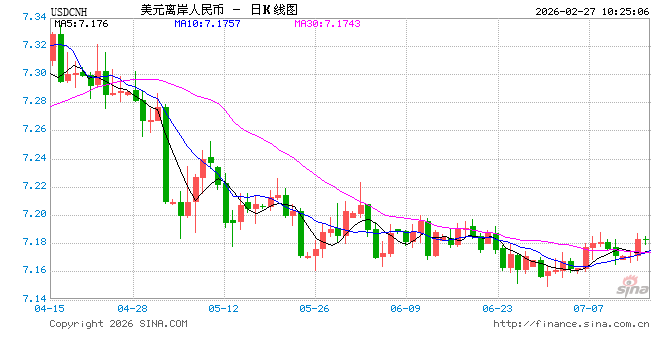
Core Viewpoint - The People's Bank of China (PBOC) announced a reduction of the foreign exchange risk reserve ratio for forward foreign exchange sales from 20% to 0% effective March 2, 2026, to support enterprises in managing exchange rate risks and to stabilize the RMB exchange rate [1][6]. Group 1: Policy Changes - The PBOC's decision to lower the foreign exchange risk reserve ratio is a response to market conditions, aimed at adjusting market supply and demand while stabilizing exchange rate expectations [1][6]. - The reduction in the reserve ratio is expected to encourage enterprises with actual demand to hedge against exchange rate risks at lower costs [1][7]. Group 2: Market Impact - The RMB faced strong appreciation pressure, with the onshore and offshore RMB against the USD both surpassing the 6.84 mark, reaching the highest level since April 2023 [2][7]. - Since the end of December 2025, the RMB has continued its appreciation trend, with the midpoint exchange rate appreciating by over 300 basis points in February alone, and both onshore and offshore RMB appreciating by more than 2% this year [2][7]. Group 3: Economic Context - The strengthening of the RMB is attributed to the stabilization of China-U.S. trade relations since November 2025 and a weaker USD, which has led to a general appreciation of non-USD currencies, including the RMB [8]. - Short-term forecasts suggest that the RMB will remain strong due to expected continued growth in exports and high market sentiment, with limited chances for a significant rebound in the USD index [8]. Group 4: Future Considerations - If the RMB continues to appreciate rapidly, other macro-prudential tools may be employed, such as adjusting the macro-prudential parameters for cross-border financing and increasing the foreign exchange deposit reserve ratio [4][8].
中国人民银行将在香港发行500亿元人民币央票
Zhong Guo Xin Wen Wang· 2026-02-14 02:49
Core Viewpoint - The People's Bank of China (PBOC) will issue 50 billion RMB in central bank bills in Hong Kong to enhance the offshore RMB financial product offerings and improve the RMB yield curve [1] Group 1: Central Bank Bills Issuance - The PBOC will issue two phases of central bank bills on February 25, 2026, through the Hong Kong Monetary Authority's debt instrument central settlement system [1] - The first phase will have a term of 3 months (91 days) with an issuance amount of 30 billion RMB, while the second phase will have a term of 1 year with an issuance amount of 20 billion RMB [1] - Both phases will have a face value of 100 RMB and will be issued via a Dutch auction method, with the bidding focused on interest rates [1] Group 2: Market Impact - The issuance of central bank bills is expected to withdraw RMB liquidity from the offshore market, thereby increasing the cost for speculators to short the RMB exchange rate [1] - The central bank bills will provide an investment channel for offshore RMB funds beyond loans and stocks, enhancing the willingness of foreign entities to hold RMB [1] - This issuance aims to counter potential one-sided depreciation expectations of the RMB and signals the PBOC's capability and tools to maintain exchange rate stability [1]
央行:坚决守住不发生系统性金融风险的底线
Jin Rong Jie· 2026-02-10 11:40
Core Viewpoint - The People's Bank of China emphasizes maintaining a stable RMB exchange rate while enhancing macro-prudential and financial stability measures [1] Group 1: Monetary Policy Framework - The report advocates for a market-based approach to monetary policy, utilizing a managed floating exchange rate system [1] - It highlights the importance of exchange rate flexibility to serve as an automatic stabilizer for the macro economy and international balance of payments [1] Group 2: Financial Stability Measures - The central bank aims to expand and enrich its macro-prudential and financial stability functions [1] - There is a focus on improving the toolbox for macro-prudential and financial stability management to maintain market stability [1] - The report stresses the commitment to preventing systemic financial risks [1]
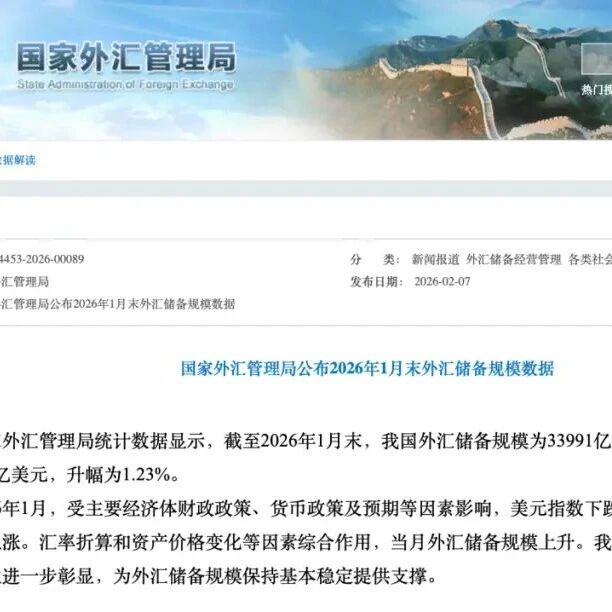
央行,连续15个月增持!
Sou Hu Cai Jing· 2026-02-07 11:32
Group 1 - The People's Bank of China reported an increase in gold reserves to 74.19 million ounces by the end of January 2026, marking the 15th consecutive month of gold accumulation [1] - As of the end of January 2026, China's foreign exchange reserves rose to $339.91 billion, an increase of $41.2 billion or 1.23% from December 2025 [1] - The increase in foreign exchange reserves is attributed to the depreciation of the US dollar index and the overall rise in global financial asset prices, supported by China's stable economic performance [1] Group 2 - In January, gold reserves increased by 40,000 ounces, continuing a trend of low accumulation over the past 11 months [2] - The analysis indicates that the central bank's continued small-scale gold purchases amidst rising international gold prices signal an optimization of international reserves [2] - Given the current global political and economic changes, the necessity for increasing gold reserves is expected to rise due to the potential for sustained high international gold prices [2][3]
央行又出手,连续15个月增持黄金
凤凰网财经· 2026-02-07 10:57
Group 1 - As of January 2026, China's foreign exchange reserves stood at $339.91 billion, marking a month-on-month increase of $4.12 billion, or 1.23% [2] - The stability of foreign exchange reserves is supported by China's resilient economic performance, which has been bolstered by favorable fiscal and monetary policies from major economies [2][3] - The People's Bank of China (PBOC) has increased its gold reserves for 15 consecutive months, with a total of 7.419 million ounces as of January 2026, reflecting a month-on-month increase of 40,000 ounces [4] Group 2 - The PBOC's continuous gold purchases signal an effort to optimize international reserves amid fluctuating global gold prices, which are expected to remain high due to changing geopolitical and economic conditions [6] - In January 2026, gold prices experienced significant volatility, with futures and spot gold prices surpassing $4,900 per ounce, indicating a strong upward trend despite recent fluctuations [7] - Analysts from major financial institutions have differing views on gold's mid-term outlook, with some projecting prices could rise to $6,300 per ounce by the end of 2026, while others foresee downward pressure due to easing geopolitical risks and economic growth in the U.S. [8]