实用货币主义

Search documents
闷驹颐谁是沃什?美联储最年轻理事,雅诗兰黛家族女婿,其岳父第一个建议特朗普买下格陵兰岛-伯南克-罗纳德-紧张局势-知名企业-唐纳·川普-唐纳德·特朗普
Sou Hu Cai Jing· 2026-02-05 11:20
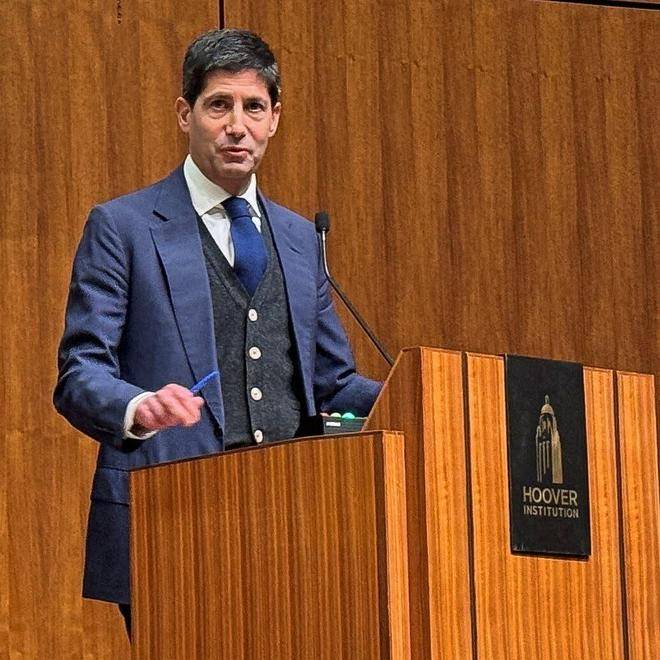
Core Viewpoint - Kevin Warsh has been nominated by President Trump to be the next Chairman of the Federal Reserve, bringing a unique blend of political connections and financial expertise to the role [1][9]. Group 1: Background and Experience - Warsh was born in Albany, New York, in 1970 and graduated from Stanford University with a degree in Public Policy, majoring in Economics and Political Science [3]. - He earned a Juris Doctor degree from Harvard Law School in 1995 and has also studied at MIT Sloan School of Management and Harvard Business School [3]. - His career includes a significant tenure at Morgan Stanley, where he rose to the position of Executive Director in the Mergers and Acquisitions department [4]. Group 2: Federal Reserve Involvement - Warsh became the youngest member of the Federal Reserve Board of Governors in 2006 at the age of 35, a position he was nominated for by President Bush [4]. - During the 2008 financial crisis, he served as a key advisor to then-Fed Chairman Ben Bernanke, providing insights on crisis response strategies [4]. - He was a vocal critic of the Fed's quantitative easing policies, opposing the second round of QE in 2011 before leaving the Fed [4][6]. Group 3: Economic Philosophy - Warsh has transitioned from being an internal critic of the Fed to advocating for a "pragmatic monetary policy" that seeks to balance government demands with central bank independence [6]. - His proposed theory aims to address both the White House's calls for interest rate cuts and market concerns about inflation through aggressive quantitative tightening [6][7]. - Critics, including former New York Fed President Bill Dudley, have labeled his theories as unrealistic, questioning the effectiveness of balance sheet reduction in creating significant room for interest rate cuts [7].

“本想捡柴,结果把家点了”,黄金白银崩盘的众生相跟生存法则
Sou Hu Cai Jing· 2026-02-03 18:13
Core Viewpoint - The recent volatility in gold and silver prices has drawn significant attention, with gold experiencing a nearly 70% increase in 2025 and silver soaring over 140% during the same period, leading to extreme market reactions and investor concerns [3][4]. Price Movements - Gold prices surged from $2,600 per ounce at the beginning of 2025 to nearly $5,500, with rapid increases observed in short time frames [3]. - Silver prices rose from $30 per ounce to a historical high of $117, with significant trading activity in futures markets [3]. Market Reactions - The market witnessed drastic declines following the rapid price increases, with gold dropping over 12% in a single day, marking the largest decline in 40 years, and silver plummeting by 35% [6]. - Various financial products linked to gold and silver also faced severe losses, with some funds experiencing unprecedented drops [6]. Underlying Factors for Price Surge - Three main catalysts for the recent price increases were identified: 1. Heightened risk aversion due to geopolitical tensions and economic uncertainties [10]. 2. European funds reducing exposure to U.S. debt, leading to increased demand for gold as a stable asset [10]. 3. A significant drop in silver inventories, creating a tight supply situation and increasing prices due to high delivery demand [12]. Reasons for Subsequent Price Declines - Several factors contributed to the sharp declines in prices: 1. Profit-taking by investors after rapid price increases [15]. 2. Increased margin requirements for trading, which limited speculative trading [15]. 3. Rebalancing of commodity indices, leading to forced selling by index-tracking funds [15]. 4. Speculation around potential changes in U.S. monetary policy, particularly regarding interest rates and balance sheet management [17]. Long-term Outlook - Despite short-term volatility, the long-term demand for gold remains strong due to central bank purchases and ongoing geopolitical risks [20]. - Silver's industrial demand, particularly in the solar energy sector, is expected to grow significantly, supporting its long-term price potential [22]. - The overall market sentiment suggests a likely rebound after the current adjustments, with continued focus on geopolitical developments and monetary policy changes [20][22].

告别美联储看跌期权!Wedbush警告:沃什执掌下流动性红利将终结 未来数月美股或面临动荡
美股IPO· 2026-02-02 07:37
Core Viewpoint - The report from Wedbush indicates that the U.S. stock market may face a period of volatility in the coming months as investors prepare for potential policy reforms under Kevin Warsh's leadership at the Federal Reserve [1][3]. Group 1: Market Impact of Warsh's Nomination - Trump's nomination of Warsh as the next Federal Reserve Chairman is expected to create short-term market unease until the policy outlook becomes clearer later this year [3][5]. - The transition period until Warsh officially takes office in May is anticipated to be bumpy, with Wedbush suggesting that the downside risk for the stock market is greater than the upside risk during this time [3][4]. Group 2: Shift in Federal Reserve Policy - Under Warsh, the Federal Reserve is expected to shift its focus from interest rates to the size of the central bank's balance sheet, utilizing "pragmatic monetarism" as a framework to combat inflation through quantitative tightening [3][4]. - This shift is seen as the end of the "Fed put," which refers to the market's assumption that the central bank will intervene to support asset prices in non-crisis situations [3][4]. Group 3: Warsh's Economic Philosophy - Warsh has a history of skepticism towards large-scale asset purchases and has previously criticized the Fed's reliance on outdated inflation models [4][6]. - His approach is characterized by a lower tolerance for inflation, suggesting a preference for tightening policies to mitigate inflation risks rather than simply accommodating short-term economic stimulus demands [6][7]. Group 4: Market Reactions and Predictions - Market analysts believe that Warsh's nomination could disrupt the consensus-driven monetary policy framework established during Powell's tenure, emphasizing inflation control and policy independence [6][7]. - Predictions indicate that Warsh may support 2-3 rate cuts this year, balancing government demands with inflation control objectives, while still adhering to a data-dependent approach [7].
告别美联储看跌期权!Wedbush警告:沃什执掌下流动性红利将终结,未来数月美股或面临动荡
Sou Hu Cai Jing· 2026-02-02 03:51
Core Viewpoint - The report from Wedbush indicates that the U.S. stock market may face a period of volatility in the coming months as investors prepare for potential policy reforms under Kevin Warsh's leadership at the Federal Reserve [1]. Group 1: Market Outlook - Wedbush analysts expect market volatility to persist until Warsh officially takes office in May, as investors reassess their positions in light of a significant policy shift away from the framework established during Jerome Powell's tenure [1][2]. - The transition period is anticipated to be bumpy, with Wedbush suggesting that the downside risk in the stock market outweighs the upside risk as investors shift focus to companies with sustainable growth [2]. Group 2: Policy Changes - Under Warsh, the Federal Reserve is expected to shift its focus from interest rates to the size of the central bank's balance sheet, utilizing monetary supply as the primary tool against inflation through quantitative tightening [1][2]. - This change is seen as the end of the "Fed put," which refers to the market's assumption that the central bank would intervene to support asset prices in non-crisis situations [1]. Group 3: Warsh's Background and Views - Warsh, nominated by Trump, has a history of skepticism towards large-scale asset purchases and previously resigned from the Fed in 2011 due to his opposition to the second round of quantitative easing [2][4]. - His nomination signifies a potential ideological shift in U.S. monetary policy, emphasizing inflation control and policy independence, contrasting with Powell's consensus-driven approach [5]. Group 4: Market Implications - Warsh's hawkish stance and support for balance sheet reduction may negatively impact risk assets reliant on excess liquidity while benefiting U.S. Treasuries and the dollar, putting pressure on gold and silver [1][4]. - Analysts believe that while Warsh may implement 2-3 rate cuts this year to align with government expectations, he will also prioritize inflation control, indicating a more stringent approach compared to Powell [5].
告别美联储看跌期权!Wedbush警告:沃什执掌下流动性红利将终结 未来数月美股或面临动荡
智通财经网· 2026-02-02 03:27
Core Viewpoint - The report from Wedbush indicates that the U.S. stock market may face a turbulent period in the coming months as investors prepare for potential policy reforms under Kevin Warsh's leadership at the Federal Reserve [1]. Group 1: Market Outlook - Wedbush analysts expect market volatility to persist until Warsh officially takes office in May, as investors adjust to a significant shift from the Powell-era policy framework [1][2]. - The transition period is anticipated to be bumpy, with the report suggesting that the downside risk in the stock market outweighs the upside risk as investors reassess high beta exposures [2]. Group 2: Federal Reserve Policy Shift - Under Warsh, the Federal Reserve is expected to shift its focus from interest rates to the size of the central bank's balance sheet, utilizing "pragmatic monetarism" as a primary tool against inflation [1][4]. - This change is seen as the end of the "Fed put," which refers to the market's assumption that the central bank will intervene to support asset prices in non-crisis situations [1][2]. Group 3: Warsh's Background and Policy Stance - Warsh, nominated by Trump, has a strong background in economic policy, having served as a Federal Reserve governor and participated in crisis management during the 2008 financial crisis [3][5]. - His skepticism towards large-scale asset purchases and a preference for maintaining the Fed's independence suggest a potential tightening of monetary policy, contrasting with Trump's desire for aggressive rate cuts [4][5]. Group 4: Implications for Financial Markets - The anticipated policy changes under Warsh could negatively impact risk assets that rely on excess liquidity while benefiting U.S. Treasuries and the dollar, putting pressure on gold and silver [1][2]. - Market analysts believe that while Warsh's hawkish reputation may lead to a tightening stance, he could still implement 2-3 rate cuts this year to balance government demands and inflation control [5].
国泰海通:沃什改革货币政策机制表明控制通胀的决心 料可满足降息需求
智通财经网· 2026-02-01 02:14
Group 1 - The core viewpoint of the report is that Walsh's "pragmatic monetary policy" signals the Federal Reserve's commitment to controlling inflation while addressing Trump's interest rate cut demands, aiming to correct market distortions caused by excessive QE and achieve convergence in a "K"-shaped economy [1] Group 2 - Walsh's notable policy proposition is "rate cuts + balance sheet reduction," emphasizing the need for the Federal Reserve to take responsibility for inflation, which he attributes to prolonged QE, advocating for QT to control inflation and create space for rate cuts once risks are mitigated [1][3] - The balance between the White House and Wall Street is highlighted, as Trump's criticism of Powell led to Walsh being favored for his ability to maintain Fed independence while aligning with Trump's rate cut desires [1][2] Group 3 - The concept of QT is described as "responsible balance sheet management," aimed at correcting the "infinite support" approach of monetary policy on the demand side, while rate cuts are intended to enhance supply capabilities from an industrial policy perspective [2] - Evidence supporting QT's effectiveness in controlling inflation is noted, with CPI dropping from 9% to around 3% following the Fed's announcement of passive balance sheet reduction in 2022 [3] - Challenges in transitioning to a "tight reserve mechanism" are acknowledged, as liquidity issues may constrain QT implementation until bank reserves return to adequate levels [3]

缩表式降息:如何理解沃什的政策主张
GUOTAI HAITONG SECURITIES· 2026-01-31 14:48
Group 1: Policy Proposals - Warsh's notable policy proposal is "rate cuts + balance sheet reduction," emphasizing the Fed's responsibility for inflation control and the need to correct market distortions caused by prolonged QE[8] - He argues that QT (Quantitative Tightening) is essential for controlling inflation, as evidenced by the CPI dropping from 9% to around 3% after the Fed announced passive balance sheet reduction in 2022[15] - Warsh criticizes the Fed's large balance sheet, claiming that QE has distorted market incentives and reduced banks' willingness to lend to the real economy[8] Group 2: Economic Implications - The transition from a "sufficient reserves mechanism" to a "scarce reserves mechanism" is crucial for enhancing banks' lending willingness and correcting post-crisis monetary policy[8] - The policy aims to avoid excessive capital flowing away from the real economy and instead provide low-cost funding to the real sector, aligning with Trump's supply-side reform agenda[14] - The balance between managing the upper end of the "K" economy (stock market) and the lower end (inflation) requires a delicate balancing act from Warsh[15] Group 3: Risks and Challenges - QT's implementation faces constraints due to liquidity issues in the repo market, which may hinder the transition to a "scarce reserves mechanism" in the short term[15] - The need for credit expansion in sectors like manufacturing and real estate under the Trump administration relies on maintaining sufficient reserve levels in banks[15] - Risks include significant fluctuations in the stock market damaging consumer confidence and the potential for the recovery of the real economy to fall short of expectations[22]
国泰海通 · 宏观聚焦|缩表式降息:如何理解沃什的政策主张
国泰海通证券研究· 2026-01-31 14:26
Core Viewpoint - The article discusses the policy stance of the new Federal Reserve Chairman, Walsh, emphasizing "pragmatic monetarism" which aims to control inflation while addressing President Trump's interest in interest rate cuts, ultimately seeking to correct market distortions caused by excessive quantitative easing (QE) and achieve convergence in the "K"-shaped economy [2]. Group 1: "Balance Sheet Reduction + Rate Cuts": New Fed Chairman's Policy Proposals - Walsh's notable policy proposal is "rate cuts + balance sheet reduction" (QT), asserting that the Fed must take responsibility for inflation, which he attributes to prolonged QE post-crisis. He believes QT is necessary to control inflation, and once inflation risks are mitigated, it will create room for rate cuts [3][7]. - The policy proposals reflect a reform in monetary policy mechanisms. Walsh criticizes the Fed's large balance sheet, claiming QE distorts market incentives. He advocates for reducing bank reserves through balance sheet reduction to enhance lending willingness, transitioning from a "sufficient reserves" to a "scarce reserves" framework [4][8]. Group 2: The White House and Wall Street Balance: Why Trump Chose Walsh - Trump's criticism of current Chairman Powell as "Mr. Too Late" led to speculation about other candidates, but Walsh, favored by Wall Street, offers a balance between maintaining Fed independence and aligning with Trump's rate cut demands. His "pragmatic monetarism" reflects a commitment to controlling inflation while accommodating Trump's interests [4][12]. - The QT approach is seen as "responsible balance sheet management," correcting the idea of "infinite support" for demand-side policies, while rate cuts aim to enhance supply capabilities from an industrial policy perspective. This aligns with Trump's supply-side reform agenda [4][12]. Group 3: Pragmatic Monetarism: Speculations on Walsh's Governance Approach - Based on the quantity theory of money, QT is indeed a tool for controlling inflation. Evidence includes the CPI dropping from 9% to around 3% after the Fed announced passive balance sheet reduction in 2022. However, QT has limits, as recent liquidity issues in the repo market have led to a halt in QT and the initiation of Reserve Management Purchases (RMP) [5][16]. - Operationally, a series of deregulatory measures for banks, such as relaxing capital constraints and optimizing the Fed's temporary discount tools, could provide more room for QT. However, transitioning to a "scarce reserves" framework is challenging, and liquidity issues will constrain QT until bank reserves return to adequate levels. Trump's policies for manufacturing and real estate require credit expansion, which depends on sufficient reserve levels [5][16].