缩表+降息

Search documents
中金研究 | 本周精选:宏观、策略、房地产
中金点睛· 2026-03-07 01:07
Group 1: Strategy Insights - The geopolitical situation in Iran is expected to impact Chinese assets, with short-term emotional shocks leading to increased volatility and risk premiums, while mid-term recovery will focus on fundamentals and policy [4] - Historical analysis shows that most industries experience short-term pullbacks due to emotional impacts from geopolitical conflicts, but sectors like oil, defense, and non-ferrous metals tend to be more resilient [4] - The current Middle East conflict may temporarily raise risk premiums, but the A-share market is likely to show relative resilience, with future focus on the conflict's duration, oil price changes, and inflation impacts [4] Group 2: Economic Policy Analysis - The government work report emphasizes high-quality development and sustainable growth, balancing long-term sustainability with short-term needs [6] - Key tasks include fostering new growth drivers and accelerating technological self-reliance, indicating a strong focus on innovation and efficiency [6] Group 3: Hong Kong Market Overview - The funding environment for Hong Kong stocks in 2026 is expected to be less favorable compared to 2025, with significant net inflows in previous years primarily driven by ETFs and other trading funds [8] - The anticipated IPO and refinancing activities in 2026 could reach HKD 1.1 trillion, significantly exceeding the previous year's demand, potentially creating pressure on the market [8] Group 4: Real Estate Market Trends - The real estate cycle has been adjusting for over four years, with expectations for stabilization in housing prices in major cities like Beijing and Shanghai [10] - The core reason for the adjustment is inventory levels, particularly in the secondary housing market, which directly affects pricing [10] Group 5: Macro Economic Shifts - A global asset style shift has been observed, with a focus on real assets and a trend of dollar depreciation, particularly against physical assets [12] - The geopolitical landscape is driving demand for hard assets that enhance national security and resilience, including resources and industrial capabilities [12] Group 6: Monetary Policy Developments - The proposed "balance sheet reduction + interest rate cut" policy by the new Fed chair nominee is seen as a significant shift in monetary policy framework, potentially impacting liquidity and asset pricing [14] - A gradual approach to implementing these policies is expected, with a timeline of at least six months for adjustments, indicating a shift from abundant to relatively scarce supply of safe assets [14]


“缩表+降息”的均衡
Bank of China Securities· 2026-03-06 08:59
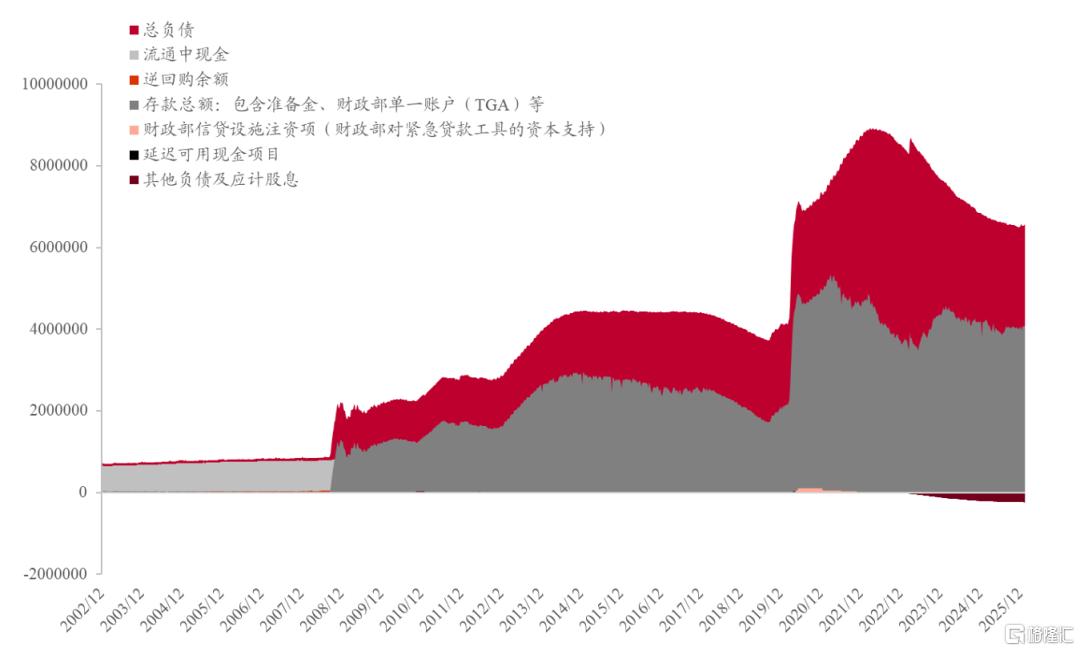
1. Report Industry Investment Rating - The report did not explicitly provide an investment rating for the industry [1] 2. Core Viewpoints of the Report - Wash's "balance-sheet reduction + interest rate cut" equilibrium may have advantages for US Treasuries and disadvantages for gold prices, but it faces multiple challenges [4][63][64] 3. Summary by Directory 3.1 Wash's "Balance-Sheet Reduction + Interest Rate Cut" Monetary and Economic Equilibrium Points - Wash has a clear monetarist tendency, believing that controlling the money supply is the core of his monetary policy concept [11][12] - He is a fiscal hawk, thinking that the Fed's over-issuance of the US dollar in non-crisis conditions has encouraged fiscal overspending by the US government and Congress [12] - Wash's "vision" of interest rate cuts is that if the Fed reduces its balance sheet and fiscal policy becomes more responsible, inflation and interest rates will decline [13] 3.2 Fiscal and Financial Aspects under the "Balance-Sheet Reduction + Interest Rate Cut" Equilibrium - If the monetization rate and deficit rate can decline simultaneously, it will reduce both the supply and demand of US government debt [18] - If the money valve continues to tighten, there is a high probability of a further decline in inflation [19] 3.3 Employment Market under the "Balance-Sheet Reduction + Interest Rate Cut" Equilibrium - AI-related investments have a substitution effect on employment, resulting in slower employment growth [23] - The actual situation of private non-farm employment in the US may be weaker than official data, and the employment market is showing a weakening trend [29] 3.4 Inflation under the "Balance-Sheet Reduction + Interest Rate Cut" Equilibrium - The current US non-farm employment market remains balanced, and if employment growth continues to slow, inflation pressure may further ease [38][40] - If the Fed reduces its balance sheet, it can lower inflation and interest rates [40] 3.5 Main Dilemmas of the "Balance-Sheet Reduction + Interest Rate Cut" Equilibrium - Whether Wash can be successfully appointed and gain support within the Fed is uncertain [44] - US fiscal and tariff policies may not be able to cooperate with Wash's policy ideas [45] - US immigration policy is also controversial [45] 3.6 Potential Impact of the "Balance-Sheet Reduction + Interest Rate Cut" Equilibrium - If the equilibrium is achieved, it will be beneficial to US Treasuries, and the Fed may cut interest rates below 3% in this round, driving the yield of US Treasuries to continue to decline [46][52][64] - It may have a negative impact on gold prices, and the assumption of continued over-issuance of US dollar liquidity may be challenged [53][57][64] 3.7 Main Conclusions - Wash's policy concept includes monetarism, fiscal hawkishness, and a "vision" of interest rate cuts [63] - The "balance-sheet reduction + interest rate cut" equilibrium may face three dilemmas, but if achieved, it will be beneficial to US Treasuries and negative for gold prices [64]
21评论丨关注沃什时代的两个超预期风险
Sou Hu Cai Jing· 2026-02-27 22:33
Core Viewpoint - The appointment of Kevin Walsh as the Federal Reserve Chairman, despite his previous opposition to quantitative easing, creates a controversial dynamic between the White House's push for rate cuts and Walsh's hawkish tendencies, leading to uncertainty in market expectations regarding future monetary policy direction [1][3]. Group 1: Short-term Alignment and Long-term Conflict - The White House and Walsh share a short-term alignment on the need for interest rate cuts, with Walsh now supporting a reduction of the federal funds target rate to around 3% [3]. - Despite this short-term agreement, there exists a fundamental long-term conflict regarding the Federal Reserve's independence and mission, with Walsh advocating for a narrow focus on price stability, contrasting with the White House's broader goals of fiscal expansion and job stimulation [4][5]. Group 2: Market Implications and Policy Framework - The upcoming June meeting will be a critical test for Walsh's policy framework, with expectations for a potential 25 basis point rate cut and a detailed explanation of his "balance sheet reduction + rate cut" strategy [4]. - If Walsh's framework is implemented, it could lead to a steepening of the yield curve, benefiting short-duration U.S. Treasuries and bank stocks, while long-duration Treasuries may face pressure [4][7]. Group 3: Risks and Future Outlook - The potential for a significant economic or financial crisis during Walsh's tenure could exacerbate the existing conflicts, as the government may demand aggressive monetary support, which Walsh may resist due to his aversion to balance sheet expansion [5][6]. - Investors should monitor the initial months of Walsh's chairmanship for signs of policy consistency, with a focus on the June and September meetings to assess the viability of his proposed framework [7].
特朗普换人也无解,美债还能坚持多久?雪球已经滚到38万亿!
Sou Hu Cai Jing· 2026-02-12 05:10
Core Viewpoint - The U.S. national debt has reached an alarming $38 trillion, with an average debt burden of over $110,000 per American, reflecting a rapid increase in debt levels that poses significant economic challenges [2][6]. Group 1: Debt Growth and Economic Impact - The U.S. national debt is projected to grow from $36 trillion in November 2024 to $38 trillion by October 2025, indicating a daily increase of nearly $20 billion [2]. - Interest payments on the national debt are expected to reach $1.4 trillion by 2025, accounting for 26.5% of federal revenue, which translates to over $1 billion in interest payments each month [2]. - The current debt situation is described as a "vicious cycle," where new debt issuance is necessary to pay off old debt, leading to an increasing interest burden [6]. Group 2: Political Dynamics and Federal Reserve - Former President Trump is pushing for a change in the Federal Reserve leadership to facilitate interest rate cuts and support his tax reduction policies, aiming to alleviate the burden of debt interest payments [2][4]. - The proposed strategy by the new Fed chair, which includes both balance sheet reduction and interest rate cuts, is criticized as impractical and potentially harmful to the economy [4]. - The political environment in the U.S. is characterized by a lack of prioritization for debt reduction, with both parties focused on tax cuts and increased spending to appeal to voters [8]. Group 3: Global Perception and Credit Ratings - There is a growing trend among global investors to reduce their holdings of U.S. debt, with countries like China decreasing their U.S. Treasury holdings to below $700 billion [6]. - Rating agencies have issued warnings regarding U.S. debt, with Fitch downgrading the U.S. sovereign credit rating and Moody's changing its outlook to "negative," indicating a decline in the perceived safety of U.S. debt [6]. - The traditional reliance on the U.S. dollar's dominance and the Federal Reserve's monetary policy is becoming less effective, as global investors diversify their assets away from U.S. Treasuries [6].
张瑜:全球“沃什”交易?对中国有何映射?——张瑜旬度会议纪要No.132
一瑜中的· 2026-02-11 14:47
Global Wash Trading - The concept of "rate cuts + balance sheet reduction" is central to Wash's philosophy, emphasizing the need to reshape the relationship between monetary policy and fiscal policy, technology, and market dynamics [3][4][6] - The core logic behind rate cuts is based on the belief that the constraints on U.S. economic growth are supply-side rather than demand-side, with AI technology potentially enhancing productivity and efficiency [3] - The rationale for balance sheet reduction is that resource allocation should dynamically adjust according to the private sector's development, allowing the market to efficiently allocate resources when productivity improves [4][6] Impact on U.S. Monetary Policy - In the short term, Wash's ideas may have limited impact on the Federal Reserve's monetary policy due to the current economic conditions and the need for further verification of AI's productivity claims [7] - In the medium term, if the Fed under Wash's leadership recognizes the potential for low rates and no inflation growth driven by productivity, it may open up more policy space for rate cuts and balance sheet reduction [7] Market Implications - Recent market volatility is not solely attributed to Wash's nomination; rather, it is influenced by broader market trends and the narrative surrounding AI's impact on productivity [8] - Market fluctuations may amplify in 2026 if Wash reduces communication with the market, especially as global monetary policy shifts [8] - The core contradiction in the global market remains the evolution of political order and industrial structure, with the performance of U.S. dollar assets hinging on the realization of AI-driven productivity growth [9] Reflections on Chinese Assets - The global interest rate cycle is nearing its end, which is likely to amplify asset price volatility, necessitating consideration of this backdrop in the Chinese asset market [10] - The narrative of AI prosperity in the U.S. will influence foreign capital inflows into China; if the narrative holds, confidence in dollar assets may persist, delaying significant foreign investment in China [10] - Market focus is expected to shift towards fundamentals, profitability, and dividend support as key economic data and policy directions emerge in 2026 [11] - The pricing logic of gold is fundamentally different from that of silver, copper, and Bitcoin, with gold being viewed as a strategic asset amid global order restructuring [12] Core Insights - The identity of Wash is less important than whether the narrative of AI prosperity can transition into reality; the core constraint on the U.S. economy lies in the supply side, while China's economic constraints are demand-driven [13]

美联储的“沃什时代”:资本市场会迎来什么变化?
Ge Long Hui· 2026-02-11 10:26
Core Viewpoint - The nomination of Kevin Warsh as the next Federal Reserve Chairman by Trump has significantly altered market expectations regarding the Fed's monetary policy, leading to substantial declines in various asset classes, including gold, silver, and Bitcoin [1][2]. Group 1: Warsh's Policy Preferences - Warsh is characterized as a "disciplinarian" who is concerned about the long-term consequences of monetary policy and the costs associated with the expansion of the Fed's balance sheet, showing a natural aversion to the normalization of unconventional tools like QE [2][3]. - He opposes quantitative easing (QE) not because he is against easing itself, but because he believes it distorts asset prices and exacerbates wealth inequality, indicating that the threshold for initiating QE in response to economic fluctuations will be significantly raised [2][3]. - Warsh acknowledges the necessity of interest rate cuts but emphasizes that "cutting rates does not equate to flooding the market with liquidity," suggesting that the current interest rates may be 50-100 basis points above the neutral rate, which he estimates to be around 3% [3][4]. Group 2: Market Implications - The market anticipates that Warsh's focus on liquidity will lead to increased volatility in the money market, as interbank liquidity will no longer be abundant, requiring precise adjustments through open market operations [7][8]. - The Fed's ability to suppress long-term interest rates will diminish, as the end of QE will allow market supply and demand to dictate the term premium, potentially leading to upward pressure on long-term rates [7][8]. - The expectation of the Fed acting as a backstop during market turbulence will be disrupted, necessitating that the market learns to absorb volatility independently, which could result in elevated volatility indicators [7][8]. Group 3: Warsh's Background and Experience - Warsh's career trajectory—from Wall Street to the White House and then to the Federal Reserve—has shaped his critical perspective on monetary policy, emphasizing the importance of financial conditions over mere statistical data [10][14]. - His experience in investment banking has heightened his sensitivity to funding costs, credit spreads, and liquidity, which are crucial in the context of financial market policy discussions [13][14]. - Warsh's connections within elite political and financial circles, including his marriage to a member of the Estée Lauder family, enhance his credibility and influence in both political and market contexts [14][15]. Group 4: Political Considerations - Trump's choice of Warsh reflects a desire for a chairman who is loyal and willing to cut rates, while also being credible enough to maintain the Fed's independence and reassure the markets [16][18]. - Warsh's "hawkish" reputation is seen as a necessary condition for the market to trust that any future rate cuts will be based on monetary discipline rather than political pressure [18][19]. - The upcoming midterm elections in 2026 create additional pressure for Warsh to align with the White House's political objectives, particularly in managing voter concerns about living costs [19][20]. Group 5: Future Policy Directions - Warsh's policies will likely face constraints from political realities, market conditions, and internal Fed dynamics, making immediate aggressive actions unlikely [21][25]. - The Fed's decision-making process is collective, meaning that even if Warsh wishes to implement significant changes, he must build consensus among the other members of the FOMC [25][26]. - The timeline for any substantial reforms will be influenced by the political landscape, with a focus on stabilizing conditions before the midterm elections, followed by potential adjustments post-election [26][28].
港股2月策略月报:冲击高峰已过,恒科触底反弹-20260211
CMS· 2026-02-11 09:32
Core Viewpoints - The recent decline in the Hang Seng Technology Index is attributed to a severe liquidity shock, but the fundamental outlook for Hong Kong technology remains unchanged, suggesting a potential rebound as the peak of the liquidity shock has passed [2][6][57] - The strategy of "buy the dip" is considered effective, with Hong Kong technology stocks trading at a significant discount compared to A-share technology stocks, nearing historical lows [6][57] - Recommendations include buying on dips and holding through the holiday season, focusing on sectors such as technology (AI and internet), non-bank financials (insurance), and high-dividend stocks [3][4][57] Market Analysis - The Hang Seng Technology sector has experienced significant declines, creating a breeding ground for pessimistic narratives, but the current position offers substantial allocation value [4][6] - Economic indicators show a slowdown in both production and demand, with the manufacturing PMI dropping to 49.3, indicating a contraction [21][22] - The liquidity environment is improving, with domestic and foreign capital continuing to increase their holdings in the Hong Kong market [33][35] Valuation Insights - The relative valuation of the Hong Kong technology sector is at historical lows, with the Hang Seng Technology Index/A-share dual innovation index premium nearing its lowest levels [4][46] - The current price-to-earnings ratio of the Hang Seng Index is 11.95, significantly lower than major global indices, indicating a valuation gap [49][50] Policy Environment - The Hong Kong Securities and Futures Commission is tightening IPO quality controls, which is expected to improve market sentiment as previous oversupply of IPOs has been a narrative for weak performance [40][41] - Policies are focused on supporting technological innovation and expanding domestic demand, with significant potential for future initiatives [57][58] Sector-Specific Trends - The AI and internet sectors are transitioning from a "arms race" to a "profit witness" investment paradigm, with a complete AI ecosystem forming in Hong Kong [4][57] - Non-bank financials are characterized by strong beta and high leverage, making them attractive investment options [4][57] - High-dividend stocks are gaining traction, with the Hang Seng High Dividend Yield Index offering a stable dividend yield of approximately 6% [4][57]
基金研究周报:消费板块走强,大宗商品回调(2.2-2.6)
Sou Hu Cai Jing· 2026-02-08 00:39
Market Overview - The A-share market faced overall pressure last week, with major indices declining, particularly the Sci-Tech 50, which dropped by 5.76%, while the ChiNext Index and ChiNext 50 fell by 3.28% and 3.68% respectively, indicating significant pullback pressure on growth sectors [1] - In contrast, the Shanghai 50 and CSI Dividend indices showed relative resilience, with declines of less than 1%, reflecting a defensive stance in value sectors [1] - The Wande Micro-Cap Index rose by 1.86%, highlighting a shift in funds towards small-cap stocks, despite overall market caution and reduced risk appetite [1] Industry Performance - The Wande primary industry indices displayed notable divergence, with daily consumer goods leading with a gain of 2.87%, followed by industrials, consumer discretionary, and financials, which rose by 1.14%, 0.77%, and 0.71% respectively [1][10] - Conversely, information technology, materials, and communication services experienced the largest declines, falling by 4.86%, 4.52%, and 3.53% respectively, indicating a preference for defensive consumer sectors over technology growth stocks [1][10] Fund Issuance - A total of 40 funds were launched last week, including 16 equity funds, 8 mixed funds, 7 bond funds, and 9 FOFs, with a total fundraising amount of 30.859 billion units [1][17] Fund Performance - The Wande All-Fund Index decreased by 1.19% last week, with ordinary equity funds dropping by 2.06% and equity-mixed funds declining by 2.39%, while bond funds remained stable [5] - The overall performance of equity funds was under pressure, contrasting with the stable performance of the bond market [1][5]
打崩金价的是沃什,还是特朗普?
Sou Hu Cai Jing· 2026-02-07 04:01
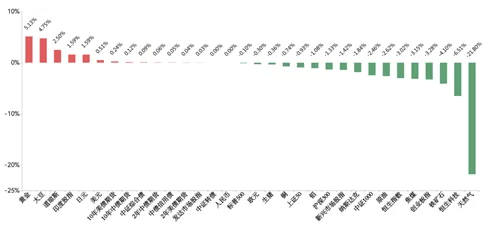
Group 1 - The core viewpoint of the article is that while the appointment of Walsh as the next Federal Reserve Chairman is linked to the decline in gold prices, it is not the sole cause when viewed from a long-term perspective [1] Group 2 - On January 30, Trump announced Walsh as the next Federal Reserve Chairman, highlighting his elite educational background and connections, including a notable relationship with Ronald Lauder, a significant Republican donor [2] - Walsh has a distinguished career, having served as an economic policy advisor under the Bush administration and as the youngest Federal Reserve Governor in history [2] - Trump had previously considered other candidates for the position, such as Hassett, but ultimately chose Walsh due to his connections and past considerations [2][4] Group 3 - The political landscape has changed since Trump's first term, with the Republican Party now largely aligned with Trump's preferences, allowing him to make appointments based on personal preference [3] - Trump has expressed dissatisfaction with current Fed Chairman Powell, particularly regarding interest rate decisions, which has influenced his choice of Walsh [4][5] Group 4 - Walsh is viewed as a hawkish figure who advocates for a focus on controlling inflation and reducing unnecessary functions of the Federal Reserve, opposing excessive quantitative easing [6] - His policy stance includes a dual approach of lowering interest rates while also reducing the Fed's balance sheet to combat inflation, a strategy that has garnered attention [6] Group 5 - Following Walsh's nomination, gold prices fell, reflecting the inverse relationship between the strength of the dollar and gold prices, with expectations of a stronger dollar under Walsh's influence [7] - The geopolitical climate, influenced by Trump's unilateral policies and military threats, has contributed to fluctuations in gold prices, indicating potential for future increases if instability persists [7]
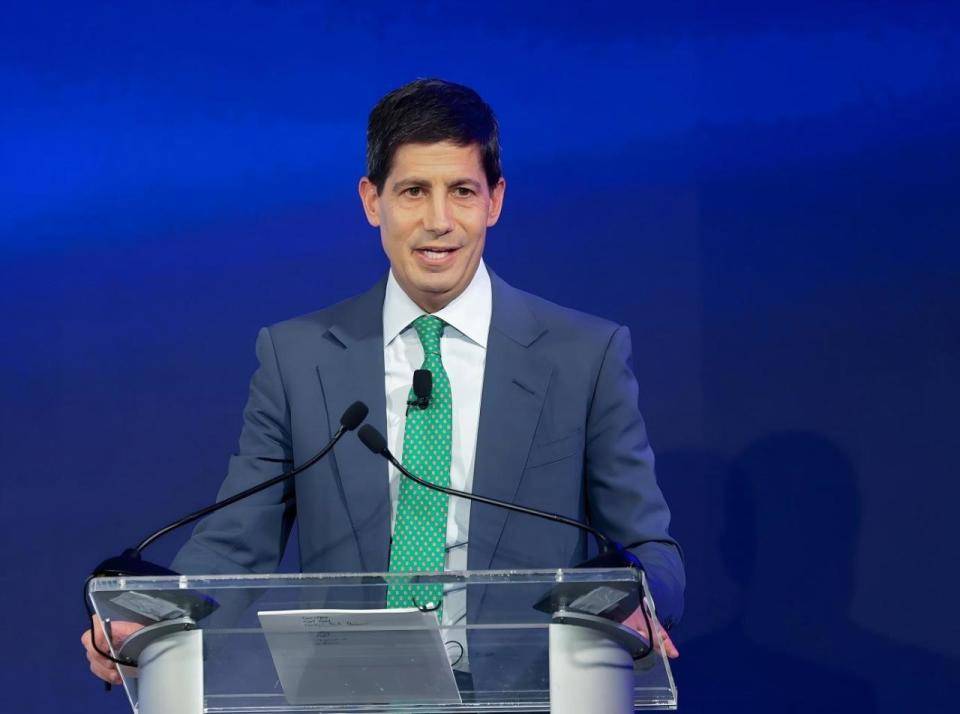
申万宏源:美联储换帅在即,大类资产影响几何?
Xin Lang Cai Jing· 2026-02-05 07:15
Core Viewpoint - The market is reacting to Trump's nomination of Kevin Warsh as the new Federal Reserve Chair, perceived as "hawkish," leading to significant fluctuations in global asset prices, including a rise in the dollar index and declines in U.S. stocks and precious metals [1][5][26]. Monetary Policy Outlook - The company believes that the market may be pricing in a hawkish shift from the Federal Reserve too quickly, as the views and actions of the new chair may differ from previous statements [2][6]. - In the short term, the Federal Reserve is likely to lower interest rates rather than pursue a rapid balance sheet reduction, which is expected to be a lengthy process [2][6]. - The core issue remains how inflation will be managed, with potential paths including fiscal discipline or production changes [2][6][27]. Impact on U.S. Stocks - Increased volatility is expected in the U.S. stock market, with a balanced style emerging. The market's short-term reaction to Warsh's nomination was moderate, with institutional buying interest noted [3][28]. - Key variables affecting the stock market include earnings verification and inflation trends, with the S&P 500 expected to see earnings growth exceeding 15% in 2025-2026 [3][28]. - If Warsh promotes a "small government + bank easing" model, it could benefit small-cap stocks, manufacturing, and financial sectors, while large-cap growth stocks may see valuation corrections [3][28]. Impact on Precious Metals and Commodities - The long-term bullish outlook for gold and silver remains intact, despite short-term volatility. The market is advised to wait for a return to lower volatility before making significant moves [4][29]. - The supply-demand fundamentals for industrial metals like copper and aluminum remain strong, supported by declining mine grades and demand from AI and new energy sectors [4][29]. - Oil prices may face upward pressure if geopolitical tensions escalate, particularly if prices exceed $80 per barrel, which could raise mid-term inflation risks [4][29].