人间烟火气

Search documents
人间烟火是归处
Xin Lang Cai Jing· 2026-02-26 19:41
Core Insights - The article emphasizes the importance of everyday life and the comfort found in simple, routine moments, often referred to as "smoky fire" or the warmth of home [1][4][5] Group 1: Daily Life and Comfort - The essence of "smoky fire" is described as the tangible aspects of daily life, such as cooking and family gatherings, which provide a sense of stability and belonging [1][4] - The narrative reflects on the contrast between the fast-paced modern lifestyle and the nostalgic memories of home-cooked meals and familial connections [2][3] Group 2: Connection to Tradition - Despite the rapid changes in lifestyle, individuals continue to seek out the familiar comforts of home, such as cooking and sharing meals with family during holidays [3][4] - The article suggests that the feeling of belonging is not tied to a specific place but can be found wherever there is warmth and companionship [4][5] Group 3: Reflection on Life's Simplicity - The author notes that the most profound experiences often come from ordinary moments rather than grand events, highlighting the significance of daily rituals [2][4] - The narrative concludes with the idea that true fulfillment lies in appreciating the simple, everyday aspects of life, which provide a sense of peace and continuity [4][5]
春晚里的人间烟火暖
Ren Min Ri Bao· 2026-02-20 00:21
Core Viewpoint - The Spring Festival Gala serves as a cultural feast that reflects the warmth of ordinary life, showcasing the resilience and dedication of everyday individuals while conveying a sense of hope and confidence for the future [1][4]. Group 1: Emotional Resonance - The emotional narratives presented in the gala, such as "Mom Has a Cinema" and "Grandma's Favorite," highlight the irreplaceable warmth of human connection amidst technological advancements [2]. - The performances emphasize the value of sincerity and genuine relationships, as seen in the skit "Whose Dish," which illustrates the preciousness of human interactions [2]. Group 2: Social Reflection - The gala acts as a mirror to contemporary society, addressing issues like formalism and community harmony through humorous sketches like "Here It Comes" and "Guaranteed Satisfaction" [3]. - Musical performances resonate with social sentiments, fostering a sense of shared experience and hope for the future, as demonstrated in songs like "Human Resonance" and "You and I Experience a Moment" [3]. Group 3: Regional Diversity - The establishment of four sub-venues for the gala showcases diverse regional expressions of the New Year, integrating local culture with broader national narratives [4]. - Each region, from Harbin's winter landscape to Yiwu's transformation into a global marketplace, reflects unique cultural and economic developments, contributing to a rich tapestry of contemporary China [4]. Group 4: Cultural Significance - The gala transcends mere entertainment, embodying a spiritual "New Year's Eve dinner" filled with the flavors of life, human connection, and Chinese culture [4]. - It emphasizes the importance of labor, family bonds, and the collective journey of ordinary people, reinforcing the gala's enduring appeal and relevance to the public [4].
鼓浪屿的歌声
Xin Lang Cai Jing· 2026-02-03 17:46
Core Viewpoint - Gulangyu Island is characterized by its unique musical ambiance, blending natural sounds with historical musical instruments, creating a harmonious cultural experience for visitors [1][2][3]. Group 1: Cultural Significance - Gulangyu Island, with an area of 1.88 square kilometers, is devoid of motor vehicles, allowing the sounds of waves and music to intertwine, creating a century-old symphony [1]. - The Piano Museum, established by patriotic overseas Chinese Hu Youyi, houses over a hundred antique pianos, each telling a story of time, including a 1928 automatic "Hainas" piano and a giant organ from 1872 [1]. - The island's unique atmosphere is enhanced by the blend of local dialects, tea aromas from old tea houses, and the sounds of music and waves, creating a distinctive human touch that has persisted for over a century [2]. Group 2: Musical Experience - Climbing to the top of Sunlight Rock offers a panoramic view where the sounds of wind, waves, and distant piano music create a rich auditory tapestry [2]. - At sunset, the harmonious resonance of the sea and city pulse is highlighted, with the waves producing sounds reminiscent of brass instruments during high tide and gentle violin-like tones during low tide [2]. - The evening atmosphere is enriched by the deep tones of the "Norman Beale" organ at the Bagua Building, echoing the ancient piano sounds from the museum, creating a musical dialogue throughout the island [3]. Group 3: Emotional Connection - The music of Gulangyu Island is embedded in the hearts of visitors, symbolizing a timeless connection between the island's history and the emotional healing experienced by travelers [3]. - The island is referred to as a "music island," where the waves serve as strings and time as the score, composing an everlasting love song between the mountains and the sea [3].
河南吴营村的“天安门”,为何可以感动全网?
Xin Lang Cai Jing· 2026-01-07 09:57
Core Viewpoint - The giant mural of Tiananmen Square created by young artist Wu Chengyan in Wuying Village, Henan, has become a symbol of collective emotional resonance and national identity, fulfilling the wishes of elderly villagers who cannot visit the actual site [2][3]. Group 1: Emotional Impact - The mural resonates deeply with the elderly villagers, reflecting their unfulfilled desires to see Tiananmen Square, thus highlighting the universal longing for connection and recognition [2][3]. - The emotional responses from viewers, including tears and heartfelt comments, indicate that the mural serves as a tangible representation of shared national sentiment and familial bonds [3]. Group 2: Community and Economic Development - The mural has transformed Wuying Village into a tourist attraction, drawing thousands of visitors during the New Year holiday and revitalizing local commerce with bustling streets and food stalls [3]. - Local authorities have responded positively by improving infrastructure and support services, indicating that the mural has become a significant opportunity for the village's development and future growth [3]. Group 3: Cultural Significance - The mural embodies the collective memory and identity of the Chinese people, serving as a bridge between individual experiences and national pride [3][4]. - The initiative reflects a broader cultural movement where art and community engagement can foster a sense of belonging and motivation among individuals [4].



千笔楼|10万人赶曹洼大集,到底在“赶”什么?
Xin Hua She· 2025-12-03 12:25
Core Insights - The Cao Wa market has become a significant attraction, drawing over 100,000 visitors in a single day and generating a consumption volume of approximately 5 to 6 million yuan [1][5] - The market's appeal lies in its rich cultural offerings and local delicacies, which resonate with visitors seeking authentic experiences [3][4] Group 1: Market Dynamics - The Cao Wa market, located in Linyi City, covers an area of 170 acres with over 2,000 stalls and employs more than 5,000 people, making it one of the largest markets in the region [1][2] - Visitors are drawn from various provinces, with a notable presence of vehicles from Henan, Anhui, and Jiangsu, indicating a broad geographic interest [2][3] - The average spending per visitor is around 50 yuan, which, while modest, translates into substantial overall sales due to the high foot traffic [5][7] Group 2: Cultural Significance - The market serves as a cultural hub, showcasing local crafts such as traditional gourd painting and live performances of regional opera, enhancing the visitor experience [2][3] - The integration of local culture and culinary offerings creates a unique atmosphere that attracts urban dwellers seeking a connection to rural traditions [3][4] Group 3: Economic Impact - Specific stalls report impressive sales figures, such as a fried bun stall selling 7,000 yuan worth of goods per market day and a rice cake stall selling two tons, contributing to the overall market's economic vitality [5][7] - The market exemplifies the potential for rural markets to stimulate local economies, aligning with national initiatives to enhance county-level commercial activities [7]
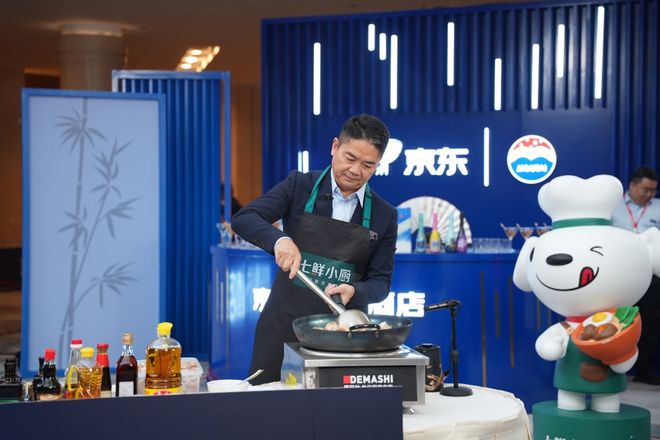
刘强东亲自下厨,“人间烟火气”背后的京东商业哲学
Guan Cha Zhe Wang· 2025-09-22 06:45
Core Viewpoint - Liu Qiangdong, the founder of JD.com, is re-entering the restaurant and hotel market with a focus on quality and integrity, aiming to create a better ecosystem for both consumers and service providers [4][5][10]. Group 1: Business Strategy - JD.com is launching a new hotel development plan to avoid price wars that could degrade service quality and profit margins in the hospitality industry [3][4]. - The company aims to innovate in the food delivery sector by reducing high commission rates that traditional platforms impose, which can reach up to 25% [4][12]. - JD.com is implementing the "Three Mao Five" theory, where it retains 70% of profits while leaving 30% for partners, ensuring a fair distribution of profits [10][12]. Group 2: Market Positioning - JD.com is focusing on quality food delivery and creating a positive ecosystem for merchants, as evidenced by the success of its "Seven Fresh Kitchen" initiative, which has seen a 30% increase in orders for local businesses [5][12]. - The company is also exploring partnerships with hotels to provide quality takeaway services, enhancing the consumer experience [13][12]. Group 3: Employee Welfare - JD.com has over 150,000 full-time delivery personnel receiving comprehensive benefits, reflecting the company's commitment to employee welfare [7][16]. - The workforce has grown to 900,000 employees, indicating rapid expansion and a focus on providing better treatment and respect for workers [7][16]. Group 4: Social Responsibility - JD.com emphasizes a business model that prioritizes social responsibility and ethical practices, aiming to create a respectful and trustworthy corporate image [17][19]. - The company believes in the importance of creating value beyond profits, focusing on the well-being of employees and the broader community [18][19].