宽基ETF投资

Search documents
开年以来370只宽基ETF总成交额突破1.25万亿元
Zheng Quan Ri Bao· 2026-01-16 16:46
Core Insights - The trading activity of broad-based ETFs has significantly increased since the beginning of 2026, with a total transaction volume of 1,251.19 billion yuan, representing a year-on-year growth of 64.03% [1] - The performance of leading products, such as Huaxia CSI A500 ETF and Huatai-PB Fund's A500 Fund, has been particularly strong, with several ETFs exceeding 100 billion yuan in transaction volume [1] - The overall net value growth rate of broad-based ETFs has been positive, averaging 6.11%, with 86 products achieving over 10% growth, indicating a robust market environment [2] Trading Activity - As of January 16, 2026, the total transaction volume for 370 broad-based ETFs reached 1,251.19 billion yuan, with notable contributions from top products [1] - Nine broad-based ETFs, including Huatai-PB CSI 300 ETF and Southern CSI 500 ETF, each surpassed 10 billion yuan in transaction volume on January 16 [1] - The increase in trading volume reflects a strong recognition of the tool attributes of broad-based ETFs by market participants [1] Performance Metrics - All broad-based ETFs reported positive net value growth, with an average increase of 6.11% and a median of 4.84% as of January 16, 2026 [2] - The number of broad-based ETFs has grown from 274 in the previous year, highlighting an increase in market liquidity and influence [2] - Different broad-based products exhibit varied performance, with the CSI 300 focusing on large-cap blue chips and the CSI A500 providing balanced exposure across 35 sectors [2] Market Trends - The overall recovery of the A-share market and the trend of capital concentrating on leading broad-based indices have contributed to the positive performance of broad-based ETFs [2] - Industry experts suggest that investors should focus on long-term value and avoid chasing short-term trends, emphasizing the importance of selecting ETFs based on specific criteria [3] - The high demand for broad-based ETFs is expected to continue, driven by enhanced market regulation, investor education, and the influx of medium to long-term capital [3]
账户创新高后,该落袋为安还是继续持有?
Sou Hu Cai Jing· 2025-09-01 14:29
Core Viewpoint - The article discusses strategies for investors to consider when their fund accounts reach new highs, emphasizing the importance of balancing profit-taking and risk management [1] Group 1: Profit-Taking Strategies - The concept of profit-taking is highlighted, with the saying "buying is for apprentices, selling is for masters" underscoring its importance [2] - Target return method is a straightforward approach where investors set a predetermined return rate before buying and sell once that target is reached [2] - The partial profit-taking method is recommended for the current market environment, allowing investors to lock in some profits while retaining a portion of their investment for potential further gains [2] - The maximum drawdown method is useful in a bull market, where investors set a drawdown threshold (e.g., 10%) and only consider selling if profits fall below this level [2][3] Group 2: Risk Management through Diversification - The article notes a recent market trend of rapid sector rotation, making it risky to chase hot sectors [4] - Balanced allocation is emphasized as crucial, advising against concentrating investments in a single area and instead spreading investments across various industries [4] - Even after achieving profits, adjusting the portfolio is necessary to manage risks, ensuring that overall volatility remains manageable [4] Group 3: Utilizing ETFs for Balanced Investment - Broad-based ETFs are presented as an effective tool for achieving a balanced investment portfolio, offering risk diversification [5] - Examples include the CSI 300 ETF, which includes 300 representative companies from the A-share market, and the CSI A500 ETF, which covers a wide range of leading companies across various sectors [5] - ETFs typically have lower management fees compared to actively managed funds, which can lead to significant cost savings over time [5] - The flexibility of ETFs allows investors to adjust their positions easily during trading hours, similar to stocks [5] Group 4: Psychological Aspects of Investing - The article emphasizes that investing is fundamentally a psychological game, particularly at market highs where greed and fear can be amplified [6][7] - To combat these emotions, it is advised to create and adhere to a plan that outlines specific conditions for profit-taking and loss-cutting [7] - Maintaining a long-term perspective is crucial, focusing on quality assets rather than short-term market fluctuations [7] Group 5: Conclusion - The article concludes that whether to take profits or continue holding investments, the key is to find a strategy that aligns with individual investment goals [8] - It reinforces the notion that investing is a marathon, not a sprint, and emphasizes the importance of rationality and risk control at market peaks [8]
二季度“国家队”千亿豪买!这类ETF仍是“中流砥柱”
Sou Hu Cai Jing· 2025-07-23 07:35
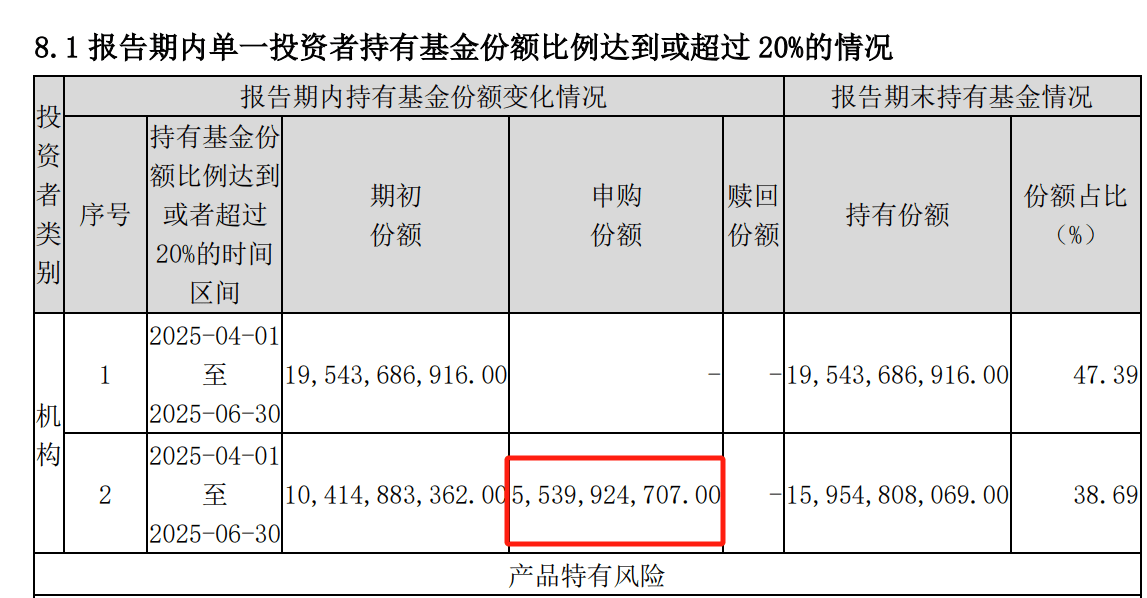
Core Insights - The "national team" led by Central Huijin has significantly increased its holdings in major ETFs, indicating a proactive investment strategy amidst favorable market conditions [1][4][5]. Group 1: Investment Actions - Central Huijin has invested approximately 150 billion CNY in four major ETFs, including the CSI 300 ETF and the Huaxia SSE 50 ETF, during the second quarter of 2025 [1][4]. - The specific investments include 410 billion CNY in the Huatai-PineBridge CSI 300 ETF, 310 billion CNY in the E Fund CSI 300 ETF, 350 billion CNY in the Huaxia CSI 300 ETF, and 220 billion CNY in the Huaxia SSE 50 ETF [4]. Group 2: Performance Metrics - The E Fund CSI 300 ETF and Huaxia CSI 300 ETF have shown strong performance over the past year, with returns of 22.88% and 22.77%, respectively, outperforming the CSI 300 index's return of 19.74% [6][8]. - The performance metrics for these ETFs indicate strong active management capabilities, with the E Fund CSI 300 ETF having an annualized Sharpe ratio of 0.95 and an information ratio of 6.26, suggesting superior risk-adjusted returns [6][8]. Group 3: Market Outlook - Future investment decisions by the "national team" will depend on the sustainability of the policy environment and market valuations, with expectations of continued support for the stock market [5]. - Analysts suggest that structural opportunities in the A-share market will persist, with a focus on the upcoming mid-year earnings reports [5].