
小众品牌

Search documents
网红韩国潮牌,只有一年保鲜期?
虎嗅APP· 2025-12-14 23:54
Core Viewpoint - A new wave of Korean fashion brands is emerging in China, characterized by rapid expansion and a short lifecycle, often referred to as "disposable brands" due to their quick rise and fall in popularity [4][5][6]. Group 1: Rise of Korean Fashion Brands - The resurgence of Korean fashion brands in China is significantly influenced by K-pop culture, with many brands closely associating with popular idols to drive traffic and sales [8][9]. - The unique design and niche appeal of these brands resonate with young consumers who prefer individuality over mainstream labels, leading to a strong initial demand [10]. Group 2: Rapid Expansion Strategies - Korean fashion brands are expanding quickly in China, establishing a presence in major cities and online platforms within 1-2 years, often targeting core commercial areas [12][15]. - The use of pop-up stores and collaborations with local influencers has created buzz and attracted foot traffic, enhancing brand visibility [13][14]. Group 3: Challenges and Market Dynamics - Despite initial success, many Korean brands face challenges such as low brand loyalty and consumer fatigue, leading to a rapid decline in popularity once they become mainstream [19][20]. - The reliance on local agents for rapid expansion can dilute brand integrity and quality, as agents prioritize quick profits over long-term brand building [22][24]. - The market is saturated with new entrants, making it difficult for existing brands to maintain their unique appeal and consumer interest [21][25].

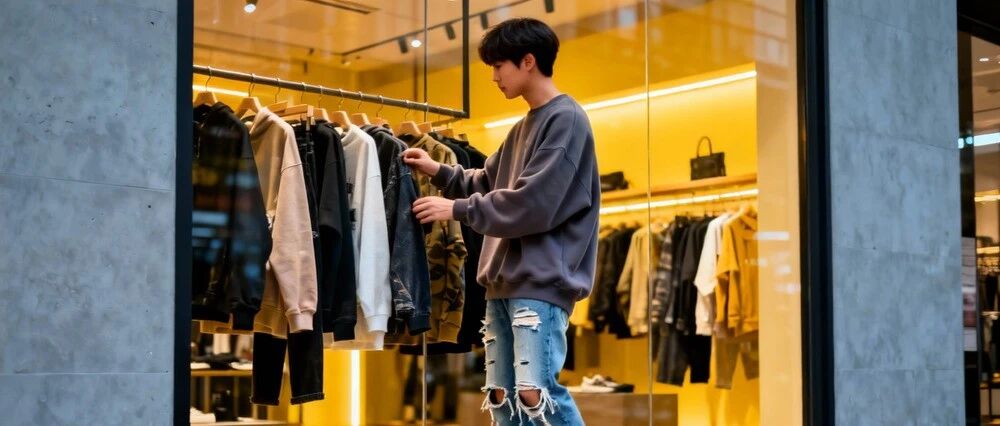
网红韩国潮牌,只有一年保鲜期?
创业邦· 2025-12-13 10:08
Core Viewpoint - A new wave of Korean fashion brands is emerging in China, with several new brands rapidly expanding their presence through pop-up events and online channels, while others are facing decline and market exit due to various operational challenges [5][10][36]. Group 1: Emerging Brands and Market Entry - Three new Korean fashion brands, minjiena, lazyz, and fancy club, launched a pop-up event in Shanghai, marking their entry into the Chinese market [5]. - Rest & Recreation opened its first store in mainland China in April and has since expanded to major cities like Beijing and Shanghai [5]. - The brand emis has successfully entered online platforms like Xiaohongshu and Tmall, and is now opening physical stores in key shopping districts [5]. Group 2: Declining Brands and Market Exit - Several previously popular Korean fashion brands are experiencing rapid decline, with Mardi Mercredi closing all its offline stores in China and ceasing its official mini-program [7][8]. - NERDY exited the Chinese market due to disputes with its local distributor, and chuu has also seen a significant drop in store traffic [7]. Group 3: Market Dynamics and Consumer Behavior - The rapid rise and fall of these brands highlight a shortened lifecycle in the market, with trends shifting from two to three years to as little as a few months [10]. - Factors contributing to the rise of Korean fashion brands include the influence of K-pop culture, the desire for unique consumer expression, and the experience of local distributors [10][22]. - However, low brand loyalty and consumer retention issues are evident, as many consumers view these brands as "disposable" or "fast fashion" [10][36]. Group 4: Marketing Strategies and Brand Positioning - The success of these brands is heavily tied to celebrity endorsements and influencer marketing, with many products gaining popularity through association with K-pop idols [12][18]. - The brands also leverage fashion KOLs to enhance visibility and attract consumers, with many influencers participating in store openings and promotional events [25][27]. - Unique design elements and niche branding appeal to younger consumers who prefer individuality over mainstream brands [22]. Group 5: Expansion Strategies and Challenges - Korean fashion brands are rapidly expanding in China, often establishing a presence in major urban centers within one to two years [24]. - The strategy includes a combination of online presence and physical stores in prime locations, with brands like Mardi and Mmlg quickly opening multiple outlets [24][28]. - Collaborations with local distributors have facilitated this rapid expansion, but reliance on these partners poses risks, as seen with NERDY's exit due to distributor conflicts [49]. Group 6: Long-term Viability and Market Risks - The rapid expansion of these brands raises questions about their long-term sustainability, as many struggle to build a solid brand identity and consumer trust [36][39]. - High prices and perceived low quality are concerns for consumers, leading to a lack of repeat purchases and brand loyalty [39][42]. - The competitive landscape is intensifying, with new brands continuously emerging, making it challenging for existing brands to maintain market share [42][55].
品牌运营:山下有松品牌洞察报告
Sou Hu Cai Jing· 2025-08-19 15:57
Group 1 - The core idea of the report is to provide insights into the brand Songmont, which was established in 2013, initially focusing on the commuting bag needs of professional women and now exploring lifestyle aesthetics through bags to meet diverse urban demands [12][16][19] - Songmont's development journey includes stages such as initial market testing, transformation to e-commerce, opening its first physical store, sales growth, and visual system upgrades [16][18] - The brand targets urban middle-class women aged 30-50 in first-tier cities who are willing to pay for aesthetics and self-worth, with a product line primarily centered on backpacks and expanding into ready-to-wear clothing [12][18] Group 2 - In 2025, the brand's social media presence and interaction volume are expected to grow significantly year-on-year, driven by collaborations with celebrities, with a focus on female audiences aged 18-29 concentrated in major cities [26][29] - The marketing strategy includes increased social media investment, targeting platforms like Douyin and Xiaohongshu, and utilizing a narrative-driven content approach to enhance brand engagement [26][39] - The brand's social media discussions reveal a younger demographic than its core target market, with 74% of discussions coming from users aged 18-29 [30][29] Group 3 - The product strategy includes a diverse range of bag series, with the "Baina" series gaining the highest interaction due to celebrity endorsements, and key purchasing considerations for users being size, color, and bag features [39][40] - The brand's social media engagement is characterized by a focus on functionality, usage scenarios, and brand perception, with discussions highlighting the quality and uniqueness of the products [33][39] - The collaboration with celebrity Jiang Qiming significantly boosted the social media interaction for the brand, particularly for the suede bag, leading to a 498% increase in related material discussions [41][43]

“长不大”的消费需求,正在遍地开花
Hu Xiu· 2025-05-28 05:29
Group 1 - The article discusses a shift in consumer behavior from large-scale consumption to niche markets, emphasizing the importance of finding smaller, dedicated customer bases [2][5][24] - There is a growing trend towards small, specialized businesses that cater to specific consumer needs, reflecting a desire for unique and personalized experiences [4][21][38] - The emergence of niche brands in various sectors, such as food and fashion, indicates a shift towards quality and individuality over mass production [11][17][37] Group 2 - Consumers are increasingly seeking products that enhance their quality of life and provide emotional satisfaction, rather than just functional benefits [21][23][39] - The article highlights the importance of community and local engagement in retail, with small businesses thriving in unique locations that foster personal connections [30][32][35] - The concept of "slow living" is gaining traction, with consumers prioritizing sustainability and mindful consumption over fast-paced lifestyles [38][40][44]