
属地快速通关

Search documents
视频|霍尔果斯口岸今年通行中欧(中亚)班列突破1000列
Yang Shi Xin Wen Ke Hu Duan· 2026-02-10 23:22
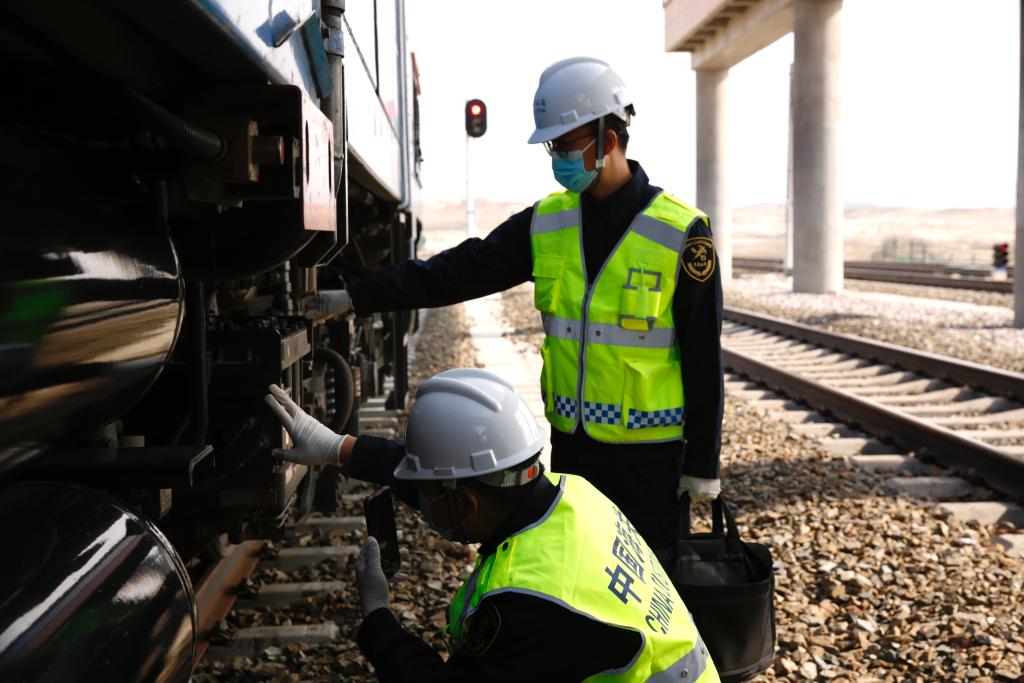
Core Insights - The article highlights the significant milestone of the China-Europe (Central Asia) freight trains, with over 1,000 trains passing through the Horgos railway port in 2026, indicating robust trade activity and logistics efficiency [2] Group 1: Freight Train Operations - A freight train loaded with goods, including consumer products, new energy vehicle components, and photovoltaic modules, departed from Horgos, marking a record in train operations [2] - The average daily number of China-Europe (Central Asia) freight trains at Horgos has been maintained at over 27 trains, with a train being completed every two hours for inbound and outbound operations [2] Group 2: Cargo Composition and Growth - The structure of goods exported through the port is continuously optimizing, with a notable increase in specialty goods from East and South China, including high-value and high-tech products like new energy vehicles and precision instruments [2] - High-value products such as new energy vehicles and photovoltaic components continue to show strong growth, contributing to the overall increase in trade volume [2] Group 3: Operational Efficiency - The Horgos Customs and railway departments have implemented a "smart railway port + local rapid customs clearance" system, achieving real-time data exchange and enhancing operational efficiency [6] - Techniques such as intelligent document review and pre-inspection have improved the customs clearance time by over 50% for individual trains, ensuring timely and efficient processing [6] Group 4: Safety and Quality Assurance - The Deputy Director of the Horgos Station Safety Production Command Center emphasized the importance of precise traffic forecasting and seamless operation coordination to ensure high-quality execution of daily transport plans [4]


去年新疆铁路客发量货发量口岸过货量创新高
Xin Lang Cai Jing· 2026-01-11 18:13
Core Insights - In 2025, Xinjiang's railway passenger volume is projected to reach 54.25 million, a 6.8% increase from the previous year, while freight volume is expected to hit 250 million tons, up 5.3% year-on-year, with record high cargo throughput at Alashankou and Horgos railway ports reaching 32.1 million tons, a 12.1% increase [1][2] Passenger Transport - The Xinjiang railway department is enhancing its services to meet passenger travel demands by launching the "Tianshan Snow Lotus" service brand and increasing train capacity during peak travel periods through additional trains and optimized operations [1] - Direct passenger trains are being introduced between Urumqi and eight popular tourist cities, along with special tourist trains like "New Oriental Express," "Tianshan No.," and "Ring Tower Tour," expanding travel options for passengers [1] Freight Transport - The Xinjiang railway department is focused on improving the capacity of the "one main, two auxiliary" railway channels for entering and exiting Xinjiang, enhancing freight train organization, and normalizing daily loading of 12,000 cars [1] - Key material transportation agreements have been signed with 31 major enterprises in the region, with a total contracted volume of 207 million tons, and specialized freight trains for rural revitalization, cold chain, and e-commerce are being regularly operated [1] Port Operations - The Xinjiang railway department has collaborated with customs to implement a pioneering "smart railway port + local rapid customs clearance" model at the Horgos railway port, significantly reducing the transit time for import and export goods by 70% and 80% respectively [2] - The scale of the full schedule for China-Europe freight trains is being expanded to promote high-quality operations of these trains [2]
新疆经济看点丨“钢铁驼队”穿梭亚欧黄金通道
Xin Lang Cai Jing· 2026-01-05 09:28
Core Insights - Xinjiang is positioned as a core area of the "Belt and Road" initiative, with the railway department aiming to enhance the capacity of the China-Europe Railway Express by 2025, achieving a cargo throughput of 29.31 million tons and a year-on-year growth of 11.9% in the first 11 months [1] Group 1: Transportation Efficiency - The Alashankou and Horgos railway ports have seen a daily average of over 21 trains, with peak times reaching 30 trains [2] - The Xinjiang railway department has implemented precise scheduling and resource allocation to optimize train operations, ensuring a monthly throughput of over 800 trains by 2025 [3] - The introduction of a "smart railway port + local rapid customs clearance" model has significantly reduced cargo clearance times, with import goods processing time cut from 2-3 days to under 16 hours [5][6] Group 2: Technological Advancements - The Horgos station has integrated a smart gantry crane system to enhance automated operations in container handling, contributing to smoother logistics [4] - The real-time detection and identification system for train operations has achieved a 99.9% detection rate, reducing on-site workload by 20% since its trial run began [5] Group 3: Service Quality and Connectivity - The full timetable for the China-Europe Railway Express has exceeded 1,000 trains, providing robust support for international supply chain security and promoting trade between Asia and Europe [7] - The number of train routes passing through the Alashankou port has reached 128, covering 21 countries, while Horgos has 90 routes, serving 18 countries and 46 cities [8]
新疆双口岸累计通行中欧(中亚)班列超10万列
Xin Hua Wang· 2025-10-14 03:15
Core Points - The total number of China-Europe (Central Asia) freight trains passing through the Alashankou and Horgos ports in Xinjiang has exceeded 100,000 [1] - These ports serve as major transportation channels connecting China to Central Asia and Europe [1] Group 1 - The local customs and railway departments have established a visual supervision system utilizing big data and IoT technology, enhancing the "smart railway port + local rapid customs clearance" reform [3] - The time for imported goods to pass through customs has been reduced from 2-3 days to within 16 hours, with an average of 2 hours required for a return freight train to be reloaded [3] - The average daily entry and exit of China-Europe (Central Asia) freight trains exceeds 27 trains [3] Group 2 - As of now, there are 127 and 89 routes for China-Europe (Central Asia) freight trains passing through Alashankou and Horgos ports, respectively [3] - The types of goods transported have expanded from initial products like computers and mobile phones to over 200 categories, including new energy vehicles, industrial machinery, and grain and oil products [3]
突破100000列
中国能源报· 2025-10-14 02:16
Core Points - The cumulative passage of China-Europe (Central Asia) freight trains through Xinjiang's dual ports has exceeded 100,000 trains [1] - The implementation of a visual supervision system utilizing big data and IoT technology has been established at the Alashankou and Horgos customs [2] - The transit time for China-Europe freight trains has been reduced from 2-3 days to within 16 hours, with an average of 2 hours for a return train to be reloaded, and over 27 trains entering and exiting daily [3] Summary by Sections - **Cumulative Freight Train Passage**: As of October 12, a freight train loaded with goods departed from the Alashankou port to Poland, marking a significant milestone of over 100,000 freight trains passing through the dual ports of Xinjiang [1] - **Technological Advancements**: The customs at Alashankou and Horgos have adopted advanced technologies to enhance efficiency, creating a visual supervision system that supports rapid customs clearance [2] - **Operational Efficiency**: The operational efficiency of the China-Europe freight trains has significantly improved, with the transit time now averaging 16 hours. The number of routes has expanded to 127 and 89 respectively for Alashankou and Horgos, connecting to 26 provinces in China and 21 countries in Europe and Asia, with a diverse range of over 200 types of goods transported [3]
今年霍尔果斯铁路口岸已通行中欧(中亚)班列7000列
Zhong Guo Xin Wen Wang· 2025-09-16 09:26
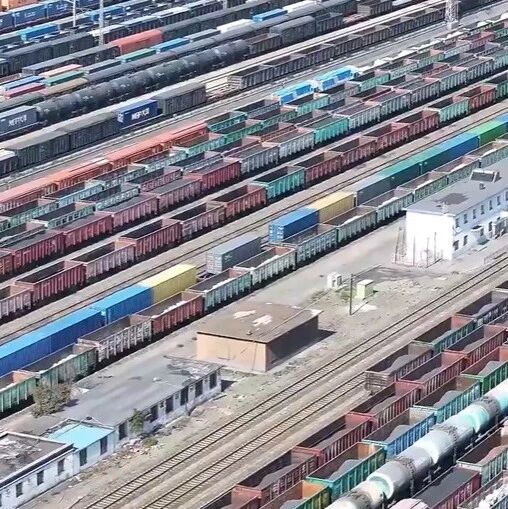
Core Viewpoint - The article highlights the significant increase in the efficiency and volume of cargo transported via the Horgos railway port, marking a milestone with the 7000th China-Europe (Central Asia) freight train this year, which is 44 days ahead of last year's pace [1] Group 1: Operational Efficiency - The Horgos port implemented a "smart railway port + local rapid customs clearance" reform in May, reducing the import cargo clearance time from 2-3 days to under 16 hours, achieving a 70% reduction [1] - The export cargo processing time has been cut from 6 hours to 1 hour, resulting in an 80% decrease [1] - Real-time data sharing between customs and railway systems allows for tracking of logistics and train information, enhancing overall clearance efficiency by over 50% [1] Group 2: Cargo Volume and Routes - The number of freight train routes passing through Horgos has reached 90, covering 18 countries and 46 cities and regions [1] - The types of goods transported include over 200 categories, such as daily necessities, auto parts, electronic products, large equipment, building materials, sports goods, and steel [1]