峰谷电价

Search documents
电价大改!3月1日执行,居民电费怎么算?错峰用电一年省1800
Sou Hu Cai Jing· 2026-02-11 02:15
Core Insights - The upcoming electricity price reform on March 1, 2026, primarily targets enterprise users, allowing their electricity prices to fluctuate based on market supply and demand, while residential electricity rates remain unchanged [3][10] - The reform maintains the existing pricing structure for residential users, including the tiered pricing system and optional time-of-use pricing, ensuring that the majority of households will not experience significant increases in their electricity bills [4][10] Summary by Sections Residential Electricity Pricing - Residential electricity pricing will continue to follow a tiered structure, with the first tier maintaining rates between 0.5 to 0.6 yuan per kilowatt-hour, covering 80% of typical household consumption [3][4] - Low-income households will still receive 10 to 15 kilowatt-hours of free electricity each month, ensuring basic living needs are met without additional costs [3] Time-of-Use Pricing - The time-of-use pricing system divides the day into peak and off-peak periods, with peak hours typically from 8 AM to 10 PM and off-peak hours from 10 PM to 8 AM, allowing for significant savings if consumers shift their usage to off-peak times [6][10] - For example, the price difference between peak and off-peak electricity can be as much as 0.3 to 0.6 yuan per kilowatt-hour, leading to potential annual savings of 1,800 yuan for households that adjust their usage patterns [6][7] Savings Potential - Households with high electricity consumption, such as those with electric vehicles or multiple high-power appliances, can save substantial amounts by utilizing off-peak pricing effectively [7][11] - Simple adjustments, such as using electric water heaters and washing machines during off-peak hours, can lead to significant savings without major lifestyle changes [8][11] Policy Intentions - The primary goal of the electricity price reform is to optimize electricity resource allocation and encourage off-peak usage, thereby alleviating peak load pressures on the grid [10] - The reform is designed to provide financial benefits to consumers without increasing their overall electricity costs, countering misconceptions that the changes will lead to higher prices [10][11]

电价迎来重大调整,价差可达4倍?会不会用不起电,交不起电费?
Sou Hu Cai Jing· 2025-11-29 22:13
Core Insights - The recent electricity price adjustments in China are not merely price hikes or cuts but represent a significant overhaul of the entire electricity pricing system, impacting both industrial and residential users [1][10] Group 1: Price Discrepancies - As of January 2025, the peak-valley price difference has exceeded 1 yuan per kilowatt-hour in nine provinces, with Shanghai leading at a peak price difference of 1.81 yuan [3][6] - In Tianjin, the peak-valley price ratio has reached 4:1, with specific time slots designated as low-cost periods, significantly affecting operational costs for businesses [3][4] Group 2: Impact on Industrial Users - Industrial users who adapt their electricity usage to low-cost periods can see substantial savings, with one factory reducing its electricity bill by 30% by shifting energy-intensive processes to off-peak hours [4][7] - Companies are increasingly investing in energy storage systems to capitalize on price differences, turning electricity management into a profit-generating activity [7][8] Group 3: Market Dynamics and Policy Changes - The shift towards market-based pricing is evident, with regions like Shandong implementing a five-tier pricing system that reflects real-time supply and demand [5][6] - The government aims to create a more flexible pricing structure that can respond to fluctuations in energy supply, particularly from renewable sources [8][11] Group 4: Recommendations for Users - Users are advised to understand local pricing policies and adjust their electricity usage accordingly to maximize savings [9][10] - The potential for residential users to benefit from time-of-use pricing, especially those with electric vehicle charging stations, is significant [6][9] Group 5: Future Trends - The trend towards dynamic pricing and real-time adjustments is expected to become more common, requiring both businesses and residential users to adapt their consumption habits [11][12] - The overarching goal of these changes is to optimize energy consumption, support renewable energy integration, and contribute to national carbon neutrality goals [10][12]

最大价差1.356元/kWh!2025年10月全国工商业峰谷电价全景
Sou Hu Cai Jing· 2025-09-30 02:50
Core Insights - The article discusses the announcement of electricity purchasing prices by grid companies across various regions for October 2025, highlighting the fluctuations in prices and the peak-valley price differences in the electricity market [2][4]. Price Overview - The purchasing prices for electricity in different regions from March to October 2025 are detailed, with notable variations across provinces such as Jiangsu, Guangdong, and Shandong [3]. - For instance, in October 2025, the purchasing price in Jiangsu is 433.6 yuan/MWh, while in Guangdong, it is 491 yuan/MWh [3]. Peak-Valley Price Differences - In October 2025, Guangdong has the largest peak-valley price difference at 1356.1 yuan/MWh, while Gansu has the smallest at 36.7 yuan/MWh [4]. - A total of three regions have peak-valley price differences exceeding 1000 yuan/MWh, and 19 regions exceed 500 yuan/MWh [4]. Regional Price Comparisons - The article provides a comprehensive table of peak and valley prices for various regions, indicating significant disparities in electricity costs [5][7][9]. - For example, the peak price in Jiangsu is reported at 1054.50 yuan/MWh, while the valley price is significantly lower, leading to a notable price gap [7]. Monthly Price Changes - The report includes month-on-month growth rates for electricity prices, showing fluctuations in various regions, such as a decrease of 10.68% in Jiangsu's peak price compared to the previous month [8]. - The data indicates that some regions, like Zhejiang, experienced a significant increase in peak prices, while others, like Gansu, saw minimal changes [9].
充满一次可少花60多元,武汉新能源车主有福了
Chang Jiang Ri Bao· 2025-05-25 08:00
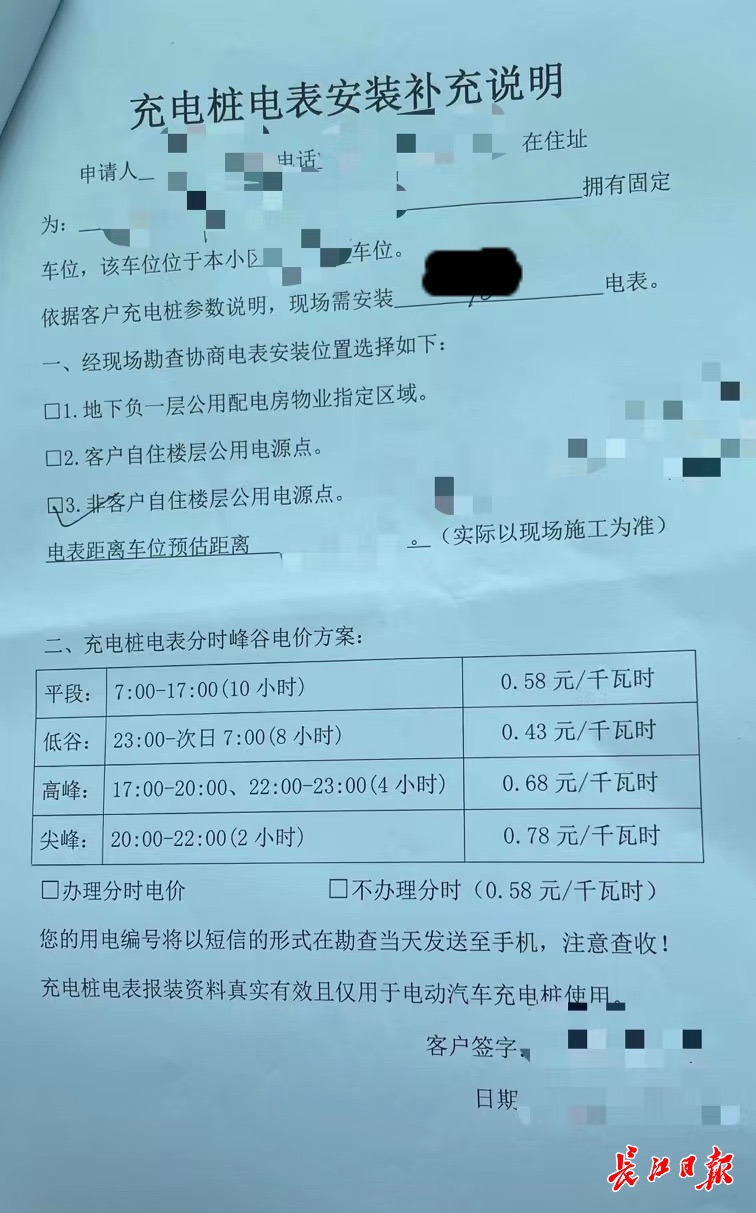
Core Viewpoint - The implementation of time-of-use electricity pricing for personal electric vehicle charging stations in Wuhan allows residents to significantly reduce their charging costs, particularly during off-peak hours [1][3][5]. Group 1: Charging Costs and Savings - Nighttime charging costs only 0.43 yuan per kilowatt-hour, leading to savings of over 60 yuan for a full charge compared to previous costs [1][3]. - Charging during peak hours can cost as much as 1.2 yuan per kilowatt-hour, making the off-peak rate highly attractive for electric vehicle owners [3][5]. Group 2: Time-of-Use Pricing Structure - The time-of-use pricing includes four different rates: - Peak (17:00-20:00, 22:00-23:00) at 0.68 yuan per kilowatt-hour - Super Peak (20:00-22:00) at 0.78 yuan per kilowatt-hour - Flat (07:00-17:00) at 0.58 yuan per kilowatt-hour - Off-Peak (23:00-07:00) at 0.43 yuan per kilowatt-hour [5]. - If residents do not opt for time-of-use pricing, they will be charged a flat rate of 0.58 yuan per kilowatt-hour [5]. Group 3: Adoption and Installation - Residents can choose to apply for a personal charging station and select the time-of-use pricing option during the installation process [5]. - The option for time-of-use pricing will be available starting December 1, 2023, for personal charging stations in Wuhan [5].