巴塞尔协议III终局规则

Search documents
美联储监管负责人鲍曼:稳定币与资本规则将迎新变革
Sou Hu Cai Jing· 2025-12-02 11:50
Group 1 - The Federal Reserve's top bank regulator, Bowman, plans to emphasize the need for responsible encouragement of innovation while enhancing the identification and management of risks associated with innovation in her written testimony to the House Financial Services Committee on December 2 [1] - Bowman highlights that new technologies are reshaping the banking ecosystem by improving operational efficiency and expanding credit coverage, creating value for consumers and businesses [1] - The development of financial technology and digital asset companies requires a "level playing field," and regulators will work to break down industry barriers to ensure fair competition among traditional banks, fintech companies, and cryptocurrency firms [1] Group 2 - Bowman reveals plans to collaborate with multiple agencies to establish capital and diversified regulatory rules for stablecoin issuers, strictly implementing the "Genius Act" requirements of "registration + equivalent reserves" to prevent stablecoins from deviating from traditional financial regulatory frameworks [1] - The Federal Reserve is advancing the Basel III final rules with a "bottom-up" calibration approach, emphasizing the need to adjust regulatory standards based on actual risk exposures rather than preset capital requirements [2] - Traditional banks warn of the risks of license abuse as cryptocurrency companies seek bank licenses for legitimacy, with Bowman reiterating that regulation will adhere to a "functional regulation" principle to prevent regulatory arbitrage [2] Group 3 - Bowman's testimony conveys a clear policy direction: finding a precise balance between encouraging financial innovation and maintaining financial stability [2] - Each initiative, from the hard constraints of stablecoin "equivalent reserves" to the dynamic calibration mechanism of Basel regulations, aims to build a more resilient, inclusive, and sustainable modern financial system [2] - The outcomes of this regulatory transformation will significantly impact the competitive landscape and risk profile of global digital finance over the next decade [2]
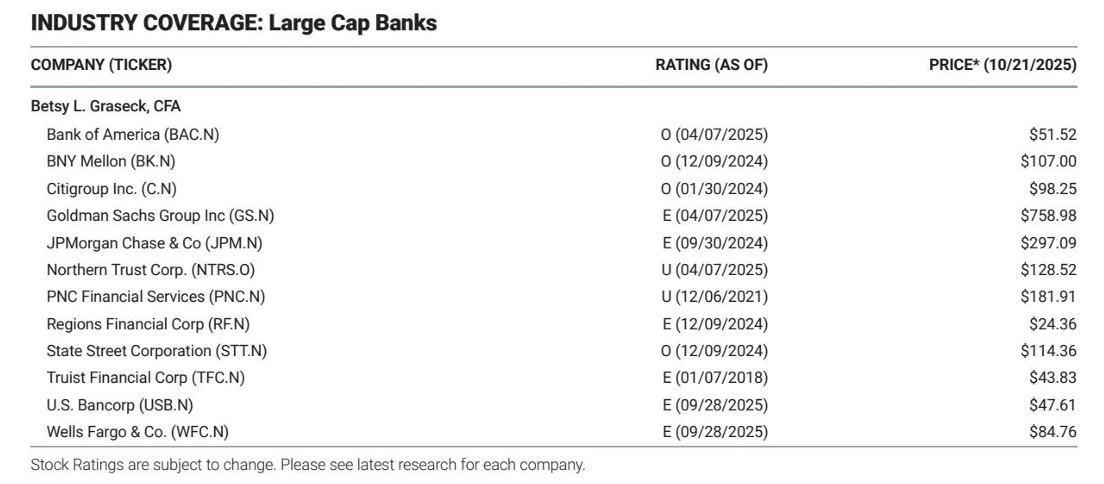
传美联储拟“松绑”华尔街 大摩:高盛(GS.US)等交易型银行最受益
智通财经网· 2025-10-24 08:24
Core Viewpoint - The Federal Reserve is proposing a revised version of the Basel III final rules that would significantly relax capital requirements for large Wall Street banks, with estimated capital increases ranging from 3% to 7%, much lower than the previously proposed 19% increase in 2023 and the 9% from last year's compromise [1] Group 1: Regulatory Changes - The revised Basel III rules aim to clarify the capital banks need to reserve to withstand economic downturns, with strong opposition from Wall Street banks against the original proposal due to concerns over increased loan costs and competitive positioning [1] - The Federal Reserve plans to announce the new proposal as early as Q1 2026, led by Vice Chair Michelle Bowman, with expectations that the final rules could be released by Q4 2026 after a public comment period [2] Group 2: Capital Positioning - As of Q2 2025, large banks are estimated to hold $157 billion in excess capital, and even with a 7% increase in capital requirements, they would still retain at least $146 billion in excess capital [3] - The proposed reduction in capital requirements is particularly beneficial for banks with large trading portfolios, such as Goldman Sachs [3] Group 3: Market Implications - If the capital reduction is less than expected, it may have a slight negative impact on bank demand from institutional mortgage-backed securities investors, but could positively affect Ginnie Mae and Fannie Mae [4] - The clarity and finalization of regulatory rules are seen as positive signals that could help banks optimize their excess capital allocation more quickly [5]