
市场化融资

Search documents
新增发债视角下城投企业转型路径研究:分类施策,重塑动能
Lian He Zi Xin· 2026-03-31 12:28
1. Report Industry Investment Rating No information provided in the content. 2. Core Viewpoints of the Report - The report aims to outline the group portrait of urban investment enterprises with market - based financing capabilities through analyzing the new bond issuance and subject characteristics of sample enterprises, and summarize the differentiated transformation logic and practical experience of urban investment enterprises by studying typical cases in different - level cities [1][3]. - Future transformation work should abandon the "one - size - fits - all" model and build a differentiated development path deeply integrated with urban strategies. Different - level cities' urban investment platforms should have different transformation directions [2][47]. - The new bond - issuing sample enterprises are mainly distributed in areas with good economic foundation and high urban development levels. Their business has extended to diversified fields, and the financial structure has been optimized, but the market - based profitability is still being cultivated [1][47]. 3. Summary According to the Directory 3.1 Introduction - With the strengthening of local government debt risk prevention and control and the tightening of financing supervision of urban investment platforms, urban investment enterprises are accelerating their market - based transformation. Whether they can obtain new bond financing has become a perspective to observe their transformation progress [3]. 3.2 New Bond Issuance and Related Subject Situations 3.2.1 New Bond Issuance - From 2024, 188 sample enterprises issued 312 new bonds with a total issuance scale of about 182.888 billion yuan. The new bond financing shows the characteristics of "dominated by exchanges, mainly private placement, led by municipal - level entities, and regional differentiation" [4]. - Over 90% of first - time bond - issuing entities issued new bonds on exchanges. Private placement corporate bonds are the main issuance variety. Labeled bonds account for about 33% of the issuance scale, and popular varieties include science and technology innovation bonds, rural revitalization bonds, and green bonds [4]. - The new bonds' terms are concentrated in 3 - 5 years. Some high - level entities in certain provinces issued 10 - year long - term bonds, and a provincial entity in Beijing issued ultra - long - term bonds over 20 years [4]. - The new bond issuance interest rate in each province ranges from 2.17% to 3.03%. The overall financing cost is at a low level. Shandong has a relatively high coupon rate, while Shanghai, Chongqing, Anhui, Beijing, Fujian, and Guangdong have lower rates [4]. - About 40% of the raised funds are used for debt roll - over, and the incremental funds of about 11 billion yuan are mainly used for business or strategic purposes such as supplementing working capital, project construction, and investment in the science and technology innovation field [4]. 3.2.2 Characteristics of New Bond - Issuing Subjects - **Regional Distribution**: New bond - issuing subjects are mainly concentrated in areas with good economic foundation and high urban development levels. The enterprise - level distribution shows regional differentiation. Coastal developed areas have more district - county - level new bond - issuing subjects, while central and western provinces have more municipal - level ones [7]. - **Business Characteristics**: The business of new bond - issuing subjects presents a structure of "asset operation as the mainstay and supporting services as the supplement". The core depends on heavy - asset businesses such as real estate development, asset leasing, and public utility operation. Some service fields are becoming important directions for enriching business composition and cultivating market - based hematopoietic ability [10]. - **Financial Characteristics**: With the deepening of market - based transformation, the proportion of operating assets of new bond - issuing subjects has been increasing. However, the overall profitability is still weak, the return on net assets is low, and financial subsidies are still the core source of book profit. First - time bond - issuing subjects have a more market - based investment layout and are less dependent on financial subsidies [15]. 3.3 Transformation Path Analysis - The report divides Chinese cities into four echelons according to key dimensions such as development positioning, economy, industry, population, and transportation, and elaborates on the transformation paths of urban investment platforms serving different - echelon cities through typical cases [21]. - **Case of Hangzhou Urban Construction Investment Group Co., Ltd.**: Through strategic restructuring and resource integration, it has established an "integrated" investment and operation system; through industry - city integration, it has transformed into a "urban investment + industrial investment" model; it has actively explored the value - mining and capital - conversion paths of stock assets; and it has applied artificial intelligence to urban governance. The transformation has improved its asset structure and business performance [25][32]. - **Case of Hefei Construction Investment Holding (Group) Co., Ltd.**: It takes industrial investment as the core engine, reconstructs the business structure in a diversified way, and innovates the government - enterprise cooperation mechanism. The transformation has led to a significant increase in asset scale and a diversified business structure [34][39]. - **Case of Pingdu City Assets Operation Co., Ltd.**: Through asset restructuring and business integration, it has built six business sectors; it drives transformation through operation services; and it conducts characteristic bond financing. After the transformation, its asset structure has been optimized, and the proportion of operating business income has increased [41][43]. 3.4 Summary - The new bond - issuing sample enterprises are mainly in developed areas, with a transition form of "heavy - asset support and light - asset expansion" in business and an optimized financial structure, but the market - based profitability is still being cultivated [47]. - Future urban investment transformation should implement a differentiated development path: - **Function Positioning Remodeling**: High - level city platforms can evolve into state - owned capital investment and operation and smart city comprehensive service providers; medium - level city platforms should play the roles of "industry enablers" and "value amplifiers"; low - level city platforms should shift from "investment - expansion - driven" to "operation - service - driven" [47]. - **Transformation Principles**: Ensure strategic, endowment, and ability fit [48]. - **System and Mechanism Reform**: Accelerate the establishment of a modern enterprise system to promote the transformation from a "financing tool" to a "market subject" [49].
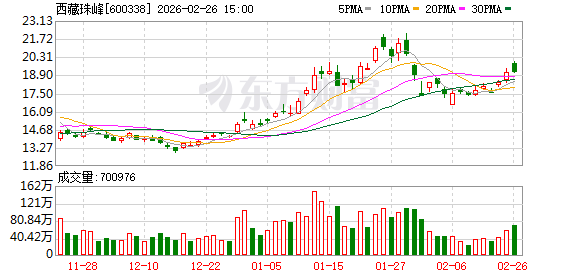
西藏珠峰:对于项目合作始终持积极开放态度
Zheng Quan Ri Bao· 2026-02-26 12:12
Group 1 - The company, Xizang Zhufeng, maintains a positive and open attitude towards project cooperation [2] - The company plans to address its resource development funding needs through market-oriented financing methods [2]


海新能科:公司将继续遵循市场化原则,积极拓宽融资渠道
Zheng Quan Ri Bao Wang· 2026-02-12 14:11
Group 1 - The core viewpoint of the article is that Haineng Technology (300072) is actively optimizing its financing structure to reduce funding costs and support high-quality industrial development [1] - Since 2025, the company has been replacing historical high-interest funds through various market-based financing channels, effectively lowering its overall financing costs [1] - The company plans to continue adhering to market principles and actively expand financing channels to secure lower-cost funds [1]

【关注】成功首发银行间长期债券 中铝股份再度拓展融资渠道
Sou Hu Cai Jing· 2025-08-04 10:53
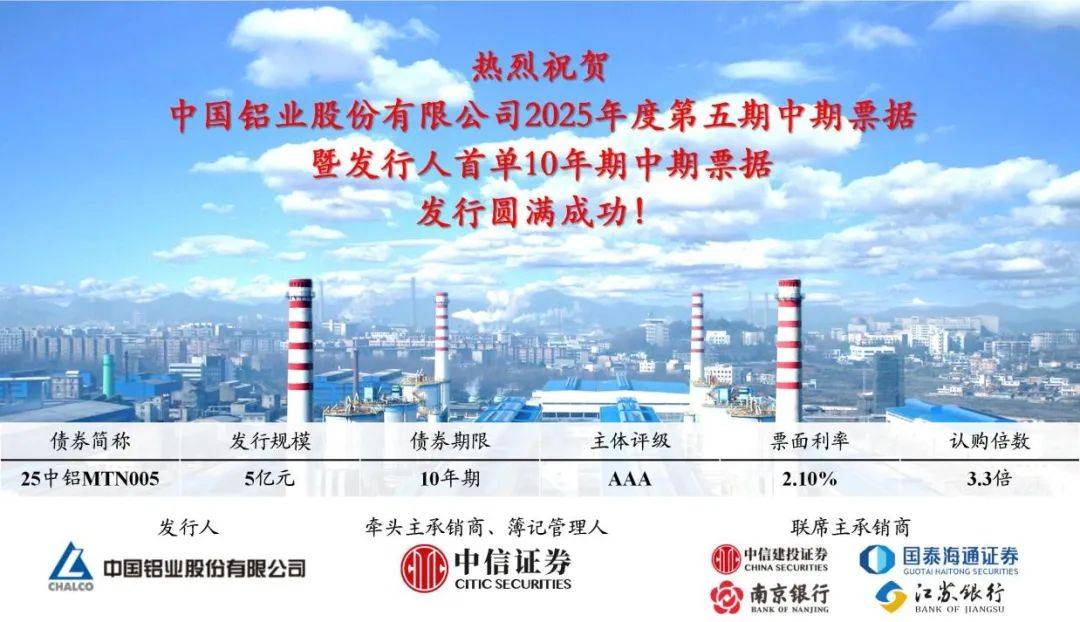
Group 1 - The core viewpoint of the article highlights that China Aluminum Corporation successfully issued a 10-year medium-term note in the interbank market, raising 500 million yuan with a subscription multiple of 3.26 times and a coupon rate of 2.10%, which is lower than the AAA- valuation by 5 basis points [1] - The issuance was supported by a non-deal roadshow held on June 21 in Shanghai, which enhanced the company's visibility in the capital market and demonstrated its competitive pricing power, laying the groundwork for the successful issuance of long-term bonds [1] - The bond issuance was characterized as a non-mainstream term, which limited the investor base and required higher qualifications for the issuer, leading the company to conduct thorough market research to identify the optimal market window [1] Group 2 - The company achieved a coupon rate that was 17 basis points lower than the AA+ rating of the China Bond market and 5 basis points lower than the AAA- rating, thereby optimizing its financial costs and debt structure [1] - The successful issuance reflects the high recognition of the company's overall strength and development prospects by capital market investors, showcasing its capabilities and influence in market-oriented financing [1] - The bond was led by CITIC Securities, with joint underwriting from CITIC Jianzhong, Guotai Junan, Nanjing Bank, and Jiangsu Bank, covering a diverse range of investors including insurance companies, funds, banks, and securities institutions, thereby activating capital market funding channels [3]

谁在对卫星收“租金”
Jin Rong Shi Bao· 2025-07-22 03:43
Group 1 - The successful launch of the Tianzhou-9 cargo spacecraft has been followed by a significant satellite leasing project in the commercial aerospace sector, marking a milestone in financial leasing for satellites in China [1] - On July 21, 2023, the Tianjin Binhai New Area government announced that China’s first SPV satellite leasing business was completed by China Merchants Jinling Leasing Co., with an asset scale of 30 million yuan [1] - This satellite leasing project involves a collaboration with a domestic commercial aerospace company to support the operation of China's first low-orbit satellite IoT constellation [1] Group 2 - Several financial leasing companies, including Pudong Development Bank Leasing, Bank of Communications Leasing, and Aerospace Leasing, have also made strides in satellite leasing, indicating a growing trend in the industry [1] - In 2019, Jiuyin Leasing initiated the satellite leasing market by partnering with Changguang Satellite Technology Co., leasing 10 out of 12 commercial remote sensing satellites [1][2] - In 2023, Pudong Development Bank Leasing successfully launched the "Pudong No. 1" remote sensing satellite in collaboration with Changguang Satellite, while Huishan Leasing completed its first satellite sale-leaseback transaction [2] Group 3 - Satellite leasing is defined as the process where a party owning satellite assets leases the usage rights to satellite operating companies, often through sale-leaseback arrangements [3] - This leasing model allows satellite companies to sell existing satellites to financial leasing firms and then lease them back, providing liquidity while maintaining operational capabilities [3] - The synergy between financial leasing and commercial aerospace is expected to strengthen, driven by policy support and market demand, facilitating faster market competitiveness for aerospace technologies [3]
迁总部融资,像吸du一样爽
叫小宋 别叫总· 2024-12-16 03:32
点进来本文的,应该已经比较理解目前一级市场中,招商行为和投资行为的混同。政府给机构出资,机 构投项目的同时,要求项目返投落地到当地。 返投落地又可以分为几种:落地壳公司,落地没有重要业务的子公司,落地产线,以及 ... 总部落地。 总部落地的意思就是,之前注册在 A 城市的企业,现在在工商层面把注册地迁到 B 城市。或者直接在 B市 新成立一个主体,控股原来 A市 的主体。 至于团队是不是也要从 A 迁到 B ,产线、业务是不是也要从 A 迁到 B ,都是谈的。看 B 给哪些条件, 看哪个城市对企业发展最有利。 政府为什么喜欢总部过来呢? 因为贡献的 gdp 和税收不一样,甚至如果这个项目上市了, 当地产生一家上市公司,这对地方政府来 说是非常重要的政绩。 现在很多项目在谈落地的时候,地方政府也会直接问:有没有可能,总部落到我这来? 有需求,就会有供给。 于是,稍微懂行的创始人都会把迁总部落地作为融资的一项绑定条件。 fa 有时候也会给类似的建议。 大家可能会先市场化融资,如果实在融不到了,把迁总部的这项条件拿出来,我接受总部搬迁,哪家政 府愿意投我? 凭本事融资,融不到了,那就只能"卖身"了。 但是迁总部可 ...