
干旱

Search documents
冬季雨量丰沛 摩洛哥7年旱情结束
Xin Hua She· 2026-01-13 07:41
Core Insights - Morocco's government announced that this winter's abundant rainfall has ended a seven-year drought, with rainfall increasing by 95% compared to the previous winter and exceeding the winter average by 17% [1] - The average water reservoir capacity in Morocco has risen to 46%, with several key reservoirs now fully filled [1] - The prolonged drought has severely impacted Morocco's agriculture and livestock sectors, affecting employment, as approximately one-third of job opportunities in the country are linked to agriculture [1] Water Management Initiatives - In response to the seven-year drought, Morocco has accelerated its seawater desalination projects and is advancing water transfer projects to supply water from the Sebou River to water-scarce cities like Rabat and Casablanca [1] - The government aims to increase the share of desalinated water in drinking water supply from 25% to 60% by 2030, while reserving reservoir water primarily for inland areas [1] Geographic Context - Morocco is located in northwest Africa, with its rainy season typically lasting from October to April, and rainfall decreasing from north to south [1]
近700个!土耳其惊现“巨大天坑”疑因气候变化导致
Huan Qiu Wang· 2025-12-25 08:39
Group 1 - The core issue is the emergence of hundreds of sinkholes in central Turkey's agricultural regions, attributed to climate change, reduced rainfall, and declining groundwater levels [1][2] - The number of sinkholes in the Konya basin has accelerated, nearing 700, with the rate of groundwater level decline now at 4 to 5 meters per year, significantly higher than the 0.5 meters per year observed in the 2000s [2][3] - Local farmers are increasingly drilling more wells, many of which are unlicensed, exacerbating the depletion of groundwater resources and worsening the situation [2][3] Group 2 - Although no fatalities have been reported from the newly formed sinkholes, their unpredictability poses a threat to the safety and property of local residents [2][3] - Farmers like Mustafa Sık have experienced the formation of sinkholes on their land, with one instance causing a loud noise that was alarming to nearby workers [5][6]

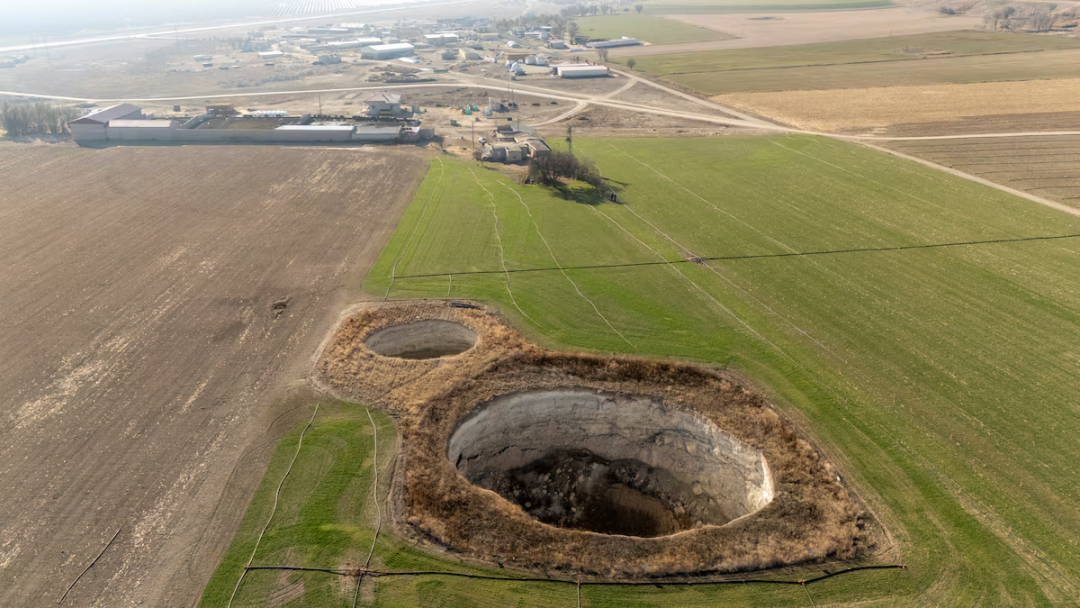
近700个!土耳其惊现“巨大天坑”
Xin Lang Cai Jing· 2025-12-24 14:46
Core Viewpoint - The emergence of nearly 700 giant sinkholes in central Turkey's agricultural region is attributed to climate change, leading to concerns among farmers and environmental experts [1][6]. Group 1: Climate Change Impact - The formation of sinkholes in the Konya basin has accelerated in recent years, with the total number nearing 700 due to reduced rainfall and declining groundwater levels [1]. - According to Professor Fethullah Arik from Konya Technical University, climate change and drought have been the primary causes of the increasing number of sinkholes since 2000, resulting in a gradual decline in groundwater levels [1]. Group 2: Groundwater Depletion - The rate of groundwater level decline has reached 4 to 5 meters per year, significantly higher than the 0.5 meters per year observed in the 2000s, raising serious concerns for Turkey's main agricultural sector [5]. - Local farmers are compelled to dig more wells, many of which are unlicensed, further depleting groundwater resources and exacerbating the issue [5]. Group 3: Safety Concerns - Although the newly formed sinkholes have not yet caused any casualties, their unpredictability poses a threat to the safety and property of local residents [6]. - A local farmer, Mustafa Sık, experienced the formation of two sinkholes on his farmland, with one occurring while his brother was working nearby, highlighting the potential danger [6][7].
周末寒潮携大风来袭,江苏多地气温骤降8~9℃
Xin Lang Cai Jing· 2025-12-19 13:19
Core Viewpoint - The article discusses a significant temperature increase in the central and eastern regions of China, with some areas breaking historical records, followed by a forecasted sharp drop in temperatures due to incoming cold air [1]. Weather Forecast Summary - On December 19, temperatures in Nanjing reached over 20°C, significantly higher than the usual 10°C for mid-December, marking a record high [1]. - A cold air mass is expected to move from north to south, leading to a "cliff-like" drop in temperatures across most of the central and eastern regions, returning to seasonal averages [1]. - A blue cold wave warning has been issued for Jiangsu Province, predicting a temperature drop of 8-9°C in certain areas and 6-7°C in others from December 20 to 22 [1]. - The lowest temperatures are anticipated on the morning of December 22, with northern areas potentially reaching around -2°C and localized frost expected [1]. Precipitation and Drought Conditions - Jiangsu has been experiencing below-average precipitation, with southern regions facing moderate to severe drought conditions [1]. - Light rain is expected in some areas south of the Huai River on December 20, but the rainfall is likely to be insufficient to alleviate drought conditions, serving only to slightly moisten the environment [1]. - Additionally, fog and haze are forecasted for December 20, necessitating public health precautions, with improvements expected after December 21 [1].
伊通社编译版:伊朗首都德黑兰陷入供水危机
Shang Wu Bu Wang Zhan· 2025-11-17 16:12
Core Viewpoint - Iran is facing severe drought for six consecutive years, with Tehran, the political and economic center, experiencing particularly critical water shortages as the rainy season has passed without any rainfall [1] Group 1: Drought Impact - Tehran has not received any rainfall for 48 days since the start of the 2025 rainy season, leading to significant challenges in water resource supply [1] - The Iranian Meteorological Organization predicts that the drought conditions will continue for several weeks, with the first expected rainfall not occurring until December [1] Group 2: Government Response - The Energy Minister, Ali Abadi, announced measures to minimize water resource waste by reducing water pressure in certain areas of Tehran during nighttime [1] - Many residents in northeastern Tehran have reported water shortages at night, causing increased anxiety among the population [1]
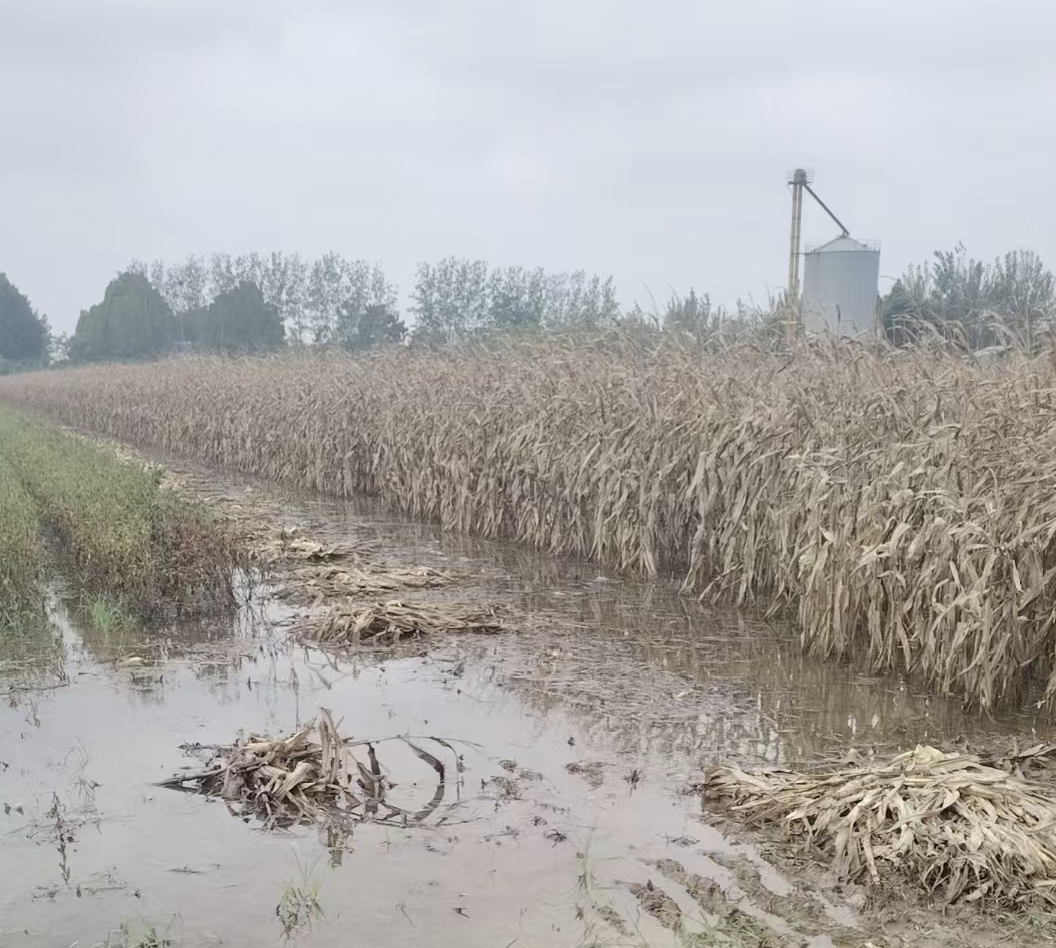
秋雨连绵的秋收:农户手掰背扛抢收,玉米霉变发芽
Di Yi Cai Jing· 2025-10-18 06:30
Core Insights - The agricultural sector is facing significant challenges due to extreme weather conditions, including drought followed by excessive rainfall, which have severely impacted crop yields and farmers' incomes [1][3][10]. Group 1: Crop Yield and Financial Impact - Farmers in regions like Henan, Shaanxi, and Shandong are reporting that they may not recover the costs of fertilizers and seeds due to poor harvests, with some expecting to earn significantly less than previous years [1][10]. - For instance, a farmer in Henan noted that his corn yield dropped from over 1,100 yuan per mu last year to potentially less than 400 yuan this year [1]. - Another farmer reported that his yield of 6,000 pounds of wet corn sold for only 3,000 yuan, a stark contrast to previous years where he earned over 1,000 yuan per mu [12][13]. Group 2: Weather Conditions and Harvest Challenges - The average rainfall in Henan since September reached 349.6 mm, 2.6 times higher than the historical average, marking the highest level since records began in 1961 [5]. - In Shandong, rainfall was recorded at 246.5 mm, a 269% increase compared to the norm, leading to soil saturation and difficulties in harvesting [6]. - The persistent rain has caused delays in harvesting, with traditional harvesting machinery becoming ineffective in muddy conditions, forcing farmers to resort to manual methods [7][10]. Group 3: Government and Cooperative Responses - The Ministry of Agriculture has mobilized over 200,000 tracked harvesters to assist in the affected regions, highlighting the urgency of the situation [7][17]. - Emergency measures have been implemented, including the establishment of over 4,700 grain drying service points across Shandong and Henan to help farmers manage their wet harvests [15][17]. - The national cooperative society has called for better coordination and resource allocation to enhance harvesting and drying capabilities in response to the ongoing challenges [17].
英国苏塞克斯郡部分区域宣布进入干旱状态
Zhong Guo Xin Wen Wang· 2025-10-10 12:28
Core Points - The Environment Agency of the UK has declared parts of Sussex County to be in a drought state due to the continuous decline in water levels at the Ardingly Reservoir [1] - This declaration follows similar drought statuses in regions such as Yorkshire, Cumbria, and Lancashire earlier this year [1] - The primary reasons for the drought include prolonged dry weather from spring to early summer and increased water demand due to rising temperatures linked to climate change [1] Summary by Sections - **Drought Declaration** - Sussex County has been officially classified as in drought status, with the Ardingly Reservoir currently at only 27.6% of its total capacity, insufficient for normal water supply needs [1] - Southeast Water has submitted a drought order application to the Department for Environment, Food and Rural Affairs (Defra) for approval [1] - **Drought Response Measures** - The Environment Agency and Southeast Water will implement a pre-established drought response plan, which includes the cancellation of exemptions to the hosepipe ban [2] - Users are encouraged to adopt water-saving measures, such as reducing shower times and using kitchen wastewater for irrigation [2] - **Water Resource Status** - Although some areas experienced rainfall in September, experts emphasize that this single month's rain cannot offset the cumulative impact of several months of below-average rainfall [2] - Continuous rainfall throughout the autumn and winter is necessary for the recovery of groundwater, reservoirs, and rivers, while ecological recovery will take longer [2]
欧洲及地中海地区干旱持续恶化 超半数土壤受影响
Yang Shi Xin Wen Ke Hu Duan· 2025-08-25 23:28
Group 1 - The core issue is the severe drought affecting Europe and the Mediterranean region, with over 51.3% of the soil impacted as of early August [1] - Since mid-April, approximately half of Europe has been experiencing drought conditions, which are more severe than the historic drought of summer 2022 [1] - The drought has significantly increased the risk of forest fires, with over 1 million hectares of land burned in the EU due to drought-related fires since 2025 [1]
可持续专栏 | 欧洲“发烧”:春季反常热浪的背后 天天观焦点
Hua Er Jie Jian Wen· 2025-08-13 23:12
Core Viewpoint - Europe is experiencing unprecedented heat waves, with temperatures reaching historical highs, significantly impacting the economy and agriculture [3][4][5]. Economic Impact - The economic losses from heat waves in Europe are projected to increase fivefold by 2060, with GDP losses potentially reaching -1.1% annually during peak years [6][7]. - In the past extreme heat years (2003, 2010, 2015, and 2018), the estimated GDP loss due to heat waves ranged from 0.3% to 0.5%, with some vulnerable regions experiencing losses exceeding 1% [6][7]. - Southern European countries, particularly Portugal, Spain, and Croatia, are expected to face the most significant economic losses from heat waves, while Northern and Central European countries will be less affected [6][7]. Agricultural and Environmental Concerns - The heat waves are exacerbated by drought conditions, which have led to significant agricultural impacts, including reduced crop yields and increased food prices [8][9]. - Spain's water reserves are critically low, with levels approximately 15% below average, raising concerns about wildfires and agricultural production [8][9]. - The olive oil production in Spain has been severely affected, leading to the highest global prices in 26 years due to extreme heat and lack of rainfall [8]. Climate Change Context - The current heat waves are unprecedented for this time of year, with temperatures exceeding historical averages by 20°C in some areas [5][6]. - Climate scientists indicate that the warming in Europe is occurring at a rate three to four times faster than in other mid-latitude regions, contributing to the severity of heat waves [10][11].

英国面临全国性水资源短缺
Zhong Guo Xin Wen Wang· 2025-08-12 12:53
Core Insights - The UK is currently facing a nationwide water shortage, with multiple regions experiencing drought conditions, leading to low river flows and reservoir levels, which pose significant challenges to agriculture and the ecological environment [1] Group 1: Drought Conditions - The first half of this year has been the driest for the UK since 1976, with river flows and reservoir levels continuing to decline despite some rainfall in July [1] - August has seen a return of dry weather, compounded by a fourth heatwave of the summer, increasing pressure on public water supply systems and inland waterways [1] Group 2: Impact on Agriculture and Ecology - Drought has significantly impacted ecology and agriculture, with low river flows causing oxygen depletion in water, leading to fish deaths and algal blooms, while drying wetlands threaten dependent species [1] - Agricultural production is suffering, with some farms experiencing severe crop reductions and livestock operations forced to use winter feed early due to insufficient grass growth, leading to rising production costs [1] Group 3: Government Response - The UK government plans to enhance response measures and is advancing a £104 billion (approximately 10,063 million RMB) investment plan, which includes the construction of nine new reservoirs and the upgrading of water supply pipelines [1]