平替消费

Search documents
中国年轻人转向平替消费,奢侈品巨头在华押注失策
Xin Lang Cai Jing· 2026-02-16 08:57
Core Insights - European luxury goods groups and American beauty giants have seen their market value evaporate by hundreds of billions due to a significant shift in consumer behavior in China, particularly among Gen Z consumers who prioritize smart purchasing over brand prestige [3][11] - The Chinese luxury goods market, which previously accounted for about one-third of global sales, is projected to shrink by 18% to 20% in 2024, leading to severe financial impacts on companies heavily invested in this market [3][11] Group 1: Market Trends - The search volume for "alternative products" on social media has doubled from 2022 to 2025, indicating a cultural shift among Chinese consumers who now celebrate finding high-quality substitutes for Western luxury brands [3][11] - LVMH's stock has dropped approximately 30% from its 2023 peak, while Kering has seen a 60% decline since 2021, and Estée Lauder's stock has plummeted 70% due to the luxury market's downturn [4][12] Group 2: Consumer Behavior - Chinese Gen Z consumers are becoming more discerning, researching supply chains and opting for products made in the same factories as luxury brands but at a fraction of the price [4][12] - The concept of "alternative products" is not merely a response to economic downturn but reflects a deeper cultural shift towards value and performance over brand prestige [6][14] Group 3: Local Brand Success - Local brands are capitalizing on this trend by adopting a "technology democratization" strategy, offering high-performance products at lower prices, which has led to significant revenue growth for companies like Laifen and Lao Pu Gold [6][15] - Lao Pu Gold reported a 251% revenue increase in the first half of 2025, reaching $1.72 billion, while beauty brand Huaxizi became the first Chinese cosmetics company to surpass $1 billion in revenue [7][15] Group 4: Future Outlook - Analysts believe the trend towards alternative products will persist beyond economic recovery, as consumers have learned that lower prices do not necessarily equate to lower quality, potentially reshaping consumption patterns for decades [8][16] - Western brands that based their strategies on the assumption of continuous luxury market expansion in China are facing a reckoning, as consumers have evolved to prioritize value and authenticity over brand names [8][16]


数说Social Research:2025年泡脚桶行业深度解析
数说Social Research· 2026-01-19 04:35
Investment Rating - The report indicates a strong growth potential for the foot bath bucket market in China, with an expected market size exceeding 15 billion yuan in 2025, reflecting a compound annual growth rate (CAGR) of 15% [3][38]. Core Insights - The foot bath bucket market in China is experiencing significant growth driven by health and wellness consumption trends, with a notable seasonal demand peak in autumn and winter [3][38]. - Social media data shows that Douyin is the primary platform for user interaction, while "grass planting" platforms are key for content dissemination [5][3]. - Consumer preferences are shifting towards integrated features such as automation, heating, and sterilization, with a strong emphasis on safety and convenience [13][22]. - Emotional consumption scenarios, such as gifting to parents, are significant drivers of market demand, reflecting a rational consumer mindset focused on high cost-performance products [13][11]. Market Overview - The Chinese foot bath bucket market is projected to surpass 15 billion yuan in 2025, with a global market size expected to reach between 5 billion to 10 billion USD [3][10]. - The market exhibits strong seasonal characteristics, with peak social media engagement occurring in November [5][3]. - The popularity of "alternative" products, such as food warmers, highlights a consumer trend towards high cost-performance options [4][11]. Consumer Behavior - Consumers prioritize functionality and safety when selecting foot bath buckets, followed by convenience and cost-effectiveness [8][22][23]. - Different demographic groups exhibit distinct preferences, with younger consumers favoring smart features and design, while older users prioritize safety and ease of use [10][17][18]. Brand Competition - The competitive landscape shows that Beici leads in sales with a 55.26% market share, while Konka holds the highest sales volume at 40.19% [14]. - Leading brands utilize diverse marketing strategies, including KOL live streaming and emotional content marketing, to effectively reach target audiences [12][21]. - User feedback indicates general satisfaction with core functions and wellness effects, but highlights areas for improvement in noise control and material quality [16]. Marketing Strategies - Major brands are leveraging social media trends and e-commerce promotions to enhance their marketing effectiveness [12][21]. - The report outlines specific marketing strategies for leading brands, emphasizing targeted audience engagement and innovative product features [21][31].

优衣库又现“偷拍”,“过度防盗”背后营收利润双降
阿尔法工场研究院· 2025-12-24 07:33
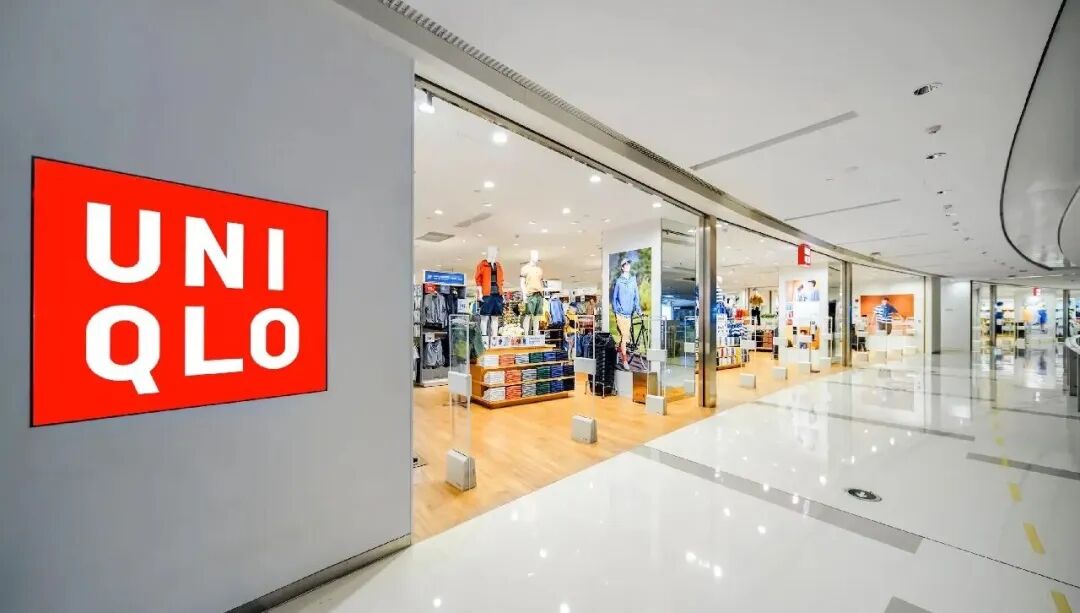
Core Viewpoint - Uniqlo's era of effortless success in the Chinese market has ended, facing increasing pressure and challenges [4][16]. Group 1: Incident of Customer Surveillance - Uniqlo has been accused of "spying" on customers in some stores, leading to significant public backlash and discussions on social media [5][6]. - Reports indicate that employees and security personnel have been observed closely monitoring customers, creating discomfort among shoppers [5][6]. - Former employees confirmed the existence of suspicious customer surveillance practices, including sharing photos of suspected shoplifters in internal groups [6][8]. Group 2: Business Performance and Market Challenges - Uniqlo's parent company, Fast Retailing, reported a revenue of 3.1038 trillion yen (approximately 147.1 billion RMB) for the 2024 fiscal year, with a 12.2% year-on-year growth, but the growth rate is slowing [17]. - In the Greater China market, revenue growth was only 9.2%, with operating profit showing a minimal increase of 0.5%, indicating a significant slowdown compared to previous years [17]. - The rise of e-commerce and competition from new local fast-fashion brands has intensified market challenges for Uniqlo [18]. Group 3: Strategic Adjustments - Uniqlo is undergoing structural strategic adjustments in the Chinese market, shifting focus from aggressive store openings to improving store operations and closing unprofitable locations [22][23]. - The company is also investing in flagship stores and enhancing its online presence, including a partnership with JD.com to launch a mini-program for direct logistics [23]. - Despite current challenges, Uniqlo still sees potential for growth in first and second-tier cities and aims to explore new market strategies to maintain brand relevance and competitiveness [23].

优衣库偷拍防盗,背刺了消费者
3 6 Ke· 2025-12-23 08:03
Group 1 - The core issue revolves around Uniqlo being accused of "spying" on customers in some stores, which has sparked significant public backlash and discussions about consumer privacy [3][4][5] - Reports indicate that employees and security personnel at Uniqlo stores have been observed closely monitoring customers, leading to discomfort among shoppers [3][4] - The incident has raised concerns about Uniqlo's approach to loss prevention, with some employees confirming the existence of suspicious customer photo-sharing practices within internal groups [5][6] Group 2 - Uniqlo has established a strong presence in the Chinese market since opening its first store in Shanghai in 2002, significantly outpacing competitors like H&M and ZARA [8][9] - The brand has experienced rapid growth, with peak sales in China exceeding 30 billion RMB, making it a major player in the fast fashion sector [14][15] - Despite its success, Uniqlo is facing increasing pressure from competition, particularly from emerging local fast fashion brands and changing consumer preferences [18][19] Group 3 - Recent financial reports indicate that Uniqlo's growth in the Greater China market is slowing, with revenue growth of only 9.2% and a slight increase in operating profit [17][21] - The company is undergoing strategic adjustments, focusing on store operations and closing unprofitable locations, while also expanding its flagship store model to enhance competitiveness [23][24] - Uniqlo is also investing in its online presence, partnering with platforms like JD.com to improve its e-commerce capabilities [25][26]
白领买爆lululemon山寨烫标,“花5块5就能拥有800元瑜伽裤上最值钱的配件”
3 6 Ke· 2025-06-12 08:25
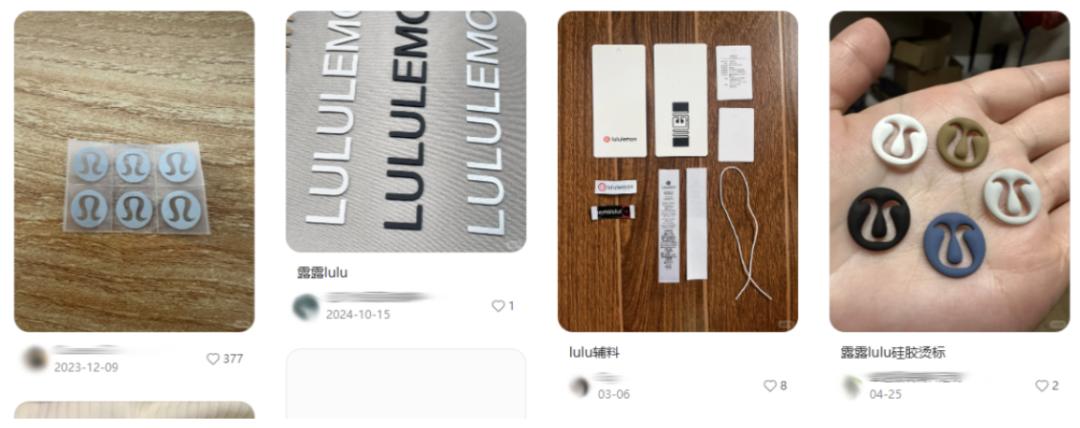
Core Insights - The article discusses the booming market for counterfeit lululemon silicone labels, which are being sold at low prices on platforms like Pinduoduo and Xianyu, allowing consumers to transform ordinary clothing into high-priced lululemon items [1][14]. Group 1: Market Dynamics - The counterfeit lululemon labels are available for as low as 5.5 yuan for two, with bulk purchases reducing the price to 0.32 yuan per label, enabling consumers to create the illusion of owning expensive lululemon products [1]. - The highest-selling label store has reported sales of 16,000 items, indicating a strong demand for these counterfeit labels [1]. - The labels are produced using "mold silicone technology" and "heat transfer reflective silver," with a standard size of 1.3cm x 1.3cm [1]. Group 2: Consumer Behavior - Many consumers are drawn to the idea of personalizing their clothing with lululemon labels, reflecting a desire for brand association and status [1][14]. - The article highlights that the ease of applying these labels at home with an iron makes it accessible for consumers to create their own branded apparel [3][5]. Group 3: Brand Vulnerability - lululemon faces challenges as its labels are prone to falling off, leading to a high demand for replacements [8][13]. - The article notes that the counterfeit market for lululemon is particularly strong, with many fake products claiming to be original factory goods, thus complicating brand integrity [14][17]. Group 4: Production Insights - lululemon's production is largely outsourced, with 40% of its products manufactured in Vietnam and significant portions in Cambodia, Sri Lanka, and Indonesia, which contributes to the ease of counterfeiting [17][18]. - The presence of counterfeit production facilities, such as those discovered in Xuzhou, indicates a well-established supply chain for fake lululemon products [15][17].

茅台走下神坛,“新王”登基!
Sou Hu Cai Jing· 2025-06-08 16:40
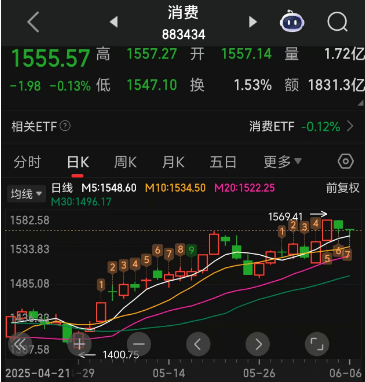
Group 1 - The core focus of macro policies in recent years has been on stimulating consumption, especially during holidays with significant incentives for purchasing various goods such as phones, cars, and appliances [1][2] - Despite the macroeconomic efforts, there is a perception that consumers are financially constrained, leading to a paradox where the consumption sector index has surged by 27.3% this year [4] - Notable consumer stocks have experienced substantial growth, with some entering bull markets [5][6] Group 2 - The previous consumption bull market featured companies like Moutai, which saw its stock price increase tenfold from 2017 to 2021, coinciding with a booming real estate market [7][8] - Moutai's revenue has continued to rise despite a decline in stock price, indicating a disconnect between market expectations and actual performance [10] - Current market dynamics favor companies that offer extreme cost-effectiveness and target lower-tier markets, exemplified by brands like Mixue Ice City and Wancheng Group [11][12] Group 3 - Mixue Ice City has concentrated 75% of its stores in third-tier cities, while Wancheng Group has over 10,000 stores, both benefiting from reduced costs through supply chain efficiencies [13][14] - Wancheng's stock has increased over tenfold since last July, and Mixue's stock price has more than doubled within three months of its Hong Kong listing [16][17] Group 4 - The second pricing logic for consumer stocks is the emotional value provided by IP-driven consumption, with the pet economy and Pop Mart as key examples [24][25] - The pet market in China is projected to grow at a compound annual growth rate of 13.3%, with the market size surpassing 300 billion yuan last year [25][26] - Pop Mart's stock has surged over tenfold since February 2024, driven by its strong appeal to the Z generation and its ability to resonate emotionally with consumers [34][37] Group 5 - The essence of consumption is identified as the pursuit of happiness, whether through traditional luxury items like Moutai or through more affordable options like Mixue Ice City and emotional purchases like pet products and collectibles [43]