
宠物经济

Search documents
未来10年,最挣钱的凭什么一定是这群人?
创业家· 2026-03-16 10:34
Core Insights - Amazon's report on global e-commerce trends highlights emerging consumer preferences and market opportunities driven by technology and emotional needs [1][2]. Group 1: AI Quality Space - Over 65% of consumers in Europe and the US are willing to spend more on smart home products, seeking emotional connections and comfort [4][6]. - The market for personalized customization, emotional interaction, and privacy is significant, emphasizing the need for technology to meet human emotional demands [7]. Group 2: Sleep Economy - 37% of American adults reported a decline in sleep quality in 2023, indicating a growing market for sleep-related products and services [10][11]. - Consumers are increasingly willing to invest in sleep quality, associating it with health and lifestyle improvements [12]. Group 3: Happy Office - There is a rising expectation for workspaces that enhance comfort and productivity, with ergonomic furniture and technology becoming more important [13][14]. Group 4: Subtle Technology - Consumers are seeking technology that seamlessly integrates into their lives, enhancing quality without being intrusive, as seen in brands like Apple [15]. Group 5: Pet Economy - The global pet industry is projected to grow by 45% over the next six years, with 55% of pet owners in developed markets willing to spend more on pet health and wellness [16][17]. - Pets are increasingly viewed as family members, creating demand for health-focused pet products and services that foster emotional connections [19]. Group 6: Outdoor Cooking - The popularity of outdoor cooking and camping is rising, creating demand for specialized outdoor cooking equipment and experiences [20][22]. Group 7: Mobile Treasure Chest - Vehicles are evolving into multifunctional spaces, serving as homes, entertainment areas, and offices, with a focus on comfort and efficiency [23][27]. Group 8: Generation Z Consumers - Generation Z, as digital natives, prioritize values-driven consumption, personalization, and unique experiences, while also being price-conscious [28][29]. Group 9: Fitness Pioneers - The health and fitness sector is increasingly focused on scientific, efficient, and personalized approaches, with a rise in smart wearable devices and tailored fitness solutions [31][34]. Group 10: E-sports Enthusiasts - Emerging markets are experiencing rapid growth in e-sports, with consumers seeking high-performance equipment and immersive experiences [35][37]. Summary of Trends - The report identifies three key drivers of these trends: accelerated technology, emotional shifts, and lifestyle changes, reflecting the complex needs of modern consumers [39][40].


经济越来越差,这八大行业越赚爆!
创业家· 2026-03-14 09:58
Core Viewpoint - The article emphasizes that despite the prevailing narrative of economic hardship, certain industries are thriving and generating significant profits, particularly in the context of a "low-desire society" where consumer spending patterns are shifting towards specific sectors [3][4]. Group 1: Emerging Business Opportunities - The article identifies eight key industries that are experiencing growth and presents them as major business opportunities in the current economic climate [5]. - The first industry highlighted is the second-hand economy, where platforms like "闲鱼" and "转转" are seeing increased activity, indicating a shift in consumer behavior towards second-hand goods [6][9]. - The pet economy is also on the rise, with brands like "中宠" and "Inaba" capitalizing on the trend of pet ownership and spending on premium pet products [11][12][15]. - Adult care products, particularly in the context of an aging population, are projected to grow significantly, with the adult diaper market in Japan surpassing $10 billion [16][17][18]. - Health food and beverage sectors are thriving due to changing demographics and increased health consciousness, with brands like "东方树叶" and "简醇" gaining traction [21]. - The beauty and aesthetics market is booming, with products like collagen supplements and home beauty devices seeing high sales, indicating a persistent demand for beauty solutions [23]. - Outdoor and leisure products are gaining popularity, with brands like "凯乐石" and "伯希和" experiencing rapid sales growth as consumers seek outdoor experiences [25][26]. - The emotional economy, characterized by products that provide comfort and joy, is also highlighted, with brands like "Rio" tapping into the market for low-alcohol beverages [28][29]. Group 2: Consumer Behavior Trends - The article discusses the concept of a "low-desire society," suggesting that while consumers may be spending less on luxury items, they are reallocating their budgets towards experiences and products that enhance their quality of life [4][39]. - The trend of "lazy economy" is noted, where younger generations are opting for convenience in food preparation, leading to increased demand for frozen foods and smart home appliances [33][35]. - The article posits that in a low-desire cycle, time-saving products may hold more commercial value than cost-saving ones, indicating a shift in consumer priorities [36].

宠物经济板块2月27日涨0.22%,奥尼电子领涨,主力资金净流出1.99亿元
Sou Hu Cai Jing· 2026-02-27 09:04
Group 1 - The pet economy sector increased by 0.22% compared to the previous trading day, with Aoni Electronics leading the gains [1] - On the same day, the Shanghai Composite Index closed at 4162.88, up by 0.39%, while the Shenzhen Component Index closed at 14495.09, down by 0.06% [1] - The net capital outflow from the pet economy sector was 199 million yuan, with retail investors contributing a net inflow of 238 million yuan [1] Group 2 - The main capital outflow from the pet economy sector was 199 million yuan, while the speculative capital outflow was 39.15 million yuan [1] - The detailed capital flow for individual stocks in the pet economy sector is available in the accompanying table [1]

宠物经济成春节消费亮点,超7成相关企业成立于近三年
Qi Cha Cha· 2026-02-27 03:03
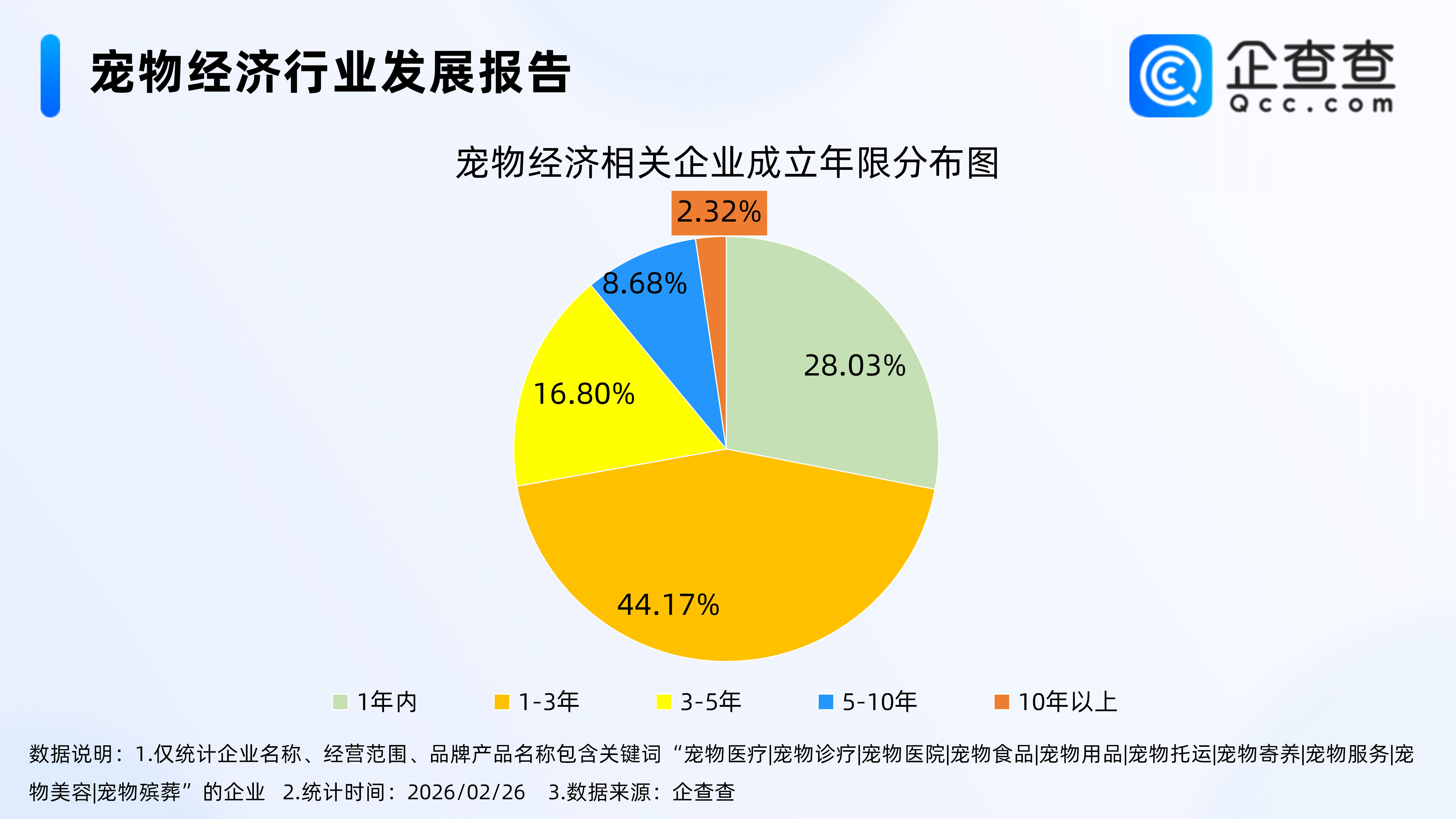
Group 1 - The pet economy is experiencing a surge in demand for services such as pet transportation, boarding, and home feeding during the Spring Festival, with reports of individuals earning up to 8,500 yuan for 9 days of home feeding and teams generating up to 160,000 yuan in revenue [1] - As of February 26, there are 5.0639 million existing pet economy-related enterprises in China, with over 70% established in the last three years, and 44.17% of these companies founded within 1-3 years [2][5] - The majority of pet economy-related enterprises are lightweight, with over 90% having registered capital of less than 2 million yuan, and 86.33% having capital under 1 million yuan [5] Group 2 - The distribution of pet economy-related enterprises is concentrated in East China and South China, accounting for 30.94% and 27.53% respectively, while Central China comprises 18.86% [7] - The registration volume for pet economy-related enterprises is projected to reach 1.8773 million in 2023, marking a year-on-year growth of 96.05%, the highest in nearly a decade, despite a forecasted decline to 1.6313 million in 2025 [7]
宠物经济板块2月26日跌0.47%,三只松鼠领跌,主力资金净流出3.62亿元
Sou Hu Cai Jing· 2026-02-26 09:03
Group 1 - The pet economy sector experienced a decline of 0.47% compared to the previous trading day, with Three Squirrels leading the drop [1] - On the same day, the Shanghai Composite Index closed at 4146.63, down 0.01%, while the Shenzhen Component Index closed at 14503.79, up 0.19% [1] - The net capital outflow from the pet economy sector was 362 million yuan, while retail investors contributed a net inflow of 226 million yuan [1] Group 2 - The main capital flow in the pet economy sector showed a net outflow of 362 million yuan from institutional investors, with a net inflow of 136 million yuan from speculative funds [1] - Detailed capital flow for individual stocks in the pet economy sector is available in the accompanying table [1]

宠物经济板块2月25日涨0.8%,海大集团领涨,主力资金净流出4523.04万元
Sou Hu Cai Jing· 2026-02-25 09:09
Group 1 - The pet economy sector increased by 0.8% compared to the previous trading day, with Hai Da Group leading the gains [1] - The Shanghai Composite Index closed at 4147.23, up 0.72%, while the Shenzhen Component Index closed at 14475.86, up 1.29% [1] - The net outflow of main funds in the pet economy sector was 45.23 million yuan, with retail investors contributing a net inflow of 49.92 million yuan [1] Group 2 - The data regarding the fund flow in the pet economy sector indicates a mixed trend, with institutional funds experiencing a net outflow while retail investors showed positive sentiment [1]

(新春走基层)浙江安吉白杨村养好一方净土 掘金“宠物经济”新赛道
Zhong Guo Xin Wen Wang· 2026-02-16 03:00
Core Viewpoint - Baiyang Village in Anji County, Zhejiang Province, is leveraging the "pet economy" as a new avenue for rural revitalization, transforming from a struggling village to a pet-friendly destination that attracts urban pet owners and investments [1][3]. Group 1: Pet Economy Development - Baiyang Village hosted a unique "Pet You Cup" pet competition during the Spring Festival, attracting 38 pet families from Hangzhou and Shanghai, showcasing the village's commitment to becoming a pet-friendly environment [1][3]. - The village has integrated "pet-friendly" initiatives into its biodiversity project planning, aiming to establish itself as a base for pet events, training, and even short film productions [3][4]. Group 2: Agricultural Practices - Since 2021, Baiyang Village has adopted natural farming methods, significantly improving soil quality, with organic matter levels nearing those of Northeast black soil [3][4]. - The village plans to launch a "pet-specialty vegetable garden" where guests can grow vegetables for their pets, promoting a sustainable cycle of clean food production [4]. Group 3: Economic Projections - Baiyang Village anticipates collective income to exceed 4 million yuan by 2025, with per capita income reaching 56,500 yuan, highlighting the economic potential of its agricultural and pet-friendly initiatives [4]. - Future plans include establishing a fresh pet food delivery base, further integrating the pet economy into the local agricultural framework [4].

估值驱动行情延续节后把握结构性机会
Zhong Guo Zheng Quan Bao· 2026-02-13 20:23
Core Viewpoint - The A-share market is expected to continue its upward trend post-Spring Festival, driven by a combination of trend inertia, seasonal effects, and policy environment support [3] Market Characteristics - The A-share market is influenced by multiple factors, exhibiting a complex overall pattern characterized by clear trends, numerous short-term disturbances, and significant structural differentiation [1] - The core support for the market's upward trend includes improving corporate profit prospects, increased willingness of residents to invest, and ongoing policies to reduce competition [1][2] Short-term Market Dynamics - The pre-Spring Festival period has led to a temporary decline in market activity as some funds opted to secure profits amid uncertainty, but this has not altered the core market trend [2] - Historical data shows that since 2009, the average spring market rally has lasted 57 days with an average increase of over 20% [2] Investment Strategy - Post-Spring Festival, the investment logic will focus on "value supporting growth," with a shift from low-risk to high-risk preferences, emphasizing technology and cyclical sectors [4] - Five key investment themes are recommended: 1. Artificial intelligence industry chain, shifting focus from hardware to application [5] 2. High dividend yield assets, particularly in stable cash flow sectors like white goods and banking [5] 3. Anti-involution sectors benefiting from improved competition dynamics, such as coal and steel [5] 4. Core areas of domestic demand recovery, focusing on sectors with strong growth potential like health and tourism [6] 5. Investment opportunities in strategic and industrial metals, anticipating a rebound in prices [6] Market Outlook - The market is expected to experience a "red envelope market" post-Spring Festival, with potential for further expansion if consumer data exceeds expectations [3] - The overall market is projected to maintain a "stable and upward" characteristic, with limited downside potential for indices [3]
“交通枢纽”变身“消费引擎” 春运“新”变化拼出中国经济的活力与韧性
Yang Shi Wang· 2026-02-13 01:48
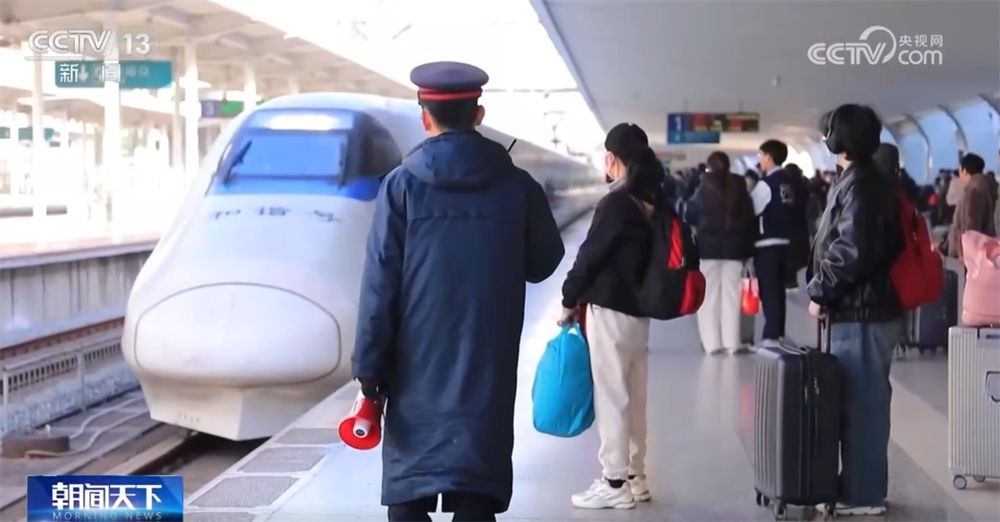
Group 1 - The Spring Festival travel rush in China has introduced new services that enhance customer experience and create business opportunities [1][4] - The railway sector has expanded its pet transportation service to 110 stations and 170 trains, tapping into the growing pet economy [3][6] - The "light travel" service allows passengers to send luggage door-to-door, covering 111 stations, which integrates passenger and logistics services for mutual benefits [4][6] Group 2 - The pet transportation service is projected to drive a market worth over 310 billion yuan by 2025, linking various industries such as pet carriers and insurance [6] - Airports have launched food markets and delivery services, transforming waiting times into consumption opportunities and enhancing airport revenue [6][10] - The expected travel volume of new energy vehicles during the Spring Festival is 380 million trips, presenting significant opportunities for the charging industry [8] Group 3 - The rise of "reverse tourism," where parents travel to cities where their children reside, is revitalizing local economies in major cities [10] - The direct consumption generated by this year's Spring Festival travel is anticipated to exceed 1.5 trillion yuan, showcasing the resilience and vitality of the Chinese economy [10]
宠物经济板块2月12日跌0.89%,永安药业领跌,主力资金净流出3.77亿元
Sou Hu Cai Jing· 2026-02-12 09:16
Group 1 - The pet economy sector experienced a decline of 0.89% compared to the previous trading day, with Yong'an Pharmaceutical leading the drop [1] - On the same day, the Shanghai Composite Index closed at 4134.02, up 0.05%, while the Shenzhen Component Index closed at 14283.0, up 0.86% [1] - The net capital outflow from the pet economy sector amounted to 377 million yuan, while retail investors saw a net inflow of 312 million yuan [1] Group 2 - The main capital flow in the pet economy sector showed a net outflow of 377 million yuan from institutional investors, with a net inflow of 65.44 million yuan from speculative funds [1] - Detailed capital flow data for individual stocks in the pet economy sector is available in the accompanying table [1]
