年终获利了结

Search documents
美股惊魂一周,纳指创4月来最大三周跌幅,华尔街现在很焦虑!
美股IPO· 2025-11-22 10:19
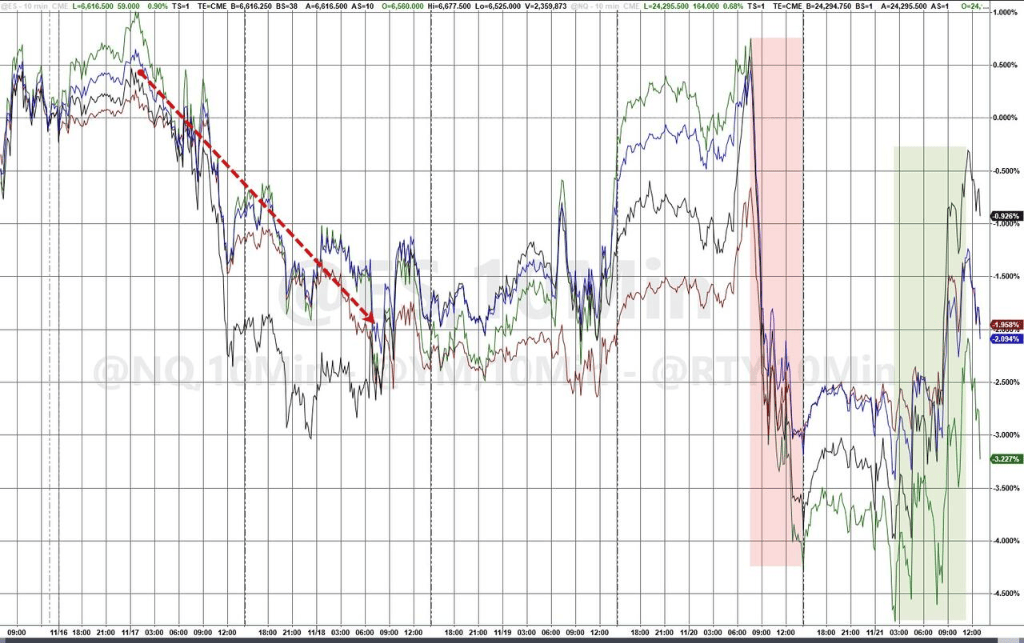
Core Viewpoint - Concerns over the AI bubble, economic slowdown, and profit-taking pressures have led to significant volatility in the U.S. stock market, with investors worried about potential future fluctuations [1][3]. Market Performance - The S&P 500 index fell nearly 2% this week, with a cumulative decline of 3.5% since November [2]. - The Nasdaq Composite, heavily weighted in tech stocks, dropped over 6% in November, marking its largest three-week decline since April [2]. Stock Movements - Momentum stocks faced severe losses, with Robinhood's market value evaporating by about 25% this month, Coinbase's stock plummeting by 30%, and Palantir down approximately 23% [4]. - Goldman Sachs' basket of high-beta momentum stocks fell nearly 15% from its peak, representing the worst week for momentum performance since November 2022 [5]. AI Sector Concerns - Investors are particularly anxious about companies heavily invested in AI, with the Global X Artificial Intelligence & Technology ETF down about 10% this month, and an ETF tracking the seven tech giants declining approximately 6.6% since the end of October [6]. Nvidia's Earnings Impact - Nvidia's earnings report initially led to a surge in stock prices, but a subsequent sharp decline resulted in a nearly 3% drop to $180.98, marking a 7% intraday decline and dragging the S&P 500 down by about 3% [7]. Private Credit and Crypto Market Influence - The private credit market is gaining attention, with concerns arising from the sudden collapse of First Brands, highlighting the impact of a loose credit environment [10]. - Investors are facing challenges with companies that borrowed at low rates but now must refinance at significantly higher rates [11]. Bitcoin and Market Dynamics - Bitcoin's price fell to $80,553, down over 30% from its October peak of $126,000, raising questions about the broader impact of the crypto market on the stock market and economy [11][13]. - The correlation between cryptocurrency and traditional stocks is becoming more pronounced, with forced liquidations in crypto affecting stock sales [14]. Leverage and Year-End Profit-Taking - Market volatility is attributed to high leverage and the impulse for year-end profit-taking, with brokerage account financing reaching a historic high of $1.1 trillion by the end of October [15]. - Over-leveraged market participants are selling tech stocks when forced to liquidate crypto positions, exacerbating market fluctuations [16]. Investor Sentiment - Despite the volatility, some investors remain calm, with the S&P 500 only 4.2% below its all-time high, indicating a wait-and-see approach among those not heavily concentrated in AI or crypto [17].


美股惊魂一周,纳指创4月来最大三周跌幅,华尔街现在很焦虑!
Sou Hu Cai Jing· 2025-11-22 05:12
Market Overview - Concerns over the AI bubble, expectations of economic slowdown, and profit-taking pressures have led to significant volatility in the U.S. stock market, with the S&P 500 index dropping nearly 2% this week and a cumulative decline of 3.5% since November [1] - The Nasdaq Composite index, heavily weighted with tech stocks, has fallen over 6% in November, marking its largest three-week drop since April [1] Stock Performance - Momentum stocks have faced severe declines, with Robinhood's market value evaporating by approximately 25% this month, Coinbase's stock plummeting by 30%, and Palantir down about 23% [3] - Goldman Sachs' basket of high-beta momentum stocks has dropped nearly 15% from its recent peak, marking the worst week for momentum performance since November 2022 [3][5] AI Sector Impact - Investors are particularly anxious about companies heavily invested in AI, with the Global X Artificial Intelligence & Technology ETF down about 10% this month and an ETF tracking the "Big Seven" tech companies declining approximately 6.6% since the end of October [5] - Nvidia's earnings report, initially expected to boost the market, resulted in a significant sell-off, with the stock opening up 5% but closing down nearly 3%, dragging the S&P 500 index down about 3% [5][6] Private Credit and Crypto Market - The private credit market is gaining attention, with concerns arising from the sudden collapse of First Brands, highlighting the risks associated with companies borrowing excessively at low rates [6] - Bitcoin's price fell to around $80,553, down over 30% from its all-time high of $126,000 in early October, raising questions about the broader impact of the crypto market on the stock market and economy [8] Market Dynamics - The volatility is attributed to leverage and profit-taking ahead of year-end, with brokerage account financing reaching a historic high of $1.1 trillion by the end of October [10] - Over-leveraged market participants are selling tech stocks to cover losses in crypto positions, exacerbating market declines [10] - Despite the volatility, some analysts believe the market remains relatively calm, with the S&P 500 index only 4.2% below its all-time high, indicating that many investors are still observing rather than panicking [12]