
应收款项管理

Search documents
博汇科技2025年度归母净亏损2271.06万元
Zhi Tong Cai Jing· 2026-02-26 11:49
Core Viewpoint - The company reported a decrease in revenue and a significant reduction in net loss for the fiscal year 2025, indicating improved operational efficiency and profitability despite a decline in sales [1] Financial Performance - The company achieved an operating revenue of 171 million yuan, a decrease of 1.05% compared to the same period last year [1] - The net profit attributable to the parent company was -22.71 million yuan, which represents a reduction in loss of 15.76 million yuan compared to the previous year [1] Profitability and Cost Management - Operating profit, total profit, and net profit attributable to the parent company, excluding non-recurring gains and losses, all saw a reduction in loss of over 30% year-on-year [1] - The improvement in profitability is attributed to an optimized product structure, with a higher proportion of core high-margin products contributing to increased overall gross margin [1] - The company has effectively controlled period expenses and strengthened the management of receivables, leading to a significant decrease in credit impairment losses compared to the previous year [1]

金诚信矿业管理股份有限公司关于2025年第三季度业绩说明会召开情况的公告
Shang Hai Zheng Quan Bao· 2025-11-27 19:14
Summary of Key Points Core Viewpoint - The company held a performance briefing for Q3 2025 to discuss its operational results and financial status with investors, addressing various concerns raised during the session [1]. Group 1: Inventory and Receivables - The company reported a significant increase in inventory, with a notable rise in stock levels due to unsold finished products and materials for new overseas projects, indicating no impairment risks [2]. - Accounts receivable increased by 12.29% year-on-year to 2.57 billion, while prepayments surged by 103% to 288 million, primarily driven by increased main business revenue and new resource projects [2]. Group 2: Long-term Borrowings and Financial Strategy - Long-term borrowings rose from 730 million at the end of 2024 to 1.57 billion by Q3 2025, marking a 94.27% increase, mainly for financing infrastructure projects in Colombia and other areas [3]. - The company aims to maintain a reasonable debt structure while optimizing its financial costs through operational efficiency in mining services and resource projects [3]. Group 3: Market Performance and Investor Relations - The company acknowledged fluctuations in its stock price compared to peers, emphasizing its commitment to protecting investor interests and focusing on stable operational management [4]. - Concerns regarding the controlling shareholder's past share reductions were addressed, clarifying that the reductions were primarily for personal financial needs and not indicative of the company's financial health [5][6]. Group 4: Project Updates and Future Strategy - The company is progressing with the Lubambe copper mine's operational management and is negotiating the transfer of a 10% stake, with overall progress aligning with technical improvement plans [8]. - The slowdown in the mining service segment is attributed to internal management changes and external factors affecting operations, with a strategic focus on developing both mining services and resource development as core business areas [7].

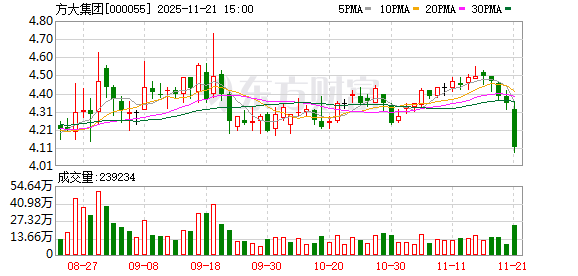
方大集团:公司对应收款项主要按账龄组合为基础确认坏账准备
Zheng Quan Ri Bao· 2025-11-21 09:42
Core Insights - Fangda Group announced on November 21 that it has increased its bad debt provisions due to extended collection periods for receivables influenced by the broader economic environment [2] Group 1: Bad Debt Management - The company confirms bad debt provisions primarily based on the aging of receivables [2] - The company plans to enhance project contract tracking and receivables management by establishing a dedicated collection team [2] - A mechanism for contract performance management will be improved, implementing targeted strategies based on project characteristics to ensure effective collection [2] Group 2: Risk Control Measures - The company will establish a full-cycle risk assessment mechanism for projects, implementing tiered dynamic risk management [2] - In terms of order selection, the company will raise entry thresholds, focusing on projects with favorable progress payment conditions to control risks from the source [2] - These measures aim to ensure the company's stable development [2]


洲明科技:在应收款项管理上,公司构建“事前防控+事后多维追收”体系
Zheng Quan Ri Bao Wang· 2025-11-10 13:45
Core Viewpoint - The company has established a comprehensive accounts receivable management system that focuses on both proactive measures and post-collection strategies to minimize impairment risks and optimize collection processes [1] Group 1: Accounts Receivable Management - The company implements a "prevention and control + multi-dimensional collection" system for managing accounts receivable [1] - Proactive measures include careful order acceptance and enhanced new order reviews, assessing customer credit and repayment capabilities to reduce impairment risks from the source [1] - Post-collection strategies involve improving management systems, setting clear targets, and forming cross-departmental teams to facilitate collections [1] Group 2: Collection Optimization - The company introduces third-party financial tools to optimize the collection structure [1] - A three-tier collection mechanism is established, involving the business department, accounts receivable management department, and legal department [1] - For long-aged accounts, a "one policy per customer" collection strategy is implemented [1]

云南锗业:公司与金融机构开展相关业务合作提高应收款项变现能力
Zheng Quan Ri Bao Wang· 2025-11-06 14:13
Core Viewpoint - Yunnan Zhenye (002428) has announced its accounting policy regarding accounts receivable, indicating a proactive approach to managing credit risk by provisioning for credit impairment on short-term receivables [1] Group 1: Accounts Receivable Management - The company will provision for credit impairment at a rate of 5% for newly added accounts receivable within the current period [1] - Yunnan Zhenye aims to enhance accounts receivable management through business negotiations and optimizing settlement methods, such as adjusting the proportion of cash and bill settlements [1] - The company is collaborating with financial institutions to improve the liquidity of accounts receivable [1]

威海广泰: 财务管理制度
Zheng Quan Zhi Xing· 2025-06-10 04:17
Core Points - The company aims to enhance financial management, standardize financial behavior, improve economic efficiency, and protect the rights of stakeholders for sustainable development [1][2][3] Financial Management System - The financial management work follows a unified management and hierarchical responsibility principle, with each level and position fulfilling their respective financial management duties [4][5] - The legal representatives of the company and its subsidiaries are ultimately responsible for the financial management work, ensuring the authenticity, legality, and completeness of accounting data [5][6] - Daily financial management is led by the general manager, with the financial officer responsible for organizing and implementing financial management tasks [6][7] Accounting Policies - The company adheres to the accounting standards issued by the Ministry of Finance of the People's Republic of China [11][12] - The accounting year is based on the calendar year, from January 1 to December 31 [12] - The company uses Renminbi as its accounting currency and follows the accrual basis for accounting [13][14] Budget Management - The company implements budget management and has established a budget management specification [16][17] - Budget content includes business, investment, financing, and financial budgets, with a structured process for preparation and execution [18][19] - Each company must establish a budget execution reporting system to track and address deviations from the budget [20][21] Accounts Receivable Management - Accounts receivable include amounts due from customers for goods sold and services rendered, with a focus on credit risk management [23][24] - The marketing department is responsible for managing customer credit and collecting receivables according to the annual budget plan [25][26] - The financial department supervises accounts receivable management and ensures timely recognition and recording of receivables [27][28] Inventory Management - Inventory includes physical assets held for sale or consumption, with a clear management structure [31][32] - The company employs a perpetual inventory system and conducts regular inventory counts [33][34] - The goal is to maintain optimal inventory levels to reduce capital occupation while ensuring normal operations [35] Fixed Asset Management - Fixed assets are defined as tangible assets used for production, services, or management with a lifespan exceeding one accounting year [36][37] - The company has established fixed asset management specifications to ensure the safety and effective use of these assets [38][39] - Regular audits and checks are conducted to maintain accurate records of fixed assets [40][41] Investment Management - The company has a major investment decision-making system to control investment risks [42][43] - Investments are categorized into short-term and long-term, with a focus on liquidity, risk, and return [44][45] - Major investment projects follow a structured management system from initiation to post-evaluation [46][47] Asset Impairment Loss Management - Asset impairment refers to situations where market value falls below book value, with specific provisions for various asset types [48][49] - The company conducts annual impairment testing and prepares necessary provisions based on accounting standards [50][51] Financing Management - Financing activities align with the company's long-term strategic goals, focusing on efficiency and cost control [54][55] - Financing includes debt, equity, and hybrid financing methods, each requiring adherence to governance procedures [56][57] Profit Distribution - Profit distribution follows national laws and company regulations, ensuring returns to shareholders while supporting business development [60][61] - The annual profit distribution plan requires approval from the board and shareholders [62][63] Financial Reporting and Analysis - Financial reports summarize the company's financial status, operational results, and cash flows, including various types of reports [65][66] - The company establishes a financial report analysis mechanism to improve management and efficiency [67][68] Accounting Information Management - The company utilizes accounting software for financial management and ensures data security and confidentiality [69][70] - IT departments are responsible for maintaining the stability and security of accounting information systems [71][72] Accounting Archives Management - Accounting archives are crucial for documenting economic activities, with specific requirements for archiving and management [74][75] - The financial department oversees the management of accounting archives, ensuring compliance with relevant regulations [76][77]
