
建材行业升级

Search documents
家居行业环比回暖,家具出口下滑3.9%
3 6 Ke· 2025-10-17 03:07
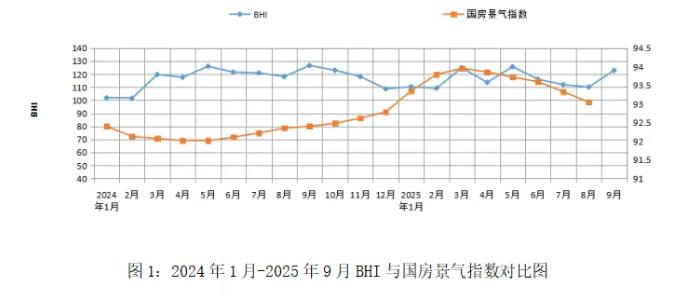
Group 1: Market Performance - The market has shown a month-on-month recovery driven by "national subsidies" and the traditional peak season of "Golden September and Silver October," with a 23.84% increase in sales revenue from building materials and home furnishings compared to the previous month [1][2] - The Building Materials Home Furnishing Index (BHI) for September was reported at 122.93, reflecting a month-on-month increase of 12.87 points but a year-on-year decline of 3.75 points [1][2] - Cumulative sales revenue for the first three quarters of 2025 reached 1,044.801 billion yuan, representing a year-on-year decrease of 3.75% [1] Group 2: Export Trends - Furniture and its parts exports for the first three quarters of 2025 amounted to 338.4 billion yuan, showing a year-on-year decline of 3.9% [5] - The export value of lighting products decreased by 7.4% to 202.83 billion yuan, while ceramic products saw a slight increase of 1.7% with an export value of 114.77 billion yuan [5] - In September alone, furniture exports were 33.37 billion yuan, while lighting products and ceramics had exports of 18.81 billion yuan and 10.52 billion yuan, respectively [6] Group 3: Consumer Trends - The use of product barcodes in the furniture and home appliance categories saw a remarkable increase of 1,178% in the first three quarters of 2025 [9] - The introduction of new products in the home renovation sector, driven by the "old-for-new" consumption policy, resulted in a significant increase in the number of registered barcoded products [11][12] - The home appliance sector also experienced growth, with 18.1 million new barcoded products introduced, marking a year-on-year increase of 47.3% [12] Group 4: Industry Outlook - The Building Materials Industrial Prosperity Index rose by 4.4 points in September, indicating a recovery trend in the industry [13][15] - The investment demand index for building materials was reported at 106.4 points, reflecting a month-on-month increase of 6.3 points, suggesting continued recovery in the investment market [15] - The industrial consumption index also showed improvement, reaching 104.5 points, indicating a rebound in demand for building materials in related manufacturing sectors [15]

9月全国建材家居市场整体呈现旺季平稳回升态势
Xin Hua Wang· 2025-10-17 02:54
Core Insights - The National Building Materials and Home Furnishing Prosperity Index (BHI) for September is 122.93, showing a month-on-month increase of 12.87 points but a year-on-year decrease of 3.75 points [1] - Sales in large-scale building materials and home furnishing markets reached 130.84 billion yuan in September, reflecting a month-on-month increase of 23.84% but a year-on-year decline of 8.02% [1] - Cumulative sales from January to September 2025 totaled 1,044.80 billion yuan, representing a year-on-year decrease of 3.75% [1] BHI Analysis - The BHI's increase is attributed to the traditional peak season of "Golden September and Silver October," with improved consumer sentiment driven by favorable weather and government subsidy policies [1] - The Manager Confidence Index stands at 159.64, down 3.83 points month-on-month, but remains above the neutral threshold of 50, indicating a generally optimistic outlook for the industry [1] Sales Capability Index - The highest month-on-month increase was observed in the Sales Capability Index, driven by the peak consumption season and the ongoing effects of the "old-for-new" consumption policy [2] - A dual incentive model of "government subsidies + enterprise discounts" has effectively stimulated consumer activity, leading to increased foot traffic and sales in key building materials and home furnishing markets [2] Policy Developments - A new policy document titled "Building Materials Industry Growth Stabilization Work Plan (2025-2026)" was jointly issued by six government departments, marking a shift from "maintaining scale" to "improving quality" in the industry [2] - The policy aims to facilitate a transition from traditional building materials to new material industries through capacity regulation, technological innovation, green transformation, and demand expansion [2] - Industry associations recommend that companies seize the policy window to accelerate structural adjustments and technological innovations to gain a competitive edge in the upcoming industrial transformation [2]