建筑创新

Search documents
中国造价最贵的超级大楼,你知道有多高级吗?光是买地就花了63亿
Sou Hu Cai Jing· 2026-02-13 05:42
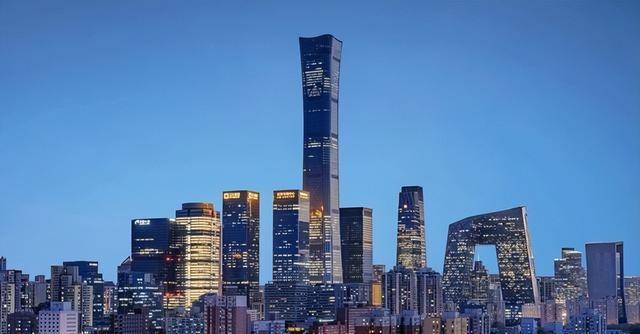
Group 1 - The article discusses the acquisition of a prime land parcel in Beijing's Central Business District (CBD) by CITIC Group for 6.3 billion yuan, highlighting the strategic importance of the location and its potential for development [2][4] - The land is the last core site in the CBD, with a high plot ratio allowing for the construction of super tall buildings, which further enhances its value [4][6] - The construction of the building, known as China Zun, began in July 2013 and was marked by significant technological advancements and a focus on earthquake resistance, making it a landmark project in China's architectural landscape [8][10] Group 2 - China Zun stands at 528 meters with a total construction area of 437,000 square meters, designed to accommodate 12,000 office workers, and its construction cost reached 24 billion yuan due to high land prices and technological investments [8][19] - The building features advanced seismic design, utilizing a giant frame core system and a significant amount of steel, ensuring structural integrity in an earthquake-prone area [10][17] - The operational phase began on January 1, 2020, and it has since become the first commercial building in Beijing to generate over 10 billion yuan in tax revenue, significantly contributing to the local economy [21][23] Group 3 - The project reflects the rapid urbanization process in China, with Beijing's land resources being scarce, leading to high-value transactions that stimulate surrounding developments [6][19] - The building's management system incorporates smart technology for real-time monitoring, enhancing operational efficiency and maintaining the building's appearance [17][23] - Overall, the investment of 24 billion yuan is seen as a long-term value creation, not just in terms of the physical structure but also as an economic engine for the region [23]

建筑有限,暖意无限
Hang Zhou Ri Bao· 2025-06-24 02:26
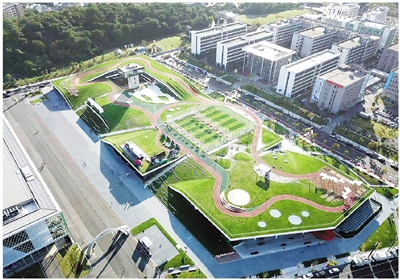
Core Perspective - The article emphasizes the innovative approach to architecture that transcends traditional design, focusing on creating spaces that resonate with human experiences and natural environments [2][3][4]. Group 1: Architectural Philosophy - The design philosophy of the architect, Madi, revolves around creating "buildings that do not look like buildings," fostering a symbiotic relationship with the city [2][4]. - Madi believes that architecture should not be about self-aggrandizement but should retreat to allow nature, urban life, and community to take precedence [5][6]. Group 2: Design Innovations - The design of the Yunqi Town Exhibition Center breaks conventional norms by elevating the main structure, creating an open space for public use, and blurring the boundaries between indoor and outdoor environments [4][5]. - The second phase of the Yunqi Town Exhibition Center features a reduced height of 6.6 meters, transforming the roof into a multifunctional park with various recreational facilities, thus maximizing public space utilization [5]. Group 3: Community Engagement - The exhibition center has become a popular gathering spot for local residents, facilitating various activities such as morning exercises and creative markets, thereby enhancing community interaction [4]. - Madi's design approach has led to the creation of "touching spaces" that encourage dialogue between architecture and life, as evidenced by the success of his projects in different cities [5]. Group 4: Personal Values and Impact - Madi's humility and commitment to social responsibility are reflected in his actions, such as assisting a fallen elderly person, showcasing the humanistic aspect of his architectural philosophy [6]. - His work not only aims to reshape the relationship between people and buildings but also seeks to foster emotional connections among individuals [6].