
开放式服务区

Search documents
把开放式服务区 变为消费新场景
Mei Ri Shang Bao· 2026-02-09 23:22
Core Insights - The concept of "open service areas" is introduced, allowing local vehicles and residents to access highway service areas without entering the highway, aiming to integrate these areas with local economies [1][2] Group 1: Policy and Development - The Ministry of Transport issued an action plan for upgrading highway service areas, emphasizing the construction of open service areas to meet traveler needs and stimulate local economic growth [1] - The open service area model is seen as a new growth point for service consumption, leveraging existing practices to enhance service offerings [1] Group 2: Operational Considerations - It is crucial to balance the primary functions of service areas (such as parking, maintenance, dining, fueling, and charging) with potential secondary commercial activities, ensuring that the core services remain effective [2] - Open service areas should complement local businesses rather than compete with them, promoting local products and enhancing the overall commercial environment [2] Group 3: Traffic Management - The complexity of traffic within service areas necessitates effective management to ensure safety and order, especially with the influx of additional traffic from outside the highway [3] - The open concept can be applied to other transportation facilities, creating more consumer opportunities and enhancing the travel experience beyond mere transit [3]
交通运输部:研究出台精品自驾旅游公路实施方案
Jing Ji Guan Cha Wang· 2026-02-06 11:21
Core Viewpoint - The Ministry of Transport plans to enhance the development of self-driving tourism by implementing high-quality tourism road projects, focusing on long-distance and cross-regional routes [1] Group 1: Policy Initiatives - The Ministry of Transport will strengthen research and develop an implementation plan for high-quality self-driving tourism roads to meet the growing trend of self-driving travel [1] - Plans include expanding and upgrading road segments and improving the capacity of tourism roads during holidays and peak periods [1] Group 2: Infrastructure Development - By 2026, the Ministry aims to build over 10,000 charging stations in highway service areas, with at least 25% being high-power chargers to enhance charging service capabilities [1] - The Ministry will promote the construction of "open service areas" on highways to serve not only passing travelers but also to support regional economies and showcase local characteristics [1] Group 3: Consumer Experience Enhancement - The Ministry will support the development of new consumption formats along self-driving routes, including campsites, car rental facilities, boutique homestays, and themed dining options to boost comprehensive consumption potential [1] - There will be a focus on improving service facilities and safety measures to cater to the diverse and personalized needs of self-driving travelers [1]
晶采观察丨划重点!2026出行大礼包来了
Yang Guang Wang· 2025-12-27 07:25
Group 1 - The press conference highlighted several favorable policies for the public, focusing on improving travel convenience for car owners, elderly individuals, and reducing hassles on highways [1] - The small and micro car rental market in China has seen explosive growth, with a total of 4 million small micro cars currently in operation, and an expected annual growth rate of around 15% during the 14th Five-Year Plan period [1] - The Ministry of Transport plans to enhance the supply of rental vehicles during peak times and optimize the development of the small micro car rental market by leveraging transportation hubs like high-speed rail stations and airports [1] Group 2 - The Ministry of Transport aims to create a series of cross-regional self-driving premium routes to meet the growing demand for self-driving tourism, which has become a new consumption hotspot [2] - A nationwide upgrade action for highway service areas will be launched, with plans to build over 10,000 charging stations by 2026, including at least 25% high-power charging stations [2] - Service areas will also undergo renovations to improve accessibility for the elderly, including increasing the proportion of sit-down toilets to over 20% and adding barrier-free access [2] Group 3 - The Ministry of Transport is committed to building and renovating open service areas that not only meet the needs of travelers but also stimulate local economic growth and enhance regional consumption [3] - The rights of 38 million truck drivers will be better protected with the establishment of a dedicated hotline for complaints, ensuring a closed-loop handling process [3] - The "Driver's Home" initiative will expand, with 863 standardized facilities already completed, and further construction planned to improve the working environment for truck drivers [3]
我国高速公路服务区提质 明年增建1万个以上充电枪
Xin Lang Cai Jing· 2025-12-23 17:02
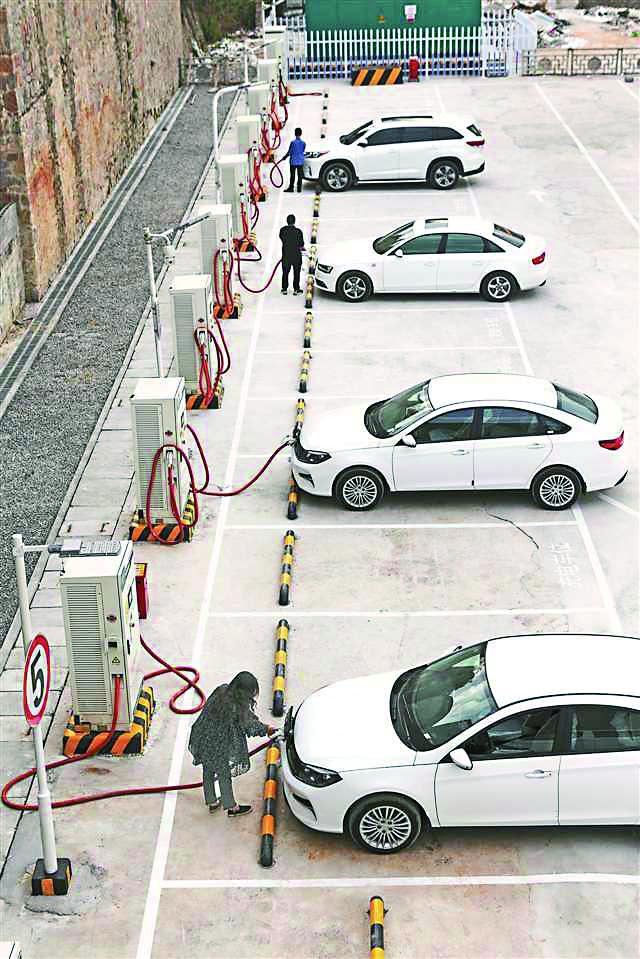
Core Viewpoint - The Ministry of Transport plans to enhance the quality of highway service areas by 2025, focusing on the construction of over 10,000 charging stations, with at least 25% being high-power chargers to address the charging difficulties faced by long-distance electric vehicle users [2][4]. Group 1: Charging Infrastructure Expansion - The Ministry of Transport aims to improve charging service capabilities in highway service areas, responding to the growing demand for long-distance travel with electric vehicles [4]. - The initiative includes the construction of over 10,000 charging stations, with a significant emphasis on high-power chargers to reduce waiting times for charging [4]. - New charging facilities will be prioritized at busy service areas and along major freight corridors, ensuring that high-power charging becomes the standard [4]. Group 2: Service Upgrades and Human-Centric Approach - The upgrade initiative goes beyond infrastructure, focusing on meeting the diverse needs of different user groups, reflecting a human-centered approach to transportation services [5]. - The Ministry plans to enhance public restroom facilities, aiming for over 20% of toilet stalls to be sit-down toilets, and improve accessibility features for elderly and disabled travelers [5]. - The "Driver's Home" initiative will continue to expand, with 863 standardized facilities already established this year, aimed at improving the working conditions for long-haul truck drivers [5]. Group 3: Innovative Service Area Models - The Ministry encourages the integration of service areas with local economies, promoting the "open service area" model that has shown positive results in some provinces [6]. - This model facilitates local community access to service area resources and boosts consumer traffic, transforming service areas into vibrant economic nodes rather than mere rest stops [6]. - The Ministry will also enhance safety and emergency capabilities in service areas, particularly focusing on fire safety for high-power charging facilities [6].

无需上高速也能直达服务区 四川首个开放式服务区来了
Si Chuan Ri Bao· 2025-07-03 02:31
Core Viewpoint - The article discusses the launch of the Tianquan Service Area, which is the first open-style "transportation and tourism integration" service area in the province, marking a shift towards a new model of highway service areas that integrates local road networks, tourism resources, and regional economies [1][2]. Group 1: Service Area Overview - The Tianquan Service Area is part of the first batch of "dual-use" pilot projects by the Ministry of Transport, emphasizing its innovative approach to service area design [1][2]. - The opening of the Sixing Toll Station on July 1 marks the transformation of the Tianquan Service Area into an open comprehensive platform that efficiently connects highway traffic with local visitors [1]. Group 2: Features and Functions - The Sixing Toll Station occupies 6.74 acres and features a two-lane entry and exit system, along with a toll booth and station building [2]. - The station will link with existing facilities such as museums, cultural sites, and commercial clusters, aiming to create a complete experience for visitors that includes dining, shopping, entertainment, and learning [2]. - The station employs a "normal + emergency" dual-function design, allowing seamless access from local roads to the service area without entering the highway, enhancing visitor convenience [2]. - In emergency mode, the station can quickly convert into a logistics hub for emergency supplies and a rescue passage, improving regional traffic emergency response capabilities [2].