影视寒冬

Search documents
对抗“碎微时代”:长剧如何重筑深度叙事的护城河
Xin Lang Cai Jing· 2026-01-16 08:48
Core Insights - The film and television industry is currently undergoing a significant "winter" phase, driven by multiple intertwined factors, with a notable decline in long-form series production and distribution licenses as of 2026 compared to 2025 [1] Group 1: Challenges Facing Long-Form Series - The primary challenge for long-form series is the fragmentation of audience attention, with over 60% of viewers accustomed to watching at increased speeds, which directly impacts the narrative depth required for long-form storytelling [2] - The rise of short-form content has diluted the novelty that new actors can bring to long-form series, making it increasingly difficult to attract audiences [2] - The industry is experiencing "hit anxiety" and "data worship," where some productions prioritize algorithm-driven metrics over genuine creative quality, leading to a misallocation of marketing resources and a focus on superficial data rather than substantive content [2] - The call from the National Radio and Television Administration in August 2025 to return to a "script-centered" approach highlights the need for a shift back to quality storytelling, although challenges remain for both original scripts and IP adaptations [2] Group 2: Path to Recovery - The path to recovery for long-form series is focused on consolidating top resources to create high-quality productions, emphasizing the importance of deep narrative and artistic value [3] - Successful examples demonstrate that when talented actors, directors, and writers collaborate, they can produce works that resonate both artistically and commercially, such as "The Story of the Rose" and "The Lychee of Chang'an" [3] - Even lesser-known IPs can achieve commercial success if they are well-produced and feature strong performances, as seen with "Lotus Tower" and "To the Mountains and Seas," which have generated significant revenue through merchandise and brand collaborations [4] Group 3: The Importance of Original Content - Original scripts that offer unique cultural insights and innovative storytelling techniques have proven to resonate with audiences, as exemplified by "The Long Season" and "The News Queen," which have sparked widespread social discussions [5] - The success of "Chang'an Twenty-Four Strategies," a meticulously crafted historical drama, illustrates the potential for original content to thrive in a challenging market, achieving impressive viewership and advertising success [6] - The overarching conclusion is that the way forward for the industry lies in a commitment to high-quality content creation, which can generate sustainable commercial value and earn market respect [6] Group 4: Future Directions - The current industry challenges are seen as an opportunity to eliminate excess and return to foundational principles, with a clear path for long-form series to focus on narrative depth and cultural significance [7] - The mission for long-form series is to become a comprehensive value entity that integrates culture, technology, and tourism, serving as a cultural bastion against fragmented consumption [7] - A collaborative effort among platforms, creators, brands, and audiences is essential to foster a healthy ecosystem that values creativity and quality, resisting the temptations of superficial metrics and poor marketing practices [7]
你小时候的荧幕偶像,现在争着去景区当NPC
3 6 Ke· 2025-11-10 02:17
Core Insights - The emergence of "star NPCs" in tourist attractions reflects both a marketing strategy to attract visitors and a response to the challenges faced by middle-aged actors in the current film and television industry [1][14][17] - The trend highlights a symbiotic relationship between scenic spots and actors, where actors bring vitality and benefits to the attractions while finding new employment opportunities [2][34] Industry Context - The film and television industry is experiencing a significant downturn, with a notable decline in the number of registered long dramas and a reduction in budget allocations for historical dramas [18][19] - The market for short dramas is growing, with a projected market size of 634 billion yuan by 2025, while the production of long dramas is expected to drop by nearly 25% [19][20] Actor Dynamics - Many well-known actors are now taking on roles as NPCs in scenic areas, with ages ranging from 49 to 70, indicating a shift in the industry where older actors are seeking alternative avenues for income [14][17] - The role of NPCs allows these actors to maintain their professional dignity while providing immediate financial returns, contrasting with the uncertainty of traditional acting roles [1][23] Audience Engagement - The presence of star NPCs has led to a surge in ticket sales, with reports of a 150% increase in ticket sales following announcements of star appearances [14] - The nostalgic appeal of these actors resonates with middle-aged audiences, who are willing to pay for experiences that connect them with their youth [17][34] Social Perception - The phenomenon has sparked debates about the dignity of actors and the perception of their roles, with some viewing it as a degradation of their status while others see it as a legitimate form of employment [27][28][30] - The discussion reflects broader societal views on the definition of "dignity" in professions and the evolving nature of the entertainment industry [31][32]


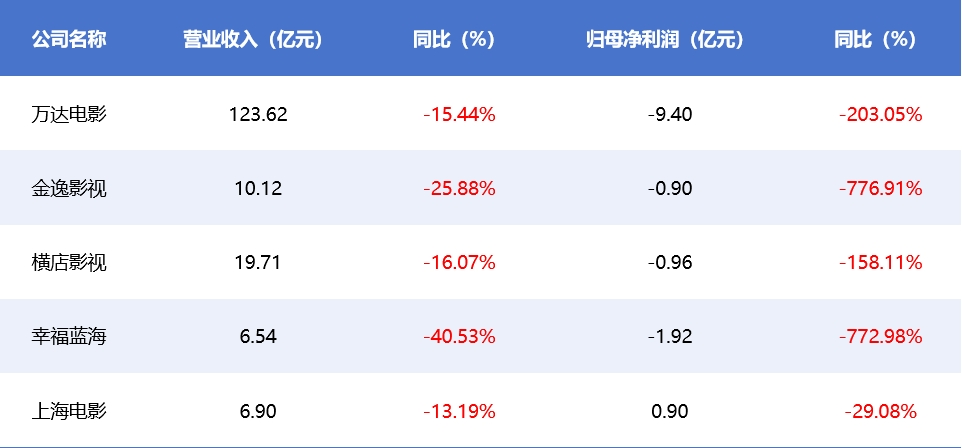
影视年报|电影行业寒冬下5家院线公司无一幸免 幸福蓝海营收利润双线领跌
Xin Lang Zheng Quan· 2025-05-23 07:24
Core Viewpoint - The Chinese film market in 2024 is experiencing a significant downturn, with total box office revenue and audience attendance both declining sharply compared to 2023, leading to substantial losses for major cinema companies [1][2]. Industry Summary - The total box office revenue for the Chinese film market in 2024 is 425.02 billion (including service fees), a decrease of 22.6% year-on-year. Audience attendance is 1.01 billion, down 22.3% from the previous year [1]. - The number of new films released in 2024 is 497, which is 11 fewer than in 2023. There are 72 films that grossed over 100 million, an increase of 2 films, but only 16 films grossed over 500 million, a decrease of 13 films [1]. - A total of 5 cinema companies, including Wanda Film, Hengdian Film, Jinyi Film, Happiness Blue Sea, and Shanghai Film, reported a combined revenue of 16.69 billion, a year-on-year decrease of 17.5%, with a net loss of 1.229 billion, a drastic decline of 202.74% compared to the previous year [1]. Company Performance Summary - Wanda Film leads with a revenue of 12.362 billion, contributing approximately 74.1% to the total revenue of the 5 companies, but experienced a year-on-year decline of 15.44%. Its net loss is 940 million, a reversal from a profit of 912 million the previous year, marking a 203.05% decline [3][4]. - Happiness Blue Sea shows the largest revenue drop of 40.53%, with total revenue of 654 million. It is the only company to continue reporting losses, with a net loss of 192 million, an increase of 772.98% compared to the previous year [3][4]. - Shanghai Film is the only company maintaining profitability, with a net profit of 90 million, although this represents a year-on-year decrease of 29.08% [4]. Revenue Breakdown - For Wanda Film, box office revenue is 6.687 billion, down 20.82%, accounting for 54.09% of total revenue, a decrease of 3.67 percentage points from 2023. Other companies follow with varying revenue declines [5]. - Non-ticket revenue for Wanda Film from merchandise and advertising is 1.545 billion and 1.278 billion, respectively, contributing about 23% to total revenue. The other four companies have revenue in the million range, which has a limited impact on overall performance [5][6]. Profitability Metrics - In terms of gross margin, Jinyi Film is the only company with a positive gross margin from film screening at 2.78%, while the others report negative margins, with Happiness Blue Sea at -17.62% [7]. - The overall gross margin for the five companies is positive, with Shanghai Film and Wanda Film exceeding 20%. However, Hengdian Film and Happiness Blue Sea are at the bottom with margins of 3.06% and 3.21%, respectively [8]. - Only Shanghai Film has a positive net margin, while the other four companies report negative margins, with Happiness Blue Sea at -29.61%, the lowest among them [8]. Cost and Expense Analysis - Happiness Blue Sea's asset impairment and credit impairment losses have significantly increased, contributing to its poor net margin. Its expense ratio is the highest among the five companies at 26.77%, up about 10 percentage points year-on-year [9].