
剧本中心制

Search documents
对抗“碎微时代”:长剧如何重筑深度叙事的护城河
Xin Lang Cai Jing· 2026-01-16 08:48
Core Insights - The film and television industry is currently undergoing a significant "winter" phase, driven by multiple intertwined factors, with a notable decline in long-form series production and distribution licenses as of 2026 compared to 2025 [1] Group 1: Challenges Facing Long-Form Series - The primary challenge for long-form series is the fragmentation of audience attention, with over 60% of viewers accustomed to watching at increased speeds, which directly impacts the narrative depth required for long-form storytelling [2] - The rise of short-form content has diluted the novelty that new actors can bring to long-form series, making it increasingly difficult to attract audiences [2] - The industry is experiencing "hit anxiety" and "data worship," where some productions prioritize algorithm-driven metrics over genuine creative quality, leading to a misallocation of marketing resources and a focus on superficial data rather than substantive content [2] - The call from the National Radio and Television Administration in August 2025 to return to a "script-centered" approach highlights the need for a shift back to quality storytelling, although challenges remain for both original scripts and IP adaptations [2] Group 2: Path to Recovery - The path to recovery for long-form series is focused on consolidating top resources to create high-quality productions, emphasizing the importance of deep narrative and artistic value [3] - Successful examples demonstrate that when talented actors, directors, and writers collaborate, they can produce works that resonate both artistically and commercially, such as "The Story of the Rose" and "The Lychee of Chang'an" [3] - Even lesser-known IPs can achieve commercial success if they are well-produced and feature strong performances, as seen with "Lotus Tower" and "To the Mountains and Seas," which have generated significant revenue through merchandise and brand collaborations [4] Group 3: The Importance of Original Content - Original scripts that offer unique cultural insights and innovative storytelling techniques have proven to resonate with audiences, as exemplified by "The Long Season" and "The News Queen," which have sparked widespread social discussions [5] - The success of "Chang'an Twenty-Four Strategies," a meticulously crafted historical drama, illustrates the potential for original content to thrive in a challenging market, achieving impressive viewership and advertising success [6] - The overarching conclusion is that the way forward for the industry lies in a commitment to high-quality content creation, which can generate sustainable commercial value and earn market respect [6] Group 4: Future Directions - The current industry challenges are seen as an opportunity to eliminate excess and return to foundational principles, with a clear path for long-form series to focus on narrative depth and cultural significance [7] - The mission for long-form series is to become a comprehensive value entity that integrates culture, technology, and tourism, serving as a cultural bastion against fragmented consumption [7] - A collaborative effort among platforms, creators, brands, and audiences is essential to foster a healthy ecosystem that values creativity and quality, resisting the temptations of superficial metrics and poor marketing practices [7]
文化新观察丨从横店看中国影视业的韧性生长和创新脉动
Xin Hua Wang· 2025-12-28 18:45
Core Insights - The Chinese film and television industry in 2025 is characterized by multiple intertwined trends, including resilience in traditional series, rapid evolution of micro-short dramas, and the unprecedented integration of artificial intelligence in creative and production processes [1] Group 1: Traditional Series - Despite facing various pressures, the traditional film and television industry demonstrates strong resilience through narrative innovation and thematic breakthroughs, with 469 long drama productions reported by the Hengdian Film and Television Cultural Industry Cluster Management Committee, remaining stable compared to the previous year [5] - The "Hengdian Index" indicates a continuous recovery in the economic benefit index of TV dramas, reflecting improved profitability driven by quality enhancement and cost control [5] - The focus on high-quality storytelling is emphasized by industry leaders, advocating for a "script-centered" approach to ensure that the essence of the story is prioritized in production [6][7] Group 2: Micro-Short Dramas - The micro-short drama sector is expanding, with a diverse range of themes emerging, including inspirational stories and narratives reflecting national sentiments, as seen in successful productions like "Adventurer Langya" [8][11] - The industry consensus is shifting towards a broader thematic exploration, moving beyond mere entertainment to address social issues and convey positive values, as demonstrated by works like "Wild Girl" and "This Life's Fate" [11] - The micro-short drama industry has created over 1.33 million jobs across the entire production chain, indicating its significant impact on employment and its potential for further integration with cultural promotion and legal education [11] Group 3: Technological Empowerment - The integration of AI technology is transforming the film and television industry, enabling rapid production processes that previously required extensive manual effort, as illustrated by the use of AI in creating complex visual scenes [12][13] - Major industry players are exploring innovative applications of AI, such as seamless integration of live-action footage with AI-generated scenes, which helps reduce costs and enhance production efficiency [15] - The establishment of the "Hengdian Film and Television Large Model" and the AI Film and Television Ecological Service Center signifies a systematic approach to leveraging AI across various production stages, enhancing creative potential and artistic expression [15][17]



从横店看中国影视业的韧性生长和创新脉动
Xin Lang Cai Jing· 2025-12-28 12:13
Core Insights - The Chinese film and television industry in 2025 is characterized by multiple intertwined trends, including resilience in traditional series, rapid evolution of micro-short dramas, and the unprecedented integration of artificial intelligence in creative and production processes [1] Group 1: Traditional Series - Despite facing multiple pressures, the traditional film and television industry demonstrates strong resilience through narrative innovation and thematic breakthroughs, with 469 long drama productions reported as of November, maintaining levels from the previous year [5] - The "Hengdian Film and Television Index" indicates a continuous recovery in the economic benefit index of television dramas, reflecting improved profitability driven by quality enhancement and cost control [5] - Industry leaders emphasize the importance of a "script-centered" approach, advocating for a focus on storytelling as the foundation for successful productions [6] Group 2: Micro-Short Dramas - The micro-short drama sector is expanding, with companies like Dongyang Ge Wu Zhi Zhi Cultural Media launching successful titles such as "Adventurer Langya" and "One Piece Cloth" [8] - The genre is diversifying, moving beyond homogeneous themes to include rich narratives that engage with social issues, as seen in works like "Wild Girl" and "This Life's Fate" [11] - The micro-short drama industry has created over 1.33 million jobs across the entire production chain, indicating its significant impact on employment [11] Group 3: Technological Integration - AI technology is becoming integral to the film and television industry, with advancements allowing for rapid production processes that previously took days to complete [12][13] - Major industry players are exploring new paths for cost reduction and efficiency through AI, such as seamless integration of AI-generated scenes in productions [15] - The establishment of the "Hengdian Film and Television Large Model" aims to provide comprehensive AI support for script analysis, scene previews, and post-production effects, standardizing technological capabilities across the industry [15]

编剧伊北:会持续书写安徽故事
Xin Lang Cai Jing· 2025-12-25 16:20
Group 1 - The core message of the article highlights the success of the TV series "Six Sisters" and its impact on local culture and tourism in Huainan, with the author confirming that there will be no sequels or prequels [1][2] - The shift from a "star-centered" approach to a "script-centered" approach in the film and television industry is emphasized, indicating a focus on storytelling rather than reliance on celebrity actors [2] - The producer's respect for the script during the creation of "Six Sisters" is noted as a key factor in the show's influence, with the producer providing protection against unreasonable demands for changes [2] Group 2 - "Six Sisters" has successfully showcased the local culture and lifestyle of Huainan, turning the historical cultural street of Jiulonggang into a popular tourist destination [2] - The concept of "drama-city symbiosis" is introduced, suggesting that local stories can gain prominence and that there is potential for creating localized intellectual properties [2] - The author plans to continue writing stories inspired by Anhui, indicating a commitment to local storytelling and cultural representation [2]
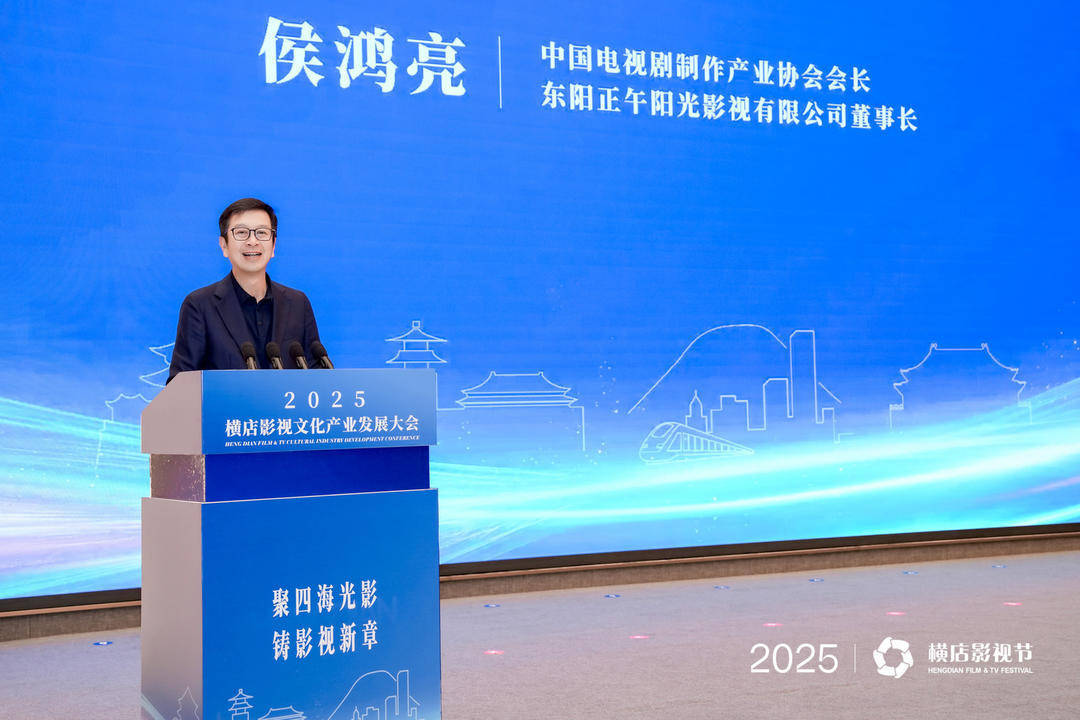
正午阳光董事长侯鸿亮:长剧破局之道唯有“好故事”
Sou Hu Cai Jing· 2025-10-31 15:39
Core Viewpoint - The Chinese television and film industry is facing significant challenges, with a call for a return to content quality and long-term strategies for sustainable development, as highlighted during the "2025 Hengdian Film and Television Festival" [1][3]. Industry Changes - The number of television and online drama releases has drastically decreased from 752 in 2019 to 281 in 2024, representing a decline of over 60% in five years [3]. - Television stations are experiencing reduced purchasing power, while online platforms have shifted from "IP grabbing" to "copyright control" [3]. - The industry is facing content dilution due to competition from short videos and micro-dramas, alongside creative stagnation caused by strict subject matter regulations and lengthy review processes [3]. Policy Insights - The "Broadcasting and Television 21 Measures" aims to rejuvenate the industry with four core principles: 1. Return to content with a focus on "script-centered" production, emphasizing the importance of solid storytelling [4]. 2. Rebuild the ecosystem by promoting diverse content forms, encouraging the creation of realistic and historical themes while reducing idol and crime dramas [4]. 3. Optimize governance by enhancing review transparency and adopting a "bottom line + profit-sharing" revenue model to reward quality works [4]. 4. Advocate for long-termism in production, emphasizing the need for thoroughness at every stage of creation [4]. Future Outlook - Hengdian is positioned as a historical landmark for Chinese television and a frontier for new ecological practices, with a call for industry professionals to shift focus from chasing short-term gains to cultivating quality content over the long term [4].
好剧本是如何炼成的?中国广播电视精品创作大会剧集沙龙在京举办
Xin Jing Bao· 2025-10-29 07:18
Core Insights - The 2025 China Broadcasting and Television Quality Creation Conference emphasizes the importance of scriptwriting in the film and television industry, advocating for a "script-centered" approach to content creation [1][2] Group 1: Shift to Script-Centered Production - The industry is transitioning towards a "script-centered" model, refocusing on storytelling rather than just traffic-driven content [2] - Industry professionals recognize that compelling storytelling is essential for creating works that resonate across time and drive the industry towards higher quality and diversity [2] - Liu Heping, President of the China Television Drama Screenwriters Committee, highlights the need for realism in storytelling to reveal deeper cultural and psychological truths [2] Group 2: Empowering Screenwriters - High Xuan, Vice President of the China Television Artists Association, calls for the establishment of three key rights for screenwriters: script finalization, interpretation, and editing review [2] - There is a push for improved evaluation mechanisms by video platforms and a call for respect for original works, emphasizing quality over individual recognition [2] Group 3: Originality and Character Development - The roundtable discussion on "IP Adaptation and Script Innovation" underscores the significance of originality in scriptwriting, with creators stressing the importance of character development [3][4] - Wang Xiaoqiang, a prominent screenwriter, notes that the allure of original scripts lies in their unpredictability, which can exceed audience expectations [3] - Lu Min, a professor at the Central Academy of Drama, emphasizes that strong character creation is foundational for effective storytelling [3] Group 4: Adaptation from Literature to Film - The adaptation of literary works into film requires a focus on using cinematic language to convey the story effectively [4] - Actors emphasize that a good script and character are crucial for their performance, allowing for a more natural portrayal of roles [4] - The importance of connecting historical narratives with contemporary audiences is highlighted, ensuring relevance across different age groups [4] Group 5: Future Trends in Long Series - The future of long series is expected to showcase unique aesthetic styles, with a rise in "author-style series" that reflect the distinct artistic vision of writers and directors [4] - The ongoing creation of series like "Tang Dynasty Strange Events" indicates a commitment to maintaining the longevity and vitality of IPs through innovative storytelling [4]
芒果超媒前三季度营收超90亿元,核心主业彰显经营韧性
Jing Ji Wang· 2025-10-27 07:31
Core Viewpoint - Mango TV has shown resilience in its core business, achieving a revenue of 9.063 billion yuan and a net profit of 1.016 billion yuan in the first three quarters of 2025, while optimizing its business structure [1] Group 1: Financial Performance - The company reported a year-on-year increase of approximately 11.08% in average monthly active users for Mango TV from January to September [1] - Advertising revenue showed signs of recovery, with a year-on-year increase in the third quarter, continuing the positive trend from the first half of the year [1] - The operating cash flow remained healthy, with a net cash flow of 674 million yuan for the first three quarters, representing a year-on-year growth of 307.14% [1] - By the end of September, the company's cash reserves exceeded 13 billion yuan, providing solid support for future investments in content, technology, and new business initiatives [1] Group 2: Strategic Focus and Business Development - The company has strategically reduced its traditional e-commerce business and is focusing more on the development of Mango IP derivative products, leading to a decline in traditional e-commerce revenue [2] - The integration of "culture + technology" is a key strategy, with increased investment in quality content and research and development, although this has led to a rise in costs for the internet video business [2] - Upcoming major shows such as "Living as if in a Drama" and "The Voice of China" are expected to attract significant market attention, with advertising budgets likely to recover [2] - The new music talent show "Sound of Stars" is anticipated to generate considerable buzz and has the potential to become one of the most influential cultural IPs of 2025 [2] Group 3: Industry Outlook - The implementation of the "Broadcast and Television 21 Policies" is expected to facilitate the release of accumulated dramas across platforms, shortening review cycles and promoting capital turnover [2] - The company aims to strengthen the "script-centered system" to optimize cost structures in the medium term [2] - Long-term strategies include the series development of dramas to enhance production stability and IP value potential, with the industry expected to recover under the new policy cycle [2]

中金 | 长剧行业:政策赋能破局,创新驱动复苏
中金点睛· 2025-10-15 23:54
Core Viewpoint - The regulatory policy for long dramas is shifting from strict regulation to a balance of relaxation and deepening, with a more diversified and refined regulatory approach. The implementation of new broadcasting regulations is expected to promote content supply innovation, leading the industry into a virtuous cycle in the future [2][5]. Background Review - The rise of short dramas, represented by platforms like Hongguo, has intensified competition for long dramas, leading to tightened budgets in the downstream sector. This has accelerated the clearing of supply in the upstream sector but has also affected the stability and creativity of content creators [4][6]. - The supply side of the long drama industry is gradually stabilizing after a period of adjustment, with a focus on quality improvement and diversification of genres. The overall number of new dramas is expected to stabilize starting in 2024 [4][14]. New Regulations Observation - The new broadcasting regulations aim to foster content supply innovation, providing a friendly environment for content creation. The key to future development lies in the impact of supply changes on user retention. Short-term benefits include the release of backlog dramas and shortened review cycles, while medium-term strategies focus on optimizing cost structures through a "script-centered" approach [5][34]. - The long-term outlook suggests that series development will enhance production stability and IP value potential, with the industry likely to recover under the new policy cycle [5][37]. Industry Trends - The long video platforms are increasingly focusing on exclusive dramas and member content, with membership revenue becoming a core income source. For instance, in 2024, membership revenue accounted for 60.8% and 24.4% of total revenue for iQIYI and Mango TV, respectively [23][24]. - The supply of costume dramas, a significant genre for young female audiences, has shown a recovery trend after a decline from 2019 to 2022. The proportion of costume dramas in the top 10 popular dramas has exceeded 40% in recent years [27][28]. Policy Background - The regulatory framework for the video drama industry is evolving from strict regulation to a more relaxed and detailed approach, with the implementation of new measures aimed at enhancing content supply and innovation. The new regulations emphasize improving the efficiency of review mechanisms and expanding content categories [32][33]. Future Development - In the short term, the release of backlog dramas and shortened review cycles are expected to facilitate cash flow and stimulate industry recovery. In the medium term, a focus on script quality and cost management is anticipated to improve production efficiency [34][36]. - Long-term strategies will likely involve a shift from standalone hits to series development, enhancing the stability of production and maximizing the potential of IP value through diversified derivative products [37][39].


精品是怎样炼成的(坚持“两创”·关注新时代文艺)
Ren Min Ri Bao· 2025-10-13 23:19
Core Insights - The article emphasizes the importance of humility and connection to reality in creative work, particularly in the film and television industry, to resonate with audiences [1][5] - It highlights the critical role of a strong script as the foundation of any successful production, advocating for a "script-centered" approach [1][3] Group 1: Script and Storytelling - A good script must be deeply rooted in real-life experiences and relatable values, avoiding superficial portrayals of life [2][4] - The concept of "hooks" in storytelling is essential; a compelling narrative should keep the audience guessing and engaged [2][3] Group 2: Direction and Production - The director's role is crucial in balancing emotional intensity and allowing actors creative freedom, which can enhance the overall performance [3][4] - Producers should focus on long-term value and quality over short-term trends, ensuring that the content resonates with genuine audience interests [4][5] Group 3: Audience Engagement - Understanding audience preferences is vital; creators should avoid repetitive themes and instead explore "blue ocean" opportunities that fulfill unmet viewer desires [4][5] - Casting decisions should prioritize suitability for the role over mere popularity, as audiences are increasingly resistant to forced star power [4][5] Group 4: Resource Allocation - Investment in quality production elements, such as script development and practical effects, is essential for enhancing the final product's quality [5] - A supportive creative environment, bolstered by policies like the "21 regulations" from the broadcasting authority, can foster better storytelling and production practices [5]