手机成瘾

Search documents
一个初二孩子手机成瘾全过程曝光,我才发现,废掉一个孩子最好的方法,就是不问青红皂白管他、管他、管他……
洞见· 2026-02-26 12:59
Core Viewpoint - The article emphasizes the importance of understanding and guiding children in their relationship with technology, particularly mobile phones, rather than simply imposing restrictions. It highlights the psychological and social factors that contribute to children's attachment to their devices and suggests a more empathetic approach to address these issues. Group 1: Reasons for Mobile Phone Addiction - From a psychological perspective, mobile phones fulfill children's needs for attention, recognition, and curiosity [22] - From a sociological perspective, parents are children's primary role models, and if parents frequently use phones for leisure, children are likely to imitate this behavior [24] - From an educational perspective, adolescents have a strong desire for autonomy and may use "rebellion" as a means to assert their independence [25] Group 2: Case Study Insights - A specific case of a middle school girl illustrates how her emotional needs were met through gaming, leading to her mobile phone addiction [11][12] - The girl's background reveals a lack of parental support and emotional security, contributing to her reliance on virtual relationships [13][14][15] - The article notes that many children experience similar issues with mobile phone addiction, often stemming from complex family dynamics and unmet emotional needs [22] Group 3: Parental Influence and Guidance - Parents should not overestimate children's self-control or underestimate their influence, as strict restrictions may lead to rebellion [46][48] - Engaging children in discussions about technology and its implications can help them understand and manage their usage better [50][51] - The article advocates for a long-term perspective in parenting, recognizing that occasional lapses in behavior are part of the growth process [52][55]


醒着就刷手机?是不是成瘾了?
Xin Lang Cai Jing· 2026-01-21 08:13
Core Viewpoint - The article discusses the concept of "smartphone addiction," clarifying that high-frequency smartphone use does not equate to addiction but rather reflects societal needs and individual circumstances [3][4][5]. Group 1: Understanding Smartphone Addiction - "Smartphone addiction" is a colloquial term and not a recognized medical diagnosis; it differs fundamentally from substance addiction [3]. - The distinction between high-frequency use and problematic use lies in whether social functionality is affected, which is a core standard in psychiatric evaluation [4]. - Normal high-frequency use of smartphones can be beneficial, aiding in work and social needs without impacting sleep or core life functions [5]. Group 2: Reasons Behind Frequent Smartphone Use - Parents often worry about their children’s smartphone use, but many adolescents may be dealing with underlying issues like depression, using smartphones as a coping mechanism [8]. - For working adults, late-night smartphone use often serves as a compensatory mechanism to relieve stress from a busy day, rather than indicating addiction [9]. - Some individuals may frequently check social media due to unmet social needs, using online platforms to alleviate social anxiety [10]. Group 3: Potential Hidden Issues - While smartphone reliance is not inherently problematic, it can exacerbate underlying mental health issues, creating a cycle of dependency and emotional distress [12][13]. - Excessive smartphone use can lead to physical health issues such as sleep disturbances and neck problems, as well as psychological impacts like decreased attention span and increased anxiety [14]. Group 4: Balancing Smartphone Use - Instead of aiming to completely eliminate smartphone use, finding a balance is crucial; strategies include setting specific usage goals and reflecting on smartphone use patterns [16][17]. - Accepting occasional unproductive smartphone use as a normal part of relaxation can help alleviate guilt associated with smartphone use [18]. Group 5: When to Seek Professional Help - Professional intervention is recommended when smartphone use severely impacts social functionality or when emotional issues persist without self-resolution [20]. - Medical evaluations may include screenings for depression and anxiety, with treatment options ranging from medication to cognitive behavioral therapy [21].
别让“手机式童年”剥夺下一代的思考力
Zhong Guo Qing Nian Bao· 2025-12-29 02:45
Core Viewpoint - The issue of "smartphone addiction" among children and adolescents is alarming, as their underdeveloped nervous systems make them more susceptible to cognitive impairments caused by smartphone use [1] Group 1: Impact on Children - Younger children face significant risks such as attention fragmentation, weakened thinking abilities, and lack of empathy due to excessive smartphone use [1] - Outdoor play is essential for children to develop crisis management skills, physical fitness, psychological resilience, and social abilities, which are compromised when children grow up focused on screens [1] - Children raised with smartphones often rely on algorithmically curated information, losing opportunities for real-world interactions that foster critical thinking [1] Group 2: Navigating the Digital World - It is crucial to integrate children into the digital world without isolating them, focusing on how to use the internet as a tool for broadening perspectives rather than limiting growth [2] - Dependence on AI tools for problem-solving can hinder the development of independent thinking skills in children, as they may miss the learning process involved in problem-solving [2] - The "information cocoon" created by algorithms can stifle creativity and critical thinking, emphasizing the need for a diverse exposure to information rather than a narrow, tailored experience [2] Group 3: Emotional and Social Development - Negative online interactions can adversely affect children's emotional well-being, leading to a loss of empathy and healthy expression of thoughts [3] - Enhancing children's digital literacy requires a collaborative effort from families, schools, and society, with parents taking the lead in fostering meaningful interactions over screen time [3] - Schools should implement comprehensive digital literacy programs that teach not only how to use the internet but also how to discern information, protect oneself, and express opinions rationally [3]
明知伤身,为什么76%的大学生选择主动熬夜
Xin Lang Cai Jing· 2025-12-21 02:11
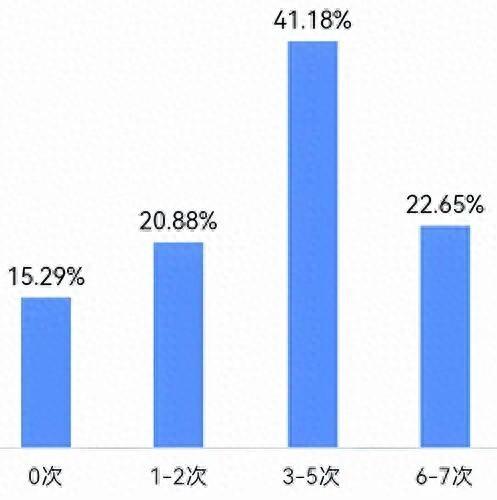
Core Viewpoint - The article highlights the sleep deficit faced by contemporary college students, particularly those born after 2000, due to excessive smartphone use and late-night activities, despite a general awareness of the negative impacts of sleep deprivation [1][14]. Group 1: Sleep Habits of College Students - 76% of surveyed college students choose to delay their sleep time without external pressure, with 41% sleeping past midnight for 3 to 5 days a week and 22% for 6 to 7 days [2] - Over 63% of students report sleeping 8 to 9 hours daily, and 91% sleep at least 6 hours, indicating some may compensate for late nights with daytime naps [4] - 60% of students perceive staying up late as enjoyable, despite knowing the potential health risks associated with it [6] Group 2: Reasons for Staying Up Late - Personal entertainment is the primary reason for staying up late, scoring 4.74, followed by social activities at 3.17 [8] - Students often decide to sleep based on physical signals (5.58), specific times (5.05), or completing tasks, showing a degree of self-regulation in their sleep patterns [10] Group 3: Challenges in Adjusting Sleep Patterns - Approximately 73% of students have attempted to adjust their sleep schedules, with lack of self-discipline being the most cited reason for failure [12][13] - The cycle of late-night habits leads to disrupted biological clocks, making it difficult for students to revert to healthier sleep patterns [13] Group 4: Broader Sleep Issues Among Young Adults - Only 29% of young adults sleep before 11 PM, with 47% sleeping past midnight, and the average sleep time for this demographic is 00:33 [14] - Young adults exhibit the highest scores for sleep disruption and daytime dysfunction compared to other age groups, indicating significant sleep quality issues [16] Group 5: Smartphone Addiction and Sleep - 39% of college students use their phones for over 8 hours daily, correlating with later sleep times [20] - Smartphone addiction is linked to poorer sleep quality and mental health, creating a vicious cycle that exacerbates sleep issues [20] Group 6: Perception of Staying Up Late - Many students describe staying up late as a mix of pleasure and pain, indicating a complex relationship with their sleep habits and the pressures of modern life [21][22]