
投机炒作

Search documents
白银彻底失控了
虎嗅APP· 2026-01-27 14:17
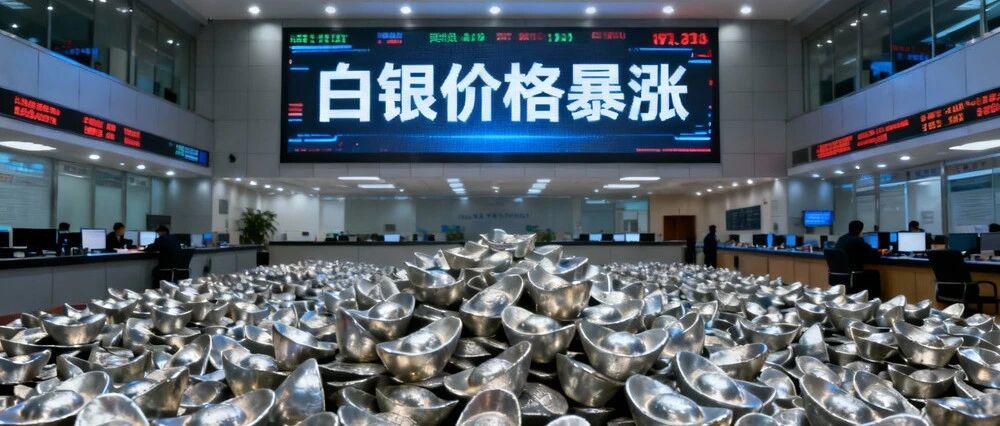
Core Viewpoint - The recent surge in silver prices, which exceeded $110 per ounce, is primarily driven by speculative trading rather than fundamental market conditions, indicating a significant deviation from historical norms [5][11][12]. Group 1: Market Dynamics - The gold-silver ratio has fluctuated dramatically, dropping from over 100 to around 46.36, suggesting that silver has detached from its fundamental value [11][45]. - The increase in COMEX silver inventories in late 2024 and early 2025, which surpassed 2020 levels, contributed to a temporary price lag compared to gold [13][14]. - A significant decline in COMEX silver inventories began in mid-2025, which coincided with a sudden price explosion in recent months [15][16]. Group 2: Speculative Behavior - The speculative nature of the current silver market is evident, with a notable increase in non-commercial net long positions from 150,000 contracts to 220,000 contracts, a rise of 46.67% in two months [36]. - Major financial institutions like JPMorgan and Goldman Sachs have increased their net long positions from 10% to 35%, indicating a strategy of "increasing positions to drive prices up" [36]. - The volatility in silver prices has been exacerbated by speculative trading, with daily price fluctuations increasing from 3%-5% in December to 5%-8% in January [43]. Group 3: Price Predictions and Risks - Analysts predict a potential correction in silver prices, with estimates suggesting a 30% decline from current levels, bringing prices down to around $70 [46]. - The current market is characterized by high speculative pressure, with approximately 40% of the recent net long positions being short-term speculative funds, which may exit quickly if macro conditions stabilize [51]. - Technical indicators show that silver is in an overbought condition, with an RSI above 85, historically correlating with a 70% probability of a short-term price correction [54]. Group 4: External Influences - The geopolitical landscape, particularly U.S.-Iran tensions and tariff implications under the Trump administration, has significantly influenced silver market dynamics, leading to increased demand and price surges [20][39]. - Future price movements will depend on several variables, including the Federal Reserve's interest rate decisions, the stability of fund flows into silver ETFs, and the sustainability of geopolitical tensions [59][60].

重磅!水贝市场已禁售铜条,亮剑出击狠刹“歪风”炒作!
Sou Hu Cai Jing· 2026-01-21 09:19
Core Viewpoint - The recent surge in "investment copper bars" in Shenzhen's water bay market has led to regulatory intervention, highlighting the speculative nature of this trend and the need for industry compliance and consumer protection [1][3][9] Group 1: Speculative Frenzy - The price of copper bars skyrocketed, with 1000g bars quoted at 180 RMB, significantly above industrial copper prices, indicating a speculative bubble [1][3] - The rise in copper prices was fueled by a lack of logical investment rationale, with claims of potential wealth generation attracting inexperienced investors [3][4] - The copper market's financial attributes are weaker than those of gold and silver, with a significant increase in domestic copper inventory contradicting high prices [3][4] Group 2: Industry Concerns - The copper bar speculation reflects broader issues in the water bay market, where businesses exploit information asymmetry to mislead ordinary investors [6][9] - Recent regulatory actions against companies engaging in non-physical gold betting highlight the urgent need for stricter oversight in the industry [6][9] - Many sellers of copper bars lack the necessary trading qualifications, raising concerns about illegal operations and the absence of a standardized recovery mechanism [6][9] Group 3: Regulatory Response - The ban on copper bar sales is seen as a corrective measure against misleading investment promotions, aiming to refocus the market on its core values of design and quality [1][9] - Compliance in the jewelry industry is becoming increasingly important, with new regulations prohibiting virtual speculative activities without physical backing [9] - The industry is encouraged to adopt standardized financial instruments for investment in copper, such as ETFs and mining stocks, to mitigate risks associated with physical ownership [9]

逼近100美元心理关口!铁矿石价格创月内新低,需求被压制?
Sou Hu Cai Jing· 2025-12-11 19:55
Core Viewpoint - The iron ore market is facing a significant psychological test as prices approach the critical $100 per ton mark, with recent trading showing a downward trend in Singapore iron ore futures prices [1] Supply and Demand Dynamics - As of early December, iron ore inventories at Chinese ports reached a record high of 159 million tons, an increase of approximately 15 million tons from the beginning of the year, primarily due to sustained high overseas shipments [5] - Daily average pig iron production from 247 steel mills dropped to 2.323 million tons, a decrease of 133,400 tons from the year's peak, indicating a contraction in demand [5][7] - Despite a clear oversupply in the market, iron ore prices saw a temporary increase, with the Platts 62% index rebounding from $102.05 per ton in early November to $107.80 per ton [3] Financial and Trading Behavior - Steel mills' profitability has deteriorated significantly, with profit margins dropping from 68.4% in August to 36.36%, leading to over 60% of companies reporting losses [7] - The financial attributes of iron ore have notably increased in the second half of 2025, with a surge in open interest for Singapore iron ore futures contracts, indicating speculative trading behavior [7] - Trade speculation has distorted price signals, with the premium for mainstream spot varieties like PB powder rising from zero to $1.2 per ton since late October [7][9] Market Sentiment and Future Outlook - Market sentiment is being supported by expectations surrounding the central economic work conference in mid-December, with some investors betting on policies aimed at boosting domestic demand in 2026 [9] - The supply side also faces uncertainties, such as the Guinea Simandou project's initial shipments, which are not expected to have a substantial impact until early 2026 [11] - The overall market remains characterized by a significant divergence, with mainstream medium-grade ores maintaining relatively stable prices while low-grade ores face substantial inventory buildup [11] Regional Demand Variations - Regional demand shows notable differences, with East China experiencing a slight increase in pig iron production due to improved rebar profits, while Central China saw a decrease due to maintenance activities [13] - The export market has been a bright spot, with cumulative steel billet exports reaching 11.9 million tons from January to October, a year-on-year increase of 157%, although this trend is beginning to slow [13] Price Projections - Despite short-term price fluctuations, the cost range is expected to provide a bottom support, with high-cost mines' cash costs exceeding $90 per ton [15] - The Platts 62% index is projected to fluctuate within a narrow range of $99 to $105 per ton in 2025, with forecasts suggesting a further decline to $95 to $100 per ton in 2026 [15]

此4000点非彼4000点
Bei Jing Shang Bao· 2025-10-29 16:40
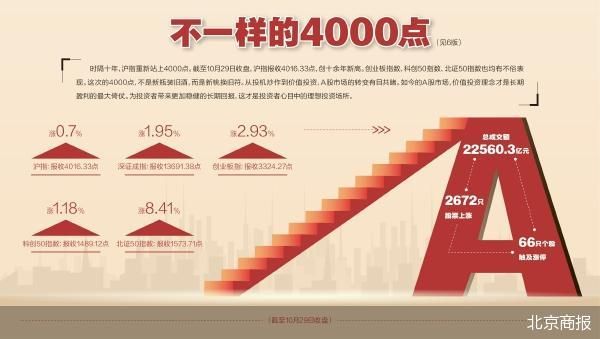
Core Viewpoint - The Shanghai Composite Index has reached the 4000-point mark for the first time in a decade, signifying a shift from speculative trading to a value investment era in the A-share market [1][3]. Group 1: Market Transition - The previous peaks of 6124 and 5178 points were characterized by speculative trading, leading to volatile market conditions and significant investor losses when confidence faltered [1]. - The current 4000-point level is supported by the continuous growth of listed companies' performance, marking a fundamental shift towards value-based investment strategies [3]. Group 2: Value Investment - Investors are now focusing on the intrinsic value of companies, emphasizing profit growth and core competitiveness rather than short-term stock price fluctuations [3][4]. - The rise of high-performing stocks reflects the deepening acceptance of value investment principles among investors, who are now more inclined to hold onto stocks for long-term gains based on solid performance [3]. Group 3: Technology Sector Growth - A new wave of technology companies is emerging, particularly in fields like artificial intelligence, renewable energy, and biomedicine, which are enhancing their competitive edge and driving performance growth [4]. - Investors are optimistic about technology stocks due to their potential for future growth, viewing them as key contributors to both earnings and stock price appreciation [4]. Group 4: Market Outlook - The resurgence of the Shanghai Composite Index above 4000 points represents a new starting point for the A-share market, transitioning from speculative trading to a focus on value investment [4]. - The mainstream adoption of value investment strategies is expected to provide investors with more stable long-term returns, aligning with their ideal investment environment [4].
侃股:此4000点非彼4000点
Bei Jing Shang Bao· 2025-10-29 12:05
Core Viewpoint - The Shanghai Composite Index has reached the 4000-point mark for the first time in ten years, signaling a shift from speculative trading to a value investment era, supported by the continuous growth of listed companies' performance [1][3]. Group 1: Market Transition - The previous peaks of 6124 and 5178 points were characterized by speculative trading, leading to volatile market conditions and significant investor losses during downturns [1]. - The current 4000-point level is underpinned by solid earnings growth from listed companies, marking a fundamental shift towards value investing [1][2]. Group 2: Value Investment Principles - Value investors are now focusing on the intrinsic value of companies, emphasizing profit growth and core competitiveness rather than short-term stock price fluctuations [2][3]. - The rise of high-performing stocks reflects the deepening acceptance of value investment principles, as these companies prioritize enhancing their core competencies and achieving steady earnings growth [2]. Group 3: Technology Sector Growth - The technology sector is emerging as a key driver of performance, with companies in artificial intelligence, renewable energy, and biomedicine enhancing their competitive edge and contributing to earnings growth [2]. - Investors are optimistic about technology stocks due to their potential for future growth, viewing them as representatives of new productive forces capable of achieving both earnings and stock price breakthroughs [2].
多措并举抑制*ST股过度投机
Guo Ji Jin Rong Bao· 2025-07-29 03:11
Core Viewpoint - The phenomenon of stocks under delisting risk being heavily speculated in the market raises questions about the effectiveness of the delisting risk warning system, as investors seem to ignore the risks associated with these stocks [1] Group 1: Market Behavior - Multiple stocks under delisting risk warnings, such as *ST Yazhen and *ST Hengjiu, have experienced significant price increases despite ongoing losses and risk warnings [1] - The paradox of "the stricter the risk warning, the stronger the stock price surge" suggests that the current risk warning system is ineffective [1] - Speculative trading is overshadowing value discovery, eroding the foundation of healthy capital market development [1] Group 2: Recommendations for Improvement - It is suggested to optimize the suspension and review system, focusing on the actual trading behaviors rather than just compliance checks by listed companies [1] - Exchanges should enhance the investigation of abnormal price fluctuations by establishing a real-time tracking system for account associations and identifying the true operators behind large accounts [2] - The delisting rules should be improved to prevent excessive speculation on stocks at risk of delisting, potentially introducing a new delisting threshold based on market valuation metrics [2] Group 3: Investor Protection and Education - Increasing the asset threshold for participating in delisting risk stocks from 500,000 to 1,000,000 yuan is recommended to limit speculative participation [3] - Strengthening the regulation of intermediary institutions that serve *ST stocks is crucial, with penalties for non-compliance or negligence [3] - Enhancing investor education and protection mechanisms is essential, including risk awareness campaigns and establishing efficient compensation channels for investors suffering losses due to speculative activities [4]